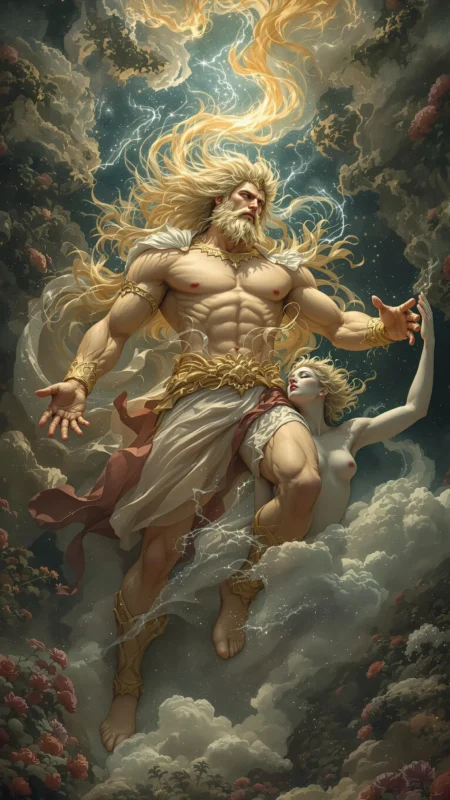
Hercules

Archetype Meaning & Symbolism

Strong, burdened, volatile, persevering, tragic, heroic, flawed, divine, mortal, tormented, driven, solitary

  • There is no easy way from the earth to the stars.

If Hercules is part of your personal mythology, you may...

Believe

  • That suffering is not meaningless, but a crucible designed to forge character and reveal greatness.
  • That your strength is a sacred responsibility, a tool given to you for the protection and service of others, not for personal aggrandizement.
  • That redemption is always possible through action; that one can labor their way back from any mistake, no matter how grievous.

Fear

  • Your own capacity for destruction; the uncontrollable 'madness' that could erupt and irrevocably harm the people and things you love most.
  • That your labors will never truly end, that you are doomed to a life of ceaseless struggle with no final peace or rest.
  • Being fundamentally misunderstood; that others see only your brute strength and miss the profound pain and noble intention that drives you.

Strength

  • Unshakable perseverance: the ability to face any obstacle, no matter how monstrous or seemingly impossible, and simply refuse to quit.
  • An immense capacity for service and protection, willingly shouldering burdens that would crush others in order to shield your community or loved ones.
  • Radical accountability: the power to transform your greatest failures into the fuel for your most profound acts of redemption.

Weakness

  • Emotional volatility: a tendency toward explosive rage or deep, crushing despair when the weight of your labors becomes too much to bear.
  • A crippling sense of responsibility that leads to profound isolation, making it nearly impossible to ask for or accept help.
  • A blindness to nuance; an instinct to apply brute force and direct action to complex emotional or social problems that require subtlety and diplomacy.

The Symbolism & Meaning of Hercules

To have Hercules as a cornerstone of your personal mythology is to be defined by the paradox of strength and suffering. Your power is not a gift but a burden, a cosmic weight that manifests as both a capacity for great deeds and a vulnerability to tragic flaws. The symbolism here is not about the clean, triumphant hero of modern cartoons but the tormented demigod of antiquity: a figure whose every victory is paid for with a pound of flesh. Life may not be a series of random events but a sequence of labors, each one tailored to test a specific facet of your soul. This archetype suggests that meaning is not found in comfort but forged in the crucible of adversity, that the Augean stables of one's own life must be cleaned not by mundane effort, but by the radical act of diverting a river, of changing the very landscape of the self.

He is the patron saint of penance through action. Where others might seek forgiveness through prayer or contemplation, the Herculean mythos insists on redemption through deed. The past is not a memory to be processed but a debt to be repaid through sweat and struggle. This could manifest as a relentless drive for self-improvement, a compulsion to take on immense projects, or a dedication to service. The core belief is that one can work their way back to grace. Hercules represents the struggle against a hostile fate, personified by Hera's eternal wrath. He is a testament to the idea that even when the universe itself seems aligned against you, sheer, bloody-minded perseverance can carve out a path to glory, or at least to a meaningful end.

The archetype also speaks to a profound solitude. Hercules walks a path no one else can fully comprehend. His half-divine nature makes him an outsider among mortals, while his mortal agonies separate him from the serene gods. In a personal mythos, this translates to a feeling of being fundamentally different, of carrying a responsibility that cannot be shared. Your triumphs and your torments are your own. It is the myth of the exceptional individual who, by virtue of their exceptionalism, is destined to be alone with their monsters, both internal and external. His club and lion skin are not just tools but symbols of a self-reliance so complete it borders on isolation.


Hercules Relationships With Other Archetypes

The Hydra

With the Hydra, Hercules may find his most vexing mirror. It is not an opponent to be simply overpowered, but a living equation of futility, a problem that blossoms from its own wound. Each swing of his club, intended as a final, percussive statement, could instead become an act of terrible creation, birthing two new heads where one had been. This relationship is perhaps a lesson in the limits of brute force, a critique of the hero’s own nature. The Hydra is the archetypal Vicious Cycle, the argument that feeds on anger, the trauma that multiplies with every attempt to violently suppress it. To defeat it, Hercules must become something other than himself, cauterizing the problem with a foreign element, fire, suggesting that true strength might lie not in the force of the blow, but in the wisdom to see how a wound must be sealed.

The Unmovable Stone

The Unmovable Stone offers no battle, no roaring challenge, only a silent, gravitational rebuttal to the hero’s entire being. It is the archetype of incontrovertible truth, of a grief that cannot be lifted, of a law of nature that will not bend. Hercules, a figure of pure kinetic energy, could find himself paralyzed before its immense stillness. His relationship with the Stone is not one of conflict, but of profound and maddening inadequacy. It may represent the quiet authority of Fate, or the simple, geological fact of a mountain that was here before him and will remain long after. In its presence, his muscles are rendered as mere decoration, and he is perhaps forced to confront the humbling idea that some things are not problems to be solved, but realities to be lived with, burdens whose weight must be accepted, not thrown off.

The Weaver

In the quiet industry of the Weaver, the thundering narrative of Hercules could be seen as just a single, brightly colored thread. For all his freedom of movement, for all the earth-shaking power of his will, he may be acting entirely within a pre-written pattern, his most defiant roar merely the sound of a taut string in a vast, cosmic loom. This relationship speaks to the tension between agency and destiny. The Weaver archetype—be it the Fates, causality, or the intricate logic of the universe—works in silence, its power not in overt strength but in the subtle, inexorable intertwining of all things. Hercules could be the most vibrant and violent knot in its tapestry, but a knot nonetheless, his labors and his tragedies perhaps serving a design far grander and more indifferent than his own heroic consciousness can ever grasp.

Using Hercules in Every Day Life

Navigating a Career Challenge:

A seemingly impossible project at work could feel like a modern-day labor. You might channel Hercules not by brute force, but by breaking the insurmountable task into twelve smaller, conquerable steps, finding unconventional tools (like the Nemean Lion’s own claw), and persisting even when the world, or at least a particular superior, seems like a vengeful Hera.

Overcoming Personal Failure:

After a significant personal mistake, a moment of Herculean madness, the archetype could inform a path to atonement. It’s not about erasing the past but about undertaking new labors: acts of service, self-improvement, or creative work that redeem the self not through forgetting, but through transformation. The guilt may become the very catalyst for a greater purpose.

Supporting a Loved One Through Crisis:

When a friend or family member is struggling, you may find yourself taking on the role of Atlas, holding up their world for a time. Hercules teaches that this strength is not just physical endurance but emotional fortitude: the capacity to bear witness to another’s pain without breaking, to offer your strength not as a solution, but as a temporary shelter.

Hercules is Known For

The Twelve Labors

A series of impossible tasks assigned as penance for killing his family in a fit of madness induced by Hera. These trials, from slaying the Nemean Lion to capturing Cerberus, form the core of his legend and represent overcoming insurmountable odds.

Divine Parentage and Human Frailty

As the son of Zeus and the mortal Alcmene, Hercules embodies the conflict between godlike potential and human fallibility. His life is a constant struggle against the machinations of a jealous goddess, symbolizing the clash between fate and personal will.

Ascension to Godhood

Upon his death, Hercules was the only Greek hero to ascend to Olympus and become a full god. This apotheosis represents the ultimate reward for a life of suffering and heroic effort, suggesting that through great trials, a mortal can achieve a kind of immortality.

How Hercules Might Affect Your Personal Mythology

How Hercules Might Affect Your Mythos

When Hercules shapes your personal mythos, your life story ceases to be a simple progression and becomes an epic, a series of trials. Setbacks are not failures but labors assigned by an unseen force. A difficult job, a painful breakup, a creative block: these are all monsters to be slain, stables to be cleaned, golden apples to be retrieved from a jealously guarded garden. This narrative structure imbues suffering with profound purpose. You are not a victim of circumstance; you are a hero engaged in a cosmic struggle. The central plot of your life may revolve around an act of atonement, a great mistake or perceived flaw that fuels a lifelong quest for redemption through immense effort.

Your personal narrative may also be characterized by a foundational duality. You are both the hero and the monster. The story of your life could be the story of wrestling with your own immense potential for both good and ill. The central conflict is internal: the divine spark versus the mortal rage. This means your mythos is likely not a comedy or a simple romance, but a tragedy with a shot at transcendence. The ultimate goal isn't happiness in the conventional sense, but apotheosis: the act of becoming more than you were, of transforming your suffering into a form of divinity through the sheer force of will and endurance.

How Hercules Might Affect Your Sense of Self

Your self-concept, under the influence of Hercules, may be built upon a bedrock of capability. You might see yourself as the one who can handle it, the person who can bear the unbearable. This fosters a powerful sense of resilience and competence. However, this identity is double-edged. The self is defined by what it can endure, and so it may subconsciously seek out burdens to validate its own existence. Rest can feel like failure, and peace like a form of death. Your self-worth could be inextricably tied to your last heroic act, your most recent feat of strength.

There may also be a deep, often hidden, view of the self as inherently dangerous. You might harbor a secret fear of your own temper, your own passions, your own strength. Like Hercules, haunted by the memory of the madness Hera sent upon him, you may live in terror of what you could do if you lost control. This creates a constant inner tension, a need to keep your own power on a tight leash. The self becomes a project of containment as much as accomplishment, a careful balancing act between expressing your strength and suppressing your destructive potential.

How Hercules Might Affect Your Beliefs About The World

The world, seen through a Herculean lens, is not a garden of delights but an arena of trial. It is a place filled with monsters, injustices, and impossible tasks that exist for the specific purpose of being overcome. This is not a cynical worldview, but rather a heroic one. It presumes that obstacles have meaning and that the universe, for all its cruelty, is ultimately a forge for the soul. You may believe that people are not meant to be happy, but to be great, and that greatness is a measure of the challenges one has faced and conquered.

This perspective could also foster a sense of profound responsibility. If the world is a place of labors, then someone must perform them. You may see societal problems, community needs, and the suffering of others not as distant issues but as personal summonses to action. This worldview dismisses passivity. It holds that justice and order are not natural states but conditions that must be actively, and often violently, carved out of the chaos of existence. The world doesn't just happen; it must be wrestled into shape.

How Hercules Might Affect Your Relationships

In relationships, you may instinctively adopt the role of the protector. Your love is expressed through shielding others from harm, solving their problems, and shouldering their burdens. You are the rock, the shield, the one who stands between your loved ones and the harshness of the world. This can forge bonds of immense loyalty and gratitude. People may feel profoundly safe with you, relying on your strength in times of crisis. Your partnerships are built on a foundation of service and steadfastness.

However, this dynamic can also lead to a deep-seated isolation within those same relationships. By always being the strong one, you may render your own vulnerability invisible. Partners and friends may not know how to support you, or even recognize that you need support. The weight you carry is yours alone. This can create a chasm: you are with people, but not truly among them. Furthermore, your intensity and drive can be overwhelming for others, and your black-and-white approach to problems may clash with the nuanced emotional needs of partners, making intimacy a challenge. The tragedy of Hercules is often that his heroic path is littered with the relationships destroyed by his focused, and sometimes violent, quest.

How Hercules Might Affect Your Role in Life

Your perceived role in life, in your family, or in your community is likely that of the problem-solver, the strongman, the one who undertakes the tasks no one else can or will. You are the person who cleans the metaphorical Augean stables. This role is not chosen lightly; it may feel like a sacred duty, a calling you cannot refuse. You might believe your purpose is to expend your strength in the service of a cause larger than yourself, whether that cause is your family, your company, or humanity itself. This provides a powerful sense of purpose and direction.

The shadow side of this role is the risk of becoming a blunt instrument. You may see every problem as a physical challenge requiring a direct, forceful solution. You might be the hero who slays the dragon but inadvertently tramples the village in the process. This role can also become a trap, where your identity is so fused with being 'the strong one' that you are unable to adapt, to show weakness, or to step aside. You may continue to perform labors long after they have ceased to be necessary, driven by a compulsion to prove your worth rather than a genuine need.

Dream Interpretation of Hercules

In a positive context, dreaming of Hercules or of performing Herculean labors may signify a burgeoning sense of your own power and competence. A dream of successfully slaying a monster could represent the conquering of a real-life fear or the overcoming of a significant obstacle. Lifting a great weight might symbolize your capacity to handle your current responsibilities. These dreams are affirmations from the psyche, acknowledging your strength and resilience. They suggest you have the inner resources to face the trials ahead and that your efforts are leading toward a form of personal mastery.

Conversely, a negative Herculean dream could be fraught with anxiety. You might dream of being attacked by a monster you cannot defeat, symbolizing a feeling of being overwhelmed by your problems. A particularly potent dream would be one in which you, as Hercules, are the monster, raging out of control and harming innocents. This may reflect a deep-seated fear of your own anger, your shadow self, or the destructive consequences of your actions. Dreaming of being bound in chains or endlessly performing a futile task could point to a feeling of being trapped by your obligations, a slave to your own heroic complex with no hope of rest or release.

How Hercules Archetype Might Affect Your Needs

How Hercules Might Affect Your Physiological Needs

The body, in this mythos, is not merely a vessel; it is the primary instrument of will. There is likely a profound connection to your physical self, a sense that your body’s needs are paramount to fulfilling your purpose. This could manifest as a disciplined approach to diet and exercise, viewing food as fuel and physical training as preparation for the next labor. The body is a tool to be sharpened, maintained, and deployed. Its aches are honorable scars, its exhaustion a sign of a day well-spent in the arena of life.

Alternatively, physiological needs might be viewed as treacherous weaknesses. Hunger, fatigue, and pain could be seen as distractions from the mission, mortal frailties to be ignored or violently suppressed. This can lead to a punishing, ascetic relationship with the body, pushing it far beyond its limits. The Herculean figure risks burnout, injury, and a fundamental disconnection from the body's signals, treating it less like a partner in the heroic journey and more like a stubborn beast of burden to be whipped into submission.

How Hercules Might Affect Your Ideas of Belonging

Belongingness is a complex and often painful theme for the Herculean soul. You may yearn for connection, for a place in a community, but your sheer scale can make it difficult to fit in. Your intensity, your singular focus, and the weight of your personal burdens can create an invisible wall between you and others. You might feel like a demigod walking among mortals: sharing their world but not their experience. This can foster a profound sense of loneliness, even when surrounded by people who love and admire you.

Love and intimate relationships are often seen through the lens of duty and tragedy. You may love fiercely, protectively, but your path is one of danger and sacrifice. As with Hercules, whose loves often met tragic ends as collateral damage of his heroic life, you may fear that your own journey will inevitably harm those who get too close. This can lead to holding others at a distance, or to a series of intense but doomed relationships. Belonging is something to be earned or fought for, but rarely something to be rested in.

How Hercules Might Affect Your Feelings of Safety

Safety, in the Herculean narrative, is not a passive state but an active, ongoing creation. You may feel that safety, for yourself and for others, depends entirely on your strength and vigilance. You are the wall against the chaos. This can lead to a hyper-aware state, a constant scanning of the environment for threats and problems to be neutralized. You might create a sense of security through mastery of your surroundings, through physical fortification, or through the sheer force of your intimidating presence.

This creates a paradox. While you may be the source of safety for others, you yourself may feel perpetually unsafe. The myth of Hercules is one of a man constantly besieged, hunted by a relentless goddess and hounded by monsters. You may feel that the world is inherently hostile toward you, that your strength makes you a target. True peace is impossible because the next threat is always just over the horizon. Safety is not a haven to be reached but a battle to be perpetually fought.

How Hercules Might Affect Your Views of Esteem

Esteem, for one with Hercules in their mythos, is almost entirely externalized: it is built upon the foundation of accomplishment. Self-worth is not inherent; it is a direct result of the labors you have completed, the monsters you have slain, the burdens you have shouldered. This can be a powerful motivator, driving you to achieve incredible things and to build a legacy of tangible successes. Your esteem is a monument built brick by brick with each conquered challenge.

However, this makes your self-esteem exceptionally fragile. It is only as secure as your last victory. A failure is not just a setback; it is a fundamental challenge to your identity. A period of rest or inactivity can trigger a crisis of worthlessness. Furthermore, you may feel that your worth is dependent on the recognition of others, needing an audience to witness your labors and affirm your greatness. Without a king to assign the tasks or a world to praise the hero, the Herculean figure can feel lost, his strength meaningless, his esteem plummeting into a void of purposelessness.

Shadow of Hercules

The shadow of Hercules is the beast he so often fought. It is what happens when strength curdles into tyranny, when protection becomes suffocating control. This shadow figure believes his power gives him the right to judge, to punish, and to dominate. He is the bull in the china shop of life, smashing through delicate situations with a club of self-righteous fury, convinced that his way is the only way because it is the strongest. He solves disagreements with intimidation and silences dissent with force. The world flattens into a simple binary: things to be conquered and things that are annoyances. Empathy is a casualty, dismissed as weakness.

Another facet of the shadow is not tyranny but a profound victimhood. This is the Hercules who sees Hera in every corner, who believes the entire universe is conspiring against him. Every challenge is a personal attack, every setback a confirmation of his tragic, cursed fate. This narrative absolves him of all responsibility. His rage isn't a flaw; it's a justifiable reaction to an unjust world. The harm he causes is not his fault; it's the collateral damage of his epic, unfair struggle. In this shadow state, the hero's journey becomes a self-pitying rampage, his labors not acts of atonement but acts of vengeance against a world that has wronged him.

Pros & Cons of Hercules in Your Mythology

Pros

  • You possess an almost superhuman drive to achieve and overcome, making you exceptionally effective and reliable in any crisis.
  • You serve as a pillar of strength and a symbol of hope for your community and loved ones, a true protector in a chaotic world.
  • You are able to find deep meaning and purpose in struggle, transforming the inevitable hardships of life into a heroic narrative of growth and transcendence.

Cons

  • You may feel profoundly and existentially alone, as few can understand the scale of the burdens you carry or match your consuming intensity.
  • The line between hero and monster can feel dangerously thin, marked by a constant, exhausting vigilance against your own destructive impulses.
  • You are at high risk for burnout and a life devoid of peace, perpetually seeking the next labor and unable to rest in the quiet moments of life.