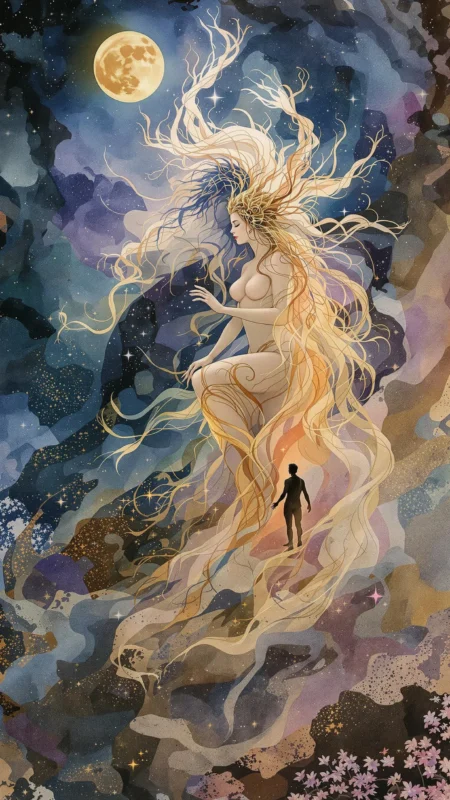
Hera

Archetype Meaning & Symbolism

Regal, Committed, Territorial, Fierce, Loyal, Jealous, Powerful, Formal, Vengeful, Matriarchal

  • Do not mistake my vow for a chain: it is the blueprint of a shared world, and I am its unyielding sky.

If Hera is part of your personal mythology, you may...

Believe

  • That a solemn vow, once given, reorganizes the universe around it and must be defended at any cost.

    That the most profound human creation is not art or philosophy, but a lasting and honorable partnership.

    That loyalty is not a feeling but a decision, the highest and most difficult of all human virtues.

Fear

  • The ultimate humiliation of betrayal by a sworn partner, which feels less like heartbreak and more like a coup d'état.

    Losing your status and authority, being rendered invisible or secondary in the domain you have built.

    The chaos of a world without binding commitments, a life of meaningless, transient encounters.

Strength

  • An almost superhuman capacity for commitment and loyalty, allowing you to build structures that last a lifetime.

    A natural and commanding authority; you inhabit your role with a dignity that inspires respect and trust.

    The resilience to endure immense trials within a partnership or institution without abandoning your post.

Weakness

  • A tendency toward consuming jealousy and a vengeful wrath that can be disproportionate and destructive.

    An inability to forgive disloyalty, causing you to hold onto grudges with mythic tenacity that poisons your own spirit.

    A fragile sense of self that is overly identified with your role or partner, leading to a complete collapse of identity if that structure fails.

The Symbolism & Meaning of Hera

To find the Hera archetype within your personal mythology is to feel the gravitational pull of the sacred vow. It is to understand commitment not as a romantic sentiment, but as a foundational act of world-building. Where others see a wedding ring, you may see a crown. This archetype consecrates partnership, transforming it from a mere relationship into a sovereign territory, a kingdom of two with its own laws, traditions, and borders. The modern Hera is not simply a spouse: she may be the co-founder of a business, the fierce protector of a creative project, or the guardian of a deeply held personal promise. The core symbolism is that of the unbreakable bond, the thing you have sworn to uphold against chaos and time. It is the conviction that some things must be absolute.

This archetype is also a meditation on power within partnership. Hera’s mythology is a tapestry of struggle for respect and fidelity from an equal who is perpetually unfaithful. For the modern individual, this translates into the complex dance of maintaining one's own authority and dignity while bound to another. It is the challenge of sharing a throne. This energy within you could manifest as an insistence on being seen, on having your contribution honored, on your role being understood not as secondary but as essential. It is the part of you that refuses to be a footnote in the story of another, demanding to be a co-author of the shared narrative.

Ultimately, Hera symbolizes the profound and often painful beauty of endurance. She remains. Through betrayal, humiliation, and cosmic strife, her position is eternal. In a personal mythos, this could represent an incredible capacity for loyalty and resilience. It is the strength to uphold a structure even when its inhabitants falter, to believe in an institution even when its leaders are flawed. It’s the part of the human spirit that builds something to last, that tends to the sacred fire of a promise, knowing that its light is a bulwark against the encroaching darkness of impermanence.


Hera Relationships With Other Archetypes

The Sovereign

The Hera archetype’s relationship with The Sovereign is perhaps the central tension of its existence, a kind of cosmic treaty between the immovable institution and the irrepressible force. The Sovereign may be seen as the storm cloud, all lightning and unaccountable rain, while Hera is the mountain it is eternally bound to circle. Their union is not one of gentle correspondence but of immense gravitational pull; a constant negotiation between the raw, generative chaos of the sky and the defined, hallowed geography of the earth. This dynamic could suggest that sanctioned power finds itself forever yoked to a wildness it can legitimize but never truly tame, creating a partnership that is less a peaceful kingdom and more a gilded, ornate, and perpetually unstable cage.

The Outcast

In The Outcast, the Hera archetype may find the living embodiment of its deepest wound. The Outcast is the unacknowledged consequence, the dissonant chord in the hymn of legitimacy, the living proof that the sacred vow has been fractured. Hera’s persecution of this figure is not, perhaps, mere spite, but a desperate attempt to maintain the integrity of a structure The Outcast’s very existence threatens to undermine. This relationship could be viewed as the established order’s frantic effort to erase an inconvenient truth, to scrub the graffiti from the temple wall. The Outcast, in this light, becomes a kind of ghost haunting the halls of power, a perpetual reminder that even the most formidable walls of convention are porous to the whims of the human—or divine—heart.

The Wedding Ring

The Wedding Ring is an object of profound and terrible intimacy for the Hera archetype. It is a perfect, cold circle of gold that may be both crown and manacle, a symbol of ultimate status and a constant, metallic reminder of a contract betrayed. This small, unblinking object represents the paradox of commitment: it is the source of Hera’s authority, the anchor that holds the great ship of state in the harbor, yet it is also the measure of her confinement. The ring does not reflect a happy union so much as it reflects the unflinching, mineral fact of a vow. In its polished surface, Hera might see not a partner, but the stark, circular logic of her own power, a kingdom whose borders are absolute, exquisite, and utterly lonely.

Using Hera in Every Day Life

Navigating Betrayal in Partnership

When a core commitment is fractured, the Hera archetype does not collapse: it clarifies. It provides the regal composure to assess the damage not as a personal slight, but as a constitutional crisis in the kingdom of two. It informs the choice to either demand reparations and restructure the treaty, or to declare the union dissolved with the cold finality of a deposed monarch, preserving one's own sovereignty above all.

Establishing a Family Legacy

To build something that outlasts you, whether a family, a business, or an artistic tradition, is to engage the Hera mythos. This archetype provides the focus for long-term structural thinking. It prioritizes the integrity of the institution over fleeting individual desires, ensuring that decisions are made not for immediate gratification, but for the endurance and stability of the dynasty you are building.

Claiming Authority in a Professional Setting

In a career, the Hera archetype can manifest as an unshakeable sense of one's own authority. It is the energy that claims a seat at the table without asking. It is not about aggression, but about a profound inhabitation of one's role. It allows one to command respect, to forge powerful alliances, and to view one's professional domain as a realm to be governed with dignity, vision, and an absolute refusal to be undermined.

Hera is Known For

Goddess of Marriage

Her primary domain is not love, but the sacred, binding contract of marriage. She governs the institution, the vow, and the structure of family as a pillar of society.

Queen of Olympus

As the wife of Zeus, she sits enthroned as his equal in status, if not always in portable power. She represents sovereignty, formal authority, and the immense dignity of her high office.

Vengeance Against Rivals

Her most famous stories often revolve around a righteous, terrifying fury directed at those who threaten the sanctity of her marriage, be they lovers of Zeus or their offspring.

How Hera Might Affect Your Personal Mythology

How Hera Might Affect Your Mythos

When Hera is a dominant force in your personal mythology, your life story may be written as a long, epic reign rather than a series of disconnected adventures. The central plot is the founding and maintenance of a kingdom, which is most often a primary, defining partnership. Other life events, careers, friendships, and even personal crises are framed by this central alliance: they are either threats to the throne, treaties with neighboring powers, or efforts to strengthen the dynasty. Your narrative arc is not about self-discovery in solitude, but about forging a self through the sacred, and often challenging, act of co-creation.

Your personal mythos might be structured like a dynastic history, with a clear line of succession in terms of values, traditions, and legacy. The past is not a foreign country; it is the foundation upon which your current reign is built. You may see your life in terms of eras defined by the state of your primary commitments. The story is one of loyalty, betrayal, governance, and endurance. The key conflicts are not internal debates about who you are, but external and internal struggles to protect the integrity of the vow that defines who you are.

How Hera Might Affect Your Sense of Self

With Hera as a guide, your sense of self may be deeply intertwined with your commitments. You might not ask 'Who am I?' so much as 'Whom and what have I sworn myself to?' Self-worth is not an abstract concept; it is reflected in the health and honor of your domain. You may perceive yourself as a sovereign, a being of inherent authority and dignity whose role is to uphold order and legacy. This can bestow a powerful, grounded sense of purpose, a feeling that your life is anchored to something larger and more enduring than your own fleeting moods.

This also means your identity can feel profoundly vulnerable to the actions of your partner or the state of your institution. A betrayal is not just an emotional wound; it is a constitutional crisis that can shatter your sense of self. You may feel your very existence is legitimized by the throne you occupy. Therefore, you might view yourself with a formal gravity, seeing your choices not as personal preferences but as acts of state that have far-reaching consequences for the future of your realm.

How Hera Might Affect Your Beliefs About The World

To see the world through Hera's eyes is to see a landscape of structures, hierarchies, and binding contracts. Society is not a random collection of individuals, but a network of alliances and institutions, some sacred and some profane. You may believe that civilization itself is built upon the strength of its vows: marital, civic, and professional. The world may seem less a place for spontaneous experience and more a stage for the solemn duties of governance and legacy-building. Chaos is the ultimate enemy, and stability is the highest good.

This worldview prioritizes form and order. It may lead you to respect tradition, to value ceremony, and to be skeptical of anything that threatens to dissolve established structures. You might appraise people and situations based on their perceived loyalty and reliability. The transient, the fickle, and the revolutionary may be viewed with suspicion. For you, freedom might not mean the absence of constraint, but the honor of choosing your bonds and upholding them with integrity, creating a pocket of enduring order in a fundamentally chaotic universe.

How Hera Might Affect Your Relationships

In the realm of relationships, the Hera archetype is a formidable, demanding force. It elevates partnership to a sacred vocation. For you, a relationship may not be a casual affair but a covenant, a joint enterprise in creating a shared world. You likely seek a partner who is not just a lover, but a co-monarch capable of sharing the burdens and privileges of the throne. The expectation is nothing less than absolute fidelity, not just of the body, but of purpose and spirit. This can forge bonds of incredible strength and depth, unions that feel mythic in their scope.

However, this same intensity can create a crucible of conflict. Your demand for loyalty can be absolute, leaving little room for human error. A perceived betrayal could trigger a righteous and potentially destructive fury. You may struggle to forgive, as a breach of the vow is seen as a desecration of a sacred space. Relationships can become territories to be defended rather than gardens to be nurtured, and a partner’s bid for independence might be misinterpreted as an act of treason, making the shared kingdom feel more like a beautiful, fortified prison.

How Hera Might Affect Your Role in Life

If Hera informs your personal mythos, you may perceive your primary role in life as that of the Matriarch, the Queen, or the Guardian of the Institution. This is never a supporting role; it is a foundational one. You are the one who maintains the structure, enforces the laws of the house, and ensures the dynasty's survival. You may feel a profound responsibility for the well-being and honor of your domain, whether that is a family, a creative partnership, or a community organization. Your purpose is tied to upholding its integrity.

This role is defined by authority and governance. You are the keeper of the calendar, the arbiter of tradition, the one who remembers the old treaties and forges the new ones. This can provide a powerful sense of purpose and place. However, it can also feel burdensome, as the weight of the entire structure may seem to rest on your shoulders. You might also struggle to see your value outside of this role, leading to an identity crisis if the institution you govern ever dissolves or fundamentally changes.

Dream Interpretation of Hera

To dream of a regal, benevolent Hera, or of her symbols like the peacock or the crown, may be a powerful affirmation from your subconscious. It could signify that you are successfully integrating your own authority and are ready to enter into a commitment of great significance. This dream might be a coronation, recognizing your worthiness to rule over your own domain. It could suggest that a partnership is becoming a true, sacred union, or that a project you are building has achieved a new level of stability and legitimacy. It is a dream of establishment, honor, and enduring power.

Conversely, to be pursued by a wrathful Hera, to see a dying peacock, or to find your throne usurped in a dream, may speak to profound anxieties about betrayal and loss of status. This dream could be a manifestation of your own jealousy, warning that it is becoming a destructive force. It might also be a reflection of a real-world situation where you feel humiliated, powerless, or betrayed within a core relationship. The dream is a crisis alert from the psyche, pointing to a violation of a sacred contract and the resulting chaos that threatens to consume your kingdom.

How Hera Archetype Might Affect Your Needs

How Hera Might Affect Your Physiological Needs

From the perspective of a Hera-infused mythology, basic physiological needs like food and shelter are elevated to matters of state. A home is not merely a shelter; it is a palace, a seat of power, and its security and opulence are direct reflections of the monarch's status. The provision of food is not just sustenance; it is a state banquet, a symbol of the realm's prosperity. Any threat to these foundational elements, like financial instability or a leaky roof, may not just feel like an inconvenience but like a political crisis, a sign that the reign is weakening.

The physical body itself could be viewed as the vessel of the dynasty, a living symbol of the kingdom's health. Therefore, its care might be formal and ritualized. Appearance, posture, and health are not matters of personal vanity but of royal presentation. A slovenly appearance or ill health could be felt as a dereliction of duty, a failure to properly represent the dignity of the throne you metaphorically occupy, undermining your own authority.

How Hera Might Affect Your Ideas of Belonging

Belongingness, in a Hera-centered mythos, is not found in a sprawling community or a wide circle of casual friends. It is located, with fierce exclusivity, within the sacred enclosure of the primary partnership or the immediate family unit. This is not the cozy belonging of a village; it is the absolute, high-stakes belonging of a royal court. To be inside this circle is to be everything; to be outside is to be nothing. Love and intimacy are not freely given; they are earned through unwavering loyalty and are part of a binding covenant.

This creates a profound, if narrow, sense of place. You know exactly where you belong because it is a position you have built and defended. The love you seek is one of honor and reverence. However, this can also foster a deep sense of isolation from the wider world. You may struggle to feel a part of any group that does not recognize your specific, sovereign role. The need for belonging is so concentrated in one place that its potential loss feels like a total exile from the cosmos.

How Hera Might Affect Your Feelings of Safety

For the Hera archetype, safety is synonymous with the security of the realm. Personal safety is secondary to the integrity of the established order. You may feel secure only when the borders of your kingdom—the vows of your marriage, the legal contracts of your business, the unspoken rules of your family—are inviolable and fiercely protected. Safety is a fortress built of loyalty, tradition, and clearly defined boundaries. You might invest enormous energy in creating these fortifications, from prenuptial agreements to iron-clad family rules.

A threat to safety is perceived not just as physical danger, but as anything that introduces chaos or threatens to undermine the ruling structure. A rival, a lie, an act of disloyalty—these are the invading armies that breach the walls. Consequently, you may live in a state of high alert, perpetually guarding against insurrection from within and attack from without. True peace is only found when all potential threats have been neutralized and the succession of the dynasty is assured.

How Hera Might Affect Your Views of Esteem

Esteem, for the individual animated by Hera, is forged in the crucible of honor and respect. It is not derived from personal accomplishments achieved in a vacuum, but from the successful governance of one's chosen domain and the unwavering fidelity of one's chosen partner. Self-worth is measured by the degree to which your authority is recognized and your vows are honored. To be revered as the Queen, the Matriarch, the Co-Founder—this is the foundation of esteem. It is the quiet confidence that comes from occupying an essential and respected position.

Consequently, the greatest blow to esteem is not failure, but humiliation. To be publicly or privately betrayed, to be usurped, to have one's authority mocked or ignored—these are the ultimate psychic wounds. Esteem can become perilously dependent on the actions of others, particularly your partner. If they uphold the pact, your self-worth is regal and unshakeable. If they break it, your esteem can shatter, as the betrayal is perceived not as a reflection on them, but as a devastating referendum on your own worthiness to rule.

Shadow of Hera

When the Hera archetype falls into shadow, the queen becomes a tyrant. The sacred vow becomes a gilded cage, and the kingdom a prison policed by suspicion. Shadow Hera manifests as a consuming jealousy that sees rivals in every shadow and treason in every act of independence. Love is replaced by ownership. She doesn't seek to govern a partnership but to control it, using emotional manipulation, righteous anger, and a litany of past grievances as weapons to keep her partner bound to a throne that has become a rack. The desire for respect curdles into a demand for submission, and any attempt by her partner to grow or change is perceived as a direct threat to her reign, to be quashed with terrifying prejudice.

There is another, quieter shadow: the queen who becomes a willing martyr. Here, the commitment to the institution becomes so absolute that she will endure any humiliation to preserve its outer form. She stays with the unfaithful partner, presides over the hollow family, or clings to the defunct business, sacrificing her own dignity and vitality on the altar of a dead vow. She confuses endurance with strength, becoming a ghost haunting the halls of her own life. This shadow abdicates true power for the mere appearance of it, choosing the cold comfort of a formal title over the terrifying, vibrant reality of her own sovereignty.

Pros & Cons of Hera in Your Mythology

Pros

  • You possess the focus and fortitude to create profoundly stable, meaningful, and enduring partnerships and families.

    Your innate authority and commitment to integrity can make you a powerful and respected leader.

    You build things to last, creating legacies that can provide security and meaning for generations.

Cons

  • Your world can shrink to the size of a single relationship, and its dramas can eclipse all other aspects of a rich life.

    Your reactions to betrayal or perceived slights can be so extreme that you destroy the very kingdom you seek to protect.

    Your self-worth may be dangerously dependent on your role and your partner's fidelity, leaving you shattered if either is lost.