 Believe
 Fear
Fear Strength
 Weakness
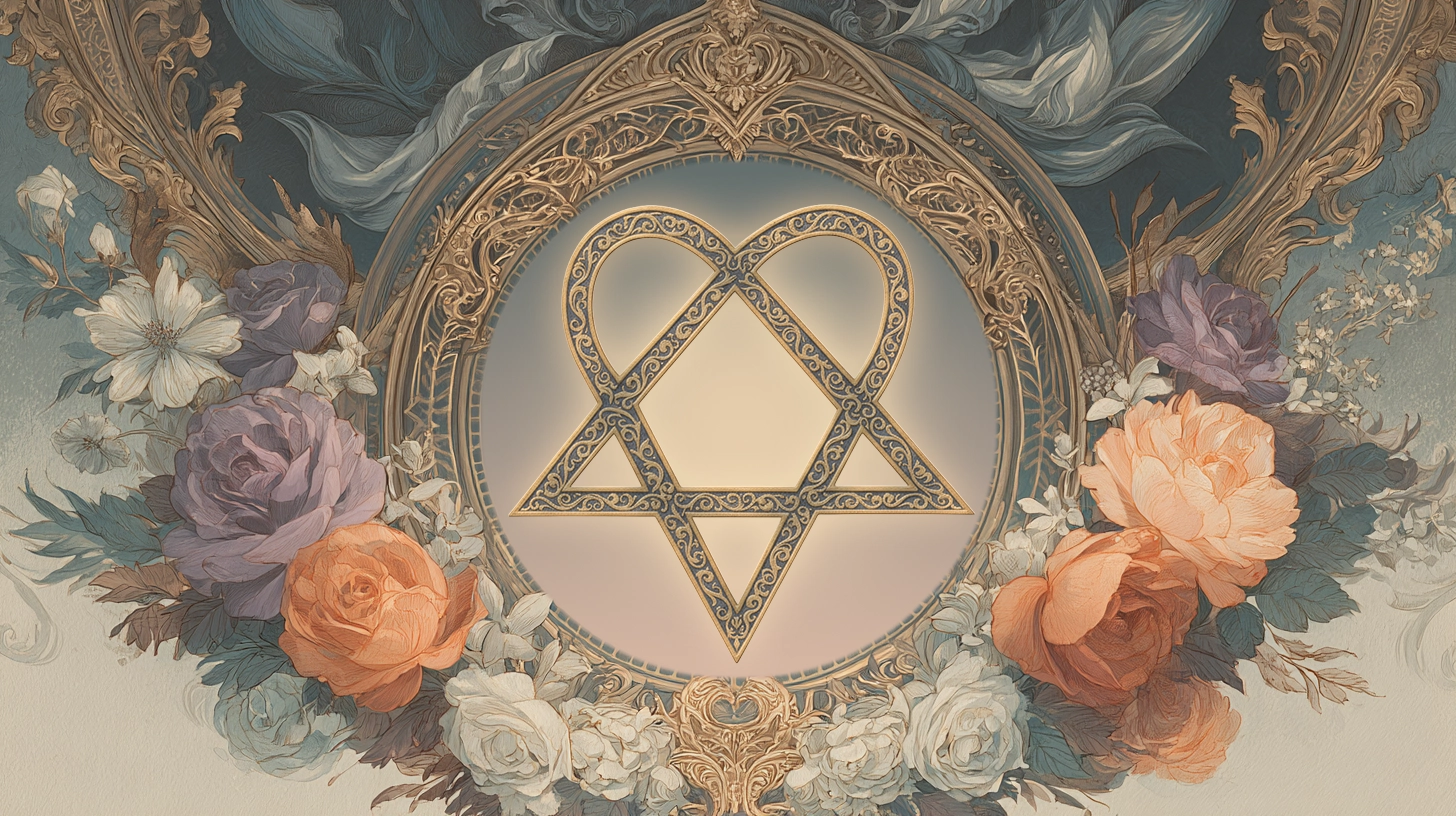
The Heartagram is a modern hieroglyph, a piece of personal mythology for those who find the traditional valentine’s heart too simple, too hollow. It proposes that love, in its most potent form, is inherently intertwined with its opposite: pain, risk, and a touch of the profane. The soft curves of the heart are given a spine by the sharp, geometric lines of the inverted pentagram, suggesting that true affection requires structure, boundaries, and a certain defensive magic. To wear this symbol, either literally on skin or psychically in one's mythos, is to declare an allegiance to a more complicated romanticism. It is an acknowledgment that the chamber of the heart has dark corners, and that these corners are not to be exorcised, but explored.
Furthermore, the symbol may speak to a kind of sacred wound. The heart shape appears almost pierced or held in place by the star, as if to say that love is a form of beautiful captivity, a willing sacrifice. The pentagram’s points could represent the five senses, electrified and heightened by love, or perhaps the classical elements, suggesting a love that is elemental, all-encompassing. In one's personal story, the Heartagram could be the sigil that appears after a great heartbreak, not as a sign of being broken, but of being reforged. It signifies the moment one learns that to be vulnerable is not the same as to be weak, and that the deepest connections are often sealed with scar tissue.
This archetype rejects the saccharine. It finds divinity not in pure light, but in the twilight where joy and sorrow meet. Its meaning is a quiet rebellion against a culture that often demands perpetual happiness. For the individual whose mythos contains the Heartagram, life's purpose may not be the pursuit of uncomplicated bliss, but the curation of profound experiences, however painful. It is the flag of a sovereign emotional nation, one that has its own dark national anthem and finds patriotism in the courage to feel everything, deeply.