 Believe
 Fear
Fear Strength
 Weakness
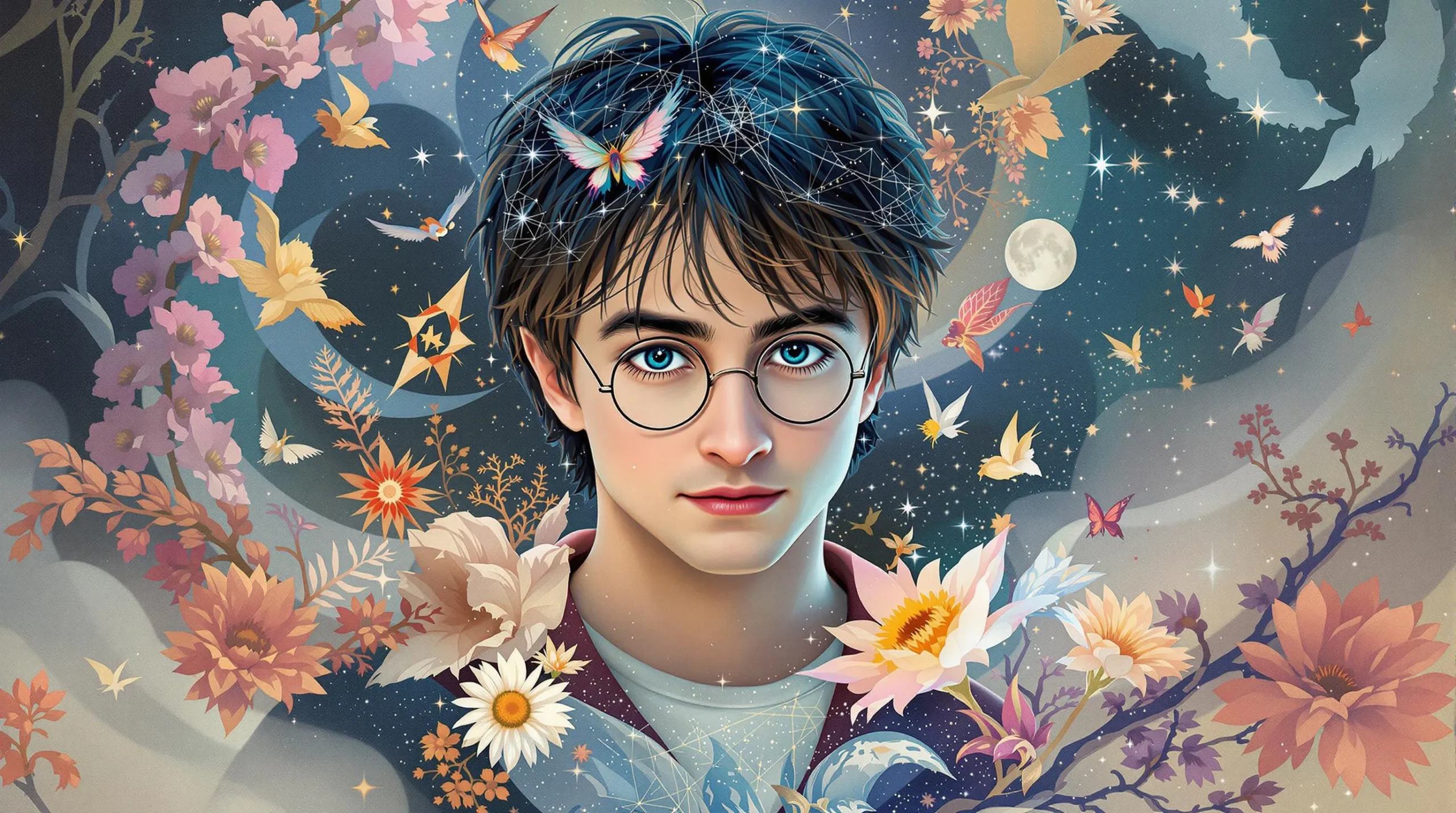
The Harry Potter archetype is a modern parable of the ordinary soul thrust into an epic narrative. He is the quiet kid in the back of the class who discovers a secret, extraordinary lineage, a metaphor for the dawning awareness in any life that one is part of a story much larger than oneself. His lightning scar is not merely a mark of survival: it is a psychic map of a foundational trauma, a constant, physical reminder of a connection to the very darkness one is fated to confront. The archetype suggests that our greatest wound may also be the source of our greatest insight, a painful portal into the nature of the world’s hidden struggles. He sanctifies the mundane, suggesting that our own “cupboards under the stairs”—our places of neglect, confinement, and smallness—are often the crucibles from which our true power is forged. It is a mythology for the overlooked.
At its core, this archetype is a meditation on choice versus destiny. Harry is drenched in prophecy, yet his defining moments are acts of will: choosing his friends, choosing his Hogwarts house, and ultimately, choosing to walk toward his own death. This could inform a personal mythology where one feels the pull of fate or circumstance—be it genetics, upbringing, or systemic forces—but believes that moral character is sculpted in the small rebellions of choice. It reframes power not as an innate ability or a dominating force, but as something relational and sacrificial. The most potent magic, in this symbolic language, is not a spell but an emotion: love, loyalty, grief. These are the forces that bend the arc of this universe.
Furthermore, the archetype speaks to a generation's yearning for enchantment in a disenchanted world. It posits that a hidden reality, a world of wonder and peril, operates just beyond our perception. To adopt this into one's mythos is to begin looking for the platforms 9 ¾ in one’s own life: the liminal spaces, the unspoken rules, the secret orders that govern our workplaces, families, and societies. It is a way of seeing the world not as a collection of random events, but as a place of subtle magic and profound moral consequence, where the flick of a wand could be a quiet act of kindness, and a Horcrux could be a deeply buried, unhealed piece of one's own soul.