 Believe
 Fear
Fear Strength
 Weakness
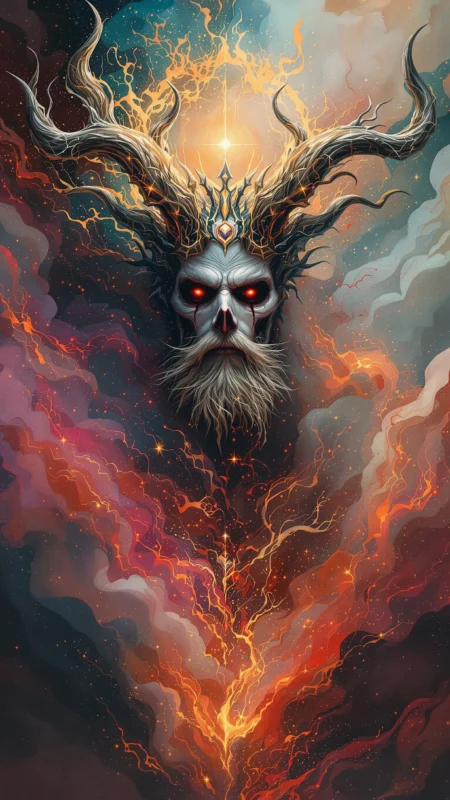
In personal mythology, Hades represents the sovereign ruler of the inner world. This is the part of you that is utterly unimpressed by external accolades, social status, or the dazzling performance of ego. Its currency is authenticity, its territory is the vast landscape of your subconscious, and its wealth is the wisdom gleaned from shadow and silence. To have a strong Hades element in your mythos is to possess a quiet, unshakeable sense of self that is rooted in the unseen. You may not be the life of the party, but you are the silent, steady chamber in which the soul's deepest truths are stored and protected.
This archetype also governs the principle of necessary endings. In a culture that fears finality, Hades offers the perspective that death, in all its forms, is not a failure but a transition that creates space for renewal. He is the quiet force that draws the curtain, the silent ferryman who helps you cross from one state of being to another. He is present in the end of a relationship, the shedding of an old identity, the quiet acceptance of loss. His presence in your personal story could suggest a life path that involves helping others navigate these thresholds, or one that requires you to become profoundly comfortable with your own cycles of psychic death and rebirth.
Finally, Hades symbolizes the immense value of what is hidden. He is the keeper of gems formed under pressure in darkness, the guardian of potent seeds that lie dormant through winter. This could mean your greatest talents are not for public display, or that your most profound healing happens in solitude. It suggests a life where the real work happens below the surface, in the slow, patient cultivation of inner riches. Your story may not be one of linear ascent into the light, but a cyclical descent into darkness to retrieve treasures that the sunlit world cannot even conceive of.