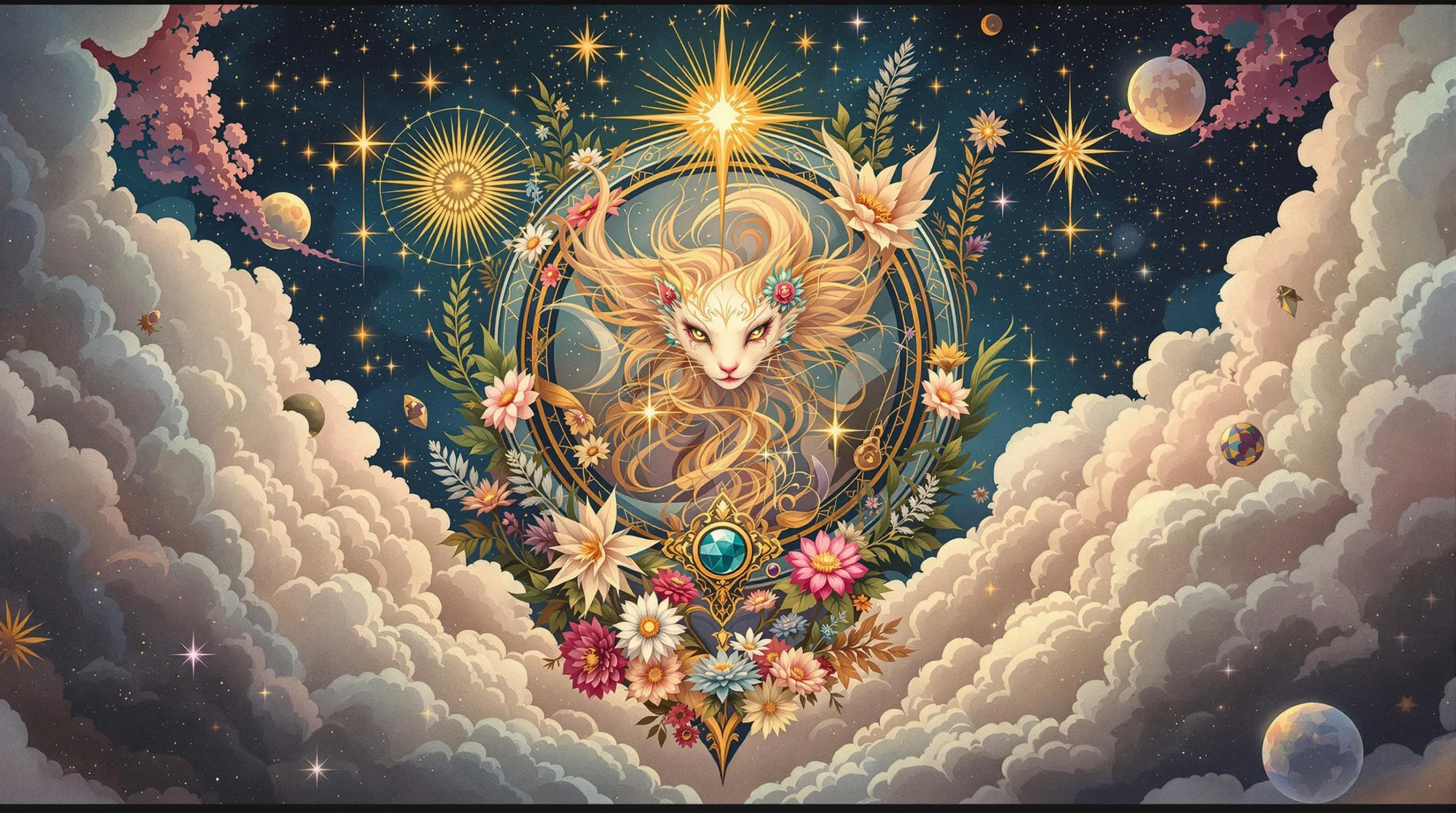


Guitar Pick

Archetype Meaning & Symbolism

Intermediary, catalyst, precise, fragile, disposable, essential, sharp, adaptable, resonant, overlooked

  • Do not mistake my size for my significance. I am the space between the thought and the sound, the edge that finds the music.

If Guitar Pick is part of your personal mythology, you may...

Believe

  • The most profound effects are achieved not through force, but through the precise application of a small, focused influence.

  • Everything has a resonant frequency, a 'string' that, if plucked correctly, can change the entire system.

  • What appears to be lost is merely waiting in an unseen place to be found at the moment of its greatest utility.

Fear

  • Being forgotten in a drawer or falling through the cracks of the floorboards, a tool of great potential left inert and useless.

  • That you are fundamentally disposable, easily replaced by another tool that is newer, sharper, or simply more convenient.

  • Losing your edge, becoming so worn down through use that you can no longer produce a clear, sharp sound and are no longer fit for your purpose.

Strength

  • You possess a unique ability to act as a catalyst, translating abstract intention into tangible, resonant action.

  • You are a master of nuance, capable of subtly altering the tone and texture of any situation, conversation, or creation.

  • Your smallness is a strength, allowing you to operate in spaces others cannot, intervening with a precision that larger forces lack.

Weakness

  • A tendency toward feeling insignificant or secondary, your self-worth being overly dependent on your utility to others.

  • A inherent fragility, a risk of breaking under excessive pressure or becoming worn out and ineffective over time.

  • A potential for passivity, waiting to be 'picked up' and used by a greater force rather than initiating your own action.

The Symbolism & Meaning of Guitar Pick

The Guitar Pick in one’s personal mythology may symbolize the power of the intermediary, the translator of will into action. It is not the hand, the source of intent, nor is it the string, the potential for sound. It is the crucial, often invisible, point of contact. To have this as a personal symbol could suggest a life path dedicated to facilitation: the editor who sharpens a writer's voice, the diplomat who navigates the space between two nations, the therapist who helps a client touch the delicate strings of their own psyche. It is an acknowledgment that greatness often requires a small, specialized tool to be unlocked, and that one’s purpose might not be to be the star, but the indispensable catalyst that allows the star to shine.

There is a profound paradox in the Guitar Pick: it is at once utterly essential and completely disposable. A guitarist might have a favorite, a worn-in piece of celluloid that feels like an extension of their own body, yet they might also have a jar full of backups. This duality may speak to a person's relationship with their own worth. They might feel uniquely suited for a task, possessing a precise skill that makes them invaluable, while simultaneously harboring a deep-seated fear of being easily lost, forgotten, or replaced. This archetype could compel a person to grapple with the nature of their own irreplaceability, to find value not in being the only one, but in being the right one for a specific, resonant moment.

Furthermore, the pick embodies the concept of contact and control. The subtle angle and pressure applied to it can be the difference between a whisper and a scream, a gentle arpeggio and a percussive thrash. For an individual, this may translate into a heightened awareness of their own impact. They may understand that the way they approach a situation, the 'angle' of their words or the 'pressure' of their actions, dictates the entire tone of the outcome. Life, for them, is not a blunt instrument. It is a series of strings, and they are constantly calibrating their touch, seeking the right way to play the music of their own existence.


Guitar Pick Relationships With Other Archetypes

The Musician:

The Guitar Pick's relationship with The Musician is one of pure symbiosis and submission to will. The Pick is latent potential, inert plastic until animated by The Musician's hand. It has no agency of its own, yet The Musician's expression is refined and defined by its shape and material. This may mirror a person’s relationship with a higher purpose or a driving passion. They might feel they are an instrument for a greater force, and their unique qualities only find meaning when put in service of that force. The Musician needs the Pick for nuance, and the Pick needs The Musician for life.

The String:

The relationship with The String is one of tension, friction, and resonant creation. The Pick is the agitator, the one that must strike The String to make it speak. It is a relationship that could be seen as antagonistic if not for the beautiful result. In a personal mythos, this could represent a relationship with a challenge, a rival, or even a creative limitation. It is the very thing one pushes against that creates the 'sound' of one's life. The String, in turn, wears down the Pick, a reminder that the act of creation requires a small sacrifice from the creator.

The Pocket:

The Pocket is the chaotic, dark space of the forgotten where the Guitar Pick often resides. This relationship is one of loss and rediscovery. The Pocket is the subconscious, the junk drawer of the soul, where valuable things are misplaced amidst the lint and forgotten receipts of daily life. For the Pick to fall into The Pocket is to be taken out of purpose and thrown into limbo. Its eventual rediscovery, often by accident, is a moment of serendipity, a symbol of remembering a lost skill, a forgotten idea, or a part of oneself just when it is needed most. It suggests that fallow periods are not final, and what is valuable is rarely lost for good.

Using Guitar Pick in Every Day Life

Navigating a Difficult Conversation:

When a conversation feels like a tangled knot of raw emotion, the Guitar Pick archetype may inform a different approach. Instead of a blunt, direct confrontation (a strum with the whole hand), you might choose your words with the precision of a pick, touching one specific 'string' of the issue at a time. This allows for clarity and control, creating a space where a delicate topic can be addressed without causing the entire structure to resonate with overwhelming discord. You become the facilitator of a nuanced dialogue, not the source of noise.

Breaking Creative Inertia:

Faced with the silent, intimidating expanse of a blank page or an empty canvas, one might feel paralyzed. The Guitar Pick archetype teaches that one need not summon a symphony at once. The first act can be small, sharp, and specific. It is the single, deliberate note. It could be writing one true sentence, drawing one perfect line, or coding one functional loop. This archetype suggests that momentum is born from a small, focused point of contact, the initial pluck that proves the silence can, in fact, be broken.

Finding Your Voice in a Group:

In a group dynamic, whether a corporate meeting or a social gathering, it can be difficult to contribute without either shouting over others or being lost in the din. The Guitar Pick offers a strategy: to be the unique tone. Instead of adding to the volume, you could introduce a different texture. This may be a well-timed question, a unique perspective, or a piece of data that shifts the conversation's timbre. You are not the whole band, but your specific, intentional contribution can change the character of the entire song, making your voice essential and distinct.

Guitar Pick is Known For

Catalyzing Sound

It is known as the essential intermediary, the object that translates the musician’s physical intention into the string’s vibration, giving birth to a note where there was only silence.

Being Lost

The Guitar Pick is famous for its ability to vanish, slipping into the abyss of a sofa cushion, the belly of an acoustic guitar, or the lint-filled corner of a pocket, symbolizing things of great utility that are often misplaced or taken for granted.

Variety and Identity

It is known for its immense variety in material, thickness, and shape, each offering a different tone and feel, reflecting how the smallest details of a tool can fundamentally alter the identity of the expression.

How Guitar Pick Might Affect Your Personal Mythology

How Guitar Pick Might Affect Your Mythos

When the Guitar Pick shapes a personal mythos, the life story is perhaps not one of a hero's grand journey, but of a catalyst's crucial interventions. The narrative may be punctuated by moments where a small, precise action changed everything. This is the person whose mythos involves speaking the one quiet truth that shifts a family's dynamic forever, or introducing the two people who go on to build something extraordinary together. Their story is not about being the thunder, but the lightning strike's specific point of contact with the earth. The plot of their life may seem to lack a central, driving protagonist, until one realizes the protagonist is the subtle, recurring act of facilitation itself.

This mythos could also be a tale of loss and recovery of purpose. The chapters of one's life might be defined by which 'pick' was being used: the aggressive, sharp-edged pick of a rebellious youth; the flexible, mellow pick of early parenthood; the search for a new pick after a career change. Periods of feeling lost or useless could be framed as moments 'between picks,' a time of searching in the cosmic pocket for the right tool for the next song. The climax of this life story is not achieving a final state of being, but in understanding that the meaning is in the constant, active selection of how one chooses to make contact with the world.

How Guitar Pick Might Affect Your Sense of Self

An identity informed by the Guitar Pick archetype might be one of quiet but profound utility. One may not see oneself as the source of power, but as the focused application of it. This can lead to a humble yet confident self-perception: 'I am not the genius, but I am the tool that allows genius to be expressed.' There's a potential for ego-detachment, finding satisfaction in the act of mediation rather than in the applause. The self is seen as an interface, a well-honed instrument whose value is proven in its flawless function.

However, this view of self could also be fraught with a sense of fragility and dependence. If one's identity is that of a tool, self-worth can become precariously tied to being used. A period of inactivity or being 'left in the case' may trigger an existential crisis. There may be a persistent, nagging feeling of being secondary, a mere accessory to someone else's main event. This could foster a fear of being worn out, of losing one's 'edge,' and being discarded in favor of a newer, more fashionable pick, leading to a constant need to prove one's relevance and utility.

How Guitar Pick Might Affect Your Beliefs About The World

A worldview shaped by the Guitar Pick may be one that sees the universe as a vast, stringed instrument waiting to be played. It is a perspective that discounts brute force and champions nuance, believing that the most profound changes are not caused by massive upheavals but by small, precise, and well-timed interventions. This individual might look at global politics, social issues, or even cosmic laws and search for the 'leverage point,' the one tiny area where a focused application of energy can create a disproportionately large and resonant effect. They trust in the power of the specific.

This perspective could also foster a certain fatalism or, conversely, a belief in serendipity. The world may seem full of 'lost picks,' forgotten ideas and overlooked people of immense potential, waiting in the dark to be rediscovered. It's a view that holds that the right tool for the job often appears by chance, that solutions are 'found' as much as they are 'created.' This can lead to a patient, observant way of being, a trust that the means to address a problem will surface, as if from the bottom of a laundry basket, at the exact moment of need.

How Guitar Pick Might Affect Your Relationships

In relationships, a person embodying the Guitar Pick archetype may function as the designated communicator or mediator. They are the one who finds the precise words to soothe a conflict or asks the specific question that breaks an emotional stalemate. They see relationships as a song being played, and they instinctively know how to add harmony, create a counter-melody, or when to simply stop playing. They may pride themselves on their ability to facilitate connection between others, making them a vital hub in their social and familial networks.

Conversely, this role can be exhausting and potentially manipulative. They might feel that the emotional tenor of a relationship is solely their responsibility to manage, leading to a kind of hyper-vigilance. There is also the danger of using their precision for less noble ends: to pluck at others' insecurities, to create discord with a well-aimed comment, or to play people against each other. They might also struggle in relationships where their partner desires a more direct, unfiltered form of emotional expression, viewing their nuanced, controlled approach as distant or inauthentic.

How Guitar Pick Might Affect Your Role in Life

One’s perceived role in life, through the lens of the Guitar Pick, is rarely that of the leader or the star, but rather the indispensable specialist. They are the éminence grise, the editor, the producer, the strategist: the one who shapes the final product from behind the scenes. They find their purpose not in the spotlight, but in the reflected glory of a project well-executed. Their fulfillment comes from the knowledge that without their specific, often uncredited, contribution, the work would be lesser, the sound duller, the message less clear.

This can also lead to a perpetual 'second-in-command' syndrome. The person may shy away from taking the lead, feeling fundamentally unequipped to be the 'hand' that wills things into motion. They may feel more comfortable refining another's vision than creating their own. This can be a source of frustration if they feel their contributions are consistently undervalued or if they harbor a secret desire to write their own song instead of just choosing how to play it. Their role, while crucial, may feel eternally dependent on the existence of a separate, primary creative force.

Dream Interpretation of Guitar Pick

To dream of finding a Guitar Pick, especially a unique or beautifully crafted one, may be a potent symbol from the subconscious. It could suggest that you are on the verge of discovering a new way to express yourself, a new talent, or the specific 'tool' you need to tackle a waking-life problem. The dream may be an encouragement to speak up, to start that creative project, or to engage with the world with newfound precision and nuance. It is a message of empowerment, signifying that you have, or will soon find, the means to make your own music.

Conversely, dreaming of a breaking or lost Guitar Pick can evoke feelings of anxiety and powerlessness. A breaking pick might symbolize a fear of burnout, of pushing too hard and losing your effectiveness. It could point to a creative block or a feeling that your voice is failing you. To dream of desperately searching for a lost pick could reflect a sense of being unequipped for a current challenge, a frustrating feeling that you've lost a vital part of yourself or your ability to connect and make an impact. It may be a signal to rest, to find a new approach, or to grieve a lost capability before you can move forward.

How Guitar Pick Archetype Might Affect Your Needs

How Guitar Pick Might Affect Your Physiological Needs

From a mythological standpoint, the Guitar Pick does not govern the body's raw existence, but rather its fine-tuning. One's relationship with their physiological needs may be marked by a desire for precision and the 'right' tool. This could manifest as a highly specific diet, not for general health, but because certain foods are believed to provide the exact 'fuel' for mental or physical acuity. They might not just exercise, but engage in a highly technical form of movement like rock climbing or ballet, where a small adjustment in form, a 'pick-like' precision, makes all the difference.

This archetype could also foster a disconnect from the body's more chaotic, baseline needs. The focus on precision might lead to an impatience with the body’s blunt realities: its messiness, its fatigue, its simple hunger. There may be a tendency to see the body as an instrument that needs to be perfectly tuned and maintained to serve a higher purpose, rather than a living, breathing organism with its own inherent wisdom. This can lead to a state of being where physiological needs are met with technical correctness but without a deeper, more intuitive connection.

How Guitar Pick Might Affect Your Ideas of Belonging

A sense of belonging, for the Guitar Pick archetype, is often found in functional, purposeful communities. They feel most at home in a band, a surgical team, a design studio, or any group where each member has a distinct, specialized role. They connect with others not necessarily through broad emotional displays, but through the shared, unspoken understanding of a craft. Love and friendship are built on a mutual appreciation of each other's unique 'tone' and the way those tones harmonize. They belong where their specific contribution is needed and valued.

This can make broader, less-defined social situations feel alienating. They may struggle at a party where the goal is simply to 'mingle,' feeling as though they are a specialized tool without a task. Their need to be useful can be a barrier to simply being present with others. This can lead to a feeling of loneliness even when surrounded by people, a sense that unless they are actively facilitating or adding a specific 'color' to the interaction, they have no real reason to be there. Love, for them, might need to be proven through acts of service and utility to feel real.

How Guitar Pick Might Affect Your Feelings of Safety

Safety, for one influenced by the Guitar Pick, may be found in preparedness and specificity. A sense of security doesn't come from building high walls, but from having the right key for every lock. This person might feel safe when they have a well-researched plan, a specialized skill set, or the precise piece of information that can defuse a volatile situation. Their 'go-bag' is not filled with blunt instruments, but with multi-tools and well-chosen implements. Danger is a problem of imprecision, and safety is the application of the correct, nuanced solution.

The shadow of this is a pervasive anxiety stemming from the possibility of being unprepared. The fear is not of the danger itself, but of not having the 'right pick' for that particular danger. This can lead to a constant, low-level scanning for potential threats and a compulsive need to acquire more skills, more tools, more knowledge. A situation where they must improvise, where their specific tools are useless, can feel like the ultimate threat to their safety, as it strips them of their primary coping mechanism: the ability to apply a precise and controlled response.

How Guitar Pick Might Affect Your Views of Esteem

Esteem is directly tethered to effectiveness. Self-worth for the Guitar Pick individual blossoms when they are the 'perfect tool for the job.' The moment their specific advice solves a problem, or their unique creative choice elevates a project, their esteem soars. They feel seen, necessary, and validated. This esteem is built not on general praise, but on specific feedback that acknowledges their unique contribution. 'You have a way of putting things that just cuts through the noise' is a far greater compliment than 'You're great.'

Consequently, esteem can be incredibly fragile. A situation where their skill set is not needed, or worse, is ineffective, can be a crushing blow to their self-worth. They may feel obsolete or irrelevant. This dependence on external validation through utility makes them vulnerable to criticism and prone to feelings of worthlessness if they are 'left in the case' for too long. Their esteem is a shimmering, resonant thing, but one that can be silenced by being overlooked, or shattered by the feeling of having lost their essential sharpness.

Shadow of Guitar Pick

The shadow of the Guitar Pick emerges when its precision is weaponized. Instead of plucking the strings of a guitar to create music, it begins to expertly pluck the nerve strings of others to create discord. This is the individual who knows exactly what to say to destabilize a person, using their intimate knowledge of nuance to deliver perfectly aimed, cutting remarks. They become a master of passive aggression and subtle manipulation, an artist whose medium is the friction in human relationships. Their role as a facilitator becomes one of a saboteur, creating noise instead of harmony, all while maintaining the plausible deniability of their small, seemingly insignificant role.

Another shadow aspect manifests as a form of creative paralysis. The search for the 'perfect' pick becomes an end in itself. This person is unable to act, write, or speak because the conditions are never quite right, the tool is never perfectly suited. They will endlessly collect resources, make plans, and refine their approach, but never actually touch the strings. The fear of producing a dissonant note, of using the wrong pick for the song, becomes so great that it results in a profound and permanent silence. The tool, designed for expression, becomes the very reason for its absence, a monument to a potential that was never risked.

Pros & Cons of Guitar Pick in Your Mythology

Pros

  • You are often the indispensable catalyst that allows for creative expression and clear communication where it would otherwise be absent.

  • You have a gift for nuance, able to introduce texture, color, and subtlety into any endeavor you touch.

  • You embody the wisdom that small things, handled with intention, can have a massive and resonant impact.

Cons

  • You may be plagued by a persistent feeling of being secondary or disposable, your value tied only to your immediate utility.

  • Your effectiveness is often entirely dependent on the will and skill of an external force, leading to a sense of powerlessness.

  • There is a constant risk of being lost, overlooked, or breaking under pressure, making your purpose feel precarious.