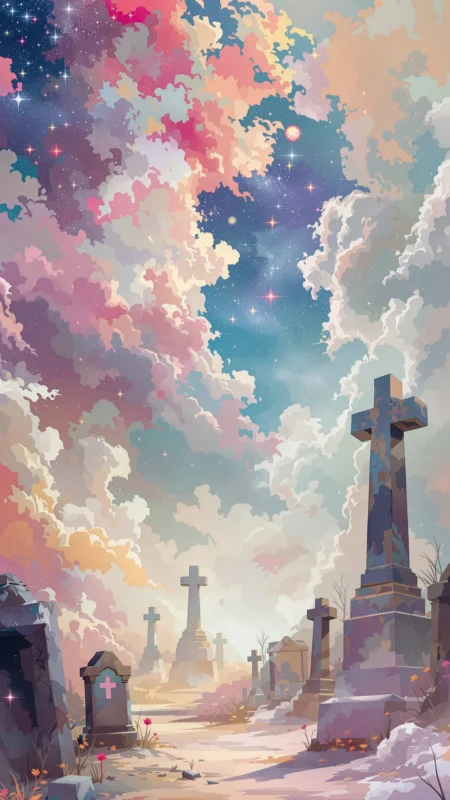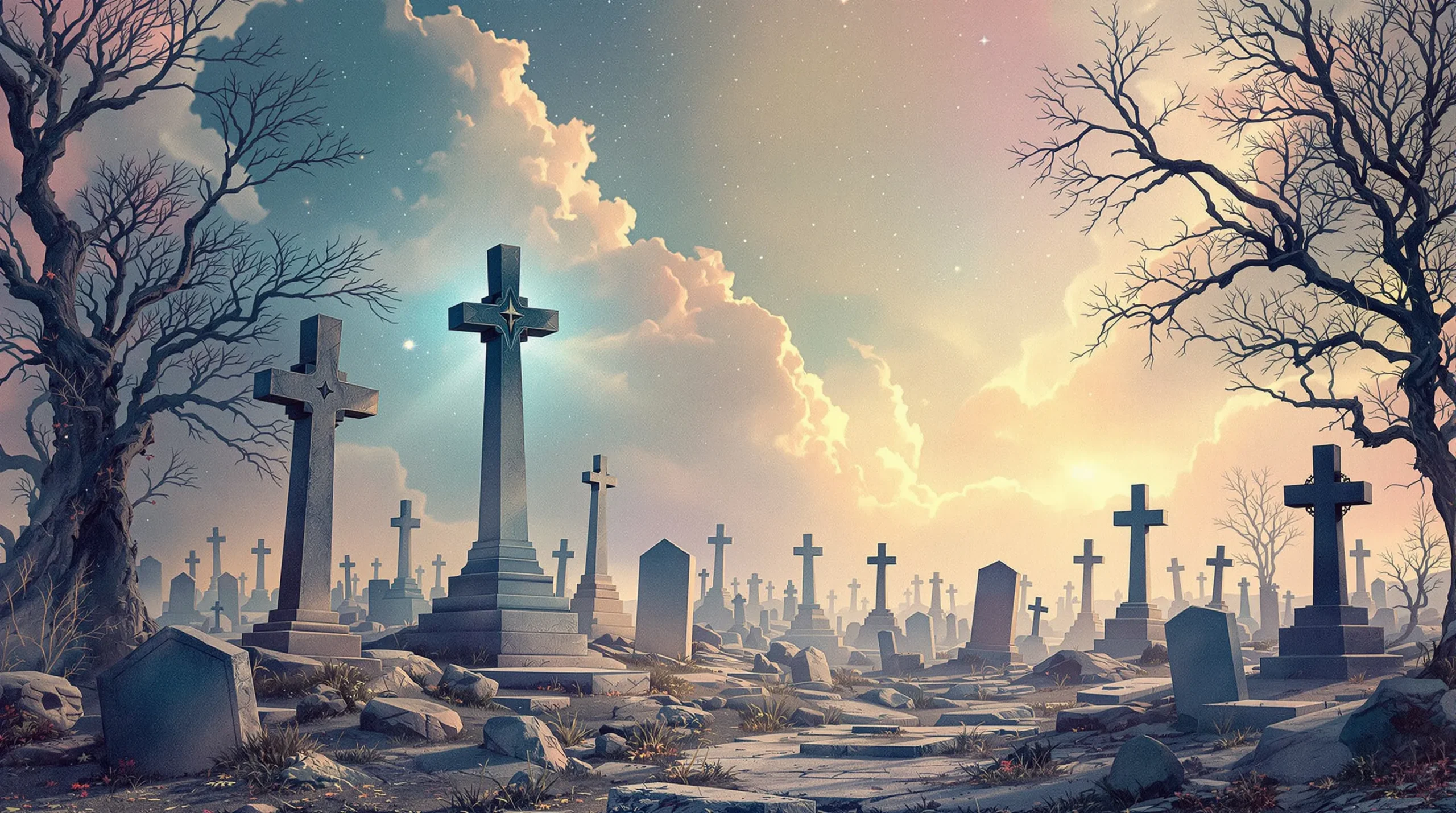


Graveyard

Archetype Meaning & Symbolism

Somber, Peaceful, Final, Historical, Sacred, Overgrown, Memorial, Still, Ancestral, Liminal

  • Rest here. The stories are safe with me. The future grows from this quiet ground.

If Graveyard is part of your personal mythology, you may...

Believe

  • The past is not a foreign country; it is the soil beneath your feet, and its nutrients are essential for growth.

    Every ending, no matter how painful, contains the seed of a necessary new beginning.

    A full life is measured not by its acquisitions, but by the grace with which it lets things go.

Fear

  • That you will be the last in a line, the final stone with no one to remember your name.

    Becoming so enamored with the past that you become a ghost in your own present life, unable to connect with the living.

    That the stories and memories you cherish will be forgotten or, worse, deliberately erased by the future.

Strength

  • A profound sense of perspective that allows you to remain calm and centered during crises that overwhelm others.

    The ability to create a safe, non-judgmental space for people to process grief and endings.

    A deep connection to your roots, providing a stable foundation of identity that is not easily shaken by external forces.

Weakness

  • A tendency towards melancholy and a romanticization of sorrow that can lead to inertia or depression.

    A resistance to change, even when it is positive and necessary, because it represents the end of a familiar chapter.

    An inclination to isolate yourself from the perceived messiness and noise of contemporary life, preferring the quiet company of ghosts.

The Symbolism & Meaning of Graveyard

The Graveyard in your personal mythology is rarely about a literal fear of death. Instead, it symbolizes a profound and necessary relationship with endings. It is the landscape of your past, not as a ghost that haunts you, but as a foundation that supports you. Here, every conclusion, every loss, every version of yourself you have outgrown is given a place of honor. It is a space of sacred composting: where the decay of what was becomes the rich, dark soil for what will be. To have the Graveyard as a core part of your inner world suggests a capacity for looking at finality without flinching, finding a strange beauty in the moss that grows over a name, in the slow, inevitable return of all things to the earth.

Furthermore, this archetype represents the importance of legacy and remembrance. Your personal Graveyard is populated by the figures, experiences, and beliefs that made you. It is a place for communion with your own history and, perhaps, the larger history of your ancestors. Walking its quiet paths could be a meditative act of acknowledging the chain of lives and events that delivered you to this present moment. It fosters a perspective that life is not an isolated event, but a single, significant contribution to a vast, ongoing story. The names on the stones are not just names: they are verses in a poem of which you are the latest line.

Ultimately, the Graveyard is a symbol of peace found through acceptance. It does not argue with reality. It does not rage against the passage of time. It simply holds it. Incorporating this landscape into your mythos is an invitation to cultivate a similar peace. It is the understanding that letting go is not an act of forgetting, but an act of reverence. It is the wisdom that in order to fully live, you must be on good terms with the part of yourself that knows how to die: to die to a moment, to an identity, to a desire, so that you may be reborn into the next.


Graveyard Relationships With Other Archetypes

The Gardener

The Gardener sees the Graveyard not as a dead end, but as a fallow field rich with potential. For the Gardener, this is not a place of grief but of quiet cultivation. They tend to the memories, pulling the weeds of regret and planting flowers of remembrance. The relationship is symbiotic: the Graveyard provides the sacred ground and the history, while the Gardener ensures it remains a place of beauty and peace, a living memorial rather than a derelict ruin. This pairing in a personal mythos may suggest someone who actively works to transform their past sorrows into wisdom and beauty.

The Librarian

The Librarian finds a kindred spirit in the Graveyard, viewing it as the ultimate archive. Each epitaph is a title, each family plot a genre, each life a story bound in earth. The Librarian doesn't mourn the endings but rather respects the collection. They walk the rows, cataloging the narratives, understanding the connections between them, and ensuring the stories are not lost to the silence. For a person with this archetypal pairing, their life may be dedicated to preserving history, whether it’s their own family’s, their community’s, or a forgotten chapter of a wider culture. They are the keepers of the quiet records.

The Child

The Child archetype might at first seem out of place, yet its relationship with the Graveyard is profound. The Child does not see the morbidity; it sees a quiet park, a place of stones to hide behind, of interesting textures and strange, silent inhabitants. The Child’s innocence asks the Graveyard questions it cannot answer, and its laughter among the tombs is not disrespectful but a powerful affirmation of life's persistence. This connection may symbolize a person's ability to carry their past and their mortality without being crushed by it, to maintain a sense of wonder and presence even in the face of life’s heaviest truths.

Using Graveyard in Every Day Life

Processing Grief

When a chapter of life closes—a relationship ends, a career path dissolves—you might mentally walk through the gates of your inner Graveyard. This is not an act of morbidity, but of honor. You can visualize creating a specific memorial for what was lost: not to dwell in sorrow, but to give it a place, a dignified stone that acknowledges its reality and its passing. This allows the grief to have a home, so it does not have to wander, ghost-like, through the other landscapes of your mind.

Connecting with Ancestry

The Graveyard archetype can be a portal to your lineage. In moments of uncertainty, you might retreat to this inner place to sit amongst the stones of those who came before. You may not know all their names, but you can feel their presence as a collective foundation. This is about drawing strength not from specific advice, but from the quiet, enduring fact of their survival, their loves, and their lives which led, improbably, to yours. It is a way to borrow resilience from the deep past.

Releasing Old Selves

To evolve, you must let parts of yourself die. The Graveyard is the perfect landscape for this sacred severance. You can hold a funeral for the person you no longer wish to be: the one defined by an old wound, a limiting belief, or a past mistake. By consciously burying that former self within this archetypal space, you are not erasing your history. Instead, you are acknowledging its part in your story and then choosing to leave it in the earth, allowing you to walk out of the gates lighter, unburdened, and ready for the next becoming.

Graveyard is Known For

A Repository of Stories

Each headstone is a book spine, each plot a condensed narrative. The Graveyard is known not for death itself, but for its preservation of memory, a silent library holding the final chapters of countless lives.

A Place of Stillness:

In a world of constant motion and noise, the Graveyard offers a rare sanctuary of profound quiet. It is a landscape that demands contemplation, slowing the breath and calming the frantic mind.

A Threshold:

It is a liminal space, a physical boundary between the known world of the living and the great mystery of what comes after. It represents the ultimate transition, the gate through which everyone must eventually pass.

How Graveyard Might Affect Your Personal Mythology

How Graveyard Might Affect Your Mythos

When the Graveyard becomes a prominent landscape in your personal mythos, your life story may cease to be a linear quest for victory and instead become a cyclical pilgrimage of remembrance and release. Your narrative is deeply informed by its endings. Past failures and lost loves are not tragic detours but consecrated ground, memorial sites that you revisit for wisdom, not for sorrow. Your mythos is less a hero's journey and more an ancestor's tale, where your significance comes not just from what you build, but from what you honor and what you have the grace to let go of. The key moments in your story might be funerals as much as they are births or weddings: the solemn, beautiful moments of saying goodbye.

Your personal mythology may also be defined by a sense of depth and heritage. You see yourself not as a self-made individual sprung from nowhere, but as the current caretaker of a very long story. Your struggles and triumphs are contextualized by the spectral presence of those who came before you, their stories etched into the stones of your inner landscape. This creates a mythos that is patient, enduring, and less susceptible to the fleeting dramas of the moment. You are a living monument, and your life’s purpose might be seen as the act of carving your own, worthy epitaph through the way you live each day.

How Graveyard Might Affect Your Sense of Self

Your sense of self may be uniquely comfortable with stillness and silence. In a culture that prizes forward momentum, you may find your truest self in moments of quiet contemplation, feeling a kinship with things that are old, weathered, and steeped in history. You might see your own identity as a layered thing, like soil, composed of all the versions of yourself that have come and gone. This perspective can foster a profound self-acceptance: you don't cringe at past mistakes but see them as the buried dead who have, in their own way, made the present you possible. You carry your history not as a burden, but as the very ground you stand on.

This archetype could also shape a self that is perceived by others as an old soul. You may possess a gravity and a calmness that is reassuring, especially in times of crisis. Your identity is not tethered to the ephemeral validations of the outside world, but to a deeper, more permanent sense of place and time. You might feel a sense of purpose in being a keeper of memories for your friends and family, the one who remembers the stories, who honors the anniversaries of loss as well as celebration. Your self-worth may be quietly tied to this role as a guardian of what was, a living link in a long and sacred chain.

How Graveyard Might Affect Your Beliefs About The World

Your worldview, colored by the Graveyard, may be one that finds beauty in impermanence. You see the world not as a solid, permanent stage, but as a place of constant, graceful decay and renewal. A crumbling brick wall, a faded photograph, a forgotten melody—these things might hold more meaning for you than what is new and shiny. This is not a pessimistic outlook but a deeply realistic and poetic one. It allows for an appreciation of the present moment in its full, fleeting preciousness, because you are always quietly aware that it, too, will pass and become a memory, a name on a stone.

You may also view society and culture through the lens of legacy. You might find yourself more interested in the history of a place than its current attractions, more drawn to traditions than to trends. This perspective questions the modern obsession with perpetual growth and innovation for its own sake. Instead, it posits that a healthy future can only be built upon a respectful and well-tended relationship with the past. The world, for you, is a vast graveyard of fallen empires, forgotten languages, and extinct species, a truth that inspires not despair, but a profound sense of humility and reverence.

How Graveyard Might Affect Your Relationships

In relationships, you may be the anchor. You are drawn to depth and history, valuing the quiet accumulation of shared experiences over the bright, loud flare of initial passion. You are likely a keeper of the relationship's story, remembering the small moments that others forget. People may turn to you in their grief because you are not afraid to sit with them in the quiet darkness. You offer the sanctuary of the Graveyard: a safe place to lay their sorrow down for a while. You understand that some wounds don't need to be fixed, they need to be honored.

However, this archetypal influence can also present challenges. You may have a tendency to memorialize relationships that are over, tending to the memory of a past love with a devotion that prevents you from moving forward. You might struggle with endings, not by denying them, but by sanctifying them to such a degree that you build a mausoleum where a simple grave would suffice. The risk is in becoming the caretaker of dead connections, polishing their headstones while the world of the living passes you by. Learning to distinguish between honoring the past and being imprisoned by it becomes a central task.

How Graveyard Might Affect Your Role in Life

Your perceived role in the world may be that of a guardian or a witness. You might not feel called to be the hero who forges the new path, but rather the one who ensures the old paths are not forgotten. This could manifest in careers like being a historian, an archivist, a therapist specializing in grief, a genealogist, or simply the unofficial storyteller of your family. Your purpose is rooted in preservation, in holding the space for what has been, believing it to be essential for the health of what is and what will be. You provide the roots while others grow the branches.

You may also see your role as one that brings perspective. In groups, projects, or communities, you are the voice that asks: what have we learned from last time? Who came before us here? You temper the frantic energy of the new with the quiet wisdom of the old. Your role is to be the repository of institutional memory, the one who reminds others that they are part of a continuum. You offer a sense of gravity and continuity, ensuring that the lessons paid for by the past are not carelessly squandered by the present.

Dream Interpretation of Graveyard

In a dream, a Graveyard appearing in a positive context is often a powerful symbol of peace and resolution. A sunlit, well-tended, or beautiful graveyard could signify that you have successfully processed a past grief, made peace with an ending, or integrated a difficult part of your history. Walking calmly through such a place in a dream may suggest a healthy connection to your ancestors or your own past, drawing wisdom from it without being haunted. It can represent the successful laying to rest of an old identity, habit, or relationship, clearing the ground for new growth. It is the peace that comes from acceptance.

Conversely, a dream of a frightening, derelict, or threatening Graveyard may point to unresolved issues. You might be haunted by the past, trapped in a cycle of grief, or burdened by guilt you have not yet buried. Being chased through a graveyard or feeling trapped within its gates could symbolize a fear of mortality, a resistance to a necessary ending, or the feeling that past mistakes are closing in on you. Crumbling tombstones might represent a fear of being forgotten or a disconnect from your own heritage. This dream is a call to consciously visit that inner landscape and tend to what has been neglected.

How Graveyard Archetype Might Affect Your Needs

How Graveyard Might Affect Your Physiological Needs

The Graveyard archetype may ground your physiological needs in a deep respect for natural cycles. The need for sleep is not just a biological reset; it is a small, daily surrender, a 'little death' that is necessary for life. You may honor your body's need for rest with a solemnity that others might not understand, seeing it as a sacred duty. Food and drink might be viewed through a lens of origin and decay, appreciating that all nourishment comes from the earth and returns to it, a cycle of consumption and decomposition that you are a part of. Your body is a temporary plot of land, to be tended with quiet dignity.

This connection to finality could also foster a heightened awareness of your body's limits. Rather than pushing against them in a quest for perpetual youth or peak performance, you may accept them with a certain grace. Illness or aging are not seen as failures but as natural, albeit difficult, parts of the story. This doesn't imply passivity, but rather a lack of panic. There's an understanding that the body is a vessel with a finite lifespan, and this knowledge encourages you to inhabit it more fully and gratefully in the present, respecting its seasons of vitality and its inevitable winter.

How Graveyard Might Affect Your Ideas of Belonging

Your sense of belonging may be tied more to the dead than to the living. You might feel a profound kinship with your ancestors, with historical figures, or with the collective story of a place. This creates a deep, unshakable sense of rootedness that transcends social circles and contemporary trends. You belong to a long, quiet story. This can be a source of immense strength and solitude, a feeling of being accompanied even when you are alone. You find your community in the silent congregation of the past.

This deep connection to heritage, however, can sometimes create a feeling of alienation from the present. The fast-paced, ephemeral nature of modern social interactions may feel hollow or exhausting. You might struggle to find your place in groups that are focused solely on the future, with no reverence for what came before. Your need for belonging is a need to be part of a continuum, and you may feel most at home with people who, like you, understand that we are all living on top of layers and layers of stories. True intimacy, for you, is sharing a sense of history.

How Graveyard Might Affect Your Feelings of Safety

For you, safety is not found in high walls or alarm systems, but in permanence and rootedness. A sense of security may come from knowing your history, from feeling connected to a lineage that has weathered countless storms. The Graveyard provides a strange kind of safety: a place so profoundly acquainted with the worst that can happen that it becomes a sanctuary from the fear of it. Safety is the knowledge that even after the end, a story remains, a name carved in stone. Your greatest fear might not be physical harm, but erasure: the terror of being forgotten, of leaving no trace.

This need for lasting significance can shape your life choices. You might prioritize building a legacy, creating something that will endure, or investing in deep, long-term relationships that create a shared history. Financial or social precarity might be less frightening to you than the threat of a meaningless existence. Security is found in the stone of memory, not the fleeting comfort of the moment. You build your house of safety on the bedrock of the past, believing that what has been remembered can never be truly lost.

How Graveyard Might Affect Your Views of Esteem

Your self-esteem may be derived from a sense of depth and endurance. You don't need to be the loudest voice in the room because you trust in the quiet gravity you possess. Your worth is not measured by fleeting achievements but by your capacity to bear witness, to remember, and to hold steady through life's seasons. You may take quiet pride in being the person others turn to for perspective or for solace in times of grief, seeing this as a sacred role. Your esteem is that of the ancient stone: weathered, sure of its place, and covered in the honorable moss of experience.

Esteem is also found in the act of honoring. You honor yourself by honoring your past, your ancestors, and the lessons learned from endings. This creates a stable, internal source of self-worth that is not dependent on external validation. You respect yourself because you are a living library of stories, a vessel of memory. This can, however, make you resistant to criticism that asks you to change a fundamental part of your past-informed identity, as an attack on your history can feel like an attack on your very soul.

Shadow of Graveyard

When the Graveyard archetype falls into shadow, it becomes a stagnant swamp of memory, a place where life is choked out by an obsessive devotion to what is gone. This is not honoring the past; it is being imprisoned by it. In this shadow form, you may become a curator of your own museum of sorrows, endlessly polishing old grievances and romanticizing past tragedies until they become the whole of your identity. You might refuse to let anyone, including yourself, move on from a loss. The shadow Graveyard does not allow for composting, only for preservation in formaldehyde. It insists that nothing new can ever be as meaningful as what has been lost.

The other manifestation of the shadow is a morbid detachment from life. It is the cynical belief that since everything ends, nothing matters. This can lead to a cold, hollow existence, a preemptive mourning for everything and everyone, which prevents genuine connection or joy. This is the Graveyard as a void, not a sanctuary. It fosters a superiority complex: a disdain for the 'frivolous' passions of the living. It is the gatekeeper who has forgotten the purpose of the gate and now simply stands guard over a field of dust, mistaking numbness for peace and nihilism for wisdom.

Pros & Cons of Graveyard in Your Mythology

Pros

  • You possess a rare and comforting wisdom about the cycles of life and death, making you a source of stability for others.

    Your deep appreciation for history and legacy enriches your life with a profound sense of meaning and connection.

    You are less likely to be thrown off course by life's inevitable setbacks, viewing them with a long-term perspective.

Cons

  • You may struggle with spontaneity and embracing the chaotic, joyful, unpredictable nature of the present moment.

    Others might perceive you as morbid, overly serious, or stuck in the past, making it difficult to form lighthearted connections.

    There is a constant risk of tipping into melancholy or becoming so identified with loss that you have difficulty recognizing or creating new happiness.