Believe
 Fear
Fear Strength
 Weakness
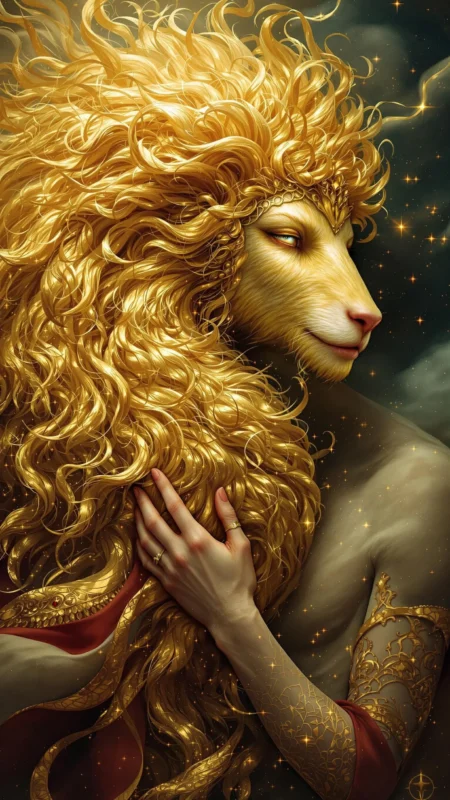
The Golden Fleece is the architecture of ambition. In a modern mythos, it is rarely a literal shining object, but a luminous concept: the Ph.D., the corner office, the published novel, the founding of a successful company, the achievement of a state of inner peace. It is the singular goal that organizes a life, transforming a random series of days into a narrative, a quest. The Fleece's power lies in its distance, its difficulty. Its glow is proportional to the darkness of the journey required to reach it. To have the Fleece as a central object in your mythology is to believe that life is not meant to be lived, but to be conquered, that a destination gives meaning to every step, every sacrifice.
Yet, the Fleece is a complex symbol, for it is often just a beautiful, inanimate thing. Its magic is not inherent but projected. The myth whispers a profound warning: the transformation happens on the voyage, not at the destination. The true prize is the wisdom of the 'Argonauts' you gather, the courage discovered while facing the 'dragon,' the resilience forged in the storms. If the Seeker arrives unchanged by the journey, the Fleece becomes a mere trophy, a golden reminder of a missed opportunity for genuine growth. It becomes a heavy, gilded burden, its light revealing not a triumphant king, but a hollow victor.
The Fleece also symbolizes a kind of divine permission. It is the proof, the credential that announces your worthiness to the world. It is the thing that says, 'I have done the impossible thing, therefore I belong here.' This can be a powerful motivator, a way to overcome doubt and claim your rightful place. It grants legitimacy. It silences detractors. But this reliance on an external validator is a fragile foundation for a mythos, for it suggests that worth is not inherent, but must be earned through a grand, and possibly fatal, trial.