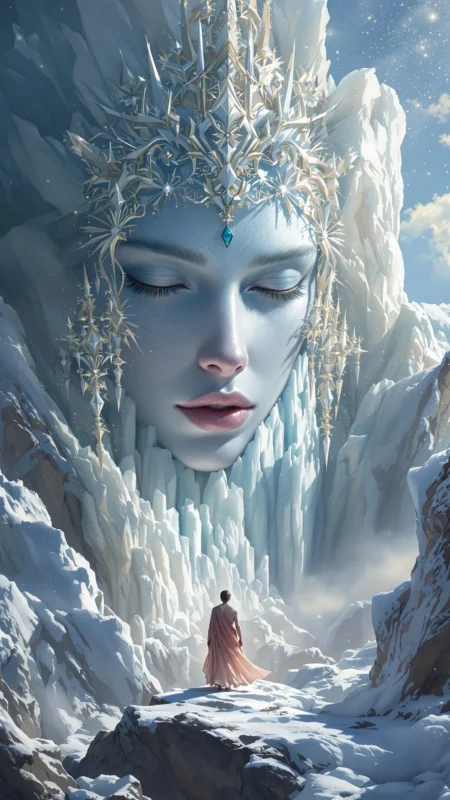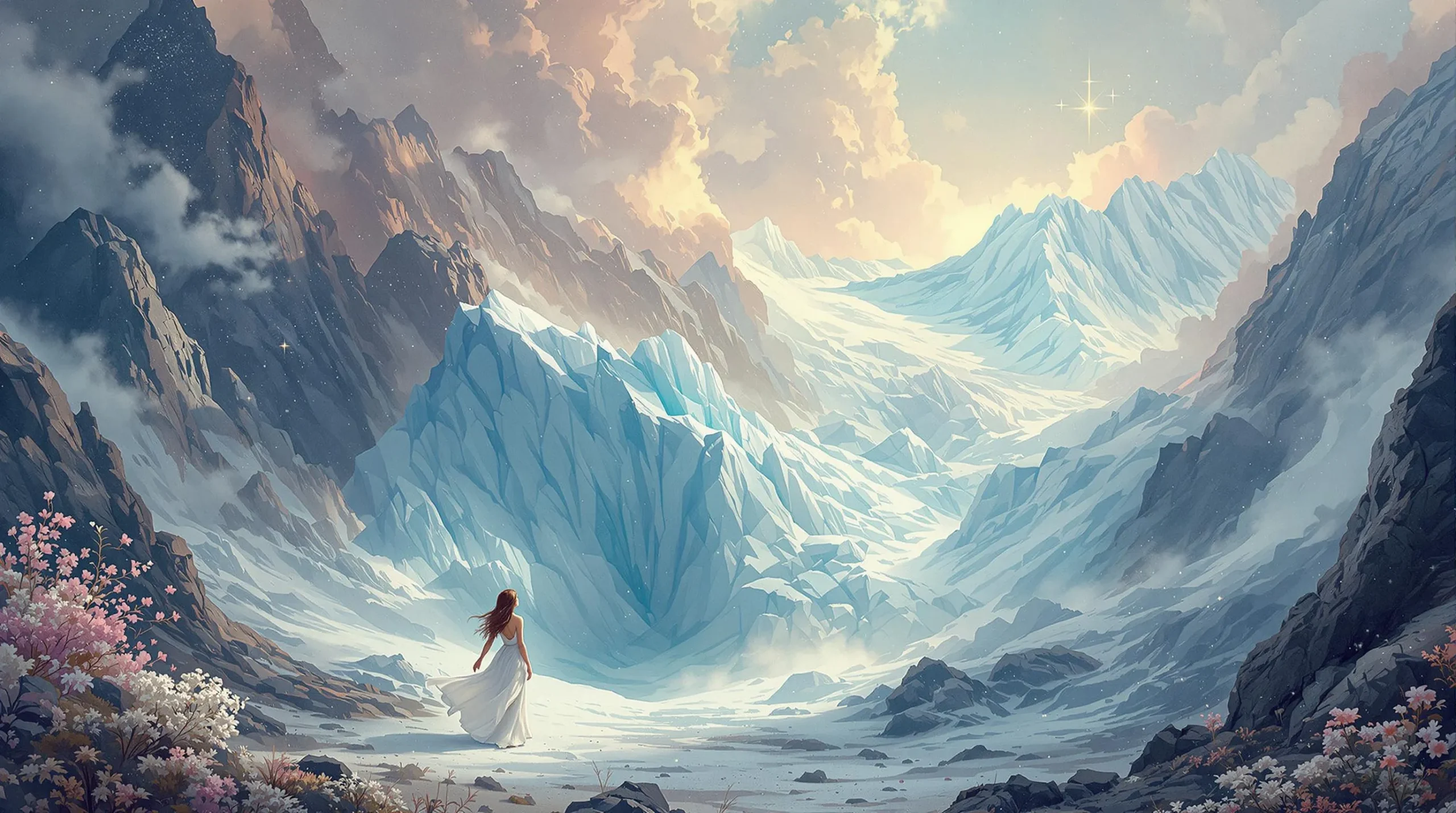


Glacier

Archetype Meaning & Symbolism

Patient, immense, slow, powerful, ancient, indifferent, transformative, cold, preserving, inexorable

  • The deepest change is measured not in lifetimes, but in the slow grinding of stone to soil.

If Glacier is part of your personal mythology, you may...

Believe

  • True change is incremental and takes generations; what matters is the direction of the pressure, not the speed of movement.
  • The past is not gone; it is carried within, shaping the present in every conceivable way.
  • Stillness is a form of power, and silence can be more impactful than any speech.

Fear

  • A sudden, catastrophic melting: a loss of control and form that dissolves your very being into a chaotic flood.
  • Insignificance: the realization that your slow, massive effort has ultimately changed nothing, leaving no mark.
  • Being rendered obsolete: a world that changes so fast that your deliberate pace becomes a fatal liability.

Strength

  • Unflinching patience: the ability to wait out any storm, to persist with a goal long after others have given up.
  • Profound resilience: a deep-seated stability that allows you to absorb immense pressure and hardship without breaking.
  • Transformative impact: the power to create deep, lasting change in your life and environment through slow, steady, and persistent effort.

Weakness

  • Emotional coldness: a difficulty connecting with others on a warm, fluid, and responsive emotional level.
  • Resistance to change: an inability to adapt quickly to new circumstances, making you vulnerable to rapid shifts.
  • Unresponsiveness: a slowness to act or react that can be perceived as apathy, stubbornness, or neglect.

The Symbolism & Meaning of Glacier

In the modern psyche, the Glacier may symbolize the power of deep time and profound patience. It is an antidote to the frantic, ephemeral nature of digital life. To have the Glacier in your personal mythology is to possess an internal clock set to a geological rhythm, to value the slow, accumulative processes that lead to enduring change. It is the belief that some things cannot and should not be rushed: wisdom, trust, the healing of deep wounds. This archetype fosters a perspective that sees life not as a series of sprints, but as a long, inexorable advance, where one’s own weight and persistence are the primary tools for sculpting reality.

The Glacier is also a potent symbol of memory and preservation. Its ice is a library of ancient atmospheres and lost worlds. For an individual, this could manifest as a deep connection to their own past, their ancestry, and the weight of their experiences. Memories are not fleeting images but are felt as a physical presence, a core of ice within the self that informs every present moment. This person might feel they carry the stories and traumas of their lineage, not as a haunting, but as a source of density, wisdom, and gravity. Their personal history is not just a story they tell; it is the very substance they are made of.

Finally, the Glacier represents a specific kind of power: one that is quiet, indifferent, and transformative. It does not announce its arrival with fire and thunder, yet it can move mountains. In a personal narrative, this archetype could signify a person whose influence is subtle but absolute. They may not be the loudest voice in the room, but their steady, unwavering presence can redirect the course of a family, a company, or a community. Their power is not in coercion or charisma, but in their sheer, unyielding being, a force that reshapes everything around it simply by moving along its own determined path.


Glacier Relationships With Other Archetypes

The Volcano

The relationship between the Glacier and the Volcano is one of elemental opposition and cosmic balance. The Volcano is hot, explosive, and sudden—a violent birth of new land from the planet's molten core. The Glacier is cold, compressive, and slow—a force that grinds down and reshapes what already exists. In a personal mythos, this pairing could represent the fundamental tension between passionate, immediate creation and slow, deliberate transformation. One is the fiery impulse, the sudden rage or epiphany that changes everything in a moment. The other is the patient, enduring pressure of discipline or grief that sculpts the self over a lifetime. They are locked in an eternal dance of building up and wearing down.

The River

The River is often the child of the Glacier, born from its meltwater. It is the Glacier's essence made fluid, fast, and articulate. Where the Glacier holds history and potential in a frozen, static state, the River carries it outward, expressing it to the world as it carves its own, more immediate path to the sea. In a personal narrative, the Glacier may represent the vast, silent, and often unconscious inner world of stored experiences and trauma. The River archetype, then, would be the emotional life that flows from this source: the tears, the laughter, the creative output that channels the Glacier's immense potential into a form that can be seen, heard, and felt by others.

The Ancient Forest

The Ancient Forest grows on soil left behind by the Glacier's retreat. It represents the life that is only possible after the great, cold, scouring force has passed and done its work. The Glacier clears the way, grinding stone into the raw material for life, and the Forest is the complex, interconnected community that rises in its wake. In a personal mythology, the Glacier may symbolize a long period of hardship, stasis, or deep introspection. The Forest archetype represents the subsequent flourishing of relationships, creativity, and new life that grows from the fertile ground of that past experience. The Forest needs the Glacier's history to have a place to root itself.

Using Glacier in Every Day Life

Navigating Protracted Conflict

When faced with a conflict that cannot be resolved quickly, the Glacier archetype offers a strategy of immense patience. Instead of engaging in heated, reactive exchanges, you may adopt a slower, more deliberate pace. You absorb the emotional energy of the situation without being moved, allowing time to cool passions and reveal the underlying bedrock of the issue. Your contribution is not a witty retort, but a steady, persistent pressure toward a fundamental resolution, reshaping the landscape of the disagreement over time.

Executing Long-Term Projects

For ambitions that require years or even decades to realize—writing a magnum opus, building a business from scratch, fostering a forest—the Glacier provides the necessary mindset. It is the antithesis of the sprint. It encourages breaking down the monumental into infinitesimal daily movements. Success isn't a single summit, but the accumulated inches of progress. This archetype helps you endure the long, quiet periods of seemingly no progress, trusting in the unstoppable power of consistent, incremental effort to eventually carve a valley of achievement.

Processing Deep Grief

Grief, from the Glacier's perspective, is not an illness to be cured but a new geological feature to be integrated. This archetype allows one to hold the immense weight of loss without collapsing. It permits the emotions to be frozen, preserved within the self, and processed on a timescale that honors their depth. There is no rush to “get over it.” Instead, there is a slow, internal shift, a gradual melting at the edges that releases the story and pain in trickles, not floods, eventually feeding new life downstream.

Glacier is Known For

Carving Landscapes

The Glacier is known for its awesome power to reshape the very surface of the planet. It doesn't merely pass over the land; it plows, scours, and sculpts it, creating U-shaped valleys, fjords, and depositing massive boulders hundreds of miles from their origin. This represents an unstoppable, transformative force.

Preserving History

Within its layers, the Glacier traps ancient air, dust, pollen, and even entire organisms, creating a perfect timeline of Earth's past. It is an archive of climate and life, holding memory not as a recollection, but as a physical, frozen substance. This speaks to its role as a keeper of deep time and secrets.

Slow, Inexorable Movement

A glacier's movement is often imperceptible to the naked eye, yet it flows with the certainty of a river of ice. This combination of slowness and unstoppable momentum is a core trait, symbolizing a power that operates beyond human urgency and whose effects are both gradual and inevitable.

How Glacier Might Affect Your Personal Mythology

How Glacier Might Affect Your Mythos

When the Glacier enters your personal mythos, your life story may shed the frantic pace of a human drama and take on the slow, epic grandeur of a geological event. Your narrative arc is not measured in days or years, but in the imperceptible shift of vast internal masses. A personal failure is not a single, dramatic event; it is the slow grinding of a moraine, a painful but necessary process that ultimately deposits fertile soil for future growth. Your story ceases to be about a hero who conquers obstacles through swift action, and becomes the story of a landscape being inevitably, profoundly, and permanently reshaped by a slow-moving, internal force.

The very nature of plot and conflict may change. The central tension in your mythos might not be an external struggle against a villain, but the internal pressure of what you carry. The story becomes about the weight of your own history, the secrets and memories preserved in your core. Key events are not battles, but moments of calving, where a massive piece of your past breaks off and crashes into the present, sending waves through the entire narrative. Your life's purpose might be seen not as reaching a destination, but as the journey itself: the slow, powerful, and transformative passage across the terrain of your own existence.

How Glacier Might Affect Your Sense of Self

You may perceive yourself as possessing a substance and permanence that sets you apart. There could be a deep inner stillness, a core that is not easily shaken by the ephemeral urgencies of the world. This self-concept is built on endurance and the long view. You may trust your own slow processes implicitly, feeling no need to apologize for a deliberate pace or a delayed emotional reaction. This can foster a powerful, quiet self-possession, a sense of being a force of nature in your own right, whose value is measured in mass and impact, not speed.

This same perception, however, can lead to a feeling of being frozen or fundamentally separate from the warmth of human connection. You might see yourself as a vast, solitary entity, a landscape of breathtaking internal beauty that no one can ever truly visit. The self can feel impossibly heavy, burdened by the sheer weight of its own preserved history. This can create a poignant loneliness, a sense of moving on a trajectory so grand and slow that it precludes the easy, fluid company of others, leaving you feeling ancient, powerful, and utterly alone.

How Glacier Might Affect Your Beliefs About The World

Your worldview may be tinted with the cool, blue light of deep time. Human affairs, with their sound and fury, could seem like temporary weather patterns on the surface of a continental ice sheet. This perspective can cultivate a profound sense of humility and a detachment from the frantic churn of politics and pop culture. You might see the world as a system of immense, slow-moving forces, of which humanity is only a small, transient part. This can be deeply calming, freeing you from the anxiety of daily crises and grounding you in a much larger, more stable reality.

Alternatively, this grand perspective could foster a kind of cosmic indifference or even a paralyzing fatalism. If human effort is so small and the truly significant forces are so vast and inexorable, then individual action may seem futile. Why struggle against the current when the entire landscape is being dragged in one direction by the ice? This worldview can diminish one's sense of agency, leading to a passive observance of life rather than active participation. It may become a justification for inaction, a belief that the world will unfold as it must, regardless of one's own small strivings.

How Glacier Might Affect Your Relationships

In relationships, you may be the bedrock. Your love, once given, is a slow-moving but immensely powerful force, characterized by unwavering loyalty and steadfast presence. You are not prone to capricious whims or dramatic shifts in affection. Friends and partners may see you as their anchor, the calm and stable center they can cling to in the midst of life's storms. You might show love not through effusive words, but through silent, steadfast endurance, through the simple, powerful act of being there, year after year, a permanent feature in the landscape of their lives.

However, this glacial pace can be profoundly challenging for partners who require more warmth and responsiveness. They may feel that their own emotions, passions, and pleas for connection simply melt and disappear on your vast, cool surface, leaving no impression. Your slowness to respond can be misinterpreted as indifference or a lack of care. There is a risk of inadvertently making loved ones feel small and insignificant, their urgent, fiery hearts no match for your cool, immense, and seemingly untouchable core. The very stability you offer can feel like a cold, impassable wall.

How Glacier Might Affect Your Role in Life

In your work, family, or community, you may naturally assume the role of the archivist, the historian, or the keeper of the foundation. You are the one who remembers how things came to be, who understands the deep and complex history of the institution. Your contribution is not in flashy, short-term wins, but in the slow, patient building of systems, structures, and cultures that are designed to last for generations. You are the quiet pillar, the unseen force that gives the entire enterprise its weight, stability, and sense of direction over the long term.

This role can also become a cage of ice. You may be perceived as the immovable object, the great resister of necessary change. Your deliberate pace and reverence for the past can be seen as an obstacle to the agility and innovation required to survive in a rapidly changing world. Others may grow frustrated with your process, viewing you as a relic rather than a resource. Your role could shift from being the foundation to being the roadblock, a monumental figure admired for its history but ultimately bypassed by those seeking a faster route to the future.

Dream Interpretation of Glacier

To dream of a glacier in a positive light is often to connect with your own deep reserves of strength and resilience. Standing in awe before a vast, sunlit glacier could symbolize a dawning awareness of your own immense power and the profound, slow-moving transformations occurring within you. It may be a message from your subconscious to trust the process, to be patient with your own growth, and to honor the vast history that has shaped you. A dream of following a glacier's path could signify that you are aligned with your life's deepest, most authentic purpose, moving with an unstoppable, natural force.

In a negative context, a glacier in a dream can represent a feeling of being emotionally frozen, overwhelmed, or stuck. Dreaming of being trapped in a crevasse or pursued by an advancing wall of ice might point to a repressed trauma or a depressive state that feels inescapable and all-consuming. A calving glacier, where massive chunks of ice crash violently into the sea, could symbolize a looming emotional breakdown, a sudden and terrifying release of pressure that has built up over years. It suggests a part of your life or psyche has become brittle and is about to break apart.

How Glacier Archetype Might Affect Your Needs

How Glacier Might Affect Your Physiological Needs

The Glacier archetype may inform a physiological approach rooted in endurance and stoicism. The body's needs are viewed through a lens of long-term conditioning rather than immediate gratification. Hunger, thirst, and fatigue are signals to be managed with deliberation, not catered to with urgency. This might foster an affinity for practices that build deep resilience, such as endurance training, fasting, or cold-water immersion. There's a fundamental trust in the body's ancient capacity to withstand hardship and adapt over time, treating it less like a delicate instrument and more like a rugged landscape.

This perspective, however, risks creating a dangerous disconnect from the body's present-moment reality. The habit of ignoring minor signals of pain or exhaustion can lead to a state of chronic neglect. The individual may treat their body as an object, a separate entity to be disciplined, rather than a living part of their being. This can result in burnout, repetitive stress injuries, or other chronic conditions that arise from the slow, grinding accumulation of unheeded physical warnings. The body, like a real glacier, can develop deep, internal fissures long before any dramatic collapse is visible on the surface.

How Glacier Might Affect Your Ideas of Belonging

For the Glacier archetype, belongingness may be a connection to the vast and timeless rather than the immediate and intimate. The need for love and connection might be met not by the warm chatter of a social group, but by a silent, profound sense of place within a lineage, a landscape, or a grand historical tradition. They might feel they belong more to the mountain range than to the village at its foot. Love is expressed through steadfast loyalty and unwavering presence over decades, a deep, quiet resonance that transcends the need for constant verbal affirmation.

This can, however, cultivate a deep and poignant solitude. The very scale of the Glacier's inner world makes it difficult for others to enter. The need for deep, slow time can clash with the more immediate emotional needs of friends and partners, leading to a perception of aloofness. While they may feel a profound connection to the whole, they may struggle to feel truly a part of any specific, warm-bodied group. This creates a paradox of being deeply connected yet perpetually on the outside, a monument that all can see but few can truly touch.

How Glacier Might Affect Your Feelings of Safety

A sense of safety, for one with the Glacier in their mythos, is likely found in mass, permanence, and immovability. Security is not agility but solidity. This translates into building a life that is fortified against sudden change: a stable career, a mortgage, a deep investment in a single community. Financial safety is pursued through slow, steady accumulation, like a glacier depositing a terminal moraine of assets, rather than through nimble, high-risk speculation. The ultimate safe space is a fortress of one's own making, designed to withstand any conceivable siege through sheer, unwavering substance.

This strategy of safety through stasis carries its own profound risk. A glacier is powerful against direct assault but exquisitely vulnerable to a fundamental change in its environment, like a warming climate. Likewise, this person's meticulously constructed fortress of safety can be rendered obsolete by a rapid paradigm shift in their industry, economy, or social structure. Their inability to pivot quickly becomes their undoing. The greatest threat is not the force they can see coming, but the invisible, systemic change that melts their foundation from beneath.

How Glacier Might Affect Your Views of Esteem

Self-esteem is likely derived from internal substance, not external validation. Praise, awards, and social status may be viewed as fleeting weather on the surface of one's being. True self-worth comes from the deep, quiet knowledge of one's own resilience, permanence, and the profound, transformative impact one has over long periods. There is a pride in one's own mass and gravity, in the ability to withstand pressures and hold a steady course when others are blown about. Esteem is intrinsic, solid, and self-contained, requiring no outside mirror to be seen.

This form of esteem can become rigid and brittle. If self-worth is fused with the identity of being the immovable, unchangeable force, then any situation that requires rapid adaptation or demonstrates a loss of control can precipitate a devastating crisis. The shadow of this is a cold arrogance, a dismissal of others' 'frantic' or 'shallow' ways. Esteem can be mistaken for sheer, unyielding weight, leading one to crush smaller, more fragile things not out of malice, but from a simple, profound lack of awareness of one's own destructive potential.

Shadow of Glacier

The shadow of the Glacier is absolute, unfeeling destruction. When its power is untempered by any sense of life, it becomes the force that scours the landscape bare, erasing all in its path not to create fertile soil, but simply to erase. In a person, this shadow may manifest as a profound lack of empathy, a cold ruthlessness where goals are pursued with no regard for the human cost. They may bulldoze over others' feelings, careers, and lives, justifying their actions with a logic of inevitability. This is the part of the self that freezes out love, connection, and joy, creating an internal permafrost where nothing new can grow.

Another facet of the shadow is a catastrophic stasis, a refusal to move at all. The Glacier becomes a tomb of ice, not a river. This individual may be so trapped by the past, so frozen by trauma or fear, that they become completely inert. They may resist any and all change, even that which is necessary for their own survival, clinging to a rigid, icy form. This can lead to a life of profound depression and isolation, a monument to what once was, while the living world evolves and moves on around them, leaving them a cold, lonely relic of a bygone age.

Pros & Cons of Glacier in Your Mythology

Pros

  • You possess a deep well of patience, allowing you to achieve long-term goals that are unattainable for those who require immediate results.
  • Your presence is often a source of stability and calm for others, making you a reliable anchor in times of chaos.
  • You have a unique ability to hold and process complex history and emotions over time, leading to profound wisdom.

Cons

  • Your slow pace and emotional reserve may make it difficult to form close, intimate bonds with those who need more active feedback and warmth.
  • You may be slow to react to urgent threats or opportunities, potentially missing out or incurring damage due to an inability to adapt quickly.
  • You may be perceived as cold, stubborn, or indifferent, alienating others and hindering collaboration.