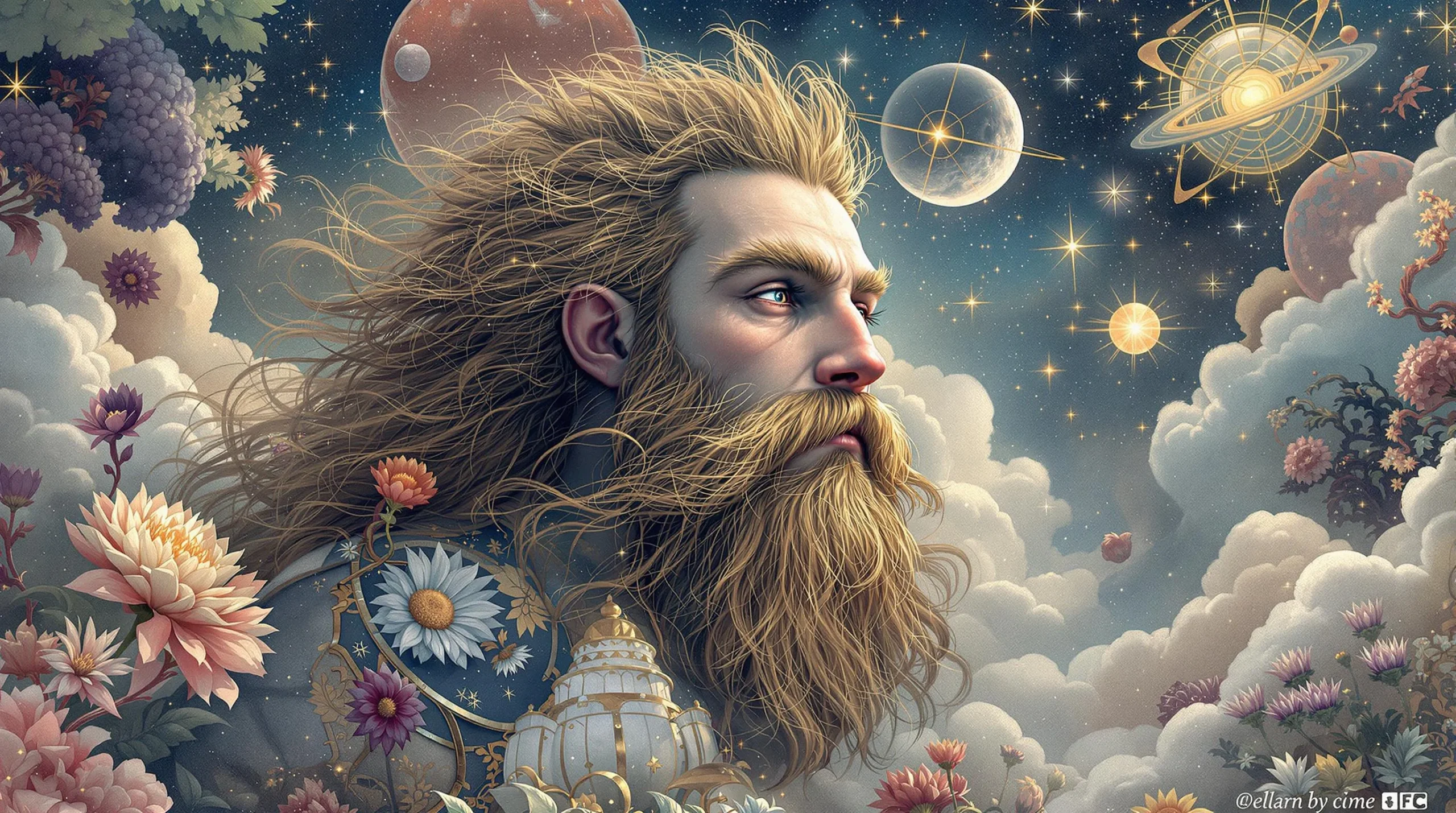


Gimli

Archetype Meaning & Symbolism

Stalwart, loyal, proud, competitive, gruff, traditional, stubborn, hearty, sentimental, grounded

  • Certainty of death. Small chance of success. What are we waiting for?

If Gimli is part of your personal mythology, you may...

Believe

  • You may believe that a person's worth is proven through deeds, not words.
  • You may believe that true beauty is found in what is durable, authentic, and handcrafted by time and pressure.
  • You may believe that loyalty to one's kin is the highest virtue, and an oath is the most sacred thing a person can give.

Fear

  • You may fear betrayal above all else, especially from those you have let into your inner circle.
  • You may fear being useless or helpless in a crisis, unable to protect those you care about.
  • You may fear the superficial, the ethereal, and the unfamiliar, suspecting them of being untrustworthy or dangerous.

Strength

  • Your loyalty is a geological feature, an unshakeable foundation upon which others can build their trust.
  • Your resilience is immense; you can endure hardship, pressure, and isolation that would break others.
  • You have a profound capacity for appreciation of the authentic and well-crafted, finding deep joy in tangible skill and substance.

Weakness

  • Your stubbornness can become a prison, preventing you from adapting to new situations or admitting when you are wrong.
  • Your pride and suspicion can make it difficult to form new connections, potentially isolating you from valuable allies and experiences.
  • Your fierce loyalty to your own 'kin' can sometimes curdle into prejudice or a blind spot towards the flaws of your own group.

The Symbolism & Meaning of Gimli

The Gimli archetype is a symbol of the earth itself: stubborn, ancient, and possessing a wealth that is not immediately visible on the surface. To find this mythos within oneself is to connect with a kind of geological loyalty, a steadfastness that is measured in epochs rather than moments. It represents the beauty of the raw and the unrefined, the worth found in what is durable and handcrafted over what is ethereal and fleeting. This archetype speaks to the part of the soul that values heritage and roots, a sense of belonging carved from stone and memory. It is the pride in one's origins, not as a limitation, but as a foundation from which to stand and face the world.

Furthermore, Gimli may symbolize the profound capacity for personal growth, even within a deeply traditional framework. His journey with Legolas is a masterclass in overcoming ingrained prejudice. It is the personal mythology of the bigot who learns to love, the traditionalist who embraces the strange and new, not by abandoning who he is, but by expanding his definition of kinship. He shows that the strongest walls we build are those in our own minds, and that true strength is the courage to look over that wall and see a friend. This suggests that our most rigid beliefs may house the potential for our greatest evolution.

Finally, this archetype champions a different kind of heroism. It is not the heroism of destiny or bloodright, but the heroism of the foot soldier, the artisan, the one who shows up. His power is not magical, it is the tangible result of a strong arm, a sharp axe, and an unbreakable will. To have Gimli in your personal pantheon is to honor the nobility of work, the integrity of a promise kept, and the courage to stand your ground. It is a mythos that finds its sacred texts not in scrolls, but in the grain of wood, the vein of gold, the shared drink after a long day's fight.


Gimli Relationships With Other Archetypes

The Elf

The relationship with The Elf may begin as a kind of tonal dissonance, the ringing of a hammer on an anvil set against the whisper of wind in the leaves. They are, at first glance, a study in opposition: one of the deep earth, the other of the sun-dappled canopy; one defined by gravity and grit, the other by a seeming indifference to it. Yet, this dialectic could slowly resolve into a strange and profound harmony. The Gimli, in this pairing, perhaps finds a necessary counterpoint, a grace that sands the rough edges of his own certitude. The Elf, in turn, might discover in The Gimli a weight and warmth that the ethereal world lacks, a loyalty as solid and unyielding as the bedrock from which he was hewn. Theirs is not a merging, but a symbiosis; they remain distinct notes, but together they could form a chord of legendary friendship, a testament to the idea that the deepest bonds are often forged between the most disparate souls.

The Mountain

The Mountain is less an external relation to The Gimli and more, perhaps, his silent, sprawling soul made manifest. He may carry its stubbornness in his bones, its geological patience in his long memory for slights and kindnesses. The Gimli’s grumbling could be the distant echo of rockslides, his laughter a sudden seam of gold, his loyalty as foundational as granite. To walk with The Gimli is to walk with a moving piece of the highland, a being who understands the world through the virtues of stone: endurance, integrity, and a treasure that must be delved for. This archetype’s relationship with his origin is not one of nostalgia but of constant, living resonance. He does not simply come *from* the mountain; in some essential way, he *is* the mountain, given a heart, a beard, and a battle axe.

The Unattainable Beauty

Confronted by The Unattainable Beauty, The Gimli archetype may experience a profound internal cleaving. Here is a force that his axe, a tool of violent certainty, cannot possibly address. This relationship is not about possession but about reverence, a sudden and humbling glimpse of a different kind of value, one measured not in carats or martial prowess but in pure, transcendent light. The Gimli, so often a creature of the earth—of stone and iron and grumbling practicality—could find his own spirit momentarily unburdened, his gruff exterior cracking like a geode to reveal an unexpected, crystalline capacity for awe. It is a moment of ego-death, perhaps, where the stout heart learns that its greatest strength may lie not in its hardened defenses, but in its ability to be utterly, willingly, and wordlessly overcome.

Using Gimli in Every Day Life

Navigating a Daunting Task

When faced with a project that feels like a dark and endless mine, the Gimli archetype encourages a practical, one-swing-at-a-time approach. It is not about seeing the end of the tunnel, but about trusting the strength of your own axe, the sturdiness of your own feet on the ground. It suggests that perseverance is a matter of rhythm, of work, of bringing your full, grounded presence to the singular stone in front of you, trusting that each strike shapes the path forward.

Overcoming Ingrained Prejudice

Encountering a person or group that your history has taught you to mistrust—the proverbial Elf to your Dwarf—the Gimli mythos offers a map. It may begin with suspicion and competitive grumbling, a measuring of differences. But the path forward is through shared peril and grudging respect, discovering a kinship not of race or custom, but of character. This archetype suggests that the deepest bonds are often forged across the widest chasms of misunderstanding.

Building Unbreakable Bonds

In moments where friendship feels transactional or flimsy, invoking Gimli could mean choosing a fierce, unwavering, and vocal loyalty. It is a love that keeps count, not of wrongs, but of shared victories. It is defending a friend in their absence, speaking of their qualities with pride, and standing with them in the shield-wall of life, shoulder to shoulder against any odd. It is a friendship built not on convenience, but on declared, rock-solid allegiance.

Gimli is Known For

Unlikely Friendship

His deep, evolving bond with Legolas the Elf, which overcame generations of animosity between their races and became a legendary tale of fellowship.

Steadfast Loyalty

An unwavering commitment to the Fellowship of the Ring, offering his axe and his life without hesitation, embodying the role of the dependable, doughty warrior.

Dwarven Pride and Craft

His profound connection to his heritage, the mountains, and the deep places of the earth. He extols the virtues of dwarven craftsmanship, from the glittering caves of Aglarond to the unyielding strength of mithril.

How Gimli Might Affect Your Personal Mythology

How Gimli Might Affect Your Mythos

When the Gimli archetype shapes your personal mythos, your life story may not be one of a destined seeker but of a stalwart companion, the unshakeable bedrock upon which grander quests are built. Your narrative may pivot not on moments of sudden revelation, but on the slow, grinding erosion of prejudice and the forging of alliances that defy all expectation. The central conflicts in your story could be internal battles between tradition and adaptation, between suspicion and trust. Your personal epic becomes less about reaching a celestial peak and more about plumbing the depths of your own heart's mountain, discovering the glittering caves and hidden treasures of loyalty and love within.

Your mythos could also be one of earned respect and tangible legacy. The tales told of you may not be of your cleverness or grace, but of your reliability: you were there. Your legend might be inscribed not in history books, but in the sturdy foundations of the relationships you built and the institutions you defended. The climactic moments in your story are perhaps not solitary triumphs, but shared victories in the shield-wall, where your strength was multiplied by those beside you. It's a mythology where your worth is measured by the oaths you keep and the friends you would follow into the dark.

How Gimli Might Affect Your Sense of Self

To see oneself through the Gimli lens is perhaps to accept a certain gruffness in your own nature, not as a flaw, but as an outer layer protecting a core of profound sentimentality. You may see yourself as grounded, practical, and suspicious of things that seem too easy or too beautiful. Your self-worth could be deeply entwined with your work ethic, your competence, and your ability to endure. You might not see yourself as the main character, but as the essential, load-bearing pillar without whom the whole structure would collapse. There may be a comfort in this role: a freedom from the pressures of the spotlight, a quiet pride in your own resilience.

This archetype could also foster a self-image that is slow to change but immensely rewarding when it does. You may view your own prejudices or stubborn habits not as fixed traits, but as ancient stones that can, with the right pressure and companionship, be overturned to reveal fertile soil underneath. Your capacity to love fiercely, once your trust is earned, might be a cornerstone of your identity. You may see your emotions not as light and airy things, but as deep, powerful currents: a magma of loyalty and affection that runs beneath a crust of stoicism.

How Gimli Might Affect Your Beliefs About The World

A worldview informed by Gimli may be one of inherent skepticism. You might see the world as a place of hidden dangers and superficial beauty, a place where true value lies beneath the surface, in the dark and deep places. It could be a perspective that honors the old ways, the traditions, and the wisdom of elders, viewing modern fads and fleeting philosophies with a cynical eye. The world is not something to be figured out with airy logic, but something to be contended with, axe in hand. It is a material world, full of things to be crafted, battles to be fought, and treasures to be guarded.

Yet, this worldview is not without its capacity for wonder. It is simply that wonder is reserved for what is proven real and durable. The Gimli perspective might see more beauty in a perfectly balanced tool than in a sunset, more magic in the crystalline structures of a cavern than in an incantation. It is a worldview that can be cracked open by the undeniable virtue of another, allowing for a radical re-evaluation of what is considered 'kin.' The world, once seen as a collection of competing tribes, could transform into a landscape of potential, if unlikely, allies.

How Gimli Might Affect Your Relationships

In relationships, the Gimli archetype suggests a model of loyalty that is both fierce and vocal. Friendships may not be built on shared sensitivities but on shared ordeals and unwavering support. You might be the friend who is awkward with gentle comfort but is the first to arrive in a crisis, ready for a practical fight. Love could be expressed not through poetic words, but through steadfast presence and protective action. For you, a promise is a bond as strong as iron; to break one is the deepest betrayal imaginable.

This archetypal influence could also mean relationships begin with a trial period. Trust is not given freely; it is mined, earned through consistent, honorable action. You may be prone to friendly, and sometimes not-so-friendly, competition with your closest companions, a way of testing and sharpening one another. The challenge lies in moving beyond the initial suspicion, especially with those who are vastly different. But once that chasm is crossed, the bond formed is not merely a friendship but a sworn brotherhood, an alliance meant to last a lifetime and be celebrated in song.

How Gimli Might Affect Your Role in Life

Adopting a Gimli-like role means you may perceive yourself as the guardian, the steadfast heart of any group. Your role is not to lead the charge with dazzling charisma, but to hold the line. You are the one who reminds others of their roots, their promises, their strength. In a family or a team, you might be the keeper of traditions, the one who provides a sense of stability and historical context. It is a role defined by substance over style, by duty over ambition. You may feel your purpose is to be the immovable object against which chaos breaks.

This role may also be that of the craftsman and the pragmatist. When others are lost in abstract ideas, your function is to ask the practical questions: what is the plan, what are the tools, who is watching the flank? You bring the conversation down to earth. Your contribution is tangible: building, defending, enduring. There is a profound sense of purpose in this role, a feeling that you are providing the essential, foundational support that allows others to soar. You are the roots of the tree that lets the Elf climb to the highest branches.

Dream Interpretation of Gimli

To dream of Gimli in a positive context, perhaps fighting alongside you or sharing a drink, could symbolize an awakening of your own inner resilience and loyalty. It may suggest that you are connecting with a deep, grounded part of yourself, a strength you had forgotten you possessed. Such a dream might be a call to trust your gut, to stand firm in your convictions, and to honor the bonds you have forged. Seeing him marveling at the beauty of a cave could indicate that it is time for you to explore your own depths to find unexpected beauty and wealth, whether creative, emotional, or spiritual.

Conversely, dreaming of a negative Gimli—one who is hostile, isolated, or consumed by greed—may point to the shadow aspects of this archetype taking hold. This could be a warning from your subconscious about your own stubbornness becoming a prison, your loyalty curdling into blind tribalism, or your pride preventing you from accepting help or admitting fault. An angry Gimli in a dream might represent a conflict between your own traditional values and a necessary change. He could be the embodiment of a deep-seated prejudice you need to confront or a part of you that fears the unfamiliar and lashes out from that fear.

How Gimli Archetype Might Affect Your Needs

How Gimli Might Affect Your Physiological Needs

When the Gimli archetype informs your being, your physiological needs may be understood through a lens of heartiness and endurance. The body is not a temple to be delicately worshiped, but a fortress to be maintained, a sturdy tool for work and survival. Your connection to food and drink might be one of robust enjoyment, fuel for the forge of life. There could be a primal satisfaction in physical labor, in feeling the ache of muscles after a day of tangible accomplishment. Sustenance is about foundation: solid, dependable, and plentiful. The need for rest is acknowledged not as weakness, but as the necessary time a smith needs to let the metal cool and strengthen.

This mythos could also manifest as a deep-seated need for physical groundedness. You may feel most at ease in spaces that are solid, enclosed, and echoic of the earth: basements, stone buildings, or deep valleys rather than open plains. There might be a physiological calming effect from the proximity to rock, wood, and metal. The body itself might be experienced as dense and powerful, regardless of its actual size, a low center of gravity that is difficult to push off balance. Your well-being is tied to this feeling of being rooted, of having your feet planted firmly on solid ground.

How Gimli Might Affect Your Ideas of Belonging

For one with the Gimli archetype in their soul, belongingness is a fierce and jealously guarded treasure. It is not about being liked by many, but about being claimed by a few. Love and friendship are matters of oath and allegiance, a formal declaration of inclusion into the clan. You may feel a profound need to belong to a group with a strong identity, a shared history, and clear traditions. Acceptance feels like being given a name in their private language, a seat at their fire. It is a deep, resonant belonging that settles in the bones.

This can also make forming new bonds a slow and deliberate process. The drawbridge to your heart is heavy and rarely lowered. You may test potential friends and partners, consciously or not, for their sturdiness and loyalty. The fear of betrayal is immense, so trust must be earned, piece by painstaking piece. Yet, once someone is admitted into your inner circle, the love offered is absolute and unconditional. It is a protective, possessive love, a love that says 'you are mine, and I will defend you against all the world.'

How Gimli Might Affect Your Feelings of Safety

From a Gimli perspective, safety is not a passive state but an active, ongoing construction. It is a well-built wall, a sharpened axe within reach, and a watchful eye on the perimeter. This archetype may instill a belief that security comes from preparedness and tangible defenses. You might feel a need to secure your home, your finances, and your resources with a practical, almost geological, thoroughness. Safety is not about avoiding all danger; that is impossible. It is about being so well-prepared, so resolute, that when danger comes, you are the rock upon which it breaks.

This need for safety may also extend to one's kin and clan. A core component of feeling safe is knowing that you are part of a shield-wall, that there are others standing shoulder to shoulder with you, watching your back. The greatest threat is not the enemy in front, but the possibility of isolation. Therefore, maintaining a small, fiercely loyal circle is paramount to one's sense of security. The world is a dangerous mine, and safety is found not only in your own strength but in the trustworthiness of the companion whose torchlight illuminates your path.

How Gimli Might Affect Your Views of Esteem

Esteem, through the Gimli archetype, is forged in the fires of competence and honor. Your self-worth is likely tied to what you can do, what you can build, and what you can endure. Praise for your appearance or your charm might feel hollow, but recognition for your hard work, your unyielding integrity, or the quality of your craft could be the highest honor. You may build your esteem by keeping your word, by being the person others can count on when all else fails. It is an esteem that is heavy, solid, and self-contained, not dependent on the shifting opinions of the crowd.

There is also a deep esteem found in lineage and pride of place. You might derive a powerful sense of self-worth from your heritage, your family, or the community you hail from. To speak its praises, to defend its honor, is to polish your own. This can be a profound source of strength, but it also carries the risk of esteem being tied to the group's reputation. The greatest boost to self-esteem may come from overcoming the inherent prejudices of your background, proving that your worth, and your love, is vast enough to embrace even a sworn enemy, earning not just their respect, but your own.

Shadow of Gimli

The shadow of Gimli emerges when the archetype's virtues are taken to a suffocating extreme. Stubbornness calcifies into bigotry, a complete inability to see value in any perspective but one's own. Loyalty becomes a possessive, smothering force, a tribalism that defines itself by its hatred of the 'other.' The pride in one's heritage sours into a xenophobic arrogance, dismissing all other cultures as weak or frivolous. In this shadow state, the individual is trapped in a mountain of their own making, rich in the fool's gold of self-righteousness but utterly isolated from the living, breathing world. They may become obsessed with material wealth, a hoarder of grudges and possessions, their heart as hard and cold as the gems they covet.

Conversely, a lack of the Gimli archetype's grounding can lead to a different shadow: a person without roots, without convictions. This is the individual who is swayed by every new argument, whose loyalties shift with the wind, and whose promises are weightless. They lack the fortitude to endure hardship, seeking only what is easy and immediately gratifying. Without the Gimli core, they may feel a profound sense of placelessness and a lack of self-worth, for their esteem has no bedrock on which to stand. They are a leaf in the wind, not a stone in the mountain, and while they may travel far, they belong nowhere and can defend nothing, least of all themselves.

Pros & Cons of Gimli in Your Mythology

Pros

  • You possess a profound and unwavering loyalty that makes you an incredibly reliable and trustworthy friend, partner, or colleague.
  • You have an immense inner strength and resilience, allowing you to endure pressures and setbacks that would crush more fragile spirits.
  • Your journey may include the profound reward of overcoming your own ingrained biases, leading to deep, life-altering relationships and a richer understanding of the world.

Cons

  • You may be resistant to change and new ideas, potentially missing out on important opportunities for growth and innovation.
  • Your gruff exterior and initial suspicion can make it difficult for others to get close to you, leading to periods of loneliness or misunderstanding.
  • Your competitive nature and pride can sometimes lead to unnecessary conflicts or an inability to gracefully accept help or defeat.