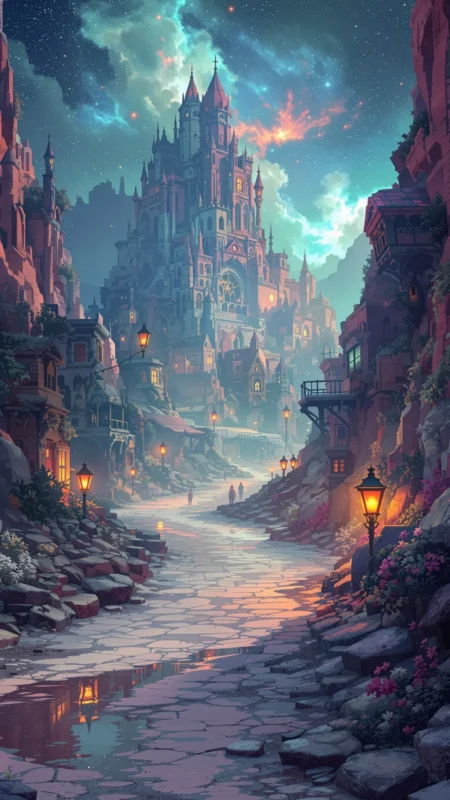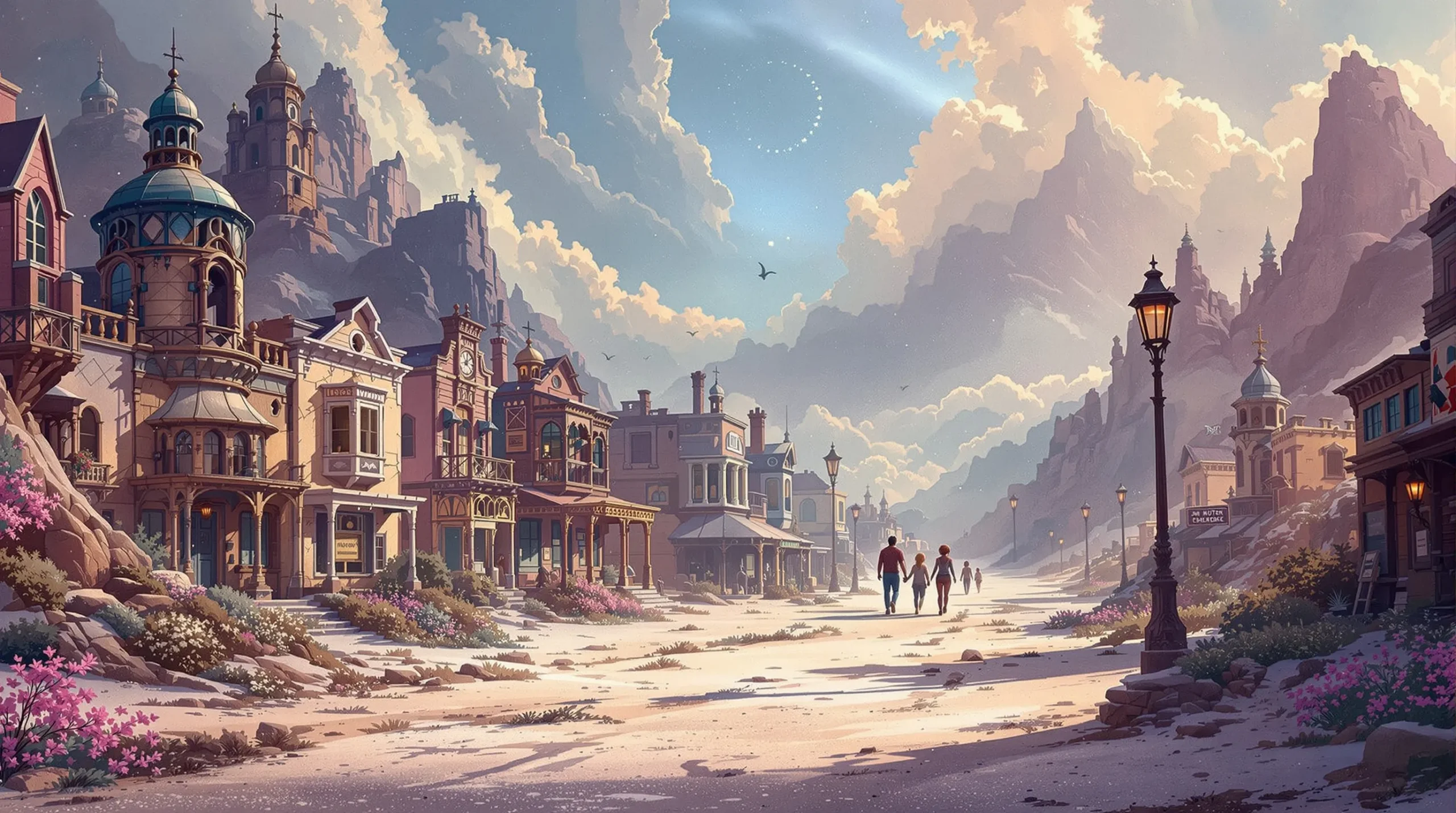


Ghost Town

Archetype Meaning & Symbolism

Silent, memorial, forgotten, transitional, haunted, preserved, hollow, resonant, ancestral, bygone

  • The loudest truths are whispered by the wind through broken windowpanes. Listen to what is no longer here to understand what truly remains.

If Ghost Town is part of your personal mythology, you may...

Believe

  • The past is never truly dead; it is a living landscape that shapes the present in quiet, unseen ways.

    Silence is not an absence, but a presence. It is a form of communication richer than most words.

    True strength is not about resisting change, but about enduring through it with grace and dignity.

Fear

  • That you will be completely forgotten, that the stories etched into your walls will fade before anyone has a chance to read them.

    The encroachment of the new and noisy world, which threatens to pave over your quiet, sacred ground without a thought.

    That the emptiness is not a transitional state, but your final destination; that the solitude will curdle into irreversible desolation.

Strength

  • A profound comfort with solitude. You do not fear being alone, as you find rich company in memory, history, and the quiet voice of your own thoughts.

    The ability to find beauty and meaning in endings, decay, and what others discard. You can see the whole story, not just the happy beginning.

    A deep, unshakable sense of self that does not depend on external circumstances or the presence of others for its foundation.

Weakness

  • A tendency towards melancholy and nostalgia, which can prevent you from fully engaging with the present moment and its possibilities.

    Difficulty in letting go completely. You may act as a curator of past hurts and grievances, preserving them long after they have ceased to serve a purpose.

    An inclination to isolate yourself from others, mistaking a healthy need for solitude with a belief that all social connection is superficial or draining.

The Symbolism & Meaning of Ghost Town

The Ghost Town, in the personal mythos, is the landscape of the past, a place held in stasis yet profoundly alive with meaning. It symbolizes the parts of ourselves and our histories that have been emptied of their original function but are not yet erased. This archetype is not about the horror of a haunting, but the quiet resonance of memory. It represents a necessary and sacred pause between what was and what will be. To have the Ghost Town in your personal mythology is to understand that endings are not voids: they are spaces filled with the echoes of laughter, the dust of frantic activity, and the silent dignity of survival. It is the place you go to understand where you came from, to speak with the ghosts of your former selves without being captured by them.

Furthermore, this archetype speaks to a deep comfort with non-utility. In a world obsessed with purpose, growth, and the next big thing, the Ghost Town finds its value in simply being. It is a monument to a concluded story. For an individual, this may manifest as an ability to appreciate experiences, relationships, or personal phases for what they were, without needing them to be stepping stones to something else. It is the repository of your life's concluded chapters, preserved under a layer of reverent dust. It is the acceptance that some things are beautiful precisely because they are over, their meaning crystallized by their own stillness.

Ultimately, the Ghost Town archetype embodies a profound form of resilience. It is not the resilience of fighting back, but of enduring. It stands against the wind, the sun, and the slow crawl of weeds, not in defiance, but in quiet testament to its own structural truth. When this place is part of your inner world, it may grant you a certain peace with your own scars and fallow periods. You understand that even in stillness and apparent desolation, a powerful story is being told. It is the myth of what remains when everything extraneous has been stripped away, leaving only the essential framework of your own history.


Ghost Town Relationships With Other Archetypes

The Pioneer:

The Ghost Town has a relationship of shadow and echo with The Pioneer. Where The Pioneer is all forward momentum, ambition, and the thrill of the new, the Ghost Town is the inevitable result of that energy moving on or exhausting itself. The Pioneer builds the saloon, digs the mine, and dreams of the future. The Ghost Town preserves the empty saloon and the collapsed mine as a monument to that dream. For an individual, this means The Pioneer archetype within may drive them to start new projects and ventures, while their inner Ghost Town provides the wisdom of past cycles, a quiet counsel that remembers not all frontiers lead to permanent cities.

The Archivist:

The Ghost Town and The Archivist are natural allies, partners in the preservation of what-was. The Ghost Town is the library; The Archivist is the one who can read its silent, decaying books. The Archivist finds narrative in a rusted weather vane, meaning in the pattern of broken glass, and history in the layers of peeling wallpaper. The Ghost Town, in turn, offers itself up as a primary source, a sacred text of time and memory. In a person's mythos, this pairing could create a powerful storyteller, someone who not only lives their life but also curates its meaning, finding significance in the artifacts of their own past.

The Wind:

The Wind is the Ghost Town's only constant companion and its primary voice. It is The Wind that moans through the rafters, slams a loose shutter for punctuation, and carries the scent of sagebrush and decay. The Wind is the active narrator for the Ghost Town's passive stage. It brings news from the outside world that the Ghost Town no longer needs, and it carries the Ghost Town's dusty secrets out into the desert. In a personal narrative, The Wind may represent the thoughts, inspirations, and fleeting feelings that animate one's internal Ghost Town, stirring memories and preventing the soul's quiet places from becoming truly stagnant.

Using Ghost Town in Every Day Life

Navigating the End of a Relationship:

When a significant partnership ends, your personal landscape may feel like a Ghost Town. Instead of trying to rebuild immediately or flee the emptiness, this archetype invites you to walk the quiet streets of your shared history. You can observe the faded signs of past hopes and the solid structures of lessons learned without being haunted by them. It is a space for honoring what was, allowing the dust to settle, and recognizing that the foundation, though now empty, was once real and can be built upon differently in the future.

Processing a Career Transition:

Leaving a long-held job or career path can feel like abandoning a thriving city. The Ghost Town archetype allows you to frame this past role not as a failure, but as a historical site within your life's journey. You may revisit it in memory to appreciate the skills you mined there, the community you built, and the reasons the boom eventually ended. This perspective allows for gratitude without regret, enabling you to move on to a new frontier without feeling like you are running from a disaster.

Overcoming Creative Blocks:

When inspiration dries up, the internal world can feel like a desolate place. The Ghost Town archetype suggests that this fallow period is not empty, but quiet. By entering this internal space, you stop demanding productivity and instead listen. You might notice the small, resilient ideas—the weeds growing through the cracks in the boardwalk—or hear the echo of a past project that still has a story to tell. It is in this profound quiet that the seeds of the next creative endeavor may be found, carried in on the wind.

Ghost Town is Known For

The Echo of What Was

It is known for holding the memory of life, commerce, and dreams long after the inhabitants have departed. Every peeling façade and rusted hinge is a testament to a story, a silent repository of ambition and circumstance.

A Monument to Impermanence:

It stands as a stark, physical reminder of the passage of time and the fragility of human endeavors. The Ghost Town is the inevitable counterpoint to the boomtown, a lesson in the cycles of growth, decay, and transformation.

Reclamation by Nature:

It is famous for the slow, persistent return of the natural world. The image of vines cracking through walls and wildflowers taking root in the saloon floor symbolizes a quiet, enduring power that ultimately subsumes human artifice.

How Ghost Town Might Affect Your Personal Mythology

How Ghost Town Might Affect Your Mythos

When the Ghost Town is a key location on the map of your personal mythos, your life story may not be a linear tale of progress and accumulation, but a series of distinct, resonant eras. Each major life phase—a past career, a formative relationship, a city you once called home—becomes its own settlement in your memory. You may see your narrative as a journey through these towns, some still bustling, others long-abandoned. Your mythos is one of cycles, of boom and bust, and your heroism is not in preventing the town from emptying, but in knowing how and when to leave, and how to honor the silent streets you leave behind.

This archetype shapes a mythos centered on the power of what endures. The central quest may not be for treasure or glory, but for the authentic story, the truth that remains after the gold rush is over. Your personal epic is written in the negative space: in the opportunities not taken, in the loves that ended, in the selves you have shed. These are not failures but the hallowed grounds of your history. You are the lone figure walking through this landscape, the keeper of its quiet legacy, and your wisdom comes from understanding that the most profound parts of your story are the ones that are no longer happening.

How Ghost Town Might Affect Your Sense of Self

Your sense of self, shaped by the Ghost Town, may be deeply rooted in your own history. You might see yourself as a composite of all the people you have been, with each former self an inhabitant of a quiet town within you. This can lend a feeling of depth and continuity, a sense of being an 'old soul' regardless of your physical age. You may not define yourself by your current job or relationship status, but by the entire, sprawling landscape of your past experiences. This can lead to a quiet self-sufficiency, a knowledge that you contain a multitude of stories and have survived the end of many of them.

However, this self-perception could also lead to a feeling of being slightly out of step with the present. You might feel more like a visitor or a custodian than a full-time resident in the bustling metropolis of contemporary life. Your identity may be so tied to the structures of the past that building new ones feels daunting or even inauthentic. The challenge is to see yourself not just as a monument to what has been, but as the living, breathing land on which new structures can, and must, be built.

How Ghost Town Might Affect Your Beliefs About The World

Viewing the world through the lens of the Ghost Town archetype, you may see societies, cultures, and trends as transient phenomena, destined to become the ruins of a future time. This is not a cynical perspective, but a long one. It allows you to look at the frantic energy of the modern world with a sense of calm detachment, appreciating the spectacle without being swept away by its temporary urgencies. You may find more beauty in an old, weathered barn than a new glass skyscraper, because the barn tells a more complete story of ambition, labor, and time.

This worldview values legacy over currency, and substance over style. You might be naturally skeptical of anything that promises permanence or utopia, understanding the inherent cycles of growth and decay. You see the 'ghosts' in every system: the remnants of past ideologies in current political discourse, the echoes of old technologies in new ones. This makes you a keen observer of the patterns of history, both grand and small, and grants you a perspective that is less about judging the present and more about understanding its place in a much longer, quieter narrative.

How Ghost Town Might Affect Your Relationships

In relationships, you may be drawn to depth, history, and the quiet spaces between words. You could be a patient and understanding partner, capable of appreciating the 'ghost towns' within others: their past hurts, their concluded chapters. You don't demand that they bulldoze their history to make room for you; instead, you are willing to walk through the quiet streets with them, honoring the people they once were. The relationships you build may be characterized by a comfortable silence and a sense of shared, enduring presence rather than constant activity and chatter.

Conversely, you may have a tendency to hold onto relational structures long after they have ceased to be vibrant. You might mistake the echo of love for its living presence, lingering in the empty framework of a partnership because its history feels too sacred to abandon. There could be a fear of the messiness of new construction, a preference for the predictable quiet of a place whose story is already written. The work is to learn when to be a respectful visitor to a relational ghost town and when it is time to pack up and seek a new place to build.

How Ghost Town Might Affect Your Role in Life

Your perceived role in life might be that of the Witness or the Keeper of Memory. You may not feel called to be the star of the show, the mayor in the bustling town square, but rather the quiet historian, the artist, or the philosopher who wanders the outskirts, piecing together the larger story. You are the one who remembers the old songs, who knows why the well went dry, who can point to the foundations of the first schoolhouse. This role is not passive; it is a vital act of preservation, providing context and wisdom to a world often afflicted with amnesia.

This can also manifest as a role of a guide for others through their own endings. When friends or family face the loss of a job, a relationship, or an identity, you may be the one they turn to. You can offer them the perspective of the Ghost Town: that this emptiness is not a void, but a sacred space. Your role is to help them see the dignity in the ruins, to find the beauty in the quiet aftermath, and to trust that the silence is a prelude to something new, even if it cannot yet be seen.

Dream Interpretation of Ghost Town

To dream of a Ghost Town in a positive context may signal a healthy integration of your past. Walking through its dusty streets in a dream, feeling a sense of peace or curiosity, could indicate that you have made peace with a former version of yourself or a concluded life chapter. It might be your subconscious mind telling you that it is safe to revisit these memories, that they no longer have the power to trap you. The dream may be an invitation to glean wisdom from what you've left behind, to find a forgotten treasure or insight among the ruins that can help you in your current life.

In a negative context, a dream of a Ghost Town can evoke feelings of desolation, loneliness, and being trapped. If you are running from something through its empty corridors, or if you are the last, lonely inhabitant, it might suggest a fear of abandonment or a sense that your current life is being drained of its vitality. Such a dream could be a warning that you are clinging too tightly to the past, allowing nostalgia to curdle into stagnation. It may be a call to action: to leave the town behind and venture out into the unknown territory that lies beyond its borders.

How Ghost Town Archetype Might Affect Your Needs

How Ghost Town Might Affect Your Physiological Needs

When the Ghost Town informs your mythology, your physiological needs might be interpreted through a lens of minimalism and endurance. You may believe the body requires very little: simple food, clean water, and shelter from the storm. The excesses of modern comfort could feel superfluous, even burdensome. There's a deep trust in the body's ability to survive on what is essential, just as the ghost town's structures endure with only their core framework. You might find that you feel physically better in quieter, less stimulating environments, as if your nervous system is attuned to the low frequency of an abandoned place.

This connection can also foster a deep physical attunement to the cycles of rest and activity. You understand that periods of fallow, quiet stillness are not laziness but a necessary part of existence, allowing for the conservation and eventual renewal of energy. However, the shadow side could be a tendency toward physical neglect, a belief that the body's needs are secondary to the stories of the mind or spirit. One might romanticize austerity to the point of deprivation, mistaking the body's warning signs for mere whispers of a ghost you can ignore.

How Ghost Town Might Affect Your Ideas of Belonging

Belonging, for one who resonates with the Ghost Town, is often a matter of historical or ancestral connection rather than social congregation. You may feel a deeper kinship with the generations who came before you, or with the land itself, than with your contemporary peers. Love and friendship are not sought in bustling crowds but are found in the quiet, one-on-one connections with others who also appreciate the beauty of what endures. Belonging is the feeling of being a link in a long, quiet chain of history.

This can create profound, deeply rooted relationships, like a lone, ancient tree. However, it can also make it difficult to feel at home in the everyday world. Parties, social gatherings, and casual acquaintances might feel hollow or exhausting, lacking the resonant depth you crave. The search for belonging can become a solitary one, a quest for a kindred spirit who understands the language of silence. The risk is in concluding that such a person doesn't exist, leading one to embrace the role of the lone sentinel in their own quiet town.

How Ghost Town Might Affect Your Feelings of Safety

Safety, within the Ghost Town mythos, may be found in anonymity and stillness. True security is not in high walls or loud alarms, but in being overlooked, in having nothing left that anyone wants to take. There is a paradoxical safety in abandonment. You might feel most secure when you are unbothered, left to your own quiet devices, far from the conflicts and competitions of the 'living' world. The threats you perceive are not sudden attacks, but the slow, insidious dangers of decay from within or the unwelcome bulldozers of 'progress' from without.

This can lead to a proactive cultivation of a low profile, avoiding the spotlight and finding security in the quiet margins. The potential danger of this approach, however, is that it can foster an isolation that becomes its own kind of prison. In seeking the safety of the ruin, you might cut yourself off from the vibrant, unpredictable, and sometimes necessary protection of a living community. Safety becomes synonymous with solitude, and the fear of engagement can prevent you from building new, fortified structures with others.

How Ghost Town Might Affect Your Views of Esteem

Esteem is not derived from external validation—applause, promotions, public recognition—but from an internal sense of resilience and permanence. Your self-worth may be built upon the knowledge that you have weathered storms, that you have survived the end of things, and that you are still standing. It is the quiet, solid pride of an old church or a courthouse in the center of the Ghost Town: its original purpose may be gone, but its dignity remains. You value your own ability to endure, to be self-sufficient, and to find meaning in solitude.

This provides a stable, robust form of self-esteem that is not easily shaken by the opinions of others. The shadow, however, is that this esteem can become entangled with a sense of otherness or superiority. One might begin to look down upon the 'loud,' bustling world and its seemingly superficial values, creating a subtle pride in one's own isolation. True esteem within this archetype means valuing your own endurance without devaluing the vibrant, living energy of others.

Shadow of Ghost Town

The shadow of the Ghost Town emerges when reverence for the past curdles into an inability to live in the present. In this state, the individual becomes a ruin themselves, haunted not by external ghosts but by their own nostalgia. They may actively resist any new growth, seeing a fresh coat of paint as a betrayal of the 'authentic' decay. Relationships are held hostage to memory, with the person constantly comparing current partners to the idealized specters of past loves. They are not merely visiting the Ghost Town within; they have become its permanent, resentful, and lonely inhabitant, rattling the chains of their own history and refusing to open the gates to anyone new.

Another manifestation of the shadow is a profound inertia and cynicism. The belief that all things end in dust becomes an excuse for not building anything at all. Why start a business, a relationship, or a creative project if it is destined to become a Ghost Town? This is not the quiet wisdom of cycles, but the bitter resignation of despair. The landscape ceases to be a place of resonant memory and becomes a monument to failure. The inner world grows not just quiet, but silent and cold, the dust no longer a protective blanket but a suffocating shroud.

Pros & Cons of Ghost Town in Your Mythology

Pros

  • You possess a unique and deep perspective that values history, legacy, and the stories that lie beneath the surface of things.

    You are not easily frightened by endings, loss, or solitude, viewing them as natural and meaningful parts of the life cycle.

    You are capable of profound self-sufficiency and can find a deep sense of peace and wisdom in quiet contemplation.

Cons

  • You may struggle to connect with fast-paced, forward-looking people and environments, leading to a sense of alienation.

    You are potentially vulnerable to bouts of melancholy, romanticizing the past to the detriment of your present happiness.

    There is a significant risk of becoming stagnant or isolated, mistaking the comfort of the familiar past for a fulfilling life.