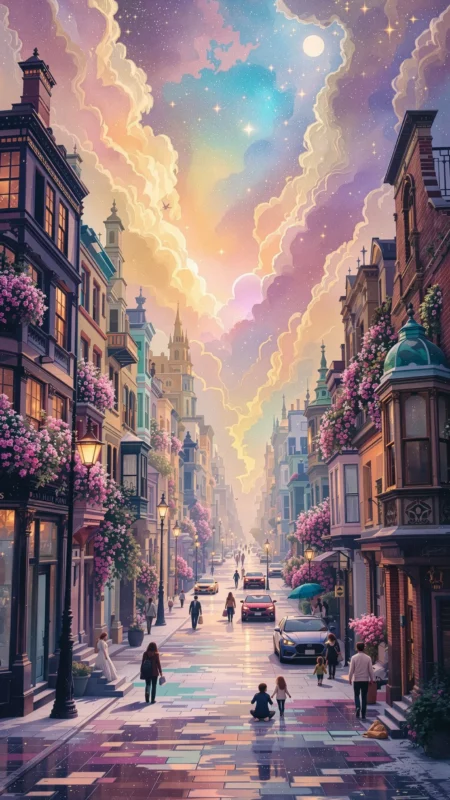


Gentrification

Archetype Meaning & Symbolism

transformative, displacing, ambitious, aesthetic, sterile, calculated, promising, invasive, aspirational, controversial

  • Authenticity is a beautiful ruin, but you cannot live in it. Build something new on the foundation.

If Gentrification is part of your personal mythology, you may...

Believe

  • Change is not just an option; it is a moral imperative for growth and improvement.

  • The past is not a sacred text to be revered, but a rough draft to be ruthlessly edited.

  • Your value is not inherent; it is something you actively construct through deliberate choices and aesthetic curation.

Fear

  • That your 'un-renovated' self will be discovered, exposing you as an imposter in your own life.

  • Becoming obsolete, outdated, or falling out of style, causing your personal 'market value' to plummet.

  • The emptiness of a perfectly curated life, the terrifying realization that you have built a beautiful house but have forgotten how to live in it.

Strength

  • A powerful visionary ability to see potential where others see only decay or stagnation.

  • The ambition and discipline to enact radical, transformative change in your own life and surroundings.

  • A refined aesthetic sense and the capacity to create beauty, order, and value.

Weakness

  • A tendency to devalue history, loyalty, and the messy, intangible aspects of human connection.

  • A potential for ruthlessness, a willingness to 'displace' people, ideas, or parts of yourself that no longer fit the new brand.

  • A fragile sense of self-worth that is dangerously dependent on external validation and surface aesthetics.

The Symbolism & Meaning of Gentrification

In your personal mythology, the Gentrification archetype represents a profound, often fraught, relationship with transformation. It symbolizes the impulse to tear down the worn, familiar structures of the self and erect something sleeker, more profitable, more socially acceptable in its place. This is not the gentle metamorphosis of a butterfly: it is the deliberate, architectural act of gutting a building to its studs, preserving the 'good bones' while ruthlessly discarding the lived-in history. It speaks to an ambition that is as much about aesthetics as it is about status, a belief that a better life can be constructed, curated, and designed, often at the expense of what came before. It is the part of you that looks at your own past not with nostalgia, but with the critical eye of a developer seeing untapped potential.

The archetype could also be a mirror for your anxieties about authenticity and belonging. To embody Gentrification is to be in a perpetual state of arriving, never quite being 'from' the new place you inhabit, whether that place is a social class, a career, or a new version of your own identity. It might symbolize a deep-seated belief that your original self is somehow not enough, that it needs to be polished, packaged, and sold to a higher bidder to be worthy. This internal narrative can be a powerful engine for self-improvement, but it may also create a profound sense of alienation, a quiet fear that beneath the reclaimed wood and stainless steel appliances of your new persona, there is a void where a home used to be.

Ultimately, this archetype forces a confrontation with the cost of progress. It asks what is lost when a 'rough' neighborhood of the soul is made 'safe'. What happens to the ghosts, the memories, the messy, complicated stories that gave the old self its character? The symbolism of Gentrification in your mythos is a constant negotiation between the allure of the new and the gravitational pull of your own history. It is the internal battle between the preservationist and the developer, a conflict that defines the very landscape of your identity and shapes the story of who you are becoming.


Gentrification Relationships With Other Archetypes

The Ruin:

Gentrification sees The Ruin not as a sacred testament to time and memory, but as a property with potential. It is drawn to the 'good bones' and 'historic charm' of The Ruin, but its intention is not preservation: it is renovation. The relationship is fundamentally exploitative. Gentrification strips The Ruin of its tragic dignity, plastering over its scars, replacing its ghosts with minimalist furniture. For the individual, this could represent a tendency to view past traumas or failures not as parts of a rich history to be integrated, but as 'fixer-uppers' to be quickly renovated into palatable success stories, erasing the valuable lessons etched into the decay.

The Pioneer:

Gentrification may be seen as the urbane, second-generation descendant of The Pioneer. While The Pioneer ventures into the unknown wilderness to create something from nothing, Gentrification ventures into established, albeit 'under-developed,' cultural landscapes to remake them in its own image. The Pioneer’s challenge is survival against nature; Gentrification's challenge is the successful rebranding of culture. This relationship highlights a shift from raw creation to sophisticated curation. The mythos might involve a family history where an ancestor was a literal pioneer, and you now find yourself 'pioneering' in cultural or economic spaces, a more complex and morally ambiguous frontier.

The Ghost:

The Ghost is what Gentrification creates and fears most. Every displaced memory, every abandoned friendship, every bulldozed aspect of the former self becomes a ghost that haunts the new, sterile structure. The Ghost represents the ineradicable past, the authentic character that whispers through the new floorboards. Gentrification’s relationship with The Ghost is one of constant suppression. It hangs new art to cover the water stains of old sorrows and plays curated playlists to drown out the echoes of past laughter. In a personal mythos, this could manifest as a deep-seated anxiety that one’s carefully constructed new life will be undone by the return of a repressed memory, a past love, or an old, 'unrefined' version of oneself.

Using Gentrification in Every Day Life

Personal Rebranding:

When your current identity feels like a beloved but rundown neighborhood, the Gentrification archetype might inform a total overhaul. This is not about a new haircut: it is a calculated demolition of old mannerisms, friend groups, and habits that no longer serve the desired 'market value' of your persona. You might trade worn band t-shirts for bespoke linen, dive bars for cocktail lounges with artisanal ice, and sprawling conversations for the clipped, effective networking of a new professional class. It is the conscious curation of a self designed for a different, perhaps more discerning, audience.

Creative Process:

In a creative project that has stalled, this archetype could suggest a radical intervention. Instead of incrementally editing a manuscript or tweaking a painting, you may 'gentrify' the entire project. This could mean taking the core 'location'—the central idea—and bulldozing the existing structure. You might rewrite the story from a completely different perspective, repaint the canvas with a minimalist aesthetic that erases the chaotic energy of the original, or recompose a piece of music using polished, electronic sounds in place of organic instruments. The soul of the work may be debated, but its presentation becomes undeniably new.

Relationship Dynamics:

When a long-term partnership or friendship has grown stagnant, embodying this archetype could lead to a 'renovation' of the dynamic. This is a risky, often painful process. It might involve setting new, demanding boundaries that effectively 'price out' old, comfortable patterns of behavior. You could insist on a new 'aesthetic' for the relationship: more ambitious shared goals, a different social circle, or a more curated way of spending time together. The original, comfortable 'character' of the relationship is displaced in favor of a new, potentially more valuable, but perhaps less authentic, version.

Gentrification is Known For

Displacement

Its primary action is the removal of the old to make way for the new. This applies not just to physical spaces but to ideas, habits, relationships, and even versions of the self. The original occupant is often seen as possessing a certain 'charm' but lacking in 'value,' justifying its removal.

Aesthetic Shift:

It is known for imposing a new, often uniform, visual and cultural language. This is the shift from worn, organic textures to clean lines, minimalist design, and curated consumption. It’s the coffee shop where every latte has perfect foam art, replacing the diner with its charmingly chipped mugs.

Value Inflation:

A core function of the Gentrification archetype is to take something perceived as under-valued and, through cosmetic and structural change, radically increase its perceived worth. This new value, however, is often defined by an external market rather than by the intrinsic history or utility of the original.

How Gentrification Might Affect Your Personal Mythology

How Gentrification Might Affect Your Mythos

If the Gentrification archetype shapes your mythos, your life story might not be one of gradual growth but of distinct and jarring eras of renovation. You may speak of your life in terms of 'before' and 'after' specific transformations: 'that was my pre-Brooklyn self,' or 'I was a different person before I got into wellness.' Each chapter could be a new development project, where the protagonist—you—moves into a new psychic neighborhood, adopts its customs and aesthetics, and systematically severs ties with the previous one. The narrative arc is one of constant, deliberate upgrading, a relentless upward trajectory that privileges reinvention over continuity.

Your personal mythology could be haunted by the ghosts of displaced selves. The stories you tell about your past might be carefully curated, with the rough edges sanded down and the 'undesirable elements' edited out. Your foundational myth may not be about where you came from, but how far you have escaped from it. This creates a compelling story of ambition and success, but it may also be a lonely one. The hero of this mythos is perpetually a newcomer, an immigrant to their own life, forever renovating the present to escape a past they have deemed uninhabitable.

How Gentrification Might Affect Your Sense of Self

Your view of self may be that of a project in perpetual development. You might not see a core, static 'you,' but rather a collection of features and attributes that can be improved, upgraded, or demolished to increase your overall value. This can foster incredible adaptability and drive, a willingness to learn new skills, adopt new mindsets, and physically transform yourself to meet new challenges. You are the architect, developer, and resident of 'Project You,' and you are always looking for the next renovation that will increase its curb appeal.

However, this perspective could also lead to a fragile and externally-defined sense of identity. Your self-worth might become dangerously tethered to the 'market'—your social standing, your professional success, the aesthetic quality of your life. A setback or criticism might not feel like a simple failure but like a catastrophic drop in property value. There may be a persistent, quiet anxiety that you are an imposter in your own beautifully curated life, a fear that someone will discover the 'original condition' beneath the expensive finishes.

How Gentrification Might Affect Your Beliefs About The World

You may view the world as a landscape of opportunities for improvement, a series of fixer-uppers waiting for the right vision. When you encounter a person, an organization, or an idea, your first instinct might not be to understand its history, but to assess its potential for redevelopment. Tradition may seem like an obstacle, and entrenched culture could appear as a charming but inefficient impediment to progress. This is the worldview of the developer, who sees not a beloved neighborhood park, but a potential location for luxury condos with a green roof.

This lens could make you a powerful agent of change, capable of seeing what could be and executing a vision. Yet, it may also foster a kind of blindness to intangible value. The worth of a community’s history, the strength of long-standing traditions, the beauty in imperfection—these things might not compute in a calculus that prioritizes polish, efficiency, and growth. Your worldview may become one where anything that cannot be renovated or monetized is ultimately seen as disposable.

How Gentrification Might Affect Your Relationships

In relationships, you may function as an architect or a curator. Friendships and partnerships might be assessed based on their potential to contribute to the 'project' of your life. You could be drawn to people who reflect your aspirational identity or who can help you 'level up.' This can lead to powerful, goal-oriented alliances and a social circle that is aesthetically and professionally cohesive. You may be the person who elevates your friends, encouraging them to pursue their own 'renovations.'

Conversely, this approach could render your connections conditional and transactional. There may be a tendency to 'displace' old friends who no longer fit the new aesthetic of your life, a quiet and often guilt-ridden phasing out of those who represent a 'before' picture. Intimacy may prove difficult, as it requires revealing the un-renovated parts of yourself—the messy rooms, the cracked foundations. A deep fear could be that if a partner saw the 'un-gentrified' you, they would deem the property worthless.

How Gentrification Might Affect Your Role in Life

Your perceived role in life might be that of the Visionary Developer. You are the one who arrives in a situation, sees its fallow potential, and has the capital—whether social, intellectual, or financial—to enact a sweeping transformation. You are not a caretaker or a preserver; you are a builder. This role is active, powerful, and forward-looking. You may feel a responsibility to 'improve' your environment, your workplace, your family, bringing order, beauty, and increased value wherever you go.

This can also be an incredibly alienating role. As the developer, you are fundamentally an outsider. You are not 'of' the community you are changing; your purpose is to remake it. This can lead to a sense of being perpetually separate from the world you shape, a feeling of being the landlord of your life rather than a resident. You may command respect and admiration for your results, but you might not inspire the love and belonging reserved for those who simply inhabit a place, flaws and all.

Dream Interpretation of Gentrification

In a positive context, dreaming of gentrification—such as renovating a dilapidated house into a beautiful home or cleaning up a city block—may symbolize a successful and healthy process of self-improvement. It could represent the clearing out of old, limiting beliefs (the condemned buildings) and the construction of a new, more empowered identity (the art galleries and cafes). Such a dream might affirm that you are taking active, positive steps to increase your self-worth, create order from chaos in your mind, and build a more beautiful inner world for yourself to inhabit. It is the psyche’s affirmation of a successful renovation.

In a negative context, such dreams could be steeped in anxiety and loss. You might dream that your childhood home has been turned into a cold, minimalist coffee shop and you can no longer find the door. Or perhaps you are the one wielding the sledgehammer, crying as you tear down a beloved, familiar place. These dreams may signify a profound fear of losing your authenticity, a guilt over having 'sold out' or betrayed your roots. It could be a warning from your subconscious that in the rush to 'improve,' you are displacing a vital, beloved part of your own history, leaving you a stranger in the newly polished landscape of your own soul.

How Gentrification Archetype Might Affect Your Needs

How Gentrification Might Affect Your Physiological Needs

The Gentrification archetype might manifest physiologically as a deep belief that the body itself is a property to be managed, renovated, and optimized for peak market value. Your relationship with food, exercise, and rest could be highly disciplined and aesthetic-driven. This is not about health for its own sake, but health as a status symbol. You might trade a simple jog for a membership at an exclusive boutique fitness studio, or a home-cooked meal for an expensive, beautifully packaged meal delivery service. The body must reflect the curated lifestyle: clean, efficient, and visually appealing.

This relentless drive for optimization may lead to a disconnect from the body's natural, messier signals. Hunger, fatigue, and the need for unstructured rest could be viewed as inefficiencies to be managed or 'hacked,' rather than essential communications from the self. The body becomes another project, and its basic needs are subordinated to the larger architectural vision. The ultimate goal is a physiological state that is not just healthy, but is also a testament to one's discipline, taste, and status.

How Gentrification Might Affect Your Ideas of Belonging

Belonging may be viewed as an acquisition rather than an organic process. You might seek out and attempt to join groups, communities, or social strata that align with your aspirational self. Belonging is earned through demonstrating shared tastes, values, and status markers: the right neighborhood, the right vacation spots, the right opinions on art. It is the sense of belonging that comes from having the key to the private garden, not from having grown up playing in the public park.

This approach can make true, unconditional belonging feel perpetually out of reach. You might gain access, but you may not feel true ownership. There could be a lingering sense of being an imposter, a tourist who has learned the local customs but will never be a native. Love and intimacy may be challenging, as they require a vulnerability that contradicts the polished, curated self you present to the world. You might fear that if someone were to see the 'before' pictures of your soul, they would revoke your membership.

How Gentrification Might Affect Your Feelings of Safety

For this archetype, safety is not merely the absence of threat, but the presence of a controlled, predictable, and aesthetically harmonious environment. Your safety needs may manifest as a desire to create a 'gated community' of the self. This involves curating your surroundings, your information diet, and your social circles to filter out anything that feels chaotic, 'low-brow,' or unpredictable. Safety is a minimalist apartment with everything in its place, a carefully managed calendar, and a social media feed free of dissent.

The primary fear is not physical danger, but the danger of contamination by the un-renovated world: the messy emotions of others, the unpredictable turns of fortune, the intrusion of anything that might lower the 'value' of your carefully constructed life. This pursuit of a sterile safety can become a prison, a beautiful, climate-controlled enclosure that protects you from risk but also insulates you from the chaotic, unpredictable, and often deeply meaningful experiences of life itself.

How Gentrification Might Affect Your Views of Esteem

Esteem is likely built upon a foundation of external validation and visible achievement. Your self-worth is reflected in the quality of the life you have built: the job title, the address, the partner, the aesthetic coherence of your existence. This is esteem as 'curb appeal.' When the external markers are positive and admired by others, your self-esteem can be high. You may feel a profound sense of pride in the transformations you have orchestrated in your own life.

However, this foundation for esteem can be perilously fragile. It is dependent on a constantly shifting market of social opinion. A professional setback, a social rejection, or simply falling behind a trend can trigger a crisis of self-worth, akin to a housing market crash. There may be a relentless, humming anxiety beneath the surface: the need to constantly maintain and upgrade the self to prevent its value from depreciating. Esteem is not a state of being, but a constant, exhausting project of maintenance and renovation.

Shadow of Gentrification

The shadow of the Gentrification archetype emerges when the drive to renovate becomes a compulsion to erase. It is a sterile, soulless perfectionism that cannot tolerate any speck of dust from the past. In this shadow state, you may become a colonizer of your own soul, treating your own memories, quirks, and 'imperfections' as an indigenous population to be violently displaced. Every authentic, spontaneous impulse is bulldozed to make way for a pre-approved, market-tested replacement. The goal is no longer improvement, but total erasure of the original self, resulting in a life that is impeccably designed but profoundly uninhabited.

This shadow can also manifest as a deep-seated contempt for anything perceived as 'unrefined' in others. It can create a cruel social critic who judges people based on their aesthetic choices, their social standing, or their lack of ambition. The shadow gentrifier becomes a ghost in their own machine, haunting a beautiful, empty life, perpetually polishing surfaces to avoid seeing the terrifying hollowness of their own reflection. It is the ultimate tragedy: to have successfully built the perfect life, only to realize you have priced your own soul out of the neighborhood.

Pros & Cons of Gentrification in Your Mythology

Pros

  • You possess a rare and powerful ability to reinvent yourself and your circumstances, turning perceived liabilities into assets.

  • Your visionary drive can create tangible improvements, bringing order, beauty, and success to your life and the lives of those you influence.

  • You are adaptable and forward-thinking, unafraid to let go of what no longer serves you in the pursuit of a better future.

Cons

  • You risk a profound sense of alienation from your own history and authentic self, becoming a tourist in your own life.

  • Your relationships can become conditional and transactional, leading to a life that is well-connected but lacking in deep, unconditional intimacy.

  • Your self-worth may be fragile and anxiety-producing, as it is tied to the ever-changing market of external approval and aesthetic trends.