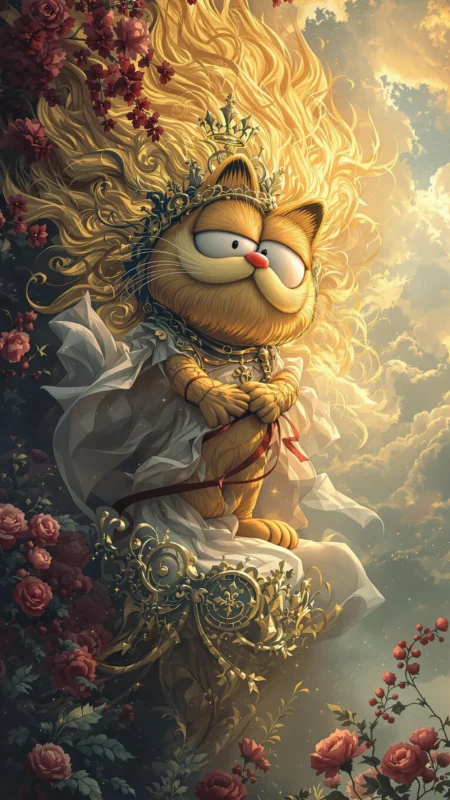


Garfield

Archetype Meaning & Symbolism

Hedonistic, cynical, lazy, gluttonous, witty, philosophical, entitled, loyal, observant, unapologetic

  • Love me, feed me, never leave me.

If Garfield is part of your personal mythology, you may...

Believe

  • That true contentment is found not in ambitious striving, but in strategic inaction and the artful appreciation of simple, sensual pleasures.
  • That one's own comfort is a sacred priority, and that establishing and defending the boundaries necessary to protect it is a high moral calling.
  • That a cynical outlook is not a form of negativity, but a pragmatic and protective wisdom that insulates the soul from the world's inevitable disappointments.

Fear

  • An unscheduled disruption to the routine: the existential terror of a Monday morning, the sudden announcement of a diet, or the unavailability of a favorite food.
  • Any form of effort that does not come with a guaranteed, immediate, and pleasurable reward; the very concept of character-building hardship is seen as a cruel joke.
  • The loss of the caregiver, the 'Jon' figure, whose labor and affection provide the essential foundation of comfort upon which this entire philosophy of life rests.

Strength

  • An almost zen-like ability to be fully present in the moment, particularly if that moment involves a satisfying meal, a comfortable surface, or a warm patch of sun.
  • A mastery of personal boundaries, wielded with an unapologetic and quiet finality that deflects unwanted demands on one's time and energy.
  • A profound capacity for self-acceptance, feeling little need to apologize for or change one's fundamental nature, desires, or perceived lack of ambition.

Weakness

  • A tendency towards sloth and apathy that can curdle into genuine stagnation, preventing personal growth, new experiences, and the discovery of novel joys.
  • A protective cynicism that, while useful, may also create a barrier to genuine wonder, altruism, and deep, vulnerable connection with others.
  • A foundational dependency on others to maintain one's lifestyle, a critical vulnerability hidden beneath a carefully constructed veneer of solitary indifference and superiority.

The Symbolism & Meaning of Garfield

To invite Garfield into one’s personal mythology is to canonize the art of passive resistance. He is the furry, orange Buddha of the breakfast nook, a guru of the glorious mundane. In a culture that worships the grind, that plasters motivational posters over the cracks of its own exhaustion, Garfield represents a powerful counternarrative. His very existence validates the quiet, personal pursuit of comfort over the loud, public chase for achievement. He teaches that perhaps the most radical act in an overworked world is to do nothing at all, and to do it with profound, unapologetic intention. His laziness is not a failing; it is a philosophical stance, a bulwark against the absurd demands of modern life.

The archetype could also be seen as the Id made manifest, a walking, sleeping, eating embodiment of pure, unvarnished desire. Our society demands sublimation, the deferral of gratification for some future, ever-receding reward. Garfield rejects this premise entirely. His desires are simple, immediate, and non-negotiable: food, sleep, warmth. By embracing him, one may begin to question the virtue of self-denial. Perhaps our deepest, most creaturely comforts are not base instincts to be overcome, but sacred truths to be honored. He poses a silent, profound question: what if the meaning of life isn't a complex equation, but a simple, warm meal?

Garfield's signature cynicism, his perpetually heavy-lidded gaze upon the world, may function as a form of spiritual armor. It is a carefully constructed defense against the inevitable disappointments of a world that rarely lives up to the ideal of perfect, uninterrupted comfort. By expecting little beyond the imminent arrival of his next meal or the threat of a looming Monday, he insulates himself from the grander heartbreaks and existential panics that plague more ambitious souls. In his strategic apathy, he finds a strange and resilient kind of peace. He is the patron saint of low expectations, a guide for navigating the world not with wide-eyed optimism, but with the weary wisdom of one who knows the surest path to contentment is paved with small, reliable pleasures.


Garfield Relationships With Other Archetypes

The Unmade Bed

With the Unmade Bed, the Garfield finds not just an ally, but perhaps a soulmate. It is a rumpled delta of cotton and down, a landscape sculpted by the gentle erosion of a night’s turning. The Bed could be seen as a physical manifestation of the Garfield’s core philosophy: a testament to gravity’s slow, sweet victory over ambition, a warm, soft-willed rebellion against the sharp-angled demands of the day. It does not ask for anything but presence, offering in return a sanctuary from the tyranny of the vertical. For the Garfield, sinking into its yielding chaos may be less an act of sloth than a return to a more honest, primal state, a daily baptism in the forgiving waters of entropy.

Monday

Monday, in this cosmology, is the eternal antagonist, the cold, bureaucratic edict from the universe itself. It is not merely a day but an existential condition, a crack of unwelcome light under the door of the weekend. The relationship between the Garfield and Monday could be understood as a kind of ritualistic, cold warfare. Monday represents the intrusion of external systems—schedules, expectations, the metronome of obligation—into the sovereign territory of the self. The Garfield’s famous animosity may not be directed at the calendar page itself, but at what it symbolizes: the abrupt end of self-determination, the forced re-engagement with a world that fails to appreciate the profound importance of a sunbeam nap. To resist Monday is, perhaps, to defend the last bastion of personal peace.

The Eager Fool

With The Eager Fool—that avatar of guileless, slobbering enthusiasm—the Garfield finds its most perplexing and perhaps necessary foil. The Fool is a sunbeam that insists on finding a crack in the drawn blinds, an engine of relentless optimism that runs on nothing but air and affection. The Garfield’s relationship with this force of pure, uncritical devotion could be seen as a study in gravitational fields. The Fool’s boundless energy may highlight the Garfield’s own studied inertia, its simple joy a stark counterpoint to a carefully curated cynicism. Yet, a strange co-dependency may be at play. The Fool’s sincerity provides the perfect, non-judgmental backboard for the Garfield’s witty barbs, its unwavering presence an anchor of simple, baffling love in a world of complex disappointments. The Garfield may perform the role of the annoyed elder statesman, but it is a performance that, perhaps, requires the warmth of this adoring, witless audience to feel complete.

Using Garfield in Every Day Life

On Facing a Creative Block:

When the well of inspiration runs dry, the Garfield archetype might not suggest pushing through the resistance. Instead, it offers the wisdom of strategic retreat: a nap. Not as an act of procrastination, but as a sacred, intentional pause. The problem may not be solved by more effort, but by the deep, restorative magic of a sunbeam, a full belly, and the temporary surrender of consciousness. The muse, it suggests, is often found in the spaces between efforts.

On Navigating Social Obligations:

Confronted with a calendar crowded with draining social demands, one who channels Garfield may discover the profound power of the unapologetic “no.” It is the dismissal of an invitation not with a fabricated excuse, but with the quiet conviction that one’s own peace is a more compelling engagement. This archetype teaches that one’s energy is a finite resource, best spent on the deep comfort of solitude or the company of those who ask for nothing but shared silence.

On Redefining Success:

In a world that quantifies success through promotions, accolades, and public recognition, the Garfield mythos offers a radical alternative. Success may be redefined by purely internal, sensual metrics: the consistent quality of one's morning coffee, the discovery of a new and superior napping location, the sheer contentment of a perfectly lazy Sunday. It is a quiet rebellion against the tyranny of ambition, locating achievement not in the future, but in the immediate, palpable now.

Garfield is Known For

Devotion to Lasagna

An almost spiritual obsession with the layered pasta dish, representing the pinnacle of sensual pleasure and the ultimate reward for the trial of existence.

Hatred of Mondays

A symbolic and deeply felt rebellion against the structured work week, the return to obligation, and the interruption of a perfectly calibrated schedule of leisure.

Complex Relationships

The cynical, yet deeply dependent, bond with his owner Jon and the playful, often cruel, torment of the dog Odie, revealing a complicated need for companionship and a stage for his domestic tyranny.

How Garfield Might Affect Your Personal Mythology

How Garfield Might Affect Your Mythos

When Garfield becomes a central figure in one's personal mythos, the very structure of the life story may be rewritten. The traditional hero’s journey, with its calls to adventure, its trials, and its triumphant return, is replaced by something quieter, more cyclical, and profoundly domestic. The great quest may not be for a distant holy grail but for the platonic ideal of a pizza. The dragons to be slain are not external monsters but internal anxieties about productivity, the tyranny of the alarm clock, and the specter of a flavorless meal. The narrative arc flattens from a dramatic ascent into a gentle, undulating rhythm of satisfaction and rest. The story becomes less about becoming something more, and more about the art of simply, and contentedly, being.

This re-narration could shift the way one marks time and measures a life. Major life chapters may no longer be defined by career milestones, romantic conquests, or geographic relocations. Instead, the epochs of one's story might be the “Era of the Perfect Armchair,” the “Winter of Discovering Slow-Cooked Ragu,” or the “Great Napping Renaissance.” Life's meaning is excavated from the mundane. It is a mythology of the contented moment, where the grandest adventure is the successful navigation of a day with maximum comfort and minimal effort, and the greatest treasure is a quiet house and a well-stocked refrigerator.

How Garfield Might Affect Your Sense of Self

To see oneself through the Garfield archetype is to grant oneself a radical form of permission. It is the permission to be flawed, to be lazy, to be governed by appetite, and to view these qualities not as moral failures but as authentic expressions of one's nature. The self ceases to be a perpetual improvement project and becomes, instead, a creature to be understood, managed, and lovingly tended to. Self-care is no longer a scheduled, compensatory activity but the very fabric of existence. One may learn to silence the relentless inner critic that demands more effort, more ambition, more self-denial, and replace it with a gentle, rumbling purr of self-acceptance.

Embodying this archetype may cultivate a deep, almost regal, sense of self-sovereignty. Garfield is the undisputed king of his domain, his opinions are law, his comfort is paramount. To integrate this into the self is to adopt an internal posture of entitlement, not in the pejorative sense, but as a conviction of one's inherent worthiness of pleasure and peace. It fosters a belief that one’s needs are not burdens or signs of weakness, but valid and important directives from the core of one's being. The self becomes its own greatest authority on what constitutes a good life, unswayed by the judgments or expectations of the outside world.

How Garfield Might Affect Your Beliefs About The World

When viewed through Garfield's heavy-lidded eyes, the world itself may seem to shrink, its frantic complexities receding into a distant, muffled hum. Grand political dramas, global economic shifts, and existential debates about the fate of humanity may seem abstract and faintly absurd compared to the immediate, tangible reality of a warm patch of sunlight on the floor. It is a worldview of radical, localized focus. Why worry about the heat-death of the universe when there is the more pressing issue of what's for dinner? This perspective may cultivate a philosophy of calculated indifference, a strategic disengagement from problems one cannot solve in favor of perfecting the small, controllable sphere of one's immediate existence.

This perspective could also foster a profound, almost spiritual, appreciation for the sensual details of life that are so often overlooked in the rush to get somewhere else. The specific texture of a fleece blanket, the rich aroma of brewing coffee, the particular slant of afternoon light as it signals naptime: these become the central, holy events of the day. The world's meaning is not sought in grand, abstract principles but is found in the direct, unmediated experience of physical comfort and sensory pleasure. The universe's deepest secrets might be revealed not in the stars, but in the miraculous layering of cheese, sauce, and pasta in a perfect lasagna.

How Garfield Might Affect Your Relationships

The Garfield archetype may reshape one’s understanding of relationships, re-evaluating them based on a simple, yet profound, metric: do they provide comfort and sustenance? It could inspire a quiet exodus from relationships built on obligation, transactional networking, or the exhausting performance of social niceties. Instead, one might gravitate towards companions who are like a favorite armchair: reliable, comforting, and requiring little more than quiet presence. Love may be understood not as a dramatic, passionate affair, but as a steady, reliable source of warmth and provision, a pact of mutual comfort against the harshness of the world.

Within this framework, the expression of affection might become more subtle, even seemingly grudging. Love is not declared in grand gestures but demonstrated in the consistent, mundane act of showing up. It is the tolerance of another's irritating habits, the sharing of a comfortable silence, the occasional decision not to kick the metaphorical dog off the furniture. Relationships become defined by a deep, unspoken codependence, a cynical but ultimately unbreakable bond forged in the shared space of a home. It is a connection that appears, from the outside, to be one of constant complaint, but is, at its core, a testament to the power of unwavering, comfortable proximity.

How Garfield Might Affect Your Role in Life

Adopting the Garfield mythos could precipitate a significant shift in one's perceived role in life. The grand, weighty titles of “innovator,” “leader,” or “changemaker” may be shed in favor of something more personal and esoteric: “curator of comfort,” “master of the art of leisure,” “guardian of the sacred nap.” This is not seen as a demotion, but as a promotion to a role of greater authenticity and personal significance. One’s purpose is no longer to strive and achieve within the world's systems, but to witness, to enjoy, and to expertly resist the siren call of needless exertion. One becomes the quiet, stable, gravitational center of their own cozy universe.

This may also cast one in the role of the “benevolent tyrant” of their domestic sphere. It is a role of immense power within a carefully circumscribed kingdom. One may find themselves setting the household rules of comfort, dictating the schedule of relaxation, and passing solemn judgment on the quality of meals and the comfort of seating. This is not a malicious dominance, but a playful and profound way of asserting control over one’s immediate environment, creating a predictable and pleasurable sanctuary in a world that often feels chaotic and beyond one’s influence. It is the role of the one who knows best, at least when it comes to the serious business of doing nothing.

Dream Interpretation of Garfield

To dream of Garfield, or to find oneself embodying his characteristics in a dream, may arrive as a potent message from the subconscious. In a positive context, it is likely a call to decelerate, a prescription for radical rest. The dream could be the psyche’s way of granting permission to indulge, to embrace pleasure without guilt, and to honor the body’s simple needs for food and sleep. It might signify that a period of struggle is over and you have earned a season of fallow contentment, suggesting that the path forward is not through more effort, but through surrender to sensual enjoyment.

In a negative context, a Garfield dream could serve as a warning. It might symbolize a descent into a debilitating apathy, where healthy rest has curdled into sloth, and protective cynicism has become a bitter, isolating nihilism. The dream may point to a feeling of being stuck, mired in unhealthy habits or a state of passive dependency. It could be a reflection of a fear that you are becoming merely an entitled observer of your own life, abdicating responsibility and allowing your world to shrink to the size of a food bowl, forfeiting growth and meaningful connection for the temporary solace of comfort.

How Garfield Archetype Might Affect Your Needs

How Garfield Might Affect Your Physiological Needs

The Garfield archetype performs a kind of spiritual alchemy on the base of Maslow's pyramid, transforming physiological needs from a foundation into a glorious, ornate pinnacle. Food, sleep, and warmth are not merely requirements for survival; they are elevated to the status of art forms, even sacred rituals. The mythos of Garfield within one's life story is a narrative centered on the holy trinity of appetite, comfort, and repose. Life can become a liturgy of attending to the body’s wisdom, a dedicated practice of honoring its profound, simple desires for nourishment and rest above all else.

This elevation of the physiological may also cultivate a hyper-attunement to physical states, a sensitivity that borders on the profound. A minor inconvenience like a slightly lumpy cushion, a tepid cup of coffee, or an unwelcome draft is not a trivial annoyance but a genuine existential affront, a sign that the cosmos is momentarily out of alignment. The body’s comfort level becomes the primary barometer for the quality of any given moment. This creates a life where the pursuit of physiological equilibrium is not a chore but the central plot, the ongoing quest for a state of perfect, uninterrupted creaturely bliss.

How Garfield Might Affect Your Ideas of Belonging

Love and belonging, as interpreted through the Garfield archetype, are defined by service and unwavering physical presence. To be loved is to be fed. To belong is to have a designated spot, whether it is a specific armchair or a permanent place in the center of the household's gravity. Belonging is not achieved by joining a cause or assimilating into a group; it is established by becoming an undeniable, if occasionally irksome, fixture in a domestic ecosystem. One belongs because one’s absence would disrupt the delicate balance of comfort and routine, even if one’s presence is a source of constant, low-grade complaint.

The expression of love and connection may become a subtle, almost coded language. It is communicated not through effusive words or grand romantic gestures, but through the quiet ministry of care and the grumpy tolerance of others. Affection is shown in the act of preparing a meal, in the begrudging sharing of a warm spot, or in the silent, shared contempt for a rainy day. It is a bond of profound, unspoken codependence, a relationship where the chaotic annoyance of another being becomes, over time, its own strange and essential form of comfort.

How Garfield Might Affect Your Feelings of Safety

Within the Garfield mythos, the concept of safety is intimately tied to predictability and the fortification of one’s personal environment. Safety is less about locks on the doors and more about the unwavering certainty of a meal appearing at the appointed hour. It is security found in the absolute reliability of routine. The greatest threats are not intruders or disasters, but disruptive elements that threaten the carefully calibrated ecosystem of comfort: a surprise visitor, an unexpected errand, the existential dread of a diet, or the horror of a trip to the vet. Safety is a fortress built of familiarity and consistency.

This profound need for a predictable environment can manifest as a powerful resistance to change, novelty, or spontaneity. The unknown is threatening not because it is inherently dangerous, but because it is effortful and its comfort-quotient has not yet been established. One might find themselves building a sanctuary of the familiar, viewing travel, new hobbies, or even new people with a deep and abiding suspicion. Safety is the absence of surprise. Every deviation from the norm is a potential breach of security, a crack in the wall of a perfectly controlled and comfortable world.

How Garfield Might Affect Your Views of Esteem

The Garfield archetype offers a model of esteem that is entirely self-contained and internally generated. It is a sense of worth completely detached from external validation, public achievement, or the opinions of others. Respect is derived from an unwavering commitment to one's own principles of pleasure and an expert mastery of the domain of comfort. The archetype feels superior by its very nature, not through comparison, but through a deep, unshakable conviction of its own central importance. Self-esteem is not something to be built or earned; it is a fundamental, immovable fact of one's existence.

This can blossom into a profound, matter-of-fact sense of entitlement. It is the belief that one deserves the best of everything—the choicest cut, the warmest spot, the unwavering attention of a caregiver—simply by virtue of being oneself. This is not the grasping, insecure entitlement of a narcissist, but the calm, regal assurance of a deity in its own small temple. Esteem comes from the core belief that one’s own satisfaction is the highest good, and that the world, or at least one's immediate corner of it, should rightly organize itself around ensuring that satisfaction.

Shadow of Garfield

The shadow of Garfield rises when the charming, philosophical hedonism sours into a grotesque and isolating gluttony of the soul. This is the point where radical self-care collapses into profound selfishness, where the witty cynic devolves into a bitter and joyless nihilist, and where strategic laziness becomes a debilitating, life-denying apathy. In its shadow form, the archetype isn't merely resisting the pressures of hustle culture; it is resisting the pulse of life itself. It encourages the building of a fortress of comfort so impregnable that it becomes a tomb, sealing one off from any experience that requires even a modicum of effort, risk, or vulnerability. The soul begins to starve, even as the belly remains full.

This shadow also manifests as a form of passive-aggressive tyranny within relationships. The individual may weaponize their needs, manipulating those around them through theatrical sighs, performative helplessness, and an endless litany of complaints. The home ceases to be a shared sanctuary and becomes a stage for the shadow-dweller's insatiable, entitled demands. Companions, the 'Jons' and 'Odies' of one's life, are no longer seen as partners but are reduced to service providers, their own needs and personhood rendered invisible by the all-consuming gravity of the shadow Garfield's comfort. It is a profound and lonely isolation, masquerading as kingship.

Pros & Cons of Garfield in Your Mythology

Pros

  • It promotes a radical self-acceptance and provides a powerful cultural permission slip to de-stigmatize rest, pleasure, and non-productivity in an overworked society.
  • It offers a potent antidote to the ambient anxiety of modern life, encouraging a grounding focus on the tangible, simple, and controllable aspects of one's immediate environment.
  • It helps cultivate a sharp, cynical wit that can serve as a useful intellectual tool for deconstructing and deflecting absurd social pressures and hollow corporate expectations.

Cons

  • It can be used to justify physical unhealthiness, personal stagnation, and a fearful resistance to beneficial change, novelty, and growth.
  • It risks fostering an overly cynical and isolationist worldview that can preclude the possibility of deep, vulnerable connection, wonder, and meaningful altruism.
  • It may create and perpetuate a dynamic of codependency, where one's entire state of well-being becomes reliant on the unacknowledged labor and emotional care of others.