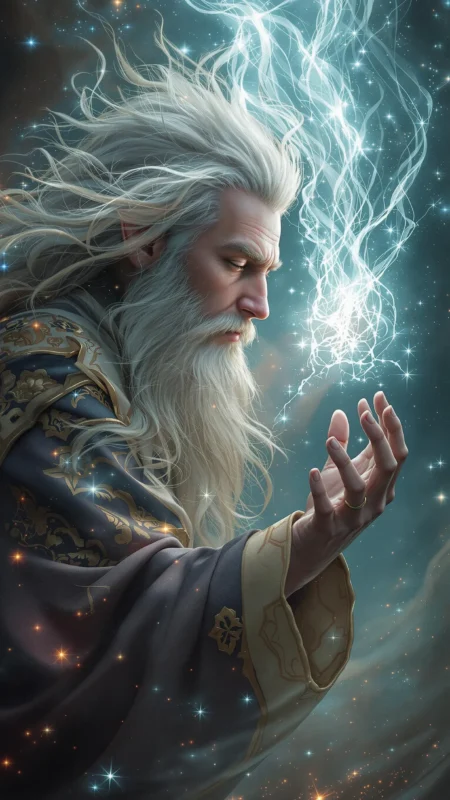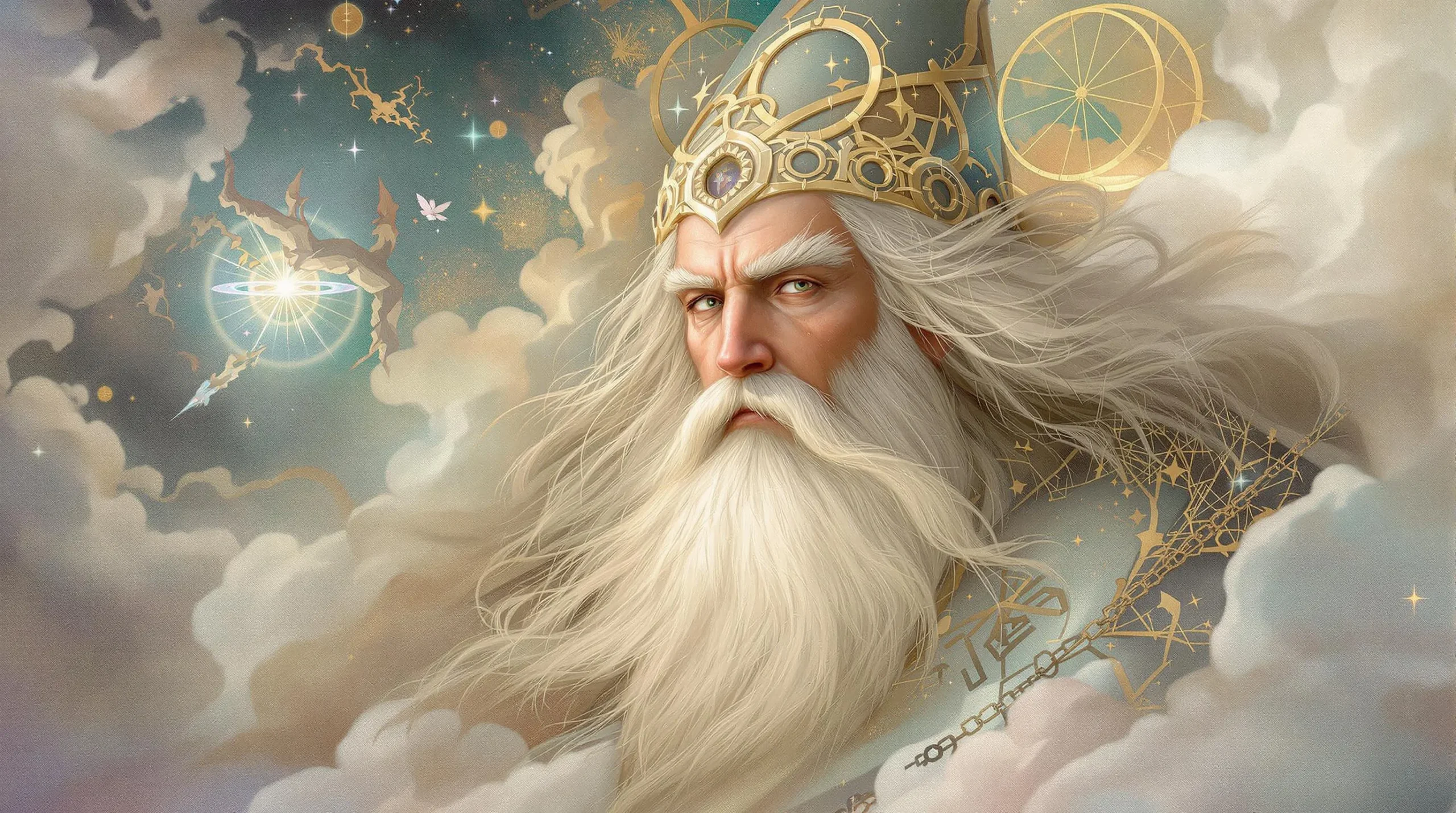


Gandalf

Archetype Meaning & Symbolism

Wise, cantankerous, guiding, powerful, mysterious, patient, irascible, humorous, purposeful, catalytic

  • All we have to decide is what to do with the time that is given us.

If Gandalf is part of your personal mythology, you may...

Believe

  • You may believe that true wisdom is earned through wandering and hardship, not found in books or institutions.
  • You may believe that the smallest person, the most unassuming act, can change the course of the future.
  • You may believe that your timing in life is never wrong; you arrive precisely when you mean to.

Fear

  • You may fear arriving too late, that your intervention or guidance will not be enough to avert disaster.
  • You may fear that your power, if used for selfish ends, could become a destructive and terrible force, like that of Saruman.
  • You may fear being misunderstood or dismissed, of your wisdom being perceived as mere meddling or foolishness.

Strength

  • You possess a long-view perspective, allowing you to remain patient and hopeful when others fall into despair.
  • You have an intuitive ability to see the hidden potential in others and to act as a catalyst for their growth.
  • You are resourceful and adaptable, able to navigate crises with a calm authority and a spark of unexpected magic.

Weakness

  • You may be secretive and withholding, failing to give others the clarity they need out of a misguided belief that they must figure it all out for themselves.
  • You can be impatient and irascible, particularly with those you perceive as foolish or slow to act.
  • Your focus on the 'great quest' can lead to a neglect of mundane responsibilities and the simple, daily needs of relationships.

The Symbolism & Meaning of Gandalf

To find Gandalf in the architecture of your psyche is to find the guide who was there all along. He is not an oracle shouting clear instructions from a mountaintop: he is the quiet, intuitive nudge, the sudden, inexplicable urge to take the left fork in the road. He represents the wisdom that emerges from the grit of experience, not the sterile polish of intellect. His presence in your mythos may be the knock on the door that interrupts a comfortable but stagnant routine, an invitation to an unexpected party that is, in truth, an adventure into the uncharted territories of your own potential.

The archetype is a master of the elements, of fire and light, yet his magic is often small, subtle. A lit pipe, a puff of smoke that takes the shape of a ship, a word of command. This may symbolize that true power lies not in world-shaking displays but in subtle influence, a well-timed question, a shared moment of quiet contemplation. Gandalf embodies the sacred marriage of the irascible and the kind, the stern teacher and the gentle grandfather. To have him as an inner figure is to make peace with one's own contradictions, to understand that a flash of temper and a deep well of compassion can exist in the same heart.

Perhaps most profoundly, Gandalf symbolizes eucatastrophe: the sudden, joyous turn, the unlooked-for grace. He is the eagle arriving at the last moment, the dawn breaking over the besieged fortress. To internalize this archetype is to cultivate a resilient faith in the narrative arc of one’s own life, a trust that even despair is a plot point, not the final chapter. He represents the hope that persists in the deepest shadows, the belief that a light can be rekindled, and that the story is not over yet.


Gandalf Relationships With Other Archetypes

The Unknowing Hero

The relationship here may not be one of a master and an apprentice, so much as a river and its guide. The Gandalf archetype does not command the hero’s flow or determine its destination; rather, he could be seen as the one who knows the deep channels and the hidden rocks, who pole-ax a way through the logjams of doubt. He is perhaps a kind of luthier, who sees in a plain block of wood the potential for a resonant music he himself cannot play, but can help bring forth by tightening a string here, sanding a rough edge there. The hero is the vessel for a destiny, a song waiting to be sung, and the Gandalf figure is the tuning fork that sounds the first, true note, allowing the hero to finally recognize the melody that has been sleeping within them all along.

The Staff

More than a mere tool or a conduit for power, the Staff is a silent partner, a kind of portable homeland. It is, perhaps, the axis mundi in miniature, a single, humble piece of the world-tree that connects the earthy loam of practical travel with the high, starlit branches of cosmic knowledge. Its gnarled grain could hold the memory of every league trod, every secret whispered, a physical chronicle of the wizard’s long, lonely duty. The Staff is the paradox of the Gandalf’s nature made manifest: a simple walking stick that can lean against a tavern wall, and a scepter that can hold back a demon of the ancient world. It may be that the Staff does not grant power, but instead bears its weight, a quiet, wooden shoulder for the burdens of light and time.

The Ancient Shadow

With the Shadow, the Gandalf finds not just an enemy, but a dreadful and defining symmetry. Theirs is the relationship between the lighthouse and the all-consuming fog that gives the beam its desperate purpose. They are, in a sense, twin pressures at the foundation of the world; one the slow, crushing gravity of despair and dominion, the other the defiant, upward thrust of hope and free will. The Shadow might be seen as the silence, the void against which the Gandalf’s words and deeds create meaning. Their conflict is not a simple war, but a timeless, grinding negotiation at the very edge of reality, where the existence of one gives form and terrible significance to the other.

Using Gandalf in Every Day Life

Navigating a Career Crossroads

The archetype may appear not as a detailed map, but as a sudden insight, a nudge towards a riskier but more fulfilling path. It is the internal voice that says, “A wizard is never late, nor is he early, he arrives precisely when he means to,” suggesting your timing, though unconventional, is perhaps correct for your own story.

Facing a Personal 'Balrog'

When confronted with a deep-seated fear or a seemingly insurmountable obstacle, embodying Gandalf could mean finding the resolve to stand your ground. It is the act of declaring “You shall not pass!” not to an external foe, but to the internal demons of self-doubt and procrastination, understanding that sometimes you must fall into the abyss of the unknown to be reborn stronger.

Mentoring Others

When a friend or colleague seeks guidance, the Gandalf within you might not offer direct answers. Instead, it could pose a pointed question, offer a cryptic story, or simply provide quiet companionship on their journey, trusting in their ability to find their own way, much like Gandalf trusted a small hobbit with the fate of the world.

Gandalf is Known For

Guidance and Catalysis

He is not the hero of the story but the force that sets the hero in motion. He appears at crucial junctures to provide a push, a piece of wisdom, or a necessary tool, then recedes, allowing the protagonist to own their journey.

Sacrifice and Rebirth

His battle with the Balrog in Moria, a seeming demise, leads to his transformation from Gandalf the Grey to Gandalf the White. This act symbolizes the necessity of confronting one's own darkness to emerge with greater clarity and power.

A Fondness for the Small and Unassuming

His deep friendship with hobbits and his belief in their capacity for greatness speaks to a wisdom that values inner courage and simple goodness over conventional measures of strength and importance.

How Gandalf Might Affect Your Personal Mythology

How Gandalf Might Affect Your Mythos

The Gandalf archetype introduces a pivotal character into your personal story: the Wise Old Guide. Your life may no longer feel like a solo trudge but a mentored quest. Events that once seemed random or chaotic could be reinterpreted as nudges from this inner figure, moments where your deeper consciousness provided a cryptic clue or a necessary obstacle. Your mythos gains a narrator, a consciousness that sees the bigger picture. You might begin to see your own narrative not as a straight line, but as a series of departures and returns, each orchestrated to reveal a new layer of your own character, each journey into the wild returning you to the Shire, changed.

Furthermore, this archetype shapes the very pacing of your personal myth. Gandalf’s sense of timing is legend: he is never late, nor is he early. Integrating him means developing a profound patience with your own unfolding story. You may cease to berate yourself for not being “there” yet, wherever “there” is. Instead, you could learn to trust the rhythm of your own journey, recognizing periods of quietude and comfort, your sojourns in Rivendell, as necessary preparations for the inevitable call to adventure. Your life story stops being a race and becomes a pilgrimage, whose arrivals are always perfectly on time.

How Gandalf Might Affect Your Sense of Self

To hold Gandalf within is to grant yourself permission to be a work in progress, to be both Grey and White. You might accept your own crankiness and impatience as part of the same self that holds deep wisdom and profound kindness. It is an embrace of complexity, a release from the tyranny of presenting a single, polished facade. This archetype could foster a sense of inner authority, a trust in one’s own intuition, even when it seems illogical or flies in the face of conventional advice. You are the one who has walked in the deep places of the earth; your perspective has weight.

This inner guide may also cultivate a peculiar and liberating humility. Like Gandalf, you may realize you are not the hero of the central story, and that is a profound relief. Your role is not to have all the answers or wield all the power, but to guide, to assist, to illuminate the path for others and for the “hobbit” part of yourself: the simple, good-hearted core that must ultimately carry the great burden. This frees the self from the crushing pressure of perfection and the paralysis of ego. Your work is to light the way, not to walk the entire road for everyone else.

How Gandalf Might Affect Your Beliefs About The World

A world seen through the Gandalf lens is one imbued with hidden meaning and latent potential. It is not a machine operating on cold logic, but a story unfolding, full of foreshadowing, symbolism, and unexpected allies. You may look at ordinary people and see potential heroes, small acts of kindness as the hinges on which great doors swing. This view could transform a modern cynicism into a watchful curiosity, a sense that even the darkest of times are part of a larger, more hopeful narrative structure. The world ceases to be merely a collection of facts and becomes a tapestry of interwoven fates.

This perspective might also foster a deep skepticism of absolute power and rigid systems. Gandalf’s primary adversary, Sauron, is the embodiment of monolithic control, a will to dominate all life into a single, predictable pattern. To align with Gandalf is to value diversity, freedom, and the chaotic, unpredictable nature of goodness. Your worldview may become one that champions the small, the local, and the individual against the encroaching forces of homogenization and tyranny. You may find yourself siding with the unruly life of the forest over the ordered, sterile industry of Isengard.

How Gandalf Might Affect Your Relationships

In relationships, the Gandalf archetype may manifest as a tendency to mentor rather than to control. You might find yourself drawn to nurturing the potential in others, offering cryptic advice and unwavering support instead of easy answers. This can create deep, meaningful bonds based on mutual respect and a shared journey of becoming. However, it can also create a certain distance. Like Gandalf, you may appear and disappear according to your own mysterious purposes, leaving others feeling occasionally bewildered or even abandoned. You offer a profound presence, but perhaps not a constant one.

You may also seek out relationships that feel like a fellowship: a diverse council of different beings united by a common purpose. You could value friends for their unique skills and perspectives, appreciating the argumentative dwarf, the graceful elf, and the steadfast hobbit in your life. This archetype resists codependency, fostering a community where each member is sovereign, yet committed to the group's quest. Love, in this context, is not about possession or merging, but about alliance. It is the quiet understanding shared between two figures looking out from a parapet at the coming dawn.

How Gandalf Might Affect Your Role in Life

If Gandalf informs your sense of self, your role in life may feel less like a fixed job title and more like a fluid, archetypal function: the Catalyst, the Guide, the Keeper of Lore. You might feel a responsibility not just to your own success, but to the unfolding story of your community or your time. This could lead you to professions like teaching, consulting, therapy, or artistry, roles that involve sparking change and illuminating meaning for others. Your purpose is not to be the king, but to ensure the right king finds the throne. You are the one who shows up when the journey needs to begin.

This role is also one of a wanderer and a bridge-builder. You may not feel entirely at home in any one place or group, belonging instead to the road itself and the connections you forge along the way. Your purpose could be to link disparate worlds: connecting the academic to the common person, the ancient wisdom to the modern problem, the boardroom to the artist's studio. You are a liminal figure, comfortable in the spaces between worlds, carrying news and warnings, and reminding everyone of the larger map on which their small territories exist.

Dream Interpretation of Gandalf

To see Gandalf in a dream, perhaps lighting your way with his staff or sharing a quiet moment over a pipe, could be a powerful affirmation from your subconscious. It may signify that you are in touch with your own inner wisdom and are on the right path, even if it feels uncertain. His presence could be a reminder to trust your intuition, to have patience with your journey, and to remember the strength you hold. He is the psyche's signal that a guide is with you, and that guide is ultimately yourself. It is a dream of self-alignment and hope.

A dream of a wrathful Gandalf, or one who abandons you in the dark of Moria, could point to a disconnect from your own inner guidance. It may reflect a fear that you have betrayed your own principles, or a feeling of being hopelessly lost without a map. This dream might also represent a formidable authority figure in your life whom you perceive as judgmental or unyielding. It could be a call from the deep self to reclaim your own authority and to face your 'Balrog' alone, trusting that you have the strength to do so even when the guide seems to have fallen.

How Gandalf Archetype Might Affect Your Needs

How Gandalf Might Affect Your Physiological Needs

The Gandalf archetype does not fuss over creature comforts, yet it understands their foundational importance. Your approach to physiological needs may become functional, almost secondary to a larger purpose. Shelter is not a showpiece but a 'Hobbit-hole,' a place of genuine rest and restoration before the next journey. Food and drink, like a shared bottle of Old Winyards, are less about gourmet indulgence and more about the communion and replenishment they provide. There is a certain hardiness implied: an ability to sleep on the hard ground if need be, sustained by the fire of one's own mission.

There might also be a ritualistic quality to these basic acts. The act of lighting a pipe is not just about tobacco; it is a moment of contemplation, a way to gather one's thoughts and look into the middle distance. Preparing a simple meal could be an exercise in mindfulness, a grounding practice. The Gandalf within you may insist on these small, quiet rituals as non-negotiable anchors, a way of tending to the body's needs so the spirit can wander freely. It is a practical magic, finding sustenance not just in the substance, but in the ceremony.

How Gandalf Might Affect Your Ideas of Belonging

Belonging is not about fitting in. The Gandalf archetype is often an outsider, a 'disturber of the peace,' who belongs more to a purpose than to a people. Your sense of connection may come from being part of a 'fellowship,' a group forged in shared adversity and a common goal, rather than from shared blood or geography. These bonds are profound, built on loyalty and mutual respect for each other's unique strengths, but they may lack the daily intimacy and easy comfort of conventional friendships. You belong with those who are on the same quest.

Love and intimacy may be expressed through acts of service and guidance. It is a love that sees and nurtures the potential in the other, that gives them the space to undertake their own perilous quests. The Gandalf within you might love fiercely but from a slight distance, your affection demonstrated by a timely warning, a shared secret, or an unwavering belief in someone when they have lost it in themselves. It is a love that bestows freedom rather than demanding closeness, a love that understands that some paths must be walked alone.

How Gandalf Might Affect Your Feelings of Safety

Safety, for one with an inner Gandalf, is not found in high walls or amassed wealth. In fact, the archetype is deeply suspicious of such things, seeing them as traps that breed complacency, like the Dragon Smaug sleeping on his hoard. True security may be located in resourcefulness, adaptability, and the strength of one's alliances. It is the knowledge that you can make your way in any wilderness, that you have friends to call upon in Helm's Deep, and that you possess the inner light to navigate any darkness. Security is a capacity, not a possession.

This perspective redefines risk. The greatest danger is not physical harm or financial loss, but spiritual stagnation: remaining in the Shire when the road calls. The Gandalf archetype may compel you to leave secure employment for a more meaningful vocation, or to speak a difficult truth at great personal cost. Safety is found not in avoiding danger, but in confronting it with courage and purpose. The most secure position is to be in alignment with your own mythic path, for that is where your true power lies and where the eagles will, perhaps, eventually find you.

How Gandalf Might Affect Your Views of Esteem

Esteem is derived not from titles or public acclaim, but from the quiet knowledge of one's own competence and integrity. Like Gandalf, who is respected by elves and kings but seeks no throne for himself, you may find your self-worth in the successful execution of your purpose. The respect you value most might come from the few who truly understand your journey and your role in the larger story. It is an internal measure, a self-respect born from facing your own Balrogs and emerging transformed, more fully yourself.

This archetype could also instill a healthy detachment from the opinions of others. Gandalf was often mistrusted, dismissed as a meddling conjurer of cheap tricks. If he is part of your mythos, you may learn to weather criticism and misunderstanding, anchored by the conviction of your own path. Your esteem is not fragile; it does not depend on constant validation because it is rooted in something more ancient and enduring than social approval: your fealty to your own personal myth.

Shadow of Gandalf

The shadow of Gandalf is Saruman. It is wisdom curdled into arrogance, guidance twisted into manipulation. When this shadow falls, the desire to help becomes a desire to control. You might believe that you, and only you, know the correct path for others, and you may use your insight and charisma to bend them to your will, 'for their own good.' The mentor becomes the puppet master. The staff of light becomes a tool of domination, and the quest for knowledge becomes a hunger for power above all else. This shadow trades the diverse green world of the Shire for the bleak, uniform industry of Isengard.

Another shadow aspect is a profound loneliness and detachment, a self-imposed exile born of a belief in one's own exceptionalism. The inner Gandalf might convince you that your burdens are too great, your wisdom too deep to be truly shared. This can lead to an emotional unavailability, a pattern of appearing in people's lives only to vanish, leaving a wake of confusion and hurt. Instead of a fellowship, you cultivate a following, and instead of belonging to the road, you are simply lost on it, a 'grey pilgrim' whose journey has lost its purpose and whose heart has forgotten the simple warmth of the hobbit's hearth.

Pros & Cons of Gandalf in Your Mythology

Pros

  • You cultivate a resilient sense of hope and a belief in the power of good, even in the face of overwhelming darkness.
  • You are a natural mentor and guide, capable of empowering others to achieve things they never thought possible.
  • You develop a deep trust in your own intuition and timing, freeing you from much of the anxiety and self-doubt that plagues others.

Cons

  • You may come across as arrogant, cryptic, or emotionally distant, making it difficult to form close, reciprocal relationships.
  • Your focus on a grand, overarching purpose can cause you to be neglectful of the practical, day-to-day aspects of life.
  • You may carry a heavy sense of responsibility for the fate of others, leading to burnout or a savior complex.