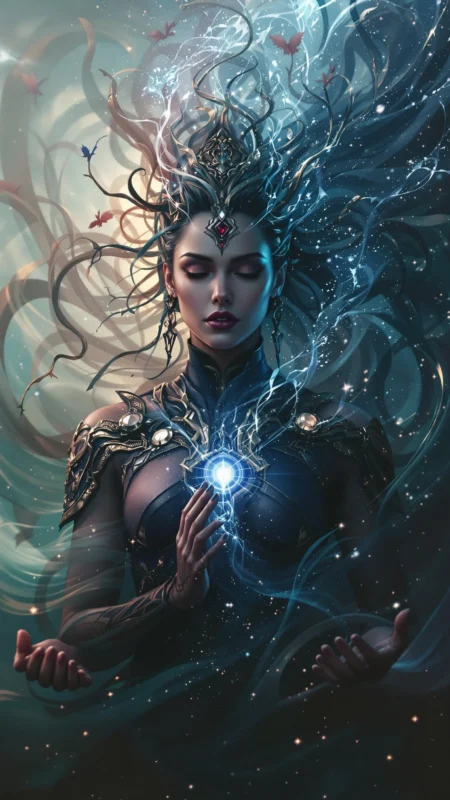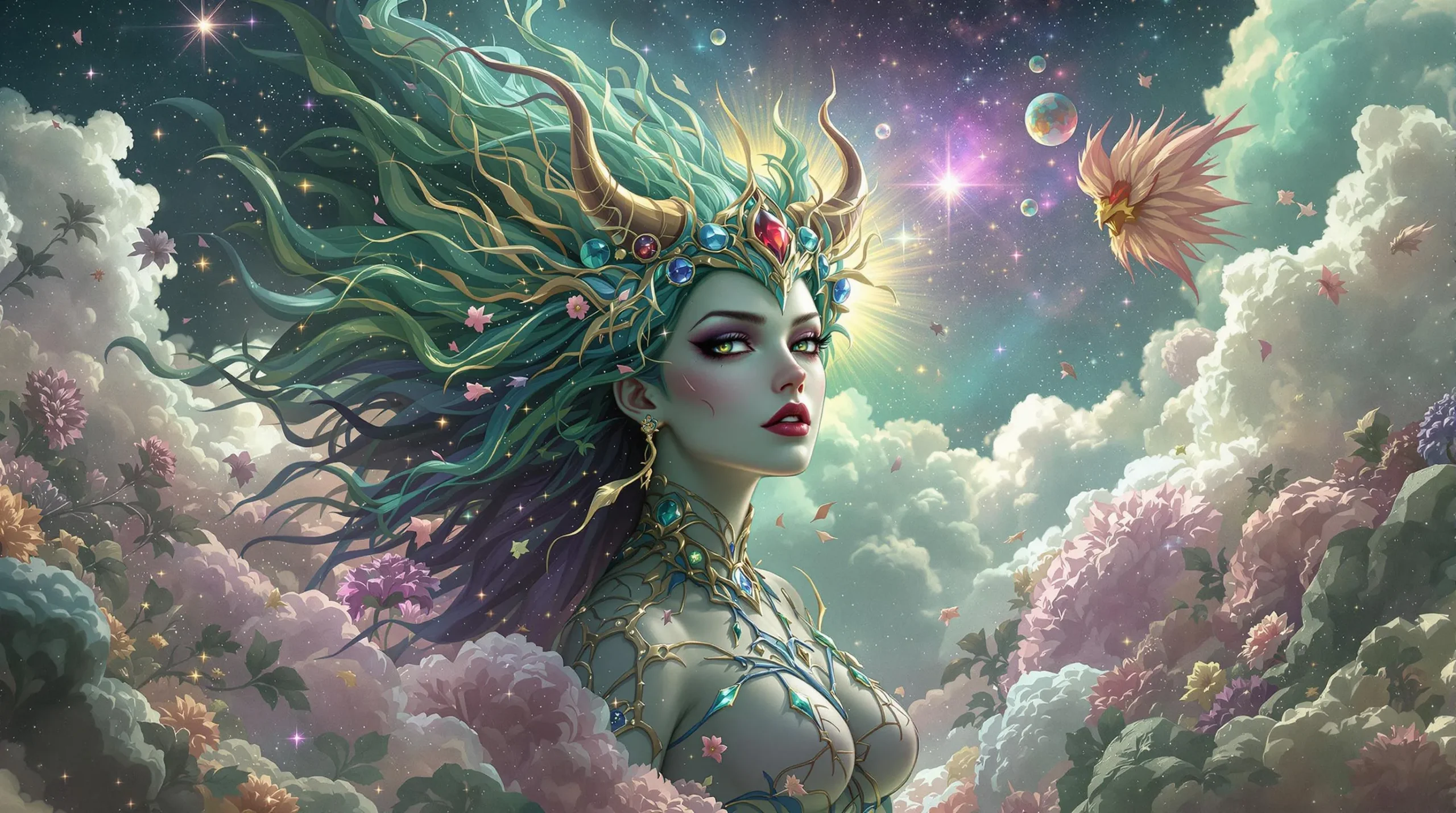


Gamora

Archetype Meaning & Symbolism

Resilient, lethal, pragmatic, loyal, disciplined, tormented, principled, strategic, guarded, formidable

  • I have lived most of my life surrounded by my enemies. I will be grateful to die among my friends.

If Gamora is part of your personal mythology, you may...

Believe

  • You may believe that your past does not dictate your future, that redemption is always possible through conscious, deliberate action.
  • You may believe that true family is not something you are born into, but something you build through loyalty, sacrifice, and shared purpose.
  • You may believe that clear-eyed pragmatism and a willingness to face uncomfortable truths are the highest and most sincere forms of love and care.

Fear

  • You may fear that you are inherently unlovable or that your intensity and past trauma make you too 'dangerous' for those you wish to be close to.
  • You may fear that you will revert to your old 'programming,' becoming the monster you fought so hard to escape.
  • You may fear vulnerability above all else, seeing it not as a path to connection but as a fatal weakness that will inevitably be exploited.

Strength

  • An almost unbreakable will and profound resilience, allowing you to endure and even thrive in circumstances that would shatter others.
  • A fierce and unwavering loyalty to your chosen few, making you the most reliable and protective ally one could hope for.
  • A gift for strategic thinking and cutting through emotional chaos to identify and execute a practical solution.

Weakness

  • A profound difficulty with expressing vulnerability or asking for help, which can lead to deep loneliness even when you are surrounded by people who care for you.
  • A tendency towards cynicism and suspicion that can prevent you from forming new bonds or trusting in the good intentions of others.
  • An all-or-nothing morality that can lead to harsh, unforgiving judgments of both yourself and others, leaving little room for mistakes or human imperfection.

The Symbolism & Meaning of Gamora

The Gamora archetype is, at its core, a meditation on redemption. She symbolizes the profound, agonizing work of breaking the programming of one’s past. To have Gamora in your personal mythology is to acknowledge a history that may have shaped you into a weapon, an instrument for a will that was not your own. She is the patron saint of deprogramming: the patron of unlearning toxic ideologies, of severing allegiances that once felt like matters of survival, and of forging a new morality piece by painful piece. Her symbolism suggests that one's origin, no matter how corrupt or traumatic, does not have to be one's destiny. It is a testament to the idea that a person can consciously choose to dismantle the person they were made to be in order to become the person they were meant to be.

Her journey is also a potent symbol for the power of the 'found family'. Gamora embodies the soul who, having been brutally severed from her roots, must construct a new sense of belonging from scratch. This is not the easy comfort of an inherited tribe; it is a fellowship built on shared purpose, mutual respect, and the gritty, unspoken understanding that comes from being fellow survivors. For those who feel like the last of their kind, she represents the hope that one can find a home among other outcasts, that loyalty can be a choice, and that the bonds forged in shared adversity may become stronger and more real than those of blood.

Finally, Gamora symbolizes a very specific kind of power: controlled lethality. Her skills as a warrior are not a source of brutish pride but a set of precisely honed tools. These tools were forged by a tyrant for the purpose of destruction, but her story is about seizing control of them and wielding them for the cause of protection. This archetype explores the difficult tension of possessing a great capacity for what could be seen as darkness—a sharp tongue, a ruthless business sense, a talent for cutting people off—and learning to use it with surgical precision in the service of a higher, self-determined good. She is the living paradox of the weapon that developed a conscience.


Gamora Relationships With Other Archetypes

The Tyrant Father

The Gamora’s very existence seems to be a reaction, a trajectory arcing away from the immense gravitational pull of The Tyrant Father. He is not merely a memory but a psychological architect, the sculptor who carved her from the marble of innocence and left his chisel marks on her soul. Her rebellion, then, may not be a single act of defiance but a constant, exhausting effort to escape an origin that is imprinted upon her very cells. It could be seen as the desperate physics of a celestial body attempting to break orbit from a black hole, a star that, while burning with its own furious light, forever carries the dark matter of its creation within its core. Every righteous act is, perhaps, an attempt to chip away at the father’s monstrous masterpiece, to prove that the weapon can, in fact, unmake its maker.

The Ragtag Crew

With The Ragtag Crew, the Gamora archetype finds not a sanctuary, but a kind of chaotic re-education. She is a perfectly honed blade learning the jarring, unpredictable rhythm of a traveling jazz band. Where her life was once a metronome of discipline and death, it is now a cacophony of misplaced sentiment, foolish bravery, and dissonant melodies of affection. This found family does not heal her wounds with gentle salves; rather, they may inadvertently place a new, vibrant, and living pressure upon them. The relationship could be that of a solitary predator learning the clumsy, inefficient, yet strangely resilient language of the pack. In their glorious imperfection, she perhaps finds the first evidence that life need not be a clean, killing strike, but can be a messy, beautiful, and collaborative improvisation.

The Rival Sibling

The Rival Sibling is the harshest of mirrors, a reflection warped by a shared trauma. To look upon this figure is for the Gamora to see her own pain, her own programming, her own capacity for violence, worn by another. They may be two daggers forged in the same cruel fire and quenched in the same bitter tears, their initial relationship the grating sound of sharpened steel striking sharpened steel. This friction is not just conflict; it could be a process of mutual, agonizing refinement. Their eventual alliance, should it come, is rarely born of simple forgiveness. It is, perhaps, a profound recalibration—a pact made in the silent understanding that they are the only two beings in the universe who truly know the geography of the hell from which they both escaped.

Using Gamora in Every Day Life

Navigating a Toxic Family Dynamic:

When grappling with a family of origin that feels more like a cabal of villains than a circle of support, the Gamora archetype offers a blueprint for secession. It suggests a path not of reconciliation, but of radical self-definition. One might use this mythos to build the internal fortitude required to set non-negotiable boundaries, to mourn the family they deserved but did not get, and to declare oneself a sovereign entity, no longer bound by the narrative written by their captors.

Forging a New Professional Identity:

For the individual ensnared in a career that provides security but corrodes the soul, Gamora symbolizes the ultimate resignation. To embody this archetype is to consciously choose to walk away from a powerful but malevolent 'Thanos': a corporation, an industry, a mentor whose influence has become tyrannical. It is the courage to trade a life of gilded servitude for the uncertainty of a path aligned with one's own emergent moral code, trusting that your skills, once used for another's gain, can be repurposed for your own mission.

Building Trust After Betrayal:

The Gamora archetype is a powerful guide for learning to form connections after profound emotional trauma has made trust feel like a liability. It models a cautious, observational approach to new relationships, where loyalty is tested and earned over time through shared action, not effusive words. It champions the creation of a 'found family', a small, meticulously chosen crew of fellow misfits, proving that the deepest bonds are not given by blood but forged in the crucible of shared struggle and mutual respect.

Gamora is Known For

The Deadliest Woman in the Galaxy

Her reputation as an unparalleled warrior and assassin, honed from childhood into a living weapon by the tyrant Thanos.

Daughter of Thanos

Her defining, deeply traumatic relationship with her adoptive father, the architect of her people's genocide and her own painful conditioning.

Guardian of the Galaxy

Her eventual role as the pragmatic and moral center of a chaotic team of outcasts, where she finds purpose, redemption, and a chosen family.

How Gamora Might Affect Your Personal Mythology

How Gamora Might Affect Your Mythos

When Gamora enters one's personal mythos, the central narrative may pivot around a singular, defining act of rebellion. Your life story ceases to be a simple progression and instead becomes a tale in two parts: Before and After. 'Before' was the time you served an ideology, a family system, a corporation, or even a version of yourself that was fundamentally oppressive. 'After' begins with the moment you say 'no more'. Your personal myth becomes a story of a great escape, not from a physical prison, but from a psychological one. The 'villain' of your story might be an external figure, but more profoundly, it may be the person you were conditioned to be, making your greatest heroic act a constant, daily battle against your own programming.

This archetype also weaves the theme of the 'sacred wound' into the fabric of your mythos. A past trauma—a betrayal, a loss, a period of profound subjugation—is no longer just a scar. It becomes the very crucible in which your strength was forged. Your story is not about pretending the wound isn't there; it's about how that specific injury gave you a unique form of sight, an immunity to certain types of poison, and an unbreakable will. The mythology frames your pain as the source of your power, the very thing that made you the 'deadliest woman in your own galaxy,' capable of navigating threats that would undo those with more sheltered pasts.

How Gamora Might Affect Your Sense of Self

To see oneself through the Gamora lens is to live with a constant internal duality. You may perceive yourself as both a survivor and a weapon, a being of immense resilience who is also acutely aware of their capacity to cause harm. This can foster a profound sense of responsibility, but also a deep-seated fear of your own nature. Self-worth might become inextricably linked to competence and control. You may value your ability to remain calm in a crisis, to make the hard decision, to be the one who does not break. The danger, of course, is that this leaves little room for softness, for acknowledging weakness, or for the simple human need to be cared for.

This archetype may also cultivate a persistent sense of being an outsider, even when you are loved and accepted. Like Gamora standing amongst the more whimsical Guardians, you might feel like an observer, a strategist in a world of poets, forever analyzing the dynamics while others simply live them. This can grant you a powerful clarity and objectivity. Yet, it can also breed a quiet loneliness. The personal journey then becomes one of integration: learning to trust that you can lower your sword, that you can 'dance' without losing your edge, and that your identity is more than just your strength.

How Gamora Might Affect Your Beliefs About The World

A worldview informed by the Gamora archetype could be one of profound pragmatism, bordering on cynicism. The world may appear as a complex chessboard of power, where naivete is the most dangerous trait a person can possess. You may find yourself constantly assessing motivations, anticipating betrayals, and operating with a baseline assumption that most systems are corrupt and most people are acting in their own self-interest. This is not a paranoid fantasy; it is a survival strategy learned from a history where this worldview was proven correct, time and again. It is a world where you must be the 'deadliest' simply to ensure your own survival.

However, this hard-edged cynicism is often paradoxically paired with a stubborn, almost illogical belief in the possibility of justice. Though you see the world's flaws with excruciating clarity, you do not accept them as final. You may believe the universe is harsh, but you also believe it can be bent toward a better path through force of will. This worldview compels action. It is the conviction that even in a galaxy run by tyrants, a single, well-aimed strike—or a single, determined individual—can change the course of history. It is the belief that a better world is not something you hope for, but something you fight for, against all odds.

How Gamora Might Affect Your Relationships

In the realm of relationships, the Gamora archetype may foster an approach of extreme caution. Trust is not a gift to be given freely but a fortress to be entered slowly, after its defenses have been thoroughly tested. Potential friends and partners might be subjected to unspoken trials of integrity, loyalty, and competence. You may hold people to an impossibly high standard, a direct reflection of the catastrophic consequences of misplaced trust in your own past. This guardedness can be mistaken for coldness, but it is a mechanism of self-preservation, a belief that emotional connection is a high-stakes battlefield where one must choose allies with strategic precision.

Once that trust is earned, however, the loyalty that follows is absolute and fierce. This archetype is the architect of the 'found family,' the small, hand-picked tribe for whom one would walk through fire. For those who pass the tests and enter the inner circle, you become the ultimate protector. Love is not expressed in soft words but in decisive action: in defending their honor, in solving their problems, in standing with them against any threat. It is a primal, powerful form of connection, a bond that says, 'I have seen the worst the world can do, and I will not let it touch you.'

How Gamora Might Affect Your Role in Life

If Gamora is part of your personal myth, you may naturally assume the role of the 'Pragmatist' or the 'Moral Compass' within any group setting. You are the one who cuts through the emotional static to ask the hard questions: 'What is the objective? What are the risks? What is the most efficient path forward?' This role is vital, as it often provides the grounding force that prevents a group from succumbing to wishful thinking or chaos. However, it can also be an isolating one. You may be perceived as the 'serious one,' the wet blanket on brainstorming sessions, the one who brings up the grim reality when everyone else is soaring on optimism.

Furthermore, this archetype can cast you in the role of the 'Reformer.' Having intimately understood a system of oppression from the inside, your life's work may feel like a mission to dismantle similar structures in the world around you. You are not a revolutionary born of abstract ideals, but one born from lived experience. Your authority comes from having been the villain's tool. This role drives you to protect those who cannot protect themselves, to expose hypocrisy, and to create systems of genuine safety and justice. It is the path of the redeemed, whose purpose is to ensure no one else has to endure the history they survived.

Dream Interpretation of Gamora

To dream of Gamora in a positive context may signal a potent moment of self-realization and empowerment. Her appearance could be the subconscious mind's acknowledgment that you have successfully integrated your own power and are learning to wield it with conscious intent. Such a dream might occur after you have finally left a toxic job, set a firm boundary with a difficult family member, or successfully navigated a complex crisis using your skills. She may act as a silent, affirming guide in the dream, a symbol that you are on the right path, transforming the painful lessons of your past into the disciplined strengths of your present.

Conversely, dreaming of Gamora in a negative or frightening context could highlight a deep-seated fear of being trapped by your own past. She might appear as the cold, relentless assassin, symbolizing a part of yourself that you fear is incapable of love or connection. This dream could arise when you feel your professional competence is alienating you from others, or when you feel your own defensive mechanisms are sabotaging a chance at intimacy. She may represent the fear that you are only your trauma, only your skills, and that beneath the warrior's armor, there is nothing left. It is a dream that calls for peace, for a truce with the inner soldier.

How Gamora Archetype Might Affect Your Needs

How Gamora Might Affect Your Physiological Needs

From a mythological perspective, the Gamora archetype could elevate physiological readiness to a sacred duty. The body is not a vessel for pleasure but a tool for survival and effectiveness. This may manifest as a rigorous, disciplined approach to physical fitness and diet, driven not by a desire for aesthetic beauty but by a need for capability. Food is fuel. Sleep is strategic recovery. Exercise is weapons maintenance. The physiological baseline is one of taut readiness, a body honed and prepared for the 'mission,' whatever that personal mission may be.

This relentless focus on readiness can, however, lead to a profound disconnect from the body's more subtle needs. The archetype might encourage you to ignore signals of exhaustion, pain, or the need for simple, unstructured rest, viewing them as weaknesses. This could create a chronic physiological state of stress, where the nervous system is perpetually in a low-grade fight-or-flight mode. The myth that one must always be a warrior can lead to adrenal fatigue, burnout, and an inability to experience genuine relaxation, as the body remains on high alert even in times of peace.

How Gamora Might Affect Your Ideas of Belonging

The need for belongingness within the Gamora archetype is the central, defining quest. It is both the deepest wound and the most sought-after prize. This may create a powerful push-pull dynamic in your life: a profound yearning for connection warring with a deep-seated belief that you are too different, too damaged, or too dangerous to truly belong. You may hold back from groups, fearing that your intensity will be too much or that your pragmatic nature will clash with the collective's harmony. Belonging is never assumed; it is a distant shore you must fight your way toward.

When belonging is finally achieved, it is rarely with a conventional group. It is found in a 'found family,' a motley crew of fellow survivors, outcasts, and misfits. Within this chosen circle, love and acceptance are not demonstrated through sentimentality, but through unwavering loyalty in the face of adversity. It is a belongingness forged in shared struggle, where each member implicitly understands the scars of the others. The love is fierce and protective, a bond that says, 'Your weirdness is safe here; your trauma is understood here; your fight is our fight.'

How Gamora Might Affect Your Feelings of Safety

For one with Gamora in their mythos, safety is not a passive state of comfort but an active state of competence. A sense of security does not come from high walls or a stable job, but from the internal knowledge that you possess the skills, cunning, and resilience to handle whatever comes next. Safety is an internal fortress built brick by brick with every crisis navigated and every threat neutralized. This creates a deeply self-reliant individual who finds peace not in the absence of danger, but in their own proven ability to face it.

This self-reliance, however, can curdle into a state of hyper-vigilance that makes true rest feel impossible. The need for safety may manifest as an intrinsic distrust of external systems, authorities, or even other people's ability to protect you. The core belief becomes, 'If I am not in control, I am not safe.' This can lead to an exhausting and isolating existence, where you feel you must constantly scan the horizon for threats, unable to ever fully lower your guard and trust that the world, or another person, can hold you securely.

How Gamora Might Affect Your Views of Esteem

Esteem, in the world of the Gamora archetype, is almost entirely derived from competence, integrity, and the successful execution of one's personal mission. Self-worth is not inherent; it is earned. It is built upon the foundation of kept promises, battles won, and the tangible evidence of your effectiveness in the world. You might feel pride in your ability to remain logical under pressure or in your reputation as someone who is ruthlessly reliable. The praise of others may feel hollow, but the respect earned from a worthy peer, a respect based on demonstrated skill, is the highest form of validation.

This creates a potentially brittle foundation for self-esteem, making it highly conditional upon performance. A single significant failure, a moral compromise, or a situation where you are unable to protect those you care for can trigger a catastrophic collapse of self-worth. The inner critic becomes a tyrannical voice, whispering that you are only as good as your last victory. There is little room for grace, forgiveness, or the value of simply 'being.' This makes vulnerability a terrifying prospect, as it threatens the very competence upon which your entire sense of value rests.

Shadow of Gamora

The shadow of Gamora emerges when the warrior's pragmatism curdles into cold, utilitarian cruelty. This is the part of you that believes your own traumatic past gives you a license to be judge, jury, and executioner in the lives of others. In this shadow state, the mission justifies any means, and compassion is dismissed as a strategic liability. Relationships are no longer about connection but about allegiance; those in your circle are not friends but assets, and any deviation from your rigidly defined code of conduct is treated as an act of treason. The shadow Gamora uses her 'lethal' skills—be they sharp words or decisive actions—not to protect, but to control and punish, recreating the very tyranny she once fought to escape.

A more insidious shadow appears when the war is over, but the warrior remains. This is the Gamora who cannot tolerate peace, who subtly engineers chaos in her relationships and professional life just to feel the familiar, comforting hum of a crisis. She may pick fights, create drama, or hold others to impossible standards, all to re-establish a sense of control and competence. This shadow self is terrified of quiet intimacy, because in peace, she must confront the person she is without a battle to fight or a mission to accomplish. It is the tragic state of the soldier who brings the war home, unable to believe she is worthy of a life beyond mere survival and constant vigilance.

Pros & Cons of Gamora in Your Mythology

Pros

  • You possess an extraordinary capacity for self-reinvention, capable of breaking free from oppressive pasts and forging a new, purpose-driven identity.
  • Your loyalty, once earned, is absolute and fiercely protective, making you an incredibly reliable and stabilizing force in the lives of your loved ones.
  • In any crisis, you are an island of competence and calm, able to think strategically and act decisively when others are overwhelmed.

Cons

  • You may struggle deeply with trust and emotional vulnerability, keeping even your closest partners and friends at a distance.
  • Your default mode of hyper-vigilance and pragmatism can be perceived by others as pessimism or coldness, leading to unintended isolation.
  • Your self-worth is often perilously tied to your performance and ability to 'win,' creating immense internal pressure and a vulnerability to burnout and self-criticism.