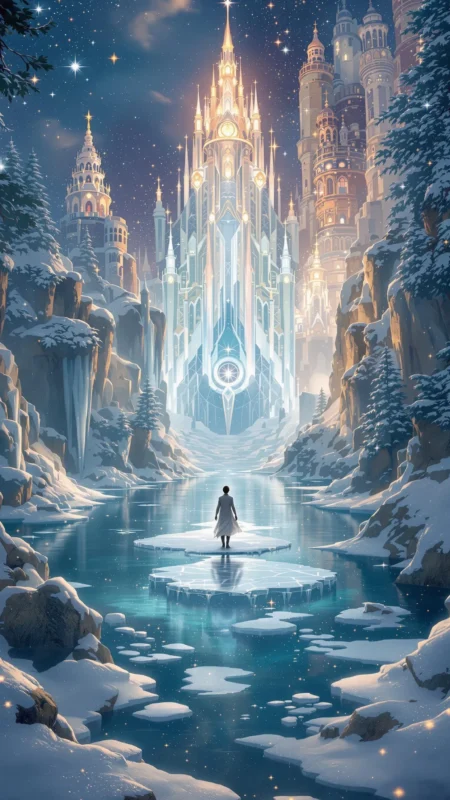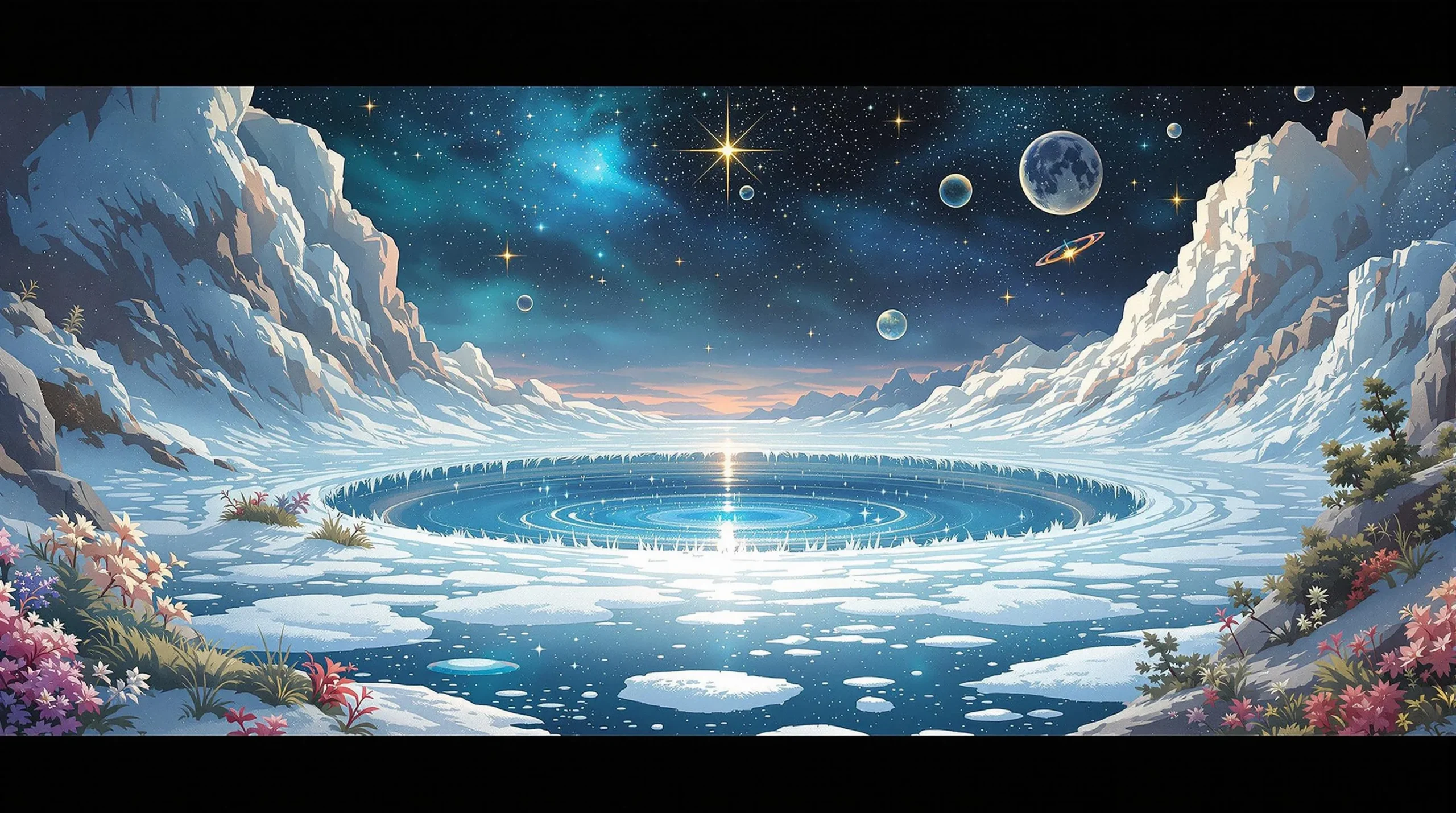


Frozen Lake

Archetype Meaning & Symbolism

Still, deep, reflective, perilous, dormant, patient, reserved, opaque, preserving, silent, concealing, vast

  • What you see is merely the pause between breaths. The real story sleeps below, waiting for the sun or the weight of a curious step.

If Frozen Lake is part of your personal mythology, you may...

Believe

  • You may believe that silence is a form of communication, often more eloquent and truthful than words.

    You may believe that the most significant growth happens in periods of quiet dormancy, hidden from the view of the world.

    You may believe that true strength lies not in overt action, but in the capacity for profound stillness and patient observation.

Fear

  • You may fear a sudden, chaotic thaw, an emotional deluge for which you are completely unprepared.

    You may fear that the ice you stand on is dangerously thin, and that you are one misstep away from plunging into your own overwhelming depths.

    You may fear that the winter is permanent, that the ice will never melt, leaving you forever frozen and disconnected from the warmth of life.

Strength

  • You possess an extraordinary capacity for patience, able to wait out storms and see the long-term view when others are lost in short-term panic.

    Your calm and composed demeanor can be a source of immense stability and reassurance for those around you, making you a rock in turbulent times.

    You are naturally introspective, capable of deep self-reflection and accessing wisdom that is unavailable to those who live only on the surface.

Weakness

  • Your reserved nature may be perceived as coldness or emotional unavailability, creating distance in relationships where you secretly crave closeness.

    You may have a tendency toward procrastination or stasis, mistaking emotional paralysis for patience and thus failing to act when the moment requires it.

    You may find it difficult to express your emotions in the moment, causing them to be held under pressure until they either freeze solid or erupt unexpectedly.

The Symbolism & Meaning of Frozen Lake

In one’s personal mythology, the Frozen Lake may symbolize a period of deep introspection or emotional latency. It is the quiet that falls after a significant event, or the stillness required before one begins. The surface represents the persona, the face shown to the world: composed, reflective, perhaps even beautiful in its austerity. Yet, its true meaning is tethered to the unseen. It speaks to the vast reservoir of memories, feelings, and potential that lies dormant within us, preserved by a protective layer of ice. To have the Frozen Lake in your mythos is to understand that what is most essential about you may not be immediately visible, even to yourself. It requires a willingness to trust what is held in the cold and the dark.

The archetype also explores the nature of potential. Like a seed in frozen earth, the life within the lake is not dead, merely waiting. This could be an unrealized talent, an unexpressed love, or a profound truth yet to be articulated. The ice is both a prison and a sanctuary, protecting this fragile potential from a world that might demand it emerge prematurely. It suggests that growth is not always active and visible. There are crucial periods of gestation that occur in silence and stillness. The personal journey might be defined by the great thaws, those moments when the surface gives way and a whole new world of feeling and possibility rushes forth.

Finally, the Frozen Lake is a potent symbol of perception. It challenges the belief that what is real is only what can be seen and touched. It asks us to consider that every person, every situation, has a hidden dimension. The smooth, unreadable surface of a colleague could conceal a turbulent inner life. A period of societal calm might be the frozen surface over deep currents of change. It encourages a kind of second sight: the ability to sense the depth, the temperature, the integrity of the ice before you step out onto it. It is a reminder that reality is layered, and the most profound layer is the one we cannot see.


Frozen Lake Relationships With Other Archetypes

The Sun Archetype

The Sun is the great catalyst, the unavoidable force of revelation in the Frozen Lake's story. Where the lake seeks to preserve and conceal, the Sun seeks to warm and expose. Their relationship is one of cyclical tension and release. The Sun's insistent light and warmth may feel like a gentle invitation or a harsh interrogation, depending on the readiness for a thaw. For a mythos built around the Frozen Lake, the appearance of a Sun figure—a new lover, a charismatic leader, a transformative idea—could signal a dramatic turning point, forcing what has been held in stasis to emerge into the light, for better or worse.

The Skater Archetype

The Skater represents the conscious mind's attempt to engage with the Frozen Lake's depths without being consumed by them. They are a symbol of grace, skill, and calculated risk. The Skater learns the language of the ice: its groans, its textures, its subtle shifts in color. In a personal mythos, embodying the Skater means navigating one's own emotional reserves with awareness and artistry. It is the part of the self that can experience joy and freedom on the surface of stillness, all while respecting the immense power and danger that lies just an inch of ice away. The Skater knows that mastery is not about conquering the lake, but about moving in harmony with it.

The Submerged City Archetype

If the Frozen Lake holds secrets, the Submerged City is its greatest one. This archetype represents the vast, collective unconscious, a personal or ancestral past that has been lost to conscious memory but remains perfectly preserved in the depths. The lake acts as its guardian. For the individual, the Submerged City may be a powerful family trauma, a forgotten childhood world, or a cultural history that continues to exert a gravitational pull from below. The journey is not to live in that city, but to become aware of its existence, to understand that the surface of one's life is shaped by the silent, underwater architecture of what has come before.

Using Frozen Lake in Every Day Life

Navigating a Creative Block

When inspiration vanishes and the page remains white, you might recognize the landscape of the Frozen Lake. Instead of fighting for a breakthrough, you could honor the dormant phase. This is not emptiness but a necessary preservation of energy. The creative life below the surface is gathering, consolidating. Your role is not to smash the ice but to wait with patient observance for the first signs of the thaw: the new idea that cracks the silence.

Responding to Interpersonal Conflict

In a heated argument, the impulse is to react, to match the rising temperature. To embody the Frozen Lake is to maintain a surface of calm. This isn't about suppression, but about creating a deliberate space between stimulus and response. Your stillness may allow the heated emotions of others to cool, reflecting their own intensity back at them. Beneath your composed exterior, you can assess the currents of the conflict without being swept away by them.

Processing Personal Grief

Grief can feel like a sudden, shocking plunge into icy water. The Frozen Lake archetype suggests a different relationship with sorrow. It allows grief to exist, preserved and held within you without demanding constant, active engagement. The surface may freeze over, allowing you to function, to move through the world. This is a form of self-preservation, trusting that the complex life of your loss is still there, beneath the ice, and that it can be revisited in moments of quiet reflection when you are strong enough to bear its cold truth.

Frozen Lake is Known For

Hidden Depths

A Frozen Lake is known not for its surface, but for what it conceals. It may hold entire ecosystems, lost objects, or ancient histories, all suspended in a silent, unchanging state. It promises a world beneath the world we see.

Precarious Surface:

It is famous for the tension between safety and peril. The ice offers a path, a place to stand, to glide, to observe. Yet, it is a temporary state, and its strength is never guaranteed. Every step is a negotiation with the unseen depths.

Seasonal Transformation:

The profound change it undergoes—from fluid water to solid ice and back again—is central to its identity. This cycle represents dormancy and rebirth, stasis and breakthrough, the inescapable rhythm of life and consciousness.

How Frozen Lake Might Affect Your Personal Mythology

How Frozen Lake Might Affect Your Mythos

When the Frozen Lake is a central feature of your personal mythos, your life story may not be a linear progression but a series of seasons. There will be long winters of quiet, internal development, where from the outside, it appears as if nothing is happening. These periods of dormancy, however, are the most crucial chapters of your narrative. They are where you gather the depth and strength that will define the subsequent spring. Your mythos is less about heroic action and more about profound, patient waiting. The climactic moments are not battles, but thaws: the sudden cracking of the ice when a long-held secret is revealed, a repressed talent emerges, or a deep emotional truth finally breaks the surface.

Your narrative might also be characterized by a significant event known as 'the fall through the ice.' This is a moment of crisis where your composure breaks, and you are plunged into the very depths you sought to keep contained. This event, while terrifying, becomes the central axis of your story. Before the fall, you were one person, living on the surface. After, you are another, someone who has known the cold, dark, and astonishing life of the world below. Your mythos then becomes about integrating these two realities: the serene surface and the turbulent depths, learning to live with the knowledge of both.

How Frozen Lake Might Affect Your Sense of Self

Your sense of self may be defined by a profound distinction between your inner and outer worlds. You may see yourself as a person of great depth, whose thoughts and feelings run far deeper than what is expressed externally. This can cultivate a rich inner life and a feeling of self-sufficiency. You do not require constant external validation because you are aware of the vast ecosystem of ideas and emotions that exists within you. You might perceive yourself as a keeper of stillness in a chaotic world, a source of quiet strength.

However, this same dynamic can lead to a feeling of alienation or being fundamentally misunderstood. You may feel that no one sees the 'real you' that exists beneath the placid surface. This can foster a sense of loneliness or the belief that you are too complex or too deep to be truly known by others. The challenge is to see the ice not as a wall but as a membrane, one that can become permeable when you choose, allowing others to glimpse the world you hold within without you having to sacrifice your essential nature.

How Frozen Lake Might Affect Your Beliefs About The World

Your worldview might be one of deep skepticism toward surfaces. You may inherently distrust initial appearances, believing that the truth of any person, situation, or idea lies in its hidden substructure. You look for the currents beneath the calm, the history beneath the modern facade, the unspoken emotion beneath the polite conversation. This can make you a perceptive and wise observer, someone who is difficult to fool. You see the world not as a stage of actors, but as a vast, interconnected body of water, where most of the life is happening out of sight.

This perspective may also attune you to the cyclical nature of things. You do not see progress as a straight line but as a series of freezes and thaws. A period of social or political regression may not be seen as a final failure, but as a necessary winter before a new spring of ideas can emerge. This grants you a long-term perspective, a kind of geological patience. You are less likely to be swayed by the panics and passions of the moment, anchoring your understanding in the slow, inevitable rhythms of change.

How Frozen Lake Might Affect Your Relationships

In relationships, you may exhibit a profound caution. You are not one to dive into intimacy. Instead, you allow connections to form slowly, testing the surface, waiting for a sense of trust to build. You may appear reserved, distant, or hard to read at first, which can be intimidating to some. This is your protective ice, ensuring that only those with patience and genuine interest will remain long enough to witness the thaw. You are not interested in fleeting, superficial connections; you crave the depth and stillness of a shared, quiet understanding.

Once a bond is formed and you feel safe, you are capable of immense loyalty and a deep, abiding presence. You offer a sanctuary of calm to your loved ones. However, the challenge lies in emotional expression. You might hold your feelings in reserve, believing they are safe beneath the ice. This can lead to misunderstandings, with partners feeling shut out or uncertain of your inner state. Your journey in relationships is to learn how much warmth to let in, how to communicate the life below the surface without shattering the ice altogether, and how to trust that revealing your depths will not lead to your own disappearance.

How Frozen Lake Might Affect Your Role in Life

You may find yourself naturally drawn to the role of the observer, the strategist, or the keeper of secrets. In any group or family, you might be the one who listens more than they speak, absorbing the dynamics and understanding the undercurrents long before anyone else. You are the patient council, the one people turn to when they need a calm perspective, free from panic and reactivity. Your role is not to lead the charge, but to provide the stable ground upon which intelligent action can be planned. You hold the space for reflection.

This can also cast you in the role of the enigma or the outsider. Because you hold so much in reserve, others may project their own ideas onto you. You can become a blank, reflective surface for their hopes and fears. This allows you a certain freedom but can also be isolating. Your life's work may involve learning how to consciously step out of the observer role and become an active participant, to risk cracking your own smooth surface to engage more directly with the world, bringing the wisdom of the depths into the light of day.

Dream Interpretation of Frozen Lake

In a positive context, dreaming of a Frozen Lake may symbolize a period of peace, clarity, and mastery over one's emotional world. Skating gracefully across a vast, solid expanse of ice could suggest that you are successfully navigating a situation that requires composure and skill. You feel on top of your emotions, not buried by them. If the ice is clear as glass, allowing you to see the aquatic life moving calmly below, it may represent a powerful moment of insight and self-awareness. You have achieved a state of consciousness where you can observe your own depths without fear, integrating your inner and outer selves in a harmonious balance.

In a negative context, the Frozen Lake in a dream often speaks to fear, paralysis, and imminent crisis. Dreaming of the ice cracking beneath your feet is a classic anxiety dream, symbolizing the breakdown of your defenses or the fear that your carefully maintained composure is about to shatter. Being trapped underneath the ice is a more profound terror, representing a feeling of being suffocated by your own unexpressed emotions, cut off from life and breath. A dream of a lake that is frozen in the middle of summer might suggest that you are emotionally stuck or out of sync with the natural flow of your own life, clinging to a state of stasis when you should be embracing change.

How Frozen Lake Archetype Might Affect Your Needs

How Frozen Lake Might Affect Your Physiological Needs

The Frozen Lake archetype in your personal mythology could translate into a physiological need for periods of profound rest and conservation of energy. You may not be built for constant output and high-intensity engagement. Instead, your body may demand cycles of activity followed by deep stillness, mirroring the lake's seasonal freeze. This isn't laziness; it's a fundamental requirement for your system to preserve and regenerate its resources. You might find that you are more sensitive to overstimulation and require quiet environments to feel physically balanced.

Your very metabolism might feel slower, more deliberate. You might approach physical needs like eating and sleeping with a sense of patient ritual rather than urgent necessity. There could be a tendency to 'store' energy, both physically and emotionally, for a time when it will be most needed. This can be a great strength, providing you with endurance for long-term projects, but it requires that you honor your body's innate rhythm of dormancy, resisting a culture that often prizes perpetual motion over restorative stillness.

How Frozen Lake Might Affect Your Ideas of Belonging

The Frozen Lake archetype might create a complex relationship with belonging. On one hand, your stillness can be magnetic. People seeking calm may be drawn to you, feeling a sense of peace in your presence. This can create a unique form of belonging, where you are the quiet center of a group. However, you might often feel like you belong to the group but are not truly 'in' it. The icy surface that protects you also separates you, creating a subtle barrier that prevents full immersion.

You may find that true belonging is rare and precious, reserved for the very few individuals who are willing and able to understand your depths. You might eschew larger social circles in favor of one or two profound connections where you feel seen and accepted in your entirety, both surface and depth. The desire for love and belonging might be a quiet, persistent ache—the part of you that stands on the frozen shore, looking at the warm lights of a distant house, wondering how to cross the expanse without either shattering your own integrity or remaining forever alone in the cold.

How Frozen Lake Might Affect Your Feelings of Safety

Your sense of safety may be deeply entwined with the concept of the unbreachable surface. Safety is a psychological fortress of calm, a placid exterior that conceals your vulnerability from the world. You might create safety by limiting self-disclosure, by maintaining emotional distance, or by becoming an expert at keeping your thoughts and feelings hidden. Danger is perceived as anything or anyone that threatens to 'break the ice' unpredictably: emotional intrusion, forced vulnerability, or situations that demand spontaneous, unfiltered reactions. You feel safest when you are in control of the thaw.

This quest for safety can also manifest as a resistance to change. The frozen state, while potentially limiting, is known and predictable. The thaw, on the other hand, is messy, chaotic, and uncertain. Therefore, you may unconsciously sabotage opportunities for growth or intimacy if they feel too threatening to your established state of equilibrium. True safety, from this perspective, is not found in a permanently frozen state, but in learning to trust your ability to navigate both the solid ice and the flowing water.

How Frozen Lake Might Affect Your Views of Esteem

Your self-esteem may be built upon a foundation of self-control, patience, and inner fortitude. You likely pride yourself on your ability to remain unflappable in a crisis, to think deeply before you speak, and to possess a rich inner world that is yours alone. Your esteem comes from the knowledge of your own depths, the secret confidence that you contain multitudes. You don't need to be the loudest person in the room because you have the quiet assurance of the lake, which knows its own power and vastness.

Conversely, your esteem can suffer when your reserved nature is misinterpreted as coldness, disinterest, or arrogance. You may internalize these perceptions, fearing that you are incapable of warmth or normal human connection. Low esteem can also arise from a fear that the depths you guard so carefully are, in fact, empty. A core anxiety might be that if the ice ever broke, it would reveal not a vibrant ecosystem, but a barren, lifeless abyss. Your sense of self-worth is thus a constant negotiation between the pride of self-containment and the fear of emotional isolation.

Shadow of Frozen Lake

The shadow of the Frozen Lake manifests as absolute frigidity. When the archetype is taken to its extreme, the protective ice becomes a permanent, impenetrable prison. The person is no longer just reserved; they are emotionally petrified, incapable of giving or receiving warmth. They become a monument to stillness, cut off from the flow of life and connection. In this state, 'patience' becomes a justification for total paralysis, and 'depth' becomes a barren, inaccessible void. The shadow self may secretly delight in its own inscrutability, using it as a subtle form of control or superiority, watching others fail to guess the password to its frozen heart.

Conversely, the shadow can also appear in the violent, shattering thaw. When the repressed contents of the lake—the anger, grief, and desires held in stasis for too long—are released all at once due to a crisis, the result is not a life-giving spring but a destructive flood. This person may experience a catastrophic breakdown, their placid persona washed away by a torrent of chaotic emotion that harms themselves and those around them. The shadow here is the illusion of control. The Frozen Lake, in its hubris, believes it can contain the infinite forever, forgetting that it is, and always has been, subject to the inescapable laws of nature and the changing of the seasons.

Pros & Cons of Frozen Lake in Your Mythology

Pros

  • You possess a natural wellspring of calm, allowing you to navigate crises with a clear head and a steady hand.

    Your patient and observant nature allows you to perceive subtle truths and deep patterns that are invisible to the hurried eye.

    You cultivate deep, meaningful relationships built on trust and mutual understanding, rather than superficial acquaintance.

Cons

  • You risk being misunderstood as aloof, cold, or disinterested, which may keep potential friends and allies at a distance.

    Your preference for observation over action can sometimes lead to missed opportunities or a failure to intervene when necessary.

    The habit of containing your emotions can lead to a sudden, overwhelming release, or to a state of chronic emotional numbness.