Believe
 Fear
Fear Strength
 Weakness
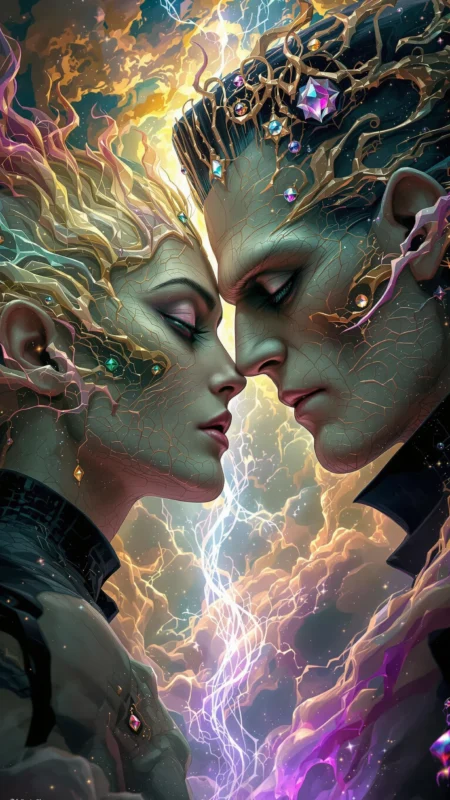
To have Frankenstein's Monster as a feature in the personal landscape of your mythos is to carry the weight of the outcast and the sublime sorrow of the misunderstood. He is not the lumbering, grunting brute of cinematic shorthand, but Mary Shelley’s articulate, sensitive, and deeply philosophical Adam, cast out of a garden he never asked to enter. His symbolism is a tapestry woven from the threads of paternal abandonment and the existential horror of being a soul trapped in a form the world despises. He represents the parts of ourselves we have cobbled together from experience and trauma, the beautiful mind lurking behind a face we fear to show the world. He is the patron saint of anyone who has ever felt their container is not worthy of the contents.
The Monster may symbolize the peril of technology and unchecked ambition, a living consequence of playing God. In a personal myth, this could translate to an awareness of the unintended consequences of one's own creations: the business that consumes your life, the lie that takes on a reality of its own, the persona you crafted that has now become your prison. The Monster’s story forces a confrontation with responsibility. It asks: what have you brought into this world, and what do you owe it? He is a perpetual reminder that what we create, we are bound to, for better or for worse.
Ultimately, the Monster’s meaning is found in the space between creator and creation, parent and child, society and individual. He is a question mark given terrifying form: What makes us human? Is it our origin, our appearance, or our capacity for love and sorrow? To embrace this archetype is to champion the idea that humanity is a quality of the soul, not the skin. It is to find a strange and powerful beauty in the stitched-together, the imperfect, the lonely giant who reads Milton in a hovel and weeps for a connection he may never know.