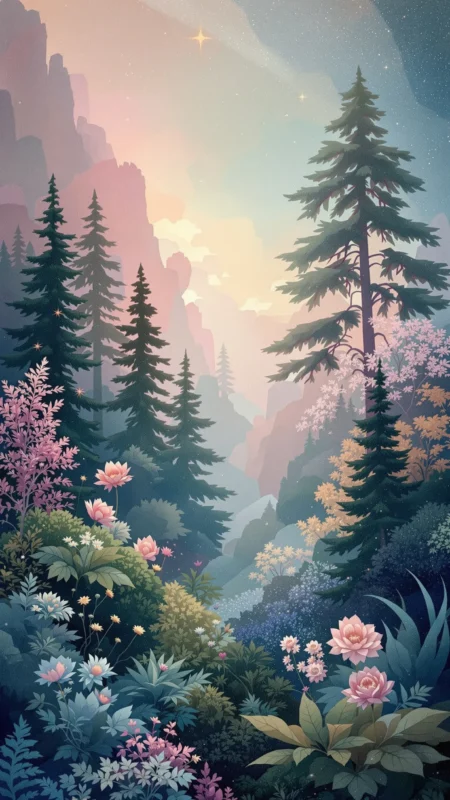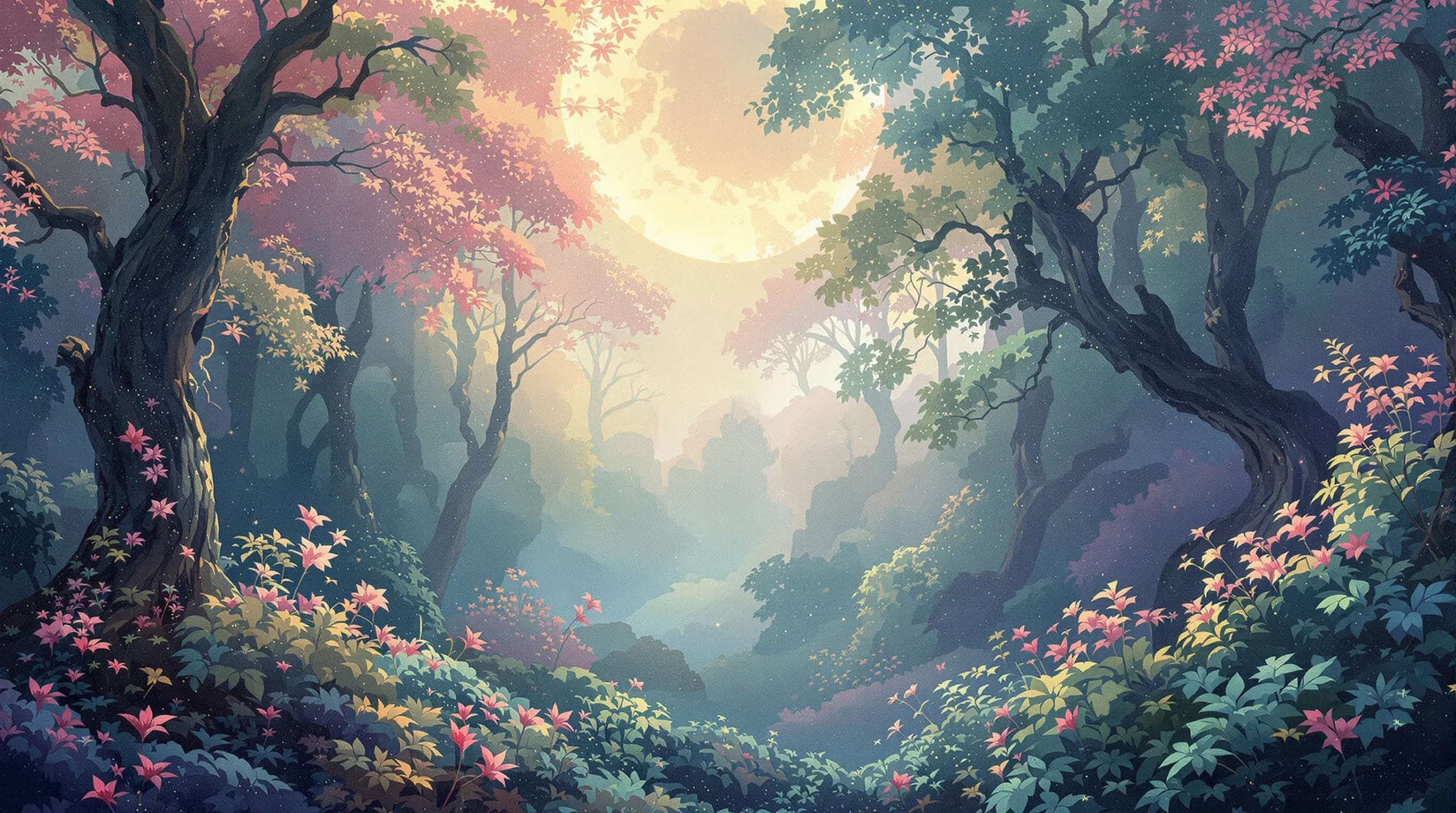


Forest

Archetype Meaning & Symbolism

Mysterious, ancient, sheltering, interconnected, wild, transformative, deep, silent, chaotic, regenerative

  • Do not seek a path. Stand still and let the path grow toward you, a root seeking water.

If Forest is part of your personal mythology, you may...

Believe

  • Growth is not an event; it is a slow, silent, and often invisible process of becoming.

    Everything is connected by a web of relationships that is too complex for the rational mind to ever fully grasp.

    Getting lost is not a sign of failure, but an essential part of the journey to find where you truly belong.

Fear

  • A sudden, uncontrollable fire—an overwhelming passion, anger, or trauma—that will consume your carefully cultivated inner world.

    Being uprooted and exposed, your private, complex root system laid bare for the judgment of a world that does not understand it.

    The chilling realization that your inner forest is not a sanctuary but a prison, a tangled maze from which you can never escape.

Strength

  • Profound resilience. You can bend in the wind and survive the harshest winters, drawing on deep, unseen reserves of strength.

    A rich inner life. You are your own sanctuary and source of wonder, rarely experiencing boredom when left to your own devices.

    Deep intuition. You can sense the subtle shifts in your environment and in the people around you, navigating by feel rather than by sight.

Weakness

  • A tendency toward isolation. Your self-sufficiency can become a fortress that keeps others out, leading to loneliness.

    Inertia and resistance to change. Accustomed to slow, organic growth, you may struggle with sudden shifts or demands for quick action.

    Getting lost in the undergrowth. You can become entangled in your own complex thoughts and emotions, losing clarity and direction.

The Symbolism & Meaning of Forest

In personal mythology, the Forest is the landscape of the soul’s interior. It is the place you go when you turn inward. Its presence suggests a life that is complex, layered, and not easily understood from the outside. Your personal story may be less about a linear journey and more about a slow, deep exploration of this inner territory. The Forest symbolizes a psyche that values depth over breadth, shadow as much as light. It whispers that true growth is often hidden, occurring in the root system of your being long before it breaks the surface as a visible branch. It's the acceptance that parts of you will always remain mysterious, even to yourself, and that this mystery is not a flaw but a source of magic.

The Forest is also the realm of intuition and primal knowledge. It is a place where rational thought must often be set aside in favor of instinct, of feeling your way forward in the dappled light. To have the Forest as part of your mythos could mean you navigate life by a different set of senses: you listen for the snap of a twig that signals a coming change, you feel the subtle shifts in the emotional atmosphere around you. This archetype champions the wisdom that is ancient, embodied, and non-verbal, a stark contrast to a world that often prizes data and explicit communication. It is a quiet rebellion, a trust in the knowing that grows in silence and shadow.

Furthermore, the Forest archetype embodies the principle of regenerative cycles. It is a testament to resilience, showing how even after a devastating fire, life returns, first with small shoots, then with a reclaiming of the canopy. For an individual, this may manifest as a profound belief in their own ability to recover from trauma and loss. It suggests an understanding that periods of destruction or decay are not endings but necessary phases that clear the way for new, more adapted forms of life to emerge. Your personal narrative might be marked by these cycles of falling and regrowing, each one adding another ring to the core of your being.


Forest Relationships With Other Archetypes

The River

The River is the Forest's restless counterpart, the flow of time and emotion that carves a path through the Forest's ancient stillness. The Forest may see the River as a necessary force, one that brings life and defines its boundaries, but also as an unpredictable element that can flood and uproot its oldest trees. For a person, this relationship might symbolize the tension between their deep, unchanging inner self (Forest) and the ever-moving currents of their emotional life (River). They might struggle to contain their feelings, or they may find that their emotional course is shaped and steadied by their deep-rooted character.

The Clearing

The Clearing is the Forest's moment of exhale, a space of sudden stillness and light within the dense complexity. It is not the absence of the Forest, but a part of it, defined by the trees that encircle it. In one's mythos, the Clearing archetype may represent a hard-won moment of clarity, a revelation, or a space of vulnerability and rest within a complex life. It is the place where one can see the sky. A relationship with this archetype suggests a deep need for periodic psychological or spiritual openness, a respite from the otherwise constant internal growth and entanglement of the psyche.

The Woodcutter

The Woodcutter represents logic, action, and the taming impulse of civilization. To the Forest, the Woodcutter is both a threat and a force of change. He brings the sharp edge of decision, clearing paths and harvesting resources, but he can also bring destruction, simplifying what is beautifully complex. Someone with a Forest mythos may have a complicated relationship with their own inner Woodcutter: the part of them that demands productivity, clear answers, and tangible results. This could be a source of great internal conflict, a battle between the desire to simply be and the pressure to do.

Using Forest in Every Day Life

Navigating Creative Stagnation

When inspiration seems to have vanished, the Forest archetype suggests you stop searching in the open fields and instead venture into the undergrowth of your mind. It encourages exploring the half-formed ideas, the strange connections, the memories left to compost. The breakthrough may not be a single, brilliant tree but the rich soil formed from what you allowed to decay and transform.

Finding Sanctuary in Crisis

During times of emotional turmoil or external chaos, embodying the Forest means creating a sanctuary of internal quiet. This isn't about ignoring the storm but about recognizing you have a deep, rooted core that the winds cannot touch. It is the practice of finding the silent clearing within the noise, a place where you can shelter until the tempest passes.

Processing Grief and Loss

The Forest understands that death is inseparable from life. A fallen tree becomes a nurse log, nurturing new growth. Applying this archetype to loss means allowing grief to be a transformative process. It suggests that what has been lost can become the fertile ground for new wisdom, new strengths, and a deeper understanding of life's unceasing cycles, without ever diminishing the importance of what fell.

Forest is Known For

The Unconscious Mind

The Forest is a timeless map of the psyche itself: a place of tangled roots representing the past, a dense canopy of current thoughts, and dark, unexplored regions where unknown potentials and fears reside.

A Place of Transformation:

One does not enter the Forest and leave unchanged. It is a crucible where travelers get lost, confront hidden beasts (both internal and external), and emerge with a fundamentally altered perspective on themselves and their world.

Symbiotic Complexity:

Known for its vast, interconnected web of life, from the mycelial networks underground to the canopy ecosystems. It serves as a powerful symbol for the idea that no part of existence is truly separate from any other.

How Forest Might Affect Your Personal Mythology

How Forest Might Affect Your Mythos

If the Forest shapes your mythos, your life story is not a straight road but a winding game trail, punctuated by periods of being utterly lost. Your narrative eschews the clean arc of the traditional hero’s journey for something more cyclical and subterranean. Major life events are not seen as battles won or lost, but as changes in the ecosystem: a wildfire of trauma that clears the way for new growth, a long winter of depression that allows the soul to lie fallow, the sudden appearance of a spring that signals a new source of emotional nourishment. Your story is one of slow discovery, where the most significant moments happen in quiet, unseen places.

Your personal mythology may also be populated by figures and events that are symbolic of the Forest’s denizens. A mentor might be seen as an 'Old Oak,' a source of cryptic, branching wisdom. A betrayer might be a 'wolf in the shadows,' an embodiment of hidden dangers. Love might be a 'hidden clearing,' a place of unexpected safety and light. Your mythos becomes a rich tapestry of ecological metaphor, where your purpose is not to conquer the landscape but to learn to live within it, to understand its secret language and respect its formidable power.

How Forest Might Affect Your Sense of Self

Your sense of self may be akin to a vast, ancient wood. You perceive yourself as a complex ecosystem, composed of countless interconnected parts: towering strengths, a shadowy undergrowth of fears, symbiotic relationships between different aspects of your personality, and areas of wild, untamed nature. This view fosters a deep self-acceptance, as you understand that even the decaying, dark, and frightening parts of you have a role to play in the health of the whole. You may not always like what you find in your inner explorations, but you understand it belongs there.

This archetypal influence could also mean you feel older than your years. You carry a sense of history within you, a connection to the long, slow processes of growth and time. Your self-worth is likely not tied to fleeting achievements but to your own depth, resilience, and the richness of your inner life. You might feel a quiet pride in your ability to withstand storms, to self-nourish, and to provide a sheltering presence for others, not through active doing but through the simple, rooted fact of your being.

How Forest Might Affect Your Beliefs About The World

Your worldview is likely one of organic complexity and profound interconnection. You may instinctively distrust simple answers and linear explanations, suspecting that the truth of any matter lies in the tangled root system beneath the surface. You see the world not as a machine to be controlled, but as a living organism to be respected. This perspective fosters a deep sense of patience; you understand that the most important changes are slow, generational, and often invisible to the impatient eye. You may look at a city and see the mycelial network of human connection beneath the concrete.

This may also lead to a worldview tinged with a kind of sacred animism. You might perceive a form of consciousness or ancient wisdom in the non-human world, in natural systems, and in long-standing institutions. You may believe that the world speaks in a language of symbols, seasons, and cycles, and that true wisdom comes from learning to listen to these subtle communications. This can create a feeling of being deeply at home in the world, a part of a vast and mysterious intelligence, even while feeling alienated from the noisy, superficial aspects of modern society.

How Forest Might Affect Your Relationships

In relationships, you may seek a depth and privacy that can feel like a secret grove. You do not flourish in wide-open, constantly public connections; instead, you need a sense of shelter and shared interiority. Trust is built slowly, like rings on a tree, and once established, it is deep and enduring. You may offer your partners a sanctuary from the harshness of the world, a quiet space where they can be their authentic selves without performance. The bond you seek is symbiotic, a silent understanding and mutual nourishment that requires few words.

However, this same need for depth and enclosure can become a fortress. You may be perceived as remote, mysterious, or difficult to know. The path into your heart may be overgrown and hard for others to find, and you may struggle with the vulnerability required to let someone in. There can be a tendency to get lost in the shared world you create with a partner, potentially isolating the relationship from the wider community. You value the roots of a connection far more than its public blossoms, which can be confusing for those who need more external validation.

How Forest Might Affect Your Role in Life

Your perceived role in life might be that of the keeper, the guardian of complexities. In a family, workplace, or community, you may not be the outspoken leader who stands in the sun, but the quiet anchor, the one who understands the hidden dynamics and long-term history. You are the holder of secrets, the listener, the one people seek out when they are lost and need to find their way through a dark wood of their own making. Your role is less about directing and more about providing the environment for growth to occur.

This can also manifest as a calling to be a conservator: of traditions, of nature, of nuanced thought, or of arts that require slow, patient mastery. You may feel a deep responsibility to protect the wild and mysterious places of the world and the psyche from the bulldozers of simplification and exploitation. Your purpose is not to build something new and shiny, but to tend to what is ancient, deep, and essential for life, ensuring that the roots of culture and wisdom are not severed for short-term gain.

Dream Interpretation of Forest

In a positive context, dreaming of a Forest could be a profound invitation from your unconscious to explore your own depths. A sun-dappled forest with a clear path may signify that you are entering a period of self-discovery with a sense of safety and wonder. Discovering a hidden spring or a fruit-laden tree could symbolize the uncovering of new creative or spiritual nourishment within yourself. The dream may be an affirmation that you have the inner resources and resilience needed to navigate the complexities of your life, and that there is beauty and magic to be found in the journey.

In a negative context, the Forest in a dream often speaks to feelings of being lost, confused, or overwhelmed. A dark, impenetrable forest where the path disappears could represent a situation in your waking life where you feel you have no clear direction. Being pursued by an unseen creature through the trees might symbolize an anxiety or a repressed part of yourself that you are not confronting. A decaying or dead forest can point to feelings of spiritual or emotional desolation, a sense that a vital part of your inner life is stagnating or has been destroyed.

How Forest Archetype Might Affect Your Needs

How Forest Might Affect Your Physiological Needs

Physiologically, the Forest archetype may manifest as a deep-seated need for quiet and stillness to recharge. Your nervous system may be finely tuned, making you sensitive to abrasive sounds, artificial light, and chaotic environments. Crowded spaces might feel like a thicket of thorns, draining your energy, whereas solitude in a natural setting can feel as essential as water. This is the body’s wisdom reflecting the mythos: you need the peace of the deep woods to regulate and find your center. Your physical well-being is directly tied to the harmony and tranquility of your surroundings.

This connection could also influence your relationship with food and sustenance. You may favor simple, natural foods, feeling a pull towards what feels 'foraged' or grown from the earth rather than processed in a factory. There might be a natural attunement to the seasons in your diet and energy levels, a feeling of greater vitality in the spring and a need for rest and storage in the autumn. Your body itself might feel like a landscape, and you listen to its subtle signals—a need for more water like a dry creek bed, or a need for rest like a forest after a storm—with an intuitive respect.

How Forest Might Affect Your Ideas of Belonging

Belonging, for you, is not about joining the crowd but about finding your symbiotic niche. You thrive not in large, homogenous groups, but in smaller, interconnected communities where each member has a unique and vital role, much like the relationship between fungi, roots, and trees. You seek a sense of being part of a living system, a place where your quiet strengths are understood and valued. This could mean you find your 'tribe' among a few deep friendships, a close-knit family, or a collaborative project where your contributions can be woven into a greater whole.

This may also lead to a powerful feeling of kinship with the non-human world. You might feel a deeper sense of belonging while walking alone among trees than you do in a crowded party. This connection to nature can be a profound source of love and solace, a relationship where you feel truly seen and accepted in your entirety. The potential challenge is that this deep bond with the natural world can sometimes supersede or replace the messier work of human connection, leading to a noble but lonely form of belonging.

How Forest Might Affect Your Feelings of Safety

Your sense of safety may be unconventional. While others find security in visibility, open spaces, and clear lines of sight, you might feel safest when partially concealed. Safety is the feeling of being sheltered under a dense canopy, hidden away in a grove that no one else knows. This translates into a need for privacy and protected personal space. Your home may be your burrow, a sanctuary filled with natural textures and low light. Emotional safety, similarly, is found not in total transparency, but in the trust that your complexities and hidden aspects are secure with another person.

Conversely, the primary threat to your safety is not external attack but the terror of being lost. For you, danger is the feeling of wandering in circles within your own mind, of losing the trail of your own purpose or identity in a thicket of confusion or despair. The ultimate vulnerability is exposure: the fear of being 'felled,' uprooted, and laid bare, your entire inner ecosystem dismantled by a force—be it a person, an event, or a devastating self-realization—that you cannot withstand. Therefore, you may build strong psychological defenses to prevent such incursions.

How Forest Might Affect Your Views of Esteem

Esteem is not derived from applause or external validation, but from a quiet, internal knowledge of your own depth and resilience. Your self-worth is rooted in your ability to withstand the storms of life, to self-regulate, and to contain a complex inner world without falling apart. You may take pride in your own complexity, seeing it not as a problem to be solved but as a testament to a life richly lived. Your esteem grows not by adding accolades, but by deepening your roots, strengthening your core understanding of who you are.

Furthermore, your self-esteem might be linked to your capacity to be a sanctuary for others. Knowing that you can provide a calm, sheltering presence for a friend in turmoil, or that your home is a place of peace for your loved ones, can be a profound source of worth. It is the esteem of the ancient tree that provides shade and shelter without asking for anything in return. Your value is measured by your endurance, your quiet wisdom, and the life you are able to support simply by being authentically yourself.

Shadow of Forest

When the Forest archetype falls into shadow, it becomes a place of stagnation and decay. It is no longer a regenerating ecosystem but a fetid swamp or an impenetrable thicket. Here, the love of complexity sours into a hoarding of grievances and overgrown resentments. You may become hopelessly lost in your own inner world, endlessly circling the same dark thoughts and old wounds, unable to find a path out into the light. The shadow Forest chokes out new life, refusing to let go of what is dead, and its silence is not peaceful but suffocating, a place where no new ideas or relationships can take root.

The shadow can also manifest as deliberate obscurity and concealment. The Forest’s mystery becomes a tool for manipulation and evasion. You might use your complex nature as a defense, creating a tangle of half-truths and emotional misdirection that makes you impossible to truly know or hold accountable. This shadow is the dark wood of fairy tales, a place of intentional deception where things are never what they seem, and the motive is to confuse and control those who dare to enter. It becomes a wilderness not of healthy life, but of poisonous secrets.

Pros & Cons of Forest in Your Mythology

Pros

  • You possess a profound sense of self-sufficiency and inner peace, able to find sanctuary within your own mind.

    Your depth and quiet stability can be a source of immense comfort and wisdom for those you allow into your life.

    You have a rich, creative, and endlessly fascinating inner world that provides a lifetime of material for growth and discovery.

Cons

  • You may be perceived by others as aloof, secretive, or unapproachable, making it difficult to form new connections.

    There is a significant risk of getting lost in your own thoughts and emotions, leading to isolation and stagnation.

    Your deliberate pace and resistance to sudden change can make it challenging to adapt in a fast-moving world.