Believe
 Fear
Fear Strength
 Weakness
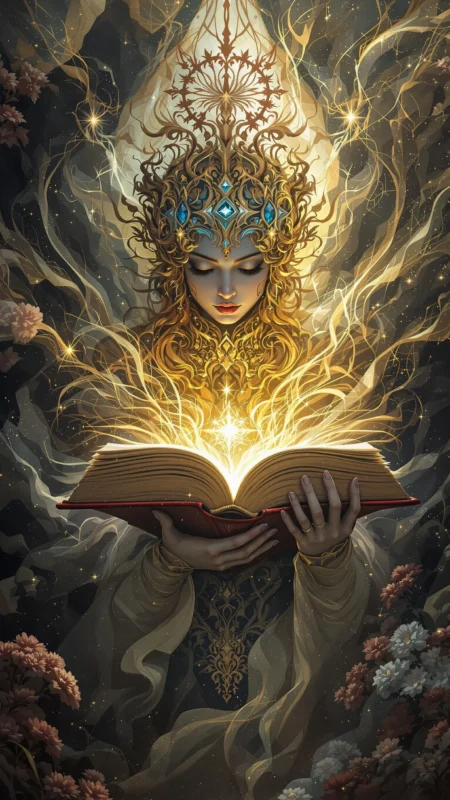
In the personal mythos, the Forbidden Book is rarely just a physical object. It is a metaphor for the shadow self, that locked library within the psyche containing all the thoughts, desires, and capacities we have deemed unacceptable. It may be bound in the leather of repressed anger, its pages filled with the invisible ink of denied ambition. To seek this book is to seek a terrifying and necessary form of self-knowledge. Its contents are 'forbidden' not by some external demon, but by our own internal censor, the part of us that desperately wants to maintain the status quo. Opening it is an act of psychological rebellion, a willingness to meet the parts of ourselves we have exiled.
The book symbolizes a paradigm shift waiting to happen. It is the single idea that can collapse a kingdom or a worldview. Its pages might hold a scientific discovery that renders current physics obsolete, a genealogical truth that upends a family’s identity, or a spiritual insight that makes official religion seem like a children’s story. In a personal mythology, the appearance of the Forbidden Book signals that the protagonist's world is built on a fragile foundation. It is a catalyst, a seed of benevolent destruction. It is the red pill, the glimpse behind the curtain, the whispered truth that proves the comfortable reality is a carefully constructed stage.
The very concept of 'forbidden' forces a confrontation with authority. Who forbids this knowledge, and why? The archetype compels us to examine the gatekeepers in our lives. Is it a parental voice, a cultural norm, a religious institution, or our own fear of chaos? The book becomes a mirror reflecting not only its own secret contents, but also the nature of the power that has forbidden it. It suggests that the greatest chains are not physical, but ideological, and the key to unlocking them is often contained in the very things we are most afraid to look at.