 Believe
 Fear
Fear Strength
 Weakness
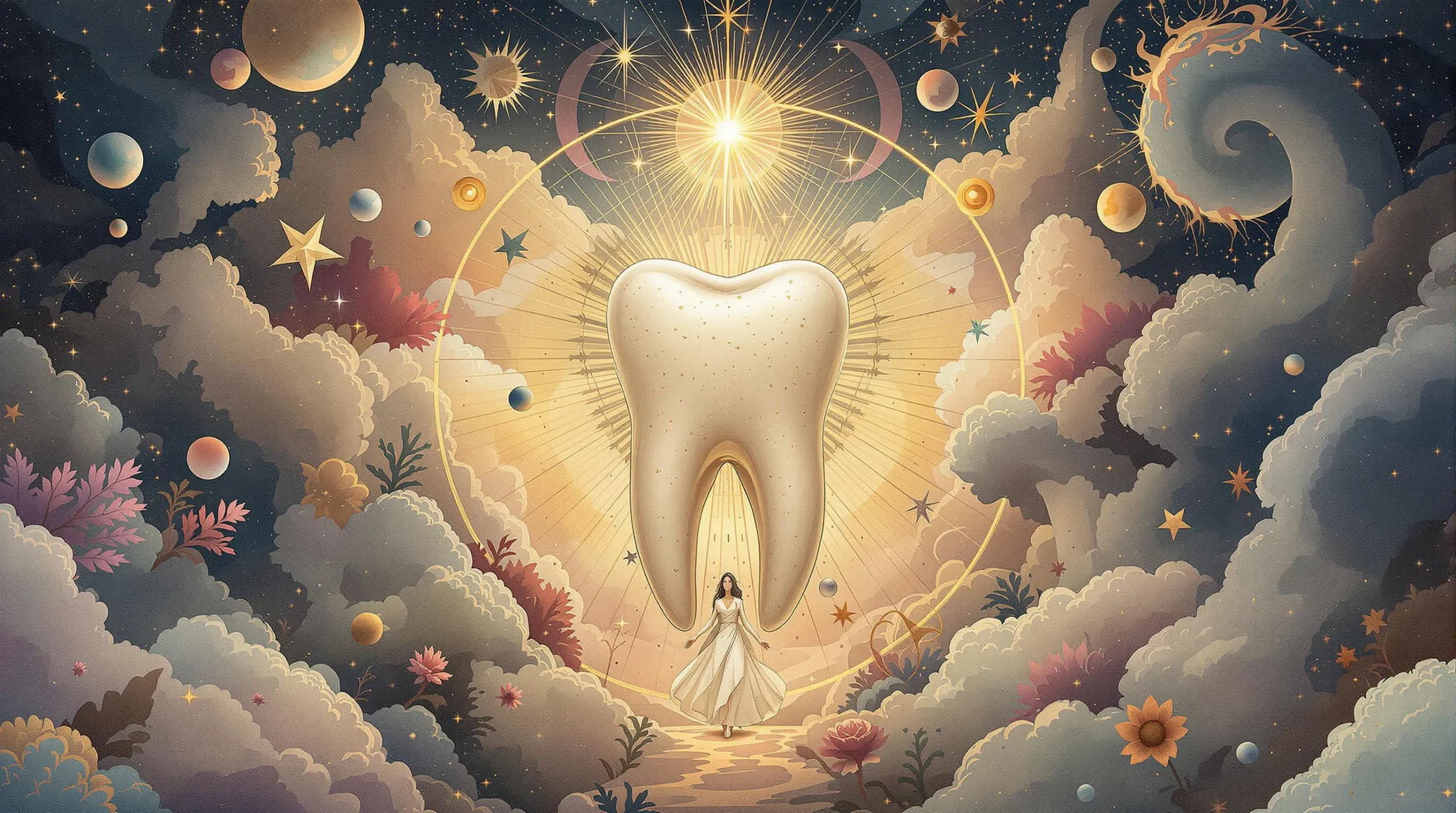
The First Tooth is a profound symbol of the painful breakthrough. It is the universe in miniature, a story of emergence where gain is inseparable from wounding. Before the tooth, there is a soft, unbroken unity: the gum. Its arrival is a schism, a sharp, pearly intrusion that is both a tool and a weapon. In one's personal mythology, this archetype signifies that growth is not a gentle unfolding but a series of small, painful eruptions. It suggests a life narrative punctuated by these moments: the first difficult truth spoken, the first boundary drawn, the first step into a terrifying new role. Each is a 'first tooth,' a new capability for engaging with the world that is born from discomfort.
The archetype is also a potent artifact of the threshold. It marks the line between passive reception and active consumption. A baby with gums can only receive sustenance as it is given; a baby with a tooth can begin, in a nascent way, to take it. This translates to a mythological understanding of agency. We are not merely shaped by the world; we must grow the tools to shape it back. The First Tooth suggests that our power does not come from without, but must be cultivated from within, pushing its way into the light through our own vulnerable tissue. It is the body's first declaration of a separate, more capable self.
Finally, the First Tooth speaks to memory and the value of small origins. It is an object often saved, placed in a velvet box, a tangible relic of a fleeting, foundational moment. This act of preservation suggests a deep-seated knowledge that the grandest structures are built on the smallest, sharpest beginnings. For an individual, it may mean that the most defining moments of their life were not the loud, public triumphs, but the quiet, internal breakthroughs that gave them a new way to 'bite' into reality. It sanctifies the small, painful start as the most precious part of the story.