

Fields

Archetype Meaning & Symbolism

Potential, vulnerability, expanse, fertility, patience, simplicity, transition, emptiness, cultivation, exposure

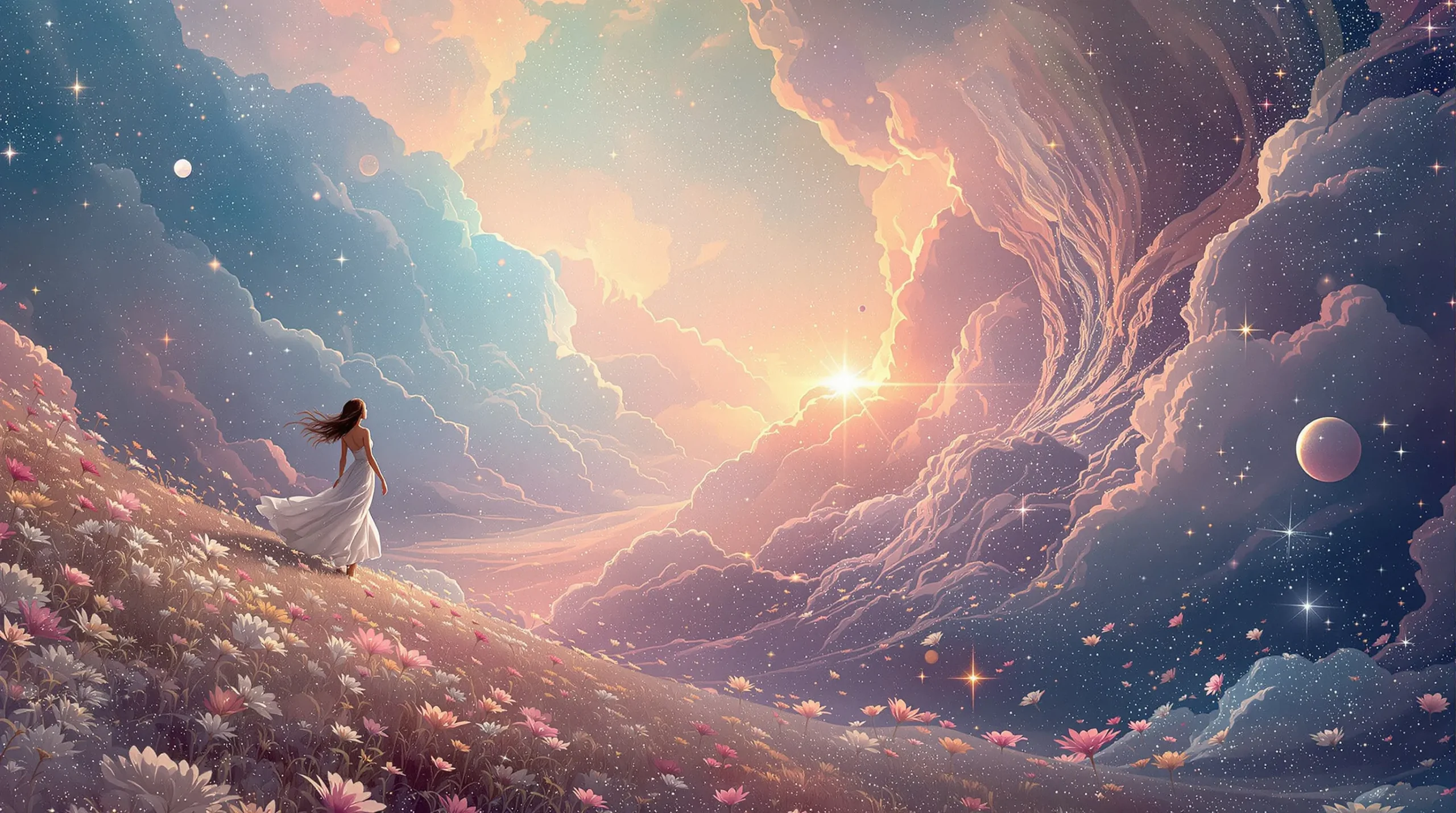
  • Stand in my center. See how the sky offers no ceiling? This is the nature of what you can become. Now, what will you plant?

If Fields is part of your personal mythology, you may...

Believe

  • You may believe that everything has its season, and that patience is the highest virtue.

    You may believe that true growth requires vulnerability and a willingness to be exposed to the elements of life.

    You may believe that the greatest potential lies dormant within the simplest, quietest things.

Fear

  • You may fear the sudden, unpredictable storm that can undo years of careful work in an instant.

    You may fear a season of drought, a time when your inner resources run dry and nothing will grow.

    You may fear the vastness of your own potential, an agoraphobia of the soul that makes you terrified of the empty space and the choices it demands.

Strength

  • You may possess a profound and unwavering patience, able to wait for the right conditions with a faith that others find remarkable.

    You may have an incredible capacity for nurturing long-term growth, whether in projects, people, or yourself.

    You may be uniquely resilient, able to recover from setbacks with the understanding that every failed crop is just preparation for the next planting.

Weakness

  • You may be prone to passivity, waiting for external forces to plant the seeds of purpose in your life.

    You may be overly vulnerable to external conditions and influences, lacking strong internal boundaries.

    You may become stuck in the 'winter' phase, mistaking a necessary fallow period for permanent barrenness and giving in to a state of inertia.

The Symbolism & Meaning of Fields

In the cartography of the soul, Fields represent the landscape of pure potential. This is the inner space where ideas are planted, where emotional groundwork is laid, and where the self is cultivated. To have Fields as a prominent feature of your personal mythology could mean you define yourself by what you are becoming, rather than what you are. It is the archetype of the blank slate, the open frontier of the psyche, a place that is both a terrifying void and a realm of infinite possibility. It is the quiet moment before the decision, the patient waiting for the right conditions, the deep faith in the unseen growth happening just beneath the surface.

Fields often mark a transitional space between the wild, untamed Forest and the structured, civilized City. Psychologically, this could place you in a state of deliberate cultivation, where you are actively taming your wilder impulses and channeling them into productive growth. You may not be a creature of pure instinct, nor one of rigid order. Instead, your inner world is a tamed wilderness, a place that requires conscious effort—plowing, sowing, weeding—to yield a harvest. This symbolism suggests a personality that values work, patience, and the slow, seasonal unfolding of one's destiny.

This archetype also speaks to a profound vulnerability. A field has no place to hide. It is open to the sky, exposed to blight, drought, and storm. To resonate with Fields is perhaps to accept a certain defenselessness as a prerequisite for growth. You may understand that to create anything of value—a relationship, a work of art, a new version of yourself—you must first make yourself open to the world, risking failure and loss. The field's meaning is tied to this radical acceptance: that the same sun that nourishes can also scorch, and the same rain that gives life can also flood.


Fields Relationships With Other Archetypes

The Sower:

The Field is receptive, passive potential; The Sower is the active, intentional principle that gives it purpose. Without The Sower, the Field may remain fallow or grow wild with whatever the wind brings. Without the Field, The Sower's seeds are just dry motes with no future. In a personal mythos, this relationship highlights the interplay between one's innate potential (the Field) and one's will, focus, and conscious choices (The Sower). You might possess a vast internal Field of talent, but it requires the disciplined action of The Sower to bring forth a meaningful harvest.

The Scarecrow:

The Scarecrow is the static guardian, the symbol of protection and fear, placed within the Field. It represents the fixed anxieties, the old traumas, or the rigid beliefs one erects to protect one's vulnerable, growing self. While it may ward off trivial threats, it is a powerless effigy against the great forces of drought or storm. This relationship could speak to a tendency to rely on superficial defenses within your open, vulnerable spaces, a reminder that the true challenges to your growth are often elemental and cannot be frightened away by a mask.

The River:

The River is a source of life and nourishment, but also a potential boundary or a threat of flood. Its relationship with the Field is one of dependent tension. The Field thrives near The River, drawing life from its waters, but it is also defined and sometimes reshaped by its course. This might symbolize a connection to a powerful emotional or spiritual source in your life. This source nourishes your potential, but its currents could also shift, changing the very landscape of your inner world and reminding you that what sustains you also has the power to overwhelm you.

Using Fields in Every Day Life

Navigating a Career Change:

When you leave a long-held job, your internal landscape might become a field. It may feel terrifyingly empty, a fallow plain where a familiar structure once stood. Instead of rushing to build something new, you could embrace the Field archetype: walk its perimeter, test the soil of your skills, and wait for the right season to plant the seeds of a new venture. The field asks for patience, not panic. It teaches that emptiness is not an absence but an invitation for a different kind of growth.

Healing from a Relationship's End:

The heart after a loss is often a trampled field, marked by the ghost of what was cultivated there. To heal is to clear the stubble, to plow under the remnants, and to let the land rest. You may need a season of lying fallow, of allowing the sun and rain to replenish the soil of your soul before considering what to grow next. The field suggests that not all ground must be productive at all times; some periods of quiet emptiness are essential for future fertility.

Embarking on a Creative Project:

The blank page, the empty canvas, the silent studio: these are all fields. They represent pure, undifferentiated potential. To embody the Field archetype here is to resist the urge to fill the space immediately. It is to sit with the vastness, to feel the gentle breeze of nascent ideas, and to understand that the quality of the harvest depends on the quiet, deliberate preparation of the ground before the first mark is ever made.

Fields is Known For

Potential

A field is a canvas of earth, a place defined by what it could become. It is the promise of a harvest, the space for a future forest, or the ground for a coming battle. Its identity is rooted in latency.

Vulnerability:

Lacking the protection of mountains or forests, a field is utterly exposed to the elements. It is at the mercy of the sun, the wind, the rain, and the frost, symbolizing a state of unguarded openness.

Cycles:

Fields are monuments to the rhythm of seasons: the plowing of spring, the growth of summer, the harvest of autumn, and the fallow rest of winter. They teach the mythology of patience, death, and rebirth.

How Fields Might Affect Your Personal Mythology

How Fields Might Affect Your Mythos

When Fields are central to your mythos, your life story may not be an epic of heroic quests and dramatic battles but a quieter, more cyclical narrative of cultivation. The major events are not conquests but harvests. The villains are not dragons but droughts, blights, and early frosts. Your personal history might be measured in seasons of growth, periods of lying fallow, and the slow, patient work of tending to the soil of your soul. Your defining moments could be the ones where you chose what to plant in the vast, empty spaces left by loss or change, and the legacy you seek to leave may be a sustainable farm, not a conquered kingdom.

This archetype suggests a mythology where meaning is generated internally and emerges slowly over time. Your narrative might lack sudden, sharp turns, favoring instead the gentle, almost imperceptible arc of a growing season. You may see your life as a long-term project, a plot of land given to you to tend. The central conflict in your story is the patient struggle to bring forth nourishment and beauty from this ground, a battle waged with consistency, hope, and an intimate understanding of your own nature, your own soil.

How Fields Might Affect Your Sense of Self

A self-concept shaped by Fields may be one of immense patience and deep-seated potential. You might see yourself as a being in a constant state of becoming, your identity less a fixed structure and more a process of growth. This can lead to a powerful sense of hope and resilience; no matter the failure of the last crop, the field remains, ready for a new season. You may not feel a need for elaborate defenses or a complex persona, preferring a state of open, simple presence. Your self-worth is perhaps tied not to immediate achievements but to the fertility of your inner ground.

Conversely, this archetype could foster a sense of being undefined or even empty. The sheer openness of the field can be daunting. You may feel porous, overly suggestible to external influences—like a field planted by whatever seeds the wind carries. There might be a persistent feeling of waiting for something to happen, for the seeds of purpose to be planted by an outside force. This could lead to a passivity or a feeling of incompleteness, a sense that your true self is still latent, dormant just beneath the surface, waiting for the right conditions to sprout.

How Fields Might Affect Your Beliefs About The World

Your worldview might be profoundly cyclical. You may not see time as a linear progression toward a final goal but as a recurring spiral of seasons. This perspective could foster a deep appreciation for process over outcome. You may believe that periods of rest and emptiness are as valuable as periods of productivity, and that every ending is simply the preparation for a new beginning. The world, for you, is not a machine to be controlled but a vast ecosystem to be understood and worked with, a place where growth happens according to its own mysterious schedule.

This perspective may also lead to a belief in the inherent potential of all things. You might look at people, situations, or ideas and see not what they are, but what they could become with the right cultivation. This can be a source of great optimism and creativity. However, it may also make you vulnerable to disappointment when the world and its inhabitants resist cultivation or fail to live up to the potential you project onto them. You might struggle with chaos and unpredictability, seeing it as a threat to the orderly rows of your carefully tended worldview.

How Fields Might Affect Your Relationships

In relationships, you may offer others a sense of space and potential. You could be the person friends and partners turn to when they need room to grow, a non-judgmental presence who allows them to be in their own season, whether it's one of blooming or lying fallow. You might value relationships that are slow-growing, built on a foundation of shared patience and mutual cultivation. The connections you foster are likely to be deep-rooted and resilient, designed to weather the changing seasons of life. You may see love not as a spark, but as a harvest that requires a lifetime of tending.

The shadow side of this in relationships is a potential for passivity or emotional distance. The vastness of the field can feel like emptiness to a partner who needs more immediate engagement. You might create so much space for the other person that you lose your own place in the landscape. There could also be a tendency to see a partner as a project to be cultivated, projecting your own hopes for a harvest onto them rather than accepting them as they are. You might struggle in relationships that are fiery and spontaneous, preferring the predictable rhythms of a planting calendar.

How Fields Might Affect Your Role in Life

You may perceive your role in life as that of the cultivator, the steward, or the patient nurturer. Your purpose isn't to conquer, build, or invent in a dramatic fashion, but to tend to the slow, quiet, essential work of fostering growth, whether in a family, a community, or a field of knowledge. You could feel a deep responsibility to leave the plot of earth you've been given—your career, your family, your community—more fertile than you found it. This role is not about being in the spotlight; it's about being the quiet, foundational presence that makes everything else possible.

This archetypal role can also lead to a feeling of being a backdrop for other people's dramas. A field is often the setting for a story, but rarely its protagonist. You might feel that your role is simply to be the ground upon which others build their dreams or fight their battles, leading to a sense of being overlooked or taken for granted. There may be a quiet frustration in this role, a yearning to be the harvest itself, not just the land from which it springs.

Dream Interpretation of Fields

To dream of lush, green, or golden fields ready for harvest may be a powerful affirmation from your subconscious. It could suggest that a period of patient work is about to pay off, and that you are entering a season of abundance and fulfillment. The dream might be highlighting a sense of unlimited potential and opportunity unfolding before you. Walking through a sun-drenched field could symbolize a feeling of peace with your path, a sense that you are in the right place at the right time, and that the ground of your being is fertile and life-giving. It is a dream of promise, peace, and deserved reward.

Conversely, dreaming of a field that is barren, flooded, on fire, or filled with weeds could signal deep-seated anxieties about your potential. A barren field might represent a creative block, a spiritual drought, or a fear that your efforts will amount to nothing. A flooded or frozen field may point to overwhelming emotions or circumstances that are paralyzing your growth. Dreaming of being lost in a vast, featureless field could symbolize a feeling of being without direction, exposed and vulnerable with no clear path forward. These dreams often ask you to examine the condition of your inner soil: what needs to be cleared, rested, or nourished?

How Fields Archetype Might Affect Your Needs

How Fields Might Affect Your Physiological Needs

Your physiological needs may be deeply intertwined with natural cycles. The Field archetype suggests a need for rhythm in your life: patterns of sleep, work, and rest that mirror the seasons. You might feel most healthy when your diet is connected to seasonal, whole foods, literally consuming the fruits of a harvest. Your body may crave open spaces, fresh air, and sunlight, feeling cooped up or stressed in cluttered, artificial environments. Physical well-being, for you, is perhaps less about intense bursts of exercise and more about the steady, consistent effort of walking the long rows of your life, day after day.

When out of balance, this can manifest as a kind of physical inertia or stagnation. Just as a field can become waterlogged or fallow for too long, you might experience periods of lethargy, feeling heavy and unproductive. There could be a resistance to sudden physical exertion, a preference for the predictable that can lead to a sedentary lifestyle. Your body may be highly sensitive to its 'weather,' feeling sluggish on gray days or agitated by chaotic energy, reflecting the field's total exposure to its environment.

How Fields Might Affect Your Ideas of Belonging

A sense of belonging may come from a deep connection to a place, a community, or a long-term project. Like a farmer who belongs to their land, you may feel most at home when you are part of a continuous, generational cycle. Love, for you, might be less about passionate romance and more about a shared stewardship, the quiet companionship of two people tending the same garden. You create belonging by putting down roots and cultivating the social soil around you, creating a nourishing environment where others can also thrive.

This can also lead to a profound sense of loneliness. A field, even when productive, is a vast and solitary place. You might stand in the center of your own life and feel the immense distance to the horizon in all directions. Intimacy could be challenging if you provide endless space for others but fail to invite them into your own center. You might offer a peaceful but ultimately lonely landscape, where others can visit and even harvest, but few are invited to stay for the winter.

How Fields Might Affect Your Feelings of Safety

Safety, for you, may be found in predictability and clear boundaries. A well-tended field is often fenced, its borders clearly marked. This translates to a need for emotional and psychological 'fences' in your life. You might feel most secure when you know the rules, when relationships are clearly defined, and when the future follows a foreseeable, seasonal pattern. Security is not found in walls and fortresses, but in the order of the plowed rows and the knowledge that you have stored enough from the last harvest to survive the winter.

However, the core nature of the Field is exposure, which can create a pervasive sense of vulnerability. You might feel a constant, low-level anxiety about unforeseen events: the 'freak hailstorm' that could ruin everything you've carefully cultivated. This could manifest as a fear of the unknown, a deep-seated worry about external forces over which you have no control. You may struggle with a feeling of being psychologically unprotected, with no trees to block the wind and no hills to hide behind, which can lead to a state of hyper-vigilance or a reluctance to take risks.

How Fields Might Affect Your Views of Esteem

Esteem is likely earned through patience, hard work, and tangible results. Your self-worth could be directly tied to the success of your 'harvest,' whatever that may be: a completed project, a well-raised family, a thriving business. You may not need applause or public recognition; the quiet satisfaction of seeing your efforts bear fruit is enough. There is a humble pride in this archetype, the self-respect that comes from knowing you have worked with the elements and your own nature to create something nourishing and good from the simple ground of your being.

The precariousness of this is that your esteem can be highly fragile, dependent on external outcomes. A 'bad harvest'—a project that fails, a goal that isn't met—can feel like a fundamental personal failure, a reflection of your own barrenness. This can lead to a cycle of overwork and anxiety, a constant pressure to remain productive lest you be judged as fallow or useless. You might struggle to feel valuable during periods of rest or transition, viewing any time not spent actively growing as wasted time.

Shadow of Fields

The shadow of the Fields archetype manifests as a terrifying emptiness or a desolate barrenness. When you are in this shadow, your inner landscape is not a field of potential but a wasteland. It is the dust bowl of the psyche, where all attempts at cultivation fail and the soil of your spirit has turned to sand. This can emerge from burnout, deep grief, or profound disappointment. In this state, you may feel utterly depleted, exposed, and useless. The openness that once felt like freedom now feels like a horrifying void. You may resist all new ideas or relationships, believing your ground to be permanently poisoned and incapable of sustaining life.

Another manifestation of the shadow is a tyrannical insistence on productivity. This is the field that is never allowed to lie fallow. It is over-farmed, chemically forced, and exploited until the soil is stripped of all nutrients. Psychologically, this looks like a person who cannot rest, who equates self-worth entirely with output. They may frantically plant new 'crops' before the old ones are even harvested, driven by a fear of emptiness. This leads to a life that looks productive on the surface but is internally unsustainable, brittle, and lacking any true, deep nourishment. It mistakes activity for growth and, in its desperate attempt to avoid winter, creates a permanent state of exhaustion.

Pros & Cons of Fields in Your Mythology

Pros

  • You are a master of patience, with an intuitive understanding of the rhythms of growth and change.

    You offer a sense of calm, open space to others, making you a grounding and nurturing presence.

    You have a deep well of resilience, knowing that even after the harshest winter, spring eventually comes.

Cons

  • You can be susceptible to passivity and inertia, waiting for life to happen to you.

    Your inherent openness can make you feel exposed and overly sensitive to external pressures and criticisms.

    Your self-worth may be dangerously tied to your productivity, making periods of rest or failure feel catastrophic.