 Believe
 Fear
Fear Strength
 Weakness
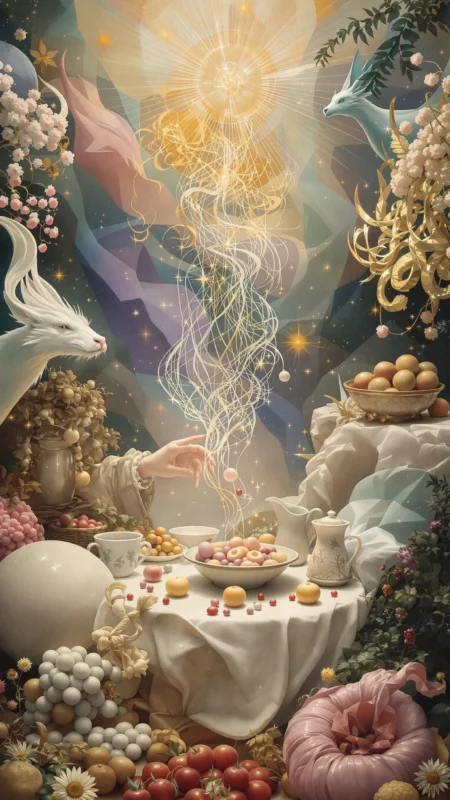
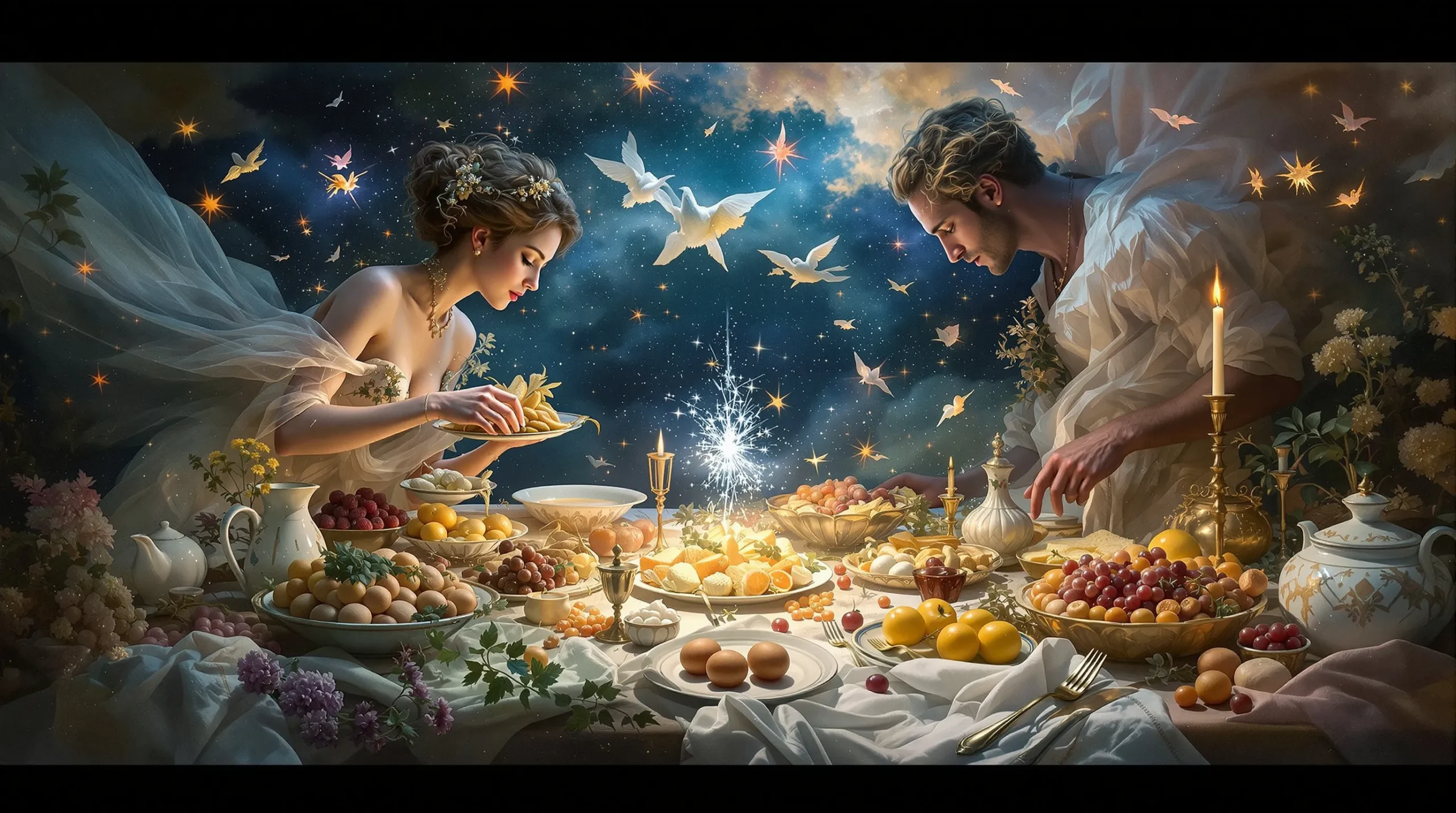
In the modern psyche, the Feast archetype represents far more than mere consumption. It is, perhaps, the ultimate symbol of the present moment lived fully. In a culture obsessed with future optimization and past regrets, the feast demands a radical presence: a sensory immersion in taste, scent, and the sound of conversation. To have the Feast in your personal mythology is to possess an internal compass that points toward moments of peak experience, understanding that a life narrative is built not just on grand achievements but on the texture of its most vibrant, shared moments. It is the ritualized acknowledgment that we are creatures who need not just to be fed, but to be nourished in body and spirit, together.
The Feast may also serve as a profound metaphor for earned reward and the cycles of life. It rarely manifests from nothing: it is the result of the hunt, the harvest, the long preparation. Its presence in one's inner world could signify a belief in the rhythm of effort and release, of labor followed by deserved celebration. This archetype recognizes that joy is not a passive state but an active creation. It understands that setting the table, preparing the food, and gathering the guests are all part of the magic. It sanctifies the material world, suggesting that spiritual and emotional fulfillment can be found in the most tangible of things: a warm loaf of bread, a shared bottle of wine, a full plate.
Furthermore, the Feast archetype is a powerful exploration of inclusion and exclusion. Who is invited to the table is a question of central importance in one's personal myth. The feast can be a radical act of generosity and welcome, expanding the circle of community. Or, its absence, or one's exclusion from it, can represent profound loneliness, scarcity, and a feeling of being an outsider. It forces a confrontation with one's own capacity for hospitality and one's deepest needs for belonging. The table becomes a map of one's social and emotional world: who gets the seat of honor, who is seated nearby, and who, perhaps, is left looking in from the cold.