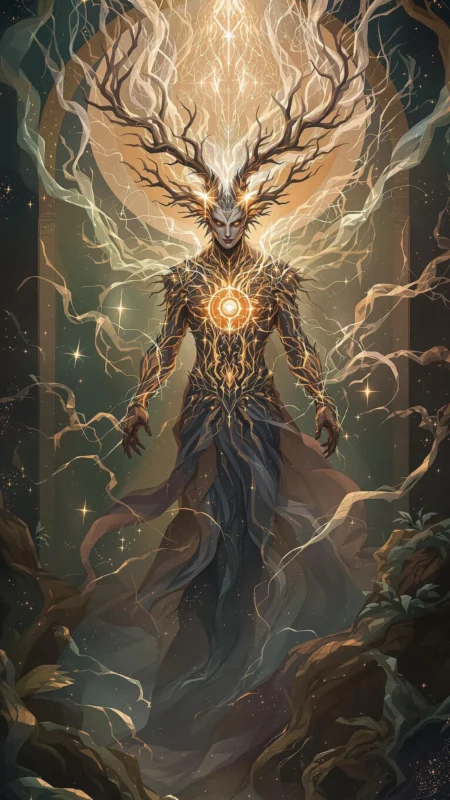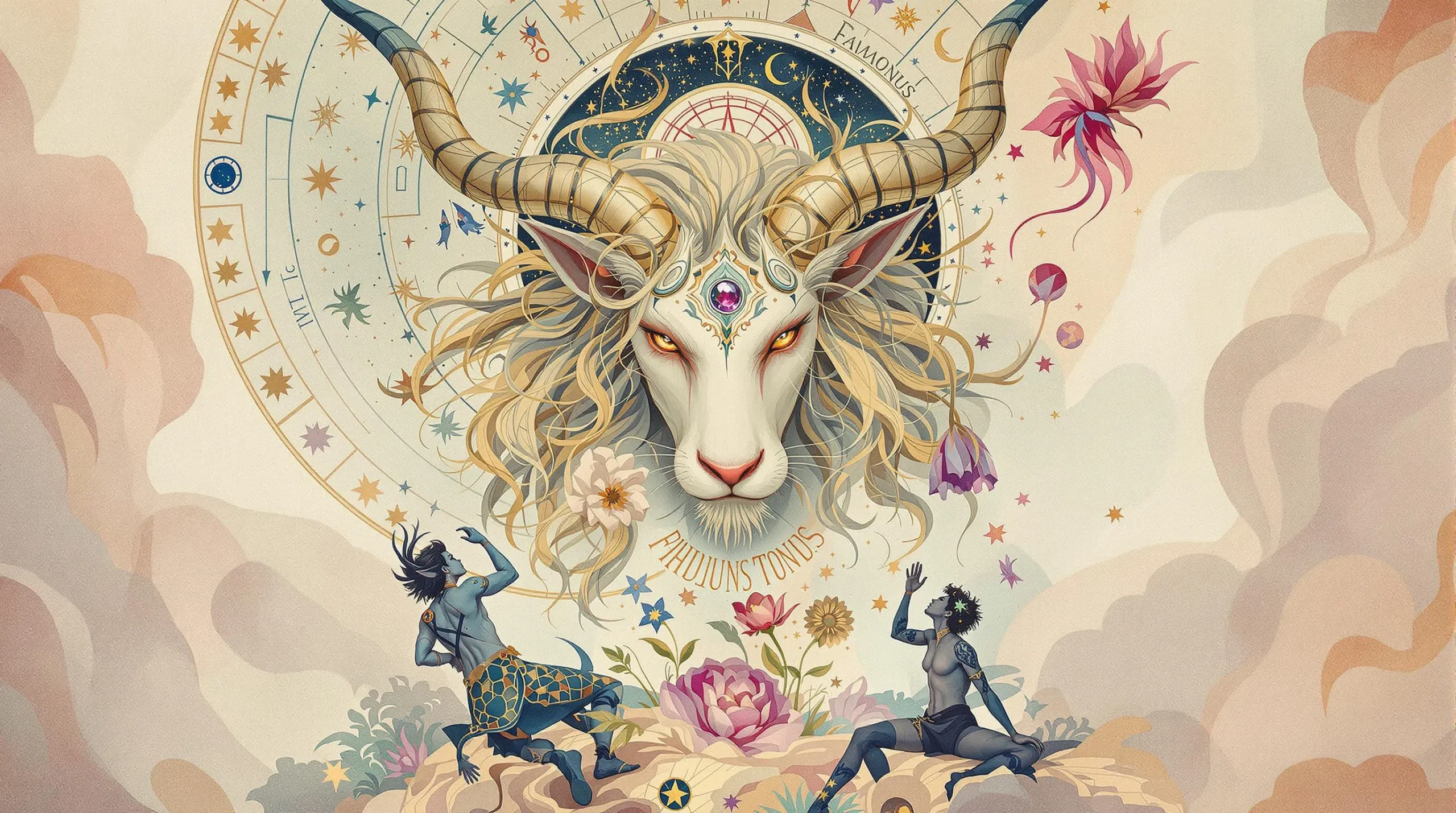


Faunus

Archetype Meaning & Symbolism

wild, instinctual, musical, fertile, prophetic, mischievous, rustic, carnal, untamed, earthy

  • Be with me, Faunus; leave your grove and lawn... Let all my flock be scatheless of the year.

If Faunus is part of your personal mythology, you may...

Believe

  • The body is an oracle, and its instincts are sacred texts.
  • True freedom is not the absence of constraints, but the ability to dance within them.
  • Wildness is not a place to visit, but a state of being to inhabit.

Fear

  • A life of sterile predictability, completely divorced from nature and passion.
  • That your own primal energies, if fully trusted, could lead to chaos and ostracism.
  • Losing the capacity for spontaneous, uninhibited joy and becoming overly civilized.

Strength

  • A powerful and reliable intuition that serves as an unerring compass in life's complexities.
  • An infectious vitality and a deep capacity for authentic, embodied joy that can uplift others.
  • A primal resilience rooted in your connection to the earth, allowing you to weather storms with a creaturely grace.

Weakness

  • A tendency toward impulsiveness that may prioritize immediate gratification over long-term well-being.
  • A difficulty thriving in or respecting highly structured environments, leading to conflict with authority and systems.
  • A potential for self-indulgent hedonism that can neglect responsibilities to oneself and one's community.

The Symbolism & Meaning of Faunus

To find the Faunus within one's personal mythology is to acknowledge the untamed wilderness that persists within the managed landscape of the self. This archetype is the patron saint of the instinctual gut-feeling, the sudden urge to run barefoot in the rain, the part of you that bristles at fluorescent lighting and the tyranny of the clock. The Faunus represents a truth that civilization often prefers to forget: that we are not disembodied minds but breathing animals, inextricably linked to the earth's cycles. He is the internal reminder that our deepest wisdom may not come from a book or a screen, but from the somatic intelligence of our own bodies, the ancient knowledge encoded in our very cells.

The hybrid form of the Faunus, part human and part goat, is a potent symbol for a necessary integration. It speaks not of a war between our 'higher' rational selves and our 'lower' animal natures, but of their potential for a harmonious, powerful union. The human torso may represent consciousness and craft, but it is supported by the goat's legs, which are sure-footed, libidinous, and grounded to the earth. To welcome the Faunus is to honor this fusion, to understand that our intellect is most potent when it is informed by our instincts, and our creativity is most fertile when it drinks from the well of our primal desires. This is the wisdom of the centaur, the mermaid, the sphinx: true power lies in embracing our composite nature.

Furthermore, the Faunus symbolizes a form of fertility that extends beyond simple procreation. He is the life force that ensures the fecundity of fields and flocks, but in a personal mythos, this translates to creative, intellectual, and spiritual fruitfulness. He presides over the wild gardens of the mind, where brilliant, untamed ideas sprout like weeds. He is the patron of the artist's messy studio, the musician's improvisational riff, the poet's surprising metaphor. To have Faunus as an inner guide is to trust in the chaotic, generative process of creation, to believe that something beautiful and vital can emerge from what appears to be nothing more than overgrown, untended ground.


Faunus Relationships With Other Archetypes

The Walled Garden

The Faunus may find its most compelling counterpoint not in an enemy, but in the quiet geometry of the Walled Garden. Where the Faunus is the chaos of unpruned growth, the ecstatic and terrifying liberty of the wildwood, the Garden is nature curated, a verse of chlorophyll composed and contained. The relationship is one of a silent dialogue across a stone boundary. The Faunus, peering through the wrought iron, could represent the raw, untamed instinct that civilization seeks to keep at bay, yet the very existence of the wall suggests a deep awareness, perhaps even a longing, for the wilderness it excludes. The Garden’s tranquil order might seem a rebuke to the Faunus’s revelry, but it could also be seen as a space pining for a single, disruptive hoofprint to spoil its perfect symmetry, to be reminded of the riotous, untamed life from which it was carved.

The Oracle

In the presence of the Oracle, the Faunus’s own prophetic nature shifts into a different key. The Oracle, often housed in stone and ritual, delivers wisdom as a distilled, crystalline truth, a message passed through the sanctified filter of priesthood and tradition. The Faunus, in contrast, may channel a more chthonic, embodied knowledge. Its prophecies are not spoken in measured hexameter but could be found in the frenzy of a dance, the pattern of scattered goat knuckle-bones, or the guttural notes of a reed pipe. This relationship is not one of opposition, but of different conduits for the same subterranean river of knowing. The Oracle offers a truth that has been refined for human consumption, while the Faunus presents it raw, still tasting of mud and moonlight, a wisdom that must be felt in the blood before it can be understood by the mind.

The Crossroads

The Crossroads is a space of pure potentiality, a pause in the world’s grammar where destinies hang in the balance, and it is here that the Faunus may feel most at home. As a liminal being, straddling the worlds of beast and man, wilderness and pasture, the Faunus is the very spirit of such a place. He is not a guide who offers a map, but perhaps the unnerving music one hears while hesitating between two paths. The relationship is symbiotic; the Crossroads provides the stage for the Faunus’s ambiguous nature to flourish. To encounter him here is to be confronted with a choice that transcends mere direction. It suggests a decision between the known and the unknown, the path of constrained civility and the overgrown track leading into the heart of instinct, with the Faunus’s piping as the only, and utterly unreliable, compass.

Using Faunus in Every Day Life

Navigating Creative Stagnation

When faced with a creative block, the Faunus archetype invites a retreat from intellect and a return to the body. It suggests abandoning the meticulous outline in favor of improvisational movement, replacing the search for the perfect word with the rhythm of drumming hands on a tabletop. This is not about finding inspiration, but about becoming a conduit for a more primal, less-censored form of expression. You could find your breakthrough not at the desk, but while dancing alone in your living room or humming a tune on a walk through a city park, allowing the untamed part of your psyche to speak in its native, non-linear tongue.

Feeling Disconnected from Modern Life

For the soul feeling alienated by the digital and the synthetic, the Faunus offers a mythology of re-embodiment. This archetype encourages a deliberate engagement with the physical world that goes beyond a scheduled hike. It is the practice of feeling the texture of a leaf, of walking barefoot to sense the earth's cool intelligence, of consciously listening to the urban wildlife that thrives in the concrete forest. By embodying the Faunus, you might re-sanctify your relationship with place, finding the 'wild' not in some distant wilderness, but in the untamed life force humming beneath the surface of your everyday world.

Overcoming Social Self-Consciousness

In social situations that provoke anxiety and over-analysis, the Faunus archetype provides a model for uninhibited presence. It is the permission to be less of a carefully curated persona and more of a living, breathing creature. Channeling this energy might mean focusing on the rhythm of a conversation rather than the content, responding with authentic laughter rather than a polite smile, and trusting the intuitive pull toward certain people. It’s about joining the dance of human connection with a playful spirit, replacing the fear of missteps with the joy of movement itself.

Faunus is Known For

Sylvan Revelry

The Faunus is renowned for leading spontaneous, joyous celebrations in natural spaces. This is not mere partying, but a sacred, uninhibited dance that connects participants to the life force of the earth and each other, blurring the lines between the divine and the mortal through music and movement.

Prophetic Whispers:

Associated with foreknowledge, Faunus was believed to communicate through rustling leaves and strange voices heard in sacred groves. This represents a form of wisdom that is not logical or linear, but intuitive and instinctual, a message from the wild heart of the world itself.

Guardian of the Flock:

As a pastoral deity, Faunus protects shepherds and their animals, symbolizing a benevolent relationship between humanity and the tamed, yet still natural, world. He represents the guardian of life, fertility, and the rustic simplicity that thrives at the edge of civilization.

How Faunus Might Affect Your Personal Mythology

How Faunus Might Affect Your Mythos

Incorporating the Faunus into your personal mythos may fundamentally alter the shape of your life's narrative. The story could cease to be a linear progression, a hero's journey toward a singular, defined treasure. Instead, your mythos becomes a rambling exploration, a dance through a vast forest with many sacred clearings and mysterious paths. Success is no longer measured by conquests or milestones reached, but by the quality of presence, the depth of experience, and the courage to follow the winding trail of intuition. Your life story reads less like a ladder and more like a map of a watershed, with meandering tributaries of experience feeding a central, ever-deepening river of self.

Under this influence, events previously labeled as failures or detours might be reframed as sacred acts of Faunic intervention. That job you impulsively quit, the relationship that burned brightly and briefly, the decision to move to a new city for no logical reason—these are no longer seen as mistakes in the grand plot. They become pivotal moments where your wild, authentic self commandeered the narrative, pulling you off the well-trodden road and into the wilderness where your true story was waiting. Your myth becomes a testament to the wisdom of these disruptions, a chronicle of a life lived in allegiance to the music only you could hear.

How Faunus Might Affect Your Sense of Self

When the Faunus takes root in your conception of self, you may begin to see your own eccentricities and so-called imperfections in a new, more generous light. Aversion to formality, a certain bodily earthiness, a streak of impulsiveness, a need for unstructured time: these are no longer personal failings to be corrected. Instead, they become the revered hallmarks of your authenticity, evidence of your connection to a wilder, more ancient part of your being. Your identity feels less like a static sculpture to be perfected and more like a living ecosystem, messy and vital, with its own internal logic and seasons of growth and decay.

This archetype could also foster a profound acceptance of your physical self. The body ceases to be a mere vehicle for the mind or an object to be disciplined into conformity. It becomes an oracle. Hunger, desire, fatigue, and pleasure are its sacred pronouncements, messages from your inner Faunus that demand to be heeded. Self-care shifts from a regimen of improvement to a ritual of listening. You might find divinity not in transcending the flesh, but in inhabiting it fully, discovering a holy presence in the simple, creaturely facts of your own existence.

How Faunus Might Affect Your Beliefs About The World

With the Faunus as a lens, the world may cease to look like a collection of resources to be exploited or a machine to be optimized. It transforms into a vast, intelligent, and spirited organism, pulsing with a life force that is both beautiful and terrifyingly indifferent to human ambition. The rigid structures of civilization—its laws, its economic systems, its social etiquette—can start to seem like flimsy fences erected in an immense and untamable wilderness. You might begin to see the signature of the Faunus everywhere: in the 'panic' of a market crash, the 'revelry' of a street festival, the stubborn weeds breaking through the pavement.

This worldview cultivates a deep respect for what lies outside the fences. You may find yourself valuing intuitive knowledge over empirical data, the wisdom of ecosystems over the logic of industry, and the untamable spirit of art over the reassurances of commerce. The world is not a problem to be solved but a mystery to be inhabited. There's a recognition that the most vital parts of life—love, creativity, joy, grief—are themselves wild things that cannot be domesticated, only witnessed and honored in their passing.

How Faunus Might Affect Your Relationships

In the realm of relationships, the Faunus archetype prioritizes vitality and authentic connection above all else. You may find yourself drawn to people who possess their own wild spirit, partners with whom you can share a dance of mutual, uninhibited self-revelation. The health of a relationship might be measured not by its stability or social acceptability, but by its capacity for play, passion, and a raw, earthy honesty. The ideal connection is a shared wilderness, a space where both individuals can be their most creaturely, instinctual selves without fear of judgment.

This can, however, create a tension with more conventional relationship structures. The Faunus within you may feel stifled by partnerships that are overly predictable, emotionally restrained, or governed by unspoken social contracts. There is a craving for a visceral bond, a shared rhythm that transcends polite conversation. While this can lead to profoundly intimate and transformative connections, it can also lead to restlessness or a feeling of being caged within relationships that prize comfort and security over passion and freedom.

How Faunus Might Affect Your Role in Life

Your perceived role in the world might shift from that of a builder, a manager, or a maintainer of the established order. Instead, you could see yourself as a keeper of the wild spaces, both literal and metaphorical. This doesn't necessarily mean becoming a forest ranger; it means embodying the role of the artist, the poet, the musician, the dancer, the lover—anyone whose life's work is to channel the untamed and remind the civilized world of its own wild heart. Your purpose is not to add another brick to the wall of society, but to ensure that the ivy continues to grow over it.

You may feel a calling to be a source of playful disruption within your community or workplace. Your role could be to ask the impertinent question, to suggest the unorthodox solution, to initiate the spontaneous celebration. You are the one who reminds the committee meeting of the existence of sunshine, the one who advocates for recess in a world obsessed with productivity. Your function is not to burn down the village, but to lead a dance at its edge, ensuring it never fully severs its roots from the forest that surrounds it.

Dream Interpretation of Faunus

In a positive context, a dream of the Faunus is an invitation from the deepest parts of your psyche to reconnect with your instinctual nature. To see a Faunus playing pipes in a sunlit glade or to find yourself dancing with one suggests a harmonious integration of your wild and civilized selves. It may be a powerful affirmation that it is safe and generative to trust your body, to embrace your creativity, and to allow more room for play and spontaneity in your waking life. Such a dream can be a profound encouragement to loosen your grip on control and follow the music of your own intuition.

In a more challenging light, a menacing or frightening Faunus in a dream can symbolize a deep-seated fear of your own primal urges. If you are being chased by a Faunus, it could signify that you are actively repressing a vital, instinctual part of yourself—your sexuality, your creativity, your anger—and that this repressed energy has become monstrous and threatening. The dream 'panic' mirrors a waking state of anxiety that arises from this internal schism. The threatening Faunus is not an external enemy, but a projection of your own disowned wildness, begging for acknowledgment before it tears your psychic landscape apart.

How Faunus Archetype Might Affect Your Needs

How Faunus Might Affect Your Physiological Needs

The presence of the Faunus in one's personal mythos can transform physiological needs from mundane biological functions into sacred, meaning-infused rituals. The act of eating becomes a communion with the sun, soil, and rain that produced the food, a visceral reminder of one's place in the food web. Sleep is not merely a shutdown of consciousness but a nightly descent into the dreaming earth, a return to a primal state of being. Even the simple act of breathing can be felt as a constant, intimate exchange with the sylvan world, an inhalation of life force and an exhalation of one's own small story into the greater whole.

This perspective naturally cultivates a preference for the raw and the authentic over the processed and the synthetic. There may be a deep, instinctual craving for food that is close to its source, for unfiltered water, for the feeling of wind on the skin and sun on the face. These are no longer just preferences; they are necessities for the soul's nourishment. Denying these simple, physical connections to the natural world can feel like a kind of starvation, a severing of a vital lifeline that sustains not just the body, but the wild spirit that inhabits it.

How Faunus Might Affect Your Ideas of Belonging

With the Faunus as an inner guide, the need for belonging is not sought through conformity but through resonance. You may seek a 'flock' not of like-minded individuals, but of kindred spirits who move to a similar internal rhythm. Connection is forged in shared moments of play, in the mutual recognition of each other's wildness, in a conversation that feels more like a dance than a debate. This is a belonging of the body, a tribal sense that comes from breathing the same air and laughing at the same absurdity, creating a bond that is deeper and more resilient than one based on shared social status or opinion.

This very need for authentic, resonant connection can also be a source of profound alienation. The Faunus within may feel perpetually out of place in environments that demand emotional suppression and adherence to rigid social codes. Corporate culture, formal gatherings, and superficial interactions can feel painfully constricting, leading to a persistent feeling of being an outsider looking in. The search for love and friendship becomes a quest for those rare souls who are willing to meet you in the wilderness, on terms that honor freedom and instinct—a high standard that can make true belonging feel elusive in a largely domesticated world.

How Faunus Might Affect Your Feelings of Safety

For one who walks with the Faunus, the foundation of safety may shift from external structures to internal attunement. Security is found not in locked doors, high-yield savings accounts, or detailed life plans, but in a deeply honed trust of one's own animal instincts. Like a deer that senses a predator on the wind, you may learn to rely on somatic cues, gut feelings, and a primal alertness to navigate the dangers of the world. True safety, from this perspective, is not the elimination of risk, but the quiet confidence in your ability to respond to life's inherent unpredictability with agility and intuitive wisdom.

This orientation, however, can breed a certain disregard for conventional notions of security. The Faunus within may perceive the 'safe' and predictable path as a form of spiritual death, a gilded cage that stifles vitality. This could lead to a pattern of risk-taking that others find reckless—abandoning stable jobs, choosing financially precarious creative paths, or entering into intense but volatile relationships. The pursuit of feeling alive may often take precedence over the pursuit of feeling safe, a choice to live fully at the wild edge rather than exist comfortably in the domesticated center.

How Faunus Might Affect Your Views of Esteem

When the Faunus archetype shapes your mythos, self-esteem may become rooted in authenticity rather than accomplishment. Your sense of worth is not derived from external praise, promotions, or the accumulation of wealth, but from the felt sense of being true to your own nature. Esteem is nurtured by listening to the wisdom of your body, by honoring your creative impulses, and by having the courage to express your untamed self. It is the quiet pride of the craftsman who delights in the work itself, not the applause, the quiet joy of the dancer lost in the music, oblivious to the audience.

This internal valuation system, however, exists in direct tension with a society that measures worth through external metrics. You may experience crises of confidence when your Faunic path—rich in experience, joy, and sensation but perhaps lacking in conventional accolades—is judged by others as aimless or unproductive. Building and maintaining self-esteem becomes an ongoing practice of self-validation. It requires the strength to honor your own meandering journey, to celebrate your own quiet rituals, and to believe in the value of your wild heart, even when the wider world fails to see it.

Shadow of Faunus

The shadow of the Faunus emerges when the call of the wild sours into a predatory entitlement. The celebration of instinct becomes an excuse for unchecked hedonism, where the pursuit of pleasure disregards consent, consequence, and the well-being of others. The playful dance devolves into a stampede. In this shadow form, the Faunus is not a guide to joyful liberation but the embodiment of the word 'panic'—a terrifying, chaotic force that consumes the self and harms the community. It's the archetype twisted into a justification for selfishness, where 'authenticity' is a mask for a refusal to engage with the responsibilities of being human among other humans.

Conversely, a repressed or starved Faunus casts a shadow of brittleness and life-denying asceticism. When the instinctual self is systematically denied, censored, and shamed, the personality becomes rigid, joyless, and disconnected from the body. An individual living in this shadow may be hyper-critical of pleasure in themselves and others, championing a sterile order over messy vitality. This is not peace, but a deep freeze of the soul. The shadow here is not the chaos of the wild, but the profound emptiness of a perfectly manicured lawn, a living death where the music has stopped and the dance is forgotten.

Pros & Cons of Faunus in Your Mythology

Pros

  • You cultivate a vibrant, life-affirming connection to your own body, creativity, and instinctual wisdom.
  • You experience a profound sense of belonging to the natural world, finding resilience and solace in its cycles and rhythms.
  • Your playful, authentic spirit can act as a potent antidote to sterile conformity, inspiring joy and vitality in others.

Cons

  • Your innate resistance to structure and authority can create significant friction in professional and social realms.
  • Impulsive decision-making, driven by instinct over foresight, can jeopardize your long-term stability and relationships.
  • You may grapple with a persistent sense of alienation, struggling to find a place for your wild spirit in a domesticated world.