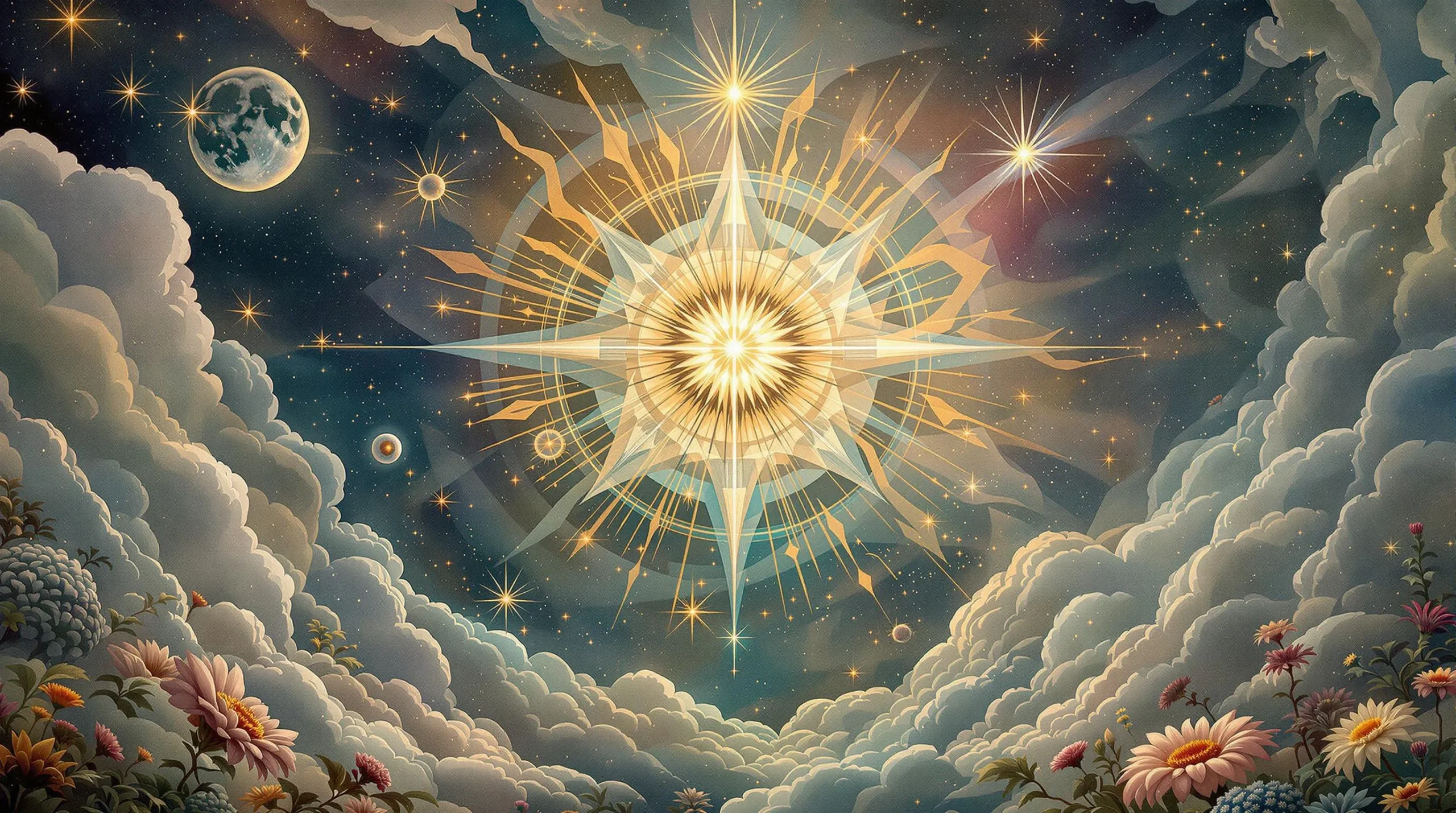


Fallen Star

Archetype Meaning & Symbolism

Luminescent, exiled, fragmented, magnetic, potential, melancholy, rebellious, otherworldly, brittle, yearning

  • My memory of the sky is not a burden, but the blueprint for the light I must build here on the ground.

If Fallen Star is part of your personal mythology, you may...

Believe

  • You may believe that your greatest wounds are the source of your most profound gifts.

  • You may believe that you have a purpose that is unique in the cosmos, and that your life is a quest to discover and enact it.

  • You may believe that there is a reality, a home, or a state of being beyond this one, for which you feel a constant, guiding nostalgia.

Fear

  • You may fear being fundamentally misunderstood, that no one will ever see the 'star' within the 'stone.'

  • You may fear that you will never find your purpose, and that your potential will remain a dormant, unactivated rock.

  • You may fear that you don't truly belong anywhere in the world and are destined to be cosmically and eternally alone.

Strength

  • You possess a deep well of resilience, having already survived the 'Great Fall' that defines your mythos.

  • You have a unique, otherworldly perspective that allows you to see solutions and possibilities that others miss.

  • You are a catalyst for change, and your very presence can inspire transformation and wonder in others.

Weakness

  • You may suffer from a form of spiritual or creative arrogance, subtly looking down on those who lack your sense of 'cosmic origin.'

  • You are susceptible to a deep, abiding melancholy and a sense of alienation that can prevent you from forming close, grounded relationships.

  • You may set impossibly high standards for yourself, leading to chronic dissatisfaction and an inability to appreciate your own earthly accomplishments.

The Symbolism & Meaning of Fallen Star

To carry the Fallen Star in your personal mythology is to live with the ghost of a brighter fire. It symbolizes a profound connection to a past state of being, a 'golden age' or a 'heaven' that now exists only in memory. This is not mere nostalgia; it is a foundational aspect of your identity, the silent hum beneath the noise of daily life. The symbolism here is one of magnificent ruin. You may feel as though you are a fragment of something once whole, a shard of divinity or brilliance now tasked with navigating a world that does not understand your intrinsic nature. The meaning found in this archetype is often in the journey of integration: how does a piece of the sky learn to live among the roots and soil? It is a story of repurposing one’s light, shifting from the passive, distant glow of a star to the tangible, concentrated energy of a meteorite.

The Fallen Star is also a potent symbol of potential born from crisis. The fall itself, a moment of cosmic violence, is what delivers the star to a new context where its gifts might be even more impactful. In the sky, it was one of billions; on Earth, it is a singular marvel. For an individual, this may translate to a belief that their greatest traumas or failures are the very events that have imbued them with their most unique strengths. They may see their scars not as signs of damage, but as the jagged, crystalline edges that catch the light in beautiful and unexpected ways. The meaning is not in returning to the sky, an impossible feat, but in discovering the profound purpose of being exactly where you have landed.

Furthermore, this archetype speaks to a specific kind of loneliness, the solitude of the singular. To be a Fallen Star is to know, deep in your core, that there are no others quite like you. This can be a source of melancholy, a quiet ache for a home you cannot name, but it can also be a source of incredible self-reliance. It forces a journey inward to find your own source of light, rather than seeking validation from a surrounding constellation. The symbolism is of a light that burns without fuel from its environment, powered by memory and an unyielding internal core. It is the myth of the ultimate outsider finding their worth not in fitting in, but in being a beacon of their own unique, otherworldly history.


Fallen Star Relationships With Other Archetypes

The Earth:

The relationship between the Fallen Star and The Earth is one of impact and integration. The Earth is the vessel, the new reality that receives the celestial traveler. At first, the relationship may be one of friction and foreignness. The Star is hard, metallic, and otherworldly, while The Earth is soft, organic, and nurturing. The Earth may seem mundane to the Star, and the Star may seem like a wound to The Earth. Yet, over time, a symbiosis can occur. The Star's rare elements may enrich the soil around it, fostering strange and beautiful new life. The Earth, in turn, slowly weathers the Star's sharp edges, pulling it deeper into its embrace, making it part of the landscape. For a person, this relationship might symbolize the tension between their transcendent aspirations and their practical, embodied reality, a lifelong dialogue between the soul's memory and the body's home.

The Seeker:

The Seeker is magnetically drawn to the Fallen Star. To The Seeker, the Star is not just a rock; it is an answer, a piece of cosmic truth made tangible, proof that there is more to reality than what is commonly perceived. The Seeker may spend their life searching for it, guided by whispers and legends. When they find it, they may wish to possess it, study it, or worship it. The relationship is one of yearning and discovery. However, The Seeker may risk idealizing the Fallen Star, seeing only its celestial origin and not its current, broken reality. The Star, in turn, may find The Seeker's attention to be a balm for its loneliness, a confirmation of its specialness, or it may feel objectified, its true, complex nature misunderstood. This dynamic could represent the way a person with this mythos attracts others who are searching for meaning, who see them as a source of wisdom or magic, a relationship that can be both affirming and burdensome.

The Shadow:

The Fallen Star has an intimate, almost inseparable relationship with its own shadow. The fall itself is a journey into shadow, a literal and metaphorical descent from light into a darker, denser reality. The Shadow archetype in this context represents the memory of the fall, the bitterness of exile, and the arrogance that can come from remembering a 'superior' origin. The Fallen Star may wrestle with its Shadow, which whispers that this new life is a punishment, that the beings of this world are lesser, and that its only value lies in what it once was. To integrate its Shadow, the Fallen Star must accept the fall not as an end but as a transformation. It must learn that the darkness of the impact crater is what allows its faint, internal light to be seen. For an individual, this relationship is the internal struggle between a debilitating nostalgia for a perceived 'better self' and the acceptance of their current, beautifully imperfect human form.

Using Fallen Star in Every Day Life

Navigating a Career Change:

A career that once felt like a celestial calling may end abruptly, leaving one feeling grounded and stripped of a former identity. The Fallen Star archetype allows you to reframe this descent not as a failure, but as an arrival. You are no longer defined by your old trajectory but by the unique, potent energy you now bring to this new terrain. This perspective encourages finding purpose in the unexpected, seeing the value in the 'impact crater' of your career shift as a site for new growth, rather than a scar of what was lost.

Healing from a Relationship's End:

The dissolution of a significant relationship can feel like being cast out from a shared heaven. By invoking the Fallen Star, you may see yourself not as half of a missing whole, but as a singular, potent entity that has landed, albeit forcefully, in a new phase of life. This mythos encourages you to gather your fragmented pieces, not to recreate the past, but to discover the strange, new light you emit on your own. It shifts the focus from mourning the lost constellation to charting a new, solo orbit.

Embracing a Unique Identity:

For those who have always felt like outsiders, like cosmic refugees in a mundane world, the Fallen Star provides a powerful narrative framework. This feeling of 'otherness' is not a defect but a sign of a different origin. It grants permission to stop trying to mimic the stars still in the sky and instead to cultivate the rare minerals and strange energies of your terrestrial form. It is the story of learning to love your beautiful, jagged edges and the unique glow you bring to the earthbound world.

Fallen Star is Known For

A Great Fall

It is known for a dramatic descent, a moment of schism from a place of brilliance, grace, or power. This fall is its origin story, the event that defines its existence and imbues it with a profound sense of memory and loss.

Latent Power:

Though grounded and perhaps fragmented, the Fallen Star retains a core of its original celestial energy. It is known for this immense, often untapped, potential waiting to be rediscovered or repurposed in its new environment.

A Sense of Otherness:

By its very nature, it is a foreign object, a piece of the heavens embedded in the earth. It is known for an intrinsic and inescapable quality of not belonging, which can manifest as loneliness, unique wisdom, or a magnetic allure.

How Fallen Star Might Affect Your Personal Mythology

How Fallen Star Might Affect Your Mythos

When the Fallen Star is a cornerstone of your personal mythos, your life story is fundamentally a narrative of exile and rediscovery. The inciting incident of your tale, whether you can pinpoint it or not, is a 'Great Fall.' This may not be a literal event, but a pervasive, internal sense of having been displaced from a more authentic, brilliant, or rightful state of being. Your mythos is therefore colored by a sense of cosmic nostalgia, a yearning for a home you cannot return to. Your life's chapters might be interpreted as stages of adapting to this new, foreign land: the initial shock and fragmentation, the period of lonely wandering, the slow discovery of your latent powers, and the ultimate quest to find meaning in your terrestrial existence. Your story is not about climbing back to heaven, but about building a new kind of heaven in the dust.

The trajectory of your mythos is not linear but radial. The point of impact is the center from which all other stories emanate. Every relationship, every success, every failure is interpreted through the lens of your 'otherness.' You may see yourself as a carrier of a secret history, a lost language, or a forgotten light. This makes your personal mythology rich with themes of uniqueness, alienation, and hidden potential. Your ultimate heroic act, in this narrative, is not one of conquest or achievement in the traditional sense, but one of radical self-acceptance. It is the act of finally declaring that the ground you landed on is now sacred soil, and the light you now possess, however fractured, is more potent and real than the distant glow you left behind.

How Fallen Star Might Affect Your Sense of Self

Your perception of self may be defined by a profound and persistent duality. On one hand, you may hold an unwavering belief in your own innate specialness, a quiet certainty that you are composed of something rare and valuable. This is the memory of the star, the core of celestial fire that still glows within. It can fuel a powerful sense of purpose and high standards for yourself. You may feel that you are destined for something significant, even if the path is unclear. This internal knowledge of your own precious material can be a source of immense resilience, allowing you to endure hardship with the understanding that your core self remains untouched and luminous.

On the other hand, this same duality may create a painful gap between your perceived potential and your daily reality. The feeling of being 'a star' can clash harshly with the mundane struggles of life, leading to a sense of frustration, melancholy, or alienation. You might look at your un-weathered, human peers and feel a pang of longing for their simple, untroubled belonging. This can lead to a state of chronic dissatisfaction, a feeling of being a king or queen in exile, surveying a kingdom of dirt. Your self-view might oscillate between a quiet, internal arrogance and a deep, sorrowful loneliness. The core challenge to your sense of self is to bridge this gap, to see the divine not just in your origin story, but in your current, grounded, and beautifully imperfect form.

How Fallen Star Might Affect Your Beliefs About The World

Your worldview might be permanently tinted with a filter of cosmic irony. You may see the world as a place of profound beauty and profound limitation simultaneously. Having a metaphorical memory of a grander, more unified reality, you may perceive the structures, ambitions, and conflicts of human society as somewhat transient and small-scale. This can grant you a unique, almost detached perspective, an ability to see the bigger picture that others miss. You might not be easily swayed by social pressures or conventional markers of success, because your internal compass is calibrated to a different celestial north. The world, to you, is a fascinating, sometimes baffling, and often beautiful place of exile.

This perspective could also foster a deep empathy for the broken, the lost, and the outcast. In every fragmented person or abandoned ideal, you may recognize a fellow piece of a fallen sky. Your worldview may be less about judgment and more about curiosity and compassion for the myriad ways life lands after a fall. You might believe that true value is almost never found in polished surfaces or perfect trajectories, but in the complex, crystalline structures that form after a great shattering. The world is not a hierarchy to be climbed, but a landscape of beautiful, singular ruins, each with a unique story of its descent and a quiet, resilient glow.

How Fallen Star Might Affect Your Relationships

In relationships, you may unconsciously seek a reflection of the home you lost. You might be drawn to people who possess a certain 'glow' of their own, who seem to understand your unspoken language of longing and otherness. These connections can be intensely profound, creating a shared world that feels like a sanctuary from the mundane. You may offer your partners a unique form of light: a perspective that is wise, otherworldly, and deeply insightful. You see the hidden potential in others, just as you sense it in yourself. You love with the depth and gravity of a celestial body, and your loyalty, once given, can be immense.

However, the Fallen Star mythos can also create significant challenges in relationships. Your inner sense of being 'from another place' can manifest as an emotional distance that partners find difficult to bridge. You may struggle to feel truly seen, believing that no one can ever fully comprehend your origins or the nature of your internal light. This can lead to a pattern of feeling misunderstood and, consequently, of holding back a part of yourself. There may also be a risk of projecting your lost 'heaven' onto a partner, placing an impossible burden on them to be your everything, your missing piece of the sky. The work, for you, is to love from the ground where you are, appreciating your partners for their own earthy, human beauty, not for their ability to mirror a celestial memory.

How Fallen Star Might Affect Your Role in Life

You may perceive your role in life as that of a 'strange attractor' or a catalyst. You don't necessarily need to be a leader in the traditional sense, giving orders from the front. Instead, by simply being, you may draw people, ideas, and events into your orbit. Your unique perspective and energy can disrupt stagnant systems and inspire new ways of thinking. Your role is not to conform or blend in, but to be a point of contrast that illuminates the surrounding environment. You might be the artist whose work feels channeled from another dimension, the scientist who intuits a revolutionary theory, or the friend whose quiet wisdom reframes a crisis. Your purpose is tied to the unique gift you brought with you in the fall.

This can also be a heavy burden. You may feel a constant pressure to be profound, to have the answers, to be the 'magical' element in every situation. This perceived role can be isolating, setting you apart from the easy camaraderie of your peers. There is a danger of becoming a prisoner of your own mystique, unable to simply be human, to be messy, to not have the answers. Your life's journey may involve learning to reconcile your cosmic role with your human needs. It is about understanding that your greatest contribution may not be a grand, celestial act, but the simple, humble process of grounding your light and sharing its warmth with those immediately around you, not as a fallen god, but as a fellow traveler.

Dream Interpretation of Fallen Star

To dream of a Fallen Star in a positive context is to dream of imminent revelation and the arrival of a new, potent energy in your life. The star's descent into your dreamscape may signal that a piece of your own 'higher self' or a long-lost aspect of your potential is making itself known to your conscious mind. It could represent a sudden insight, a creative breakthrough, or the solution to a problem arriving from an unexpected place. If you find the star, hold it, or feel its warmth, it suggests you are ready to integrate this new power. The dream is an invitation to pay attention to the serendipitous, the strange, and the 'alien' ideas entering your life, for they hold the key to your next stage of growth. It is a message that something magical has landed in the soil of your reality, waiting to be unearthed.

In a negative context, a dream of a Fallen Star might symbolize a 'fall from grace,' a loss of faith, or a shattering of ideals. It can represent a recent failure, a disappointment, or a trauma that has left you feeling fragmented and displaced. A star that is cold, that burns you, or that shatters into dust upon impact could reflect a fear that your potential has been wasted or destroyed. Dreaming of a star falling and causing immense destruction might speak to a fear of your own power, or the negative consequences of a major life change. The dream may be a warning from your subconscious about a sense of alienation or a growing bitterness about your circumstances. It could be urging you to tend to the 'impact crater' in your psyche, to mourn what was lost, so you can begin the work of recovery.

How Fallen Star Archetype Might Affect Your Needs

How Fallen Star Might Affect Your Physiological Needs

The Fallen Star archetype, when it informs your personal mythology, may have a peculiar effect on your physiological awareness. You might experience your body as a kind of vessel or container, a dense, earthly machine that is tasked with housing a vibrant, otherworldly energy. This could lead to a feeling of disconnect, as if your spirit and your flesh are two different materials imperfectly welded together. You may be acutely sensitive to your body’s needs not out of pure physical instinct, but out of a sense of responsibility for the 'precious cargo' it carries. Basic needs like food and sleep might be viewed as the necessary, sometimes tedious, grounding wires for your high-voltage soul.

This can manifest as a hyper-awareness of your energy levels, but not in the way an athlete is aware. It's more like monitoring the fuel for an internal flame. You might feel a physiological need for periods of intense quiet and solitude, not just for mental rest, but as a way to recharge your core luminosity away from the 'static' of the world. Conversely, you might be prone to neglecting physical needs when caught up in a transcendent or creative state, forgetting to eat or sleep because the earthly vessel feels secondary to the cosmic work at hand. Your physiological story may be one of learning to honor the ship that carries the light.

How Fallen Star Might Affect Your Ideas of Belonging

The need for belongingness is perhaps the most poignant and challenging aspect for one with a Fallen Star mythos. There is a deep, persistent ache to find your 'constellation,' the other points of light with whom you belong. This can lead to a lifelong search for your true tribe, a group of people who resonate on the same unusual frequency. When you find even one such person, the connection can be electrifying and immediate, a profound relief from cosmic loneliness. Love, for you, might be defined as the experience of being seen in your full, strange luminosity, and not just for your earthly persona.

Yet, this powerful yearning can be fraught with difficulty. You may feel like you're constantly trying to fit a star-shaped peg into a round hole. You might join groups or enter relationships hoping to finally belong, only to feel the familiar pang of being an outsider once the initial novelty fades. This can lead to a pattern of serial belonging, moving from one group to another in search of that perfect fit. True belongingness may not come from finding a group of identical stars, but from accepting your unique place in a diverse human landscape. It is the realization that you can belong to the world not by being the same as everyone else, but by offering your unique, singular light to the collective tapestry.

How Fallen Star Might Affect Your Feelings of Safety

Your need for safety could be defined by a search for what might be called 'ontological security,' a safety of being, rather than just physical safety. Because your mythos is one of displacement, you may feel fundamentally unsafe in a world that doesn’t recognize your true nature. Your safety needs may therefore be met not by locks on the doors, but by creating environments that honor your singularity. This could be a physical space filled with objects that feel resonant and true, or a small circle of friends who 'get it' without needing an explanation. Safety is a place where your otherworldly glow doesn't need to be hidden for fear of being misunderstood or extinguished.

However, this same mythos might create a kind of recklessness. Remembering a past existence of invulnerable brilliance, you may subconsciously believe you are immune to common dangers. A part of you, the star-core, may feel eternal and indestructible, leading you to take emotional or even physical risks that seem illogical to others. The vulnerability of your human form can come as a recurring, unpleasant surprise. The journey toward feeling safe involves reconciling your celestial memory with your terrestrial fragility. Safety is found when you accept that your earthly vessel is precious and requires protection, and that building a fortress of understanding and acceptance around yourself is a worthy and necessary task.

How Fallen Star Might Affect Your Views of Esteem

Your esteem needs are deeply tied to the concept of purpose. Having 'fallen' from a place of being, your self-worth is contingent on a life of 'doing' that honors your celestial origin. You may not be driven by the need for public accolades or conventional status symbols. Instead, your esteem is nourished by the private knowledge that you are living authentically, that you are using your unique, 'star-stuff' gifts in a meaningful way. Esteem comes from creating something that no one else could have created, solving a problem that no one else could have solved, or offering a perspective that is uniquely yours. It is the feeling of successfully grounding your light.

This can lead to impossibly high standards for yourself. Your sense of self-worth can become brittle, dependent on constant, profound output. A period of creative block or purposelessness can feel like a catastrophic failure, a betrayal of your very essence. You might judge your worth not by your efforts, but by the magnitude of your impact, which is an exhausting way to live. Building stable self-esteem involves a crucial shift in perspective: from valuing only the brilliant flash of light to also honoring the quiet, dense, and resilient nature of the stone that holds it. It is learning to respect yourself not just for what you produce, but for the incredible journey you have endured and the simple fact of your continued existence.

Shadow of Fallen Star

When the Fallen Star archetype falls into shadow, its beautiful melancholy curdles into a toxic bitterness. The memory of the sky is no longer a source of quiet strength but a weapon used against the present. The shadow Fallen Star is crippled by nostalgia, refusing to engage with the world as it is because it pales in comparison to a glorified, perhaps imaginary, past. This individual may become consumed by arrogance, treating others as mundane, unenlightened 'ground-dwellers.' They don't emit a gentle, unique light; they demand worship for a light no one else can see. Their 'otherness' becomes a fortress of contempt, isolating them completely. They are the artist who never creates because no medium is pure enough, the lover who sabotages every relationship because no mortal can live up to their celestial ideal.

In its other shadow form, the archetype manifests not as arrogance but as crushing despair. The fall is not seen as a transformative event but as an unhealable, defining failure. The Fallen Star gives up. It allows its light to be extinguished completely, believing itself to be nothing more than a worthless, broken rock. It actively rejects its own uniqueness, trying desperately and unsuccessfully to mimic the pebbles around it. This is the individual with immense, palpable potential who wallows in self-pity and inaction, convinced of their own ruin. The shadow here is a profound abdication of self, a refusal to believe that a star can still be a star even when it lies in the dirt. It is the tragedy of a light that has forgotten how to shine.

Pros & Cons of Fallen Star in Your Mythology

Pros

  • This mythos provides a powerful framework for resilience, reframing trauma and failure as transformative origin stories.

  • It fosters a unique, outside-the-box perspective that can lead to incredible creativity and innovation.

  • It cultivates a deep sense of purpose and a drive to live an authentic, meaningful life aligned with one's core self.

Cons

  • It can lead to a chronic sense of alienation, loneliness, and the feeling of never truly belonging anywhere.

  • It may foster an arrogant or detached attitude towards others and the 'mundane' aspects of life.

  • The pressure to live up to a perceived 'celestial potential' can create intense anxiety and a persistent dissatisfaction with oneself and one's accomplishments.