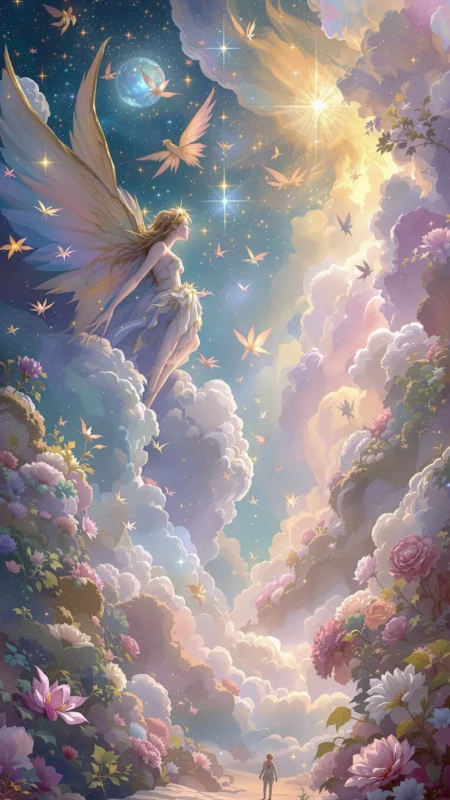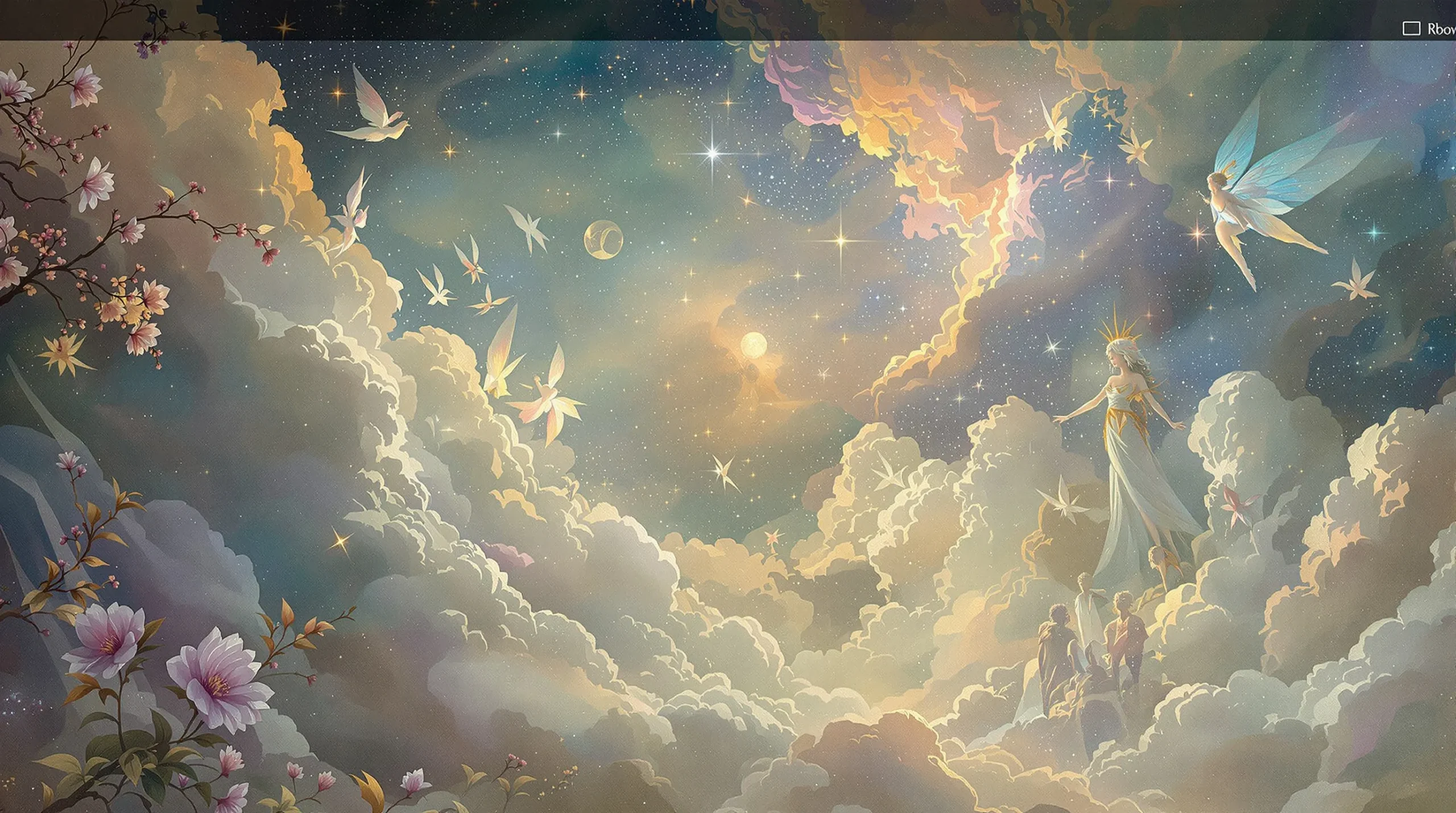


Fairy Realm

Archetype Meaning & Symbolism

otherworldly, ephemeral, enchanting, deceptive, wild, timeless, alluring, perilous, whimsical, intuitive

  • Tread lightly. Not all that is beautiful is kind, and not all promises can be broken simply by wishing it so.

If Fairy Realm is part of your personal mythology, you may...

Believe

  • Beauty is not a luxury but a fundamental force, a form of truth that has its own intelligence and power.

    There are invisible rules and ancient agreements that underpin the fabric of reality, and it is far more dangerous to break these than to break the laws of man.

    The most important parts of life are those that cannot be measured, proven, or sold.

Fear

  • A future where every forest is paved over, every mystery is solved, and every bit of magic is extinguished by the cold light of reason.

    Being truly seen and categorized by others, as this would be like having a naturalist pin you to a board, robbing you of your freedom and mystery.

    That one day you will wake up and the door to your inner world will be locked, leaving you stranded in the gray, mundane reality forever.

Strength

  • An inexhaustible well of creativity and imagination, allowing you to see possibilities and solutions that are invisible to more linear thinkers.

    A profound and intuitive connection to nature and the subtle energies of the world, providing a constant source of guidance, healing, and inspiration.

    The ability to find meaning and wonder in the smallest of things, leading to a rich inner life that is not dependent on external circumstances for its joy.

Weakness

  • A tendency toward escapism, using fantasy and daydreams to avoid dealing with the difficult or boring aspects of practical, everyday life.

    A vulnerability to illusion and glamour, sometimes making it difficult to discern between genuine intuition and wishful thinking, or between a trustworthy person and a charismatic deceiver.

    A potential for unreliability or seeming capriciousness, as you may follow your own mysterious inner rhythms over the commitments and schedules of the outside world.

The Symbolism & Meaning of Fairy Realm

To have the Fairy Realm as a cornerstone of your personal mythology is to possess a secret geography. It is the inner landscape where intuition is the only reliable compass and logic is a foreign tongue. This realm may symbolize the subconscious mind itself: a place of profound, archetypal imagery, both luminous and menacing, where the rules of the waking world dissolve. It represents a reality that runs parallel to our own, a layer of meaning shimmering just beneath the surface of the mundane. It is the belief that there is more to the world than what can be measured, cataloged, and explained by science, a space where coincidence is conspiracy and beauty is a form of power.

Living with this archetype means you may navigate your life by a different set of laws. The hard facts of a situation may matter less than the feeling, the atmosphere, the resonance. It is the allure of the unknown, the romance of the perilous. This realm is not a place of comfort and safety in the conventional sense; it is a place of wild, untamed nature, both within and without. It whispers that to be fully alive is to be a little bit feral, to honor the parts of yourself that have not been civilized or domesticated, the instincts that twitch at the rising of the moon or the scent of rain on dry earth.

Furthermore, the Fairy Realm archetype speaks to the ambiguous nature of reality. It challenges the binary of good and evil, replacing it with a more complex ecology of motivations: caprice, curiosity, ancient loyalties, and inscrutable codes of honor. Things are not what they seem, and this is not a trick, but a fundamental truth. A beautiful flower may be poisonous; a grotesque creature may offer profound wisdom. It is an invitation to look deeper, to question surfaces, and to accept that some mysteries are not meant to be solved, only experienced.


Fairy Realm Relationships With Other Archetypes

The Scientist

The Scientist archetype, with its reliance on empirical data and repeatable experiments, stands in stark opposition to the Fairy Realm. Their relationship is one of deep skepticism and occasional, startling convergence. The Scientist may seek to classify, dissect, and explain the phenomena of the Fairy Realm, viewing its magic as undiscovered physics or psychological projection. In a personal mythos, this tension could manifest as a struggle between the analytical mind and the intuitive heart. Yet, a synthesis is possible: the Scientist may find that the quantum world, with its observer effects and non-local connections, behaves with a logic as strange and whimsical as any fairy tale, realizing that the deepest truths often defy common-sense explanation.

The Child

The Child archetype often holds an unblemished passport to the Fairy Realm. Lacking the cynical armor of adulthood, The Child enters this world not as a trespasser but as a native. The relationship is one of pure belief and acceptance. The Fairy Realm, in turn, may reveal its gentler side to The Child, its wonders untainted by its perils. Within a personal narrative, this could represent a connection to one’s own primal innocence, a part of the self that still believes in magic. The danger lies in never outgrowing this perspective, becoming a puer aeternus, an eternal child trapped in a world of fantasy, unable to face the less enchanting realities of adult life.

The Trickster

The Trickster is often an inhabitant, a court jester, or even a ruler within the Fairy Realm, and their relationship is one of kinship and rivalry. Both archetypes operate outside conventional morality, delight in upsetting established order, and use illusion and wordplay as their primary tools. The Fairy Realm provides the perfect stage for The Trickster’s games, a place where boundaries are fluid and reality is ripe for reshaping. In one's mythos, this pairing could signify a mind that is brilliantly creative and chaotically unpredictable. It suggests a personality that can charm and deceive in equal measure, navigating life by wit and whim, but always at risk of getting caught in its own clever traps.

Using Fairy Realm in Every Day Life

Navigating Creative Stagnation

When a project feels like a path of cold stone, the Fairy Realm archetype invites a deliberate detour. This is not about forcing a solution but about creating a small, wild space in your routine: walking a new route home without a map, listening to music in an unfamiliar language, or writing with your non-dominant hand. It is an invitation to get lost, to follow the flickering lights of whim and synchronicity, knowing that the most profound ideas are often found just off the beaten path, in the liminal space between logic and dream.

Establishing Unconventional Boundaries

This archetype teaches the art of the thorny boundary, the one that is both beautiful and dangerous. Instead of a hard “no,” you may set a boundary that is a riddle or a condition: “I can help, but only on a Tuesday when it rains,” or “I will share my energy, but you must first bring me a story I have never heard.” It reframes personal limits not as walls, but as enchanted gates, teaching others that your inner world has its own rules, its own seasons, and cannot be accessed by force, only by respect and a touch of ingenuity.

Finding Meaning in the Mundane

The Fairy Realm is a lens through which the mundane world becomes layered with significance. An encounter with a white moth on your window could be seen as a message, the specific pattern of cracks in a sidewalk might suggest a hidden path. This archetype encourages a personal mythology where you are in constant, quiet dialogue with your environment. It is the practice of finding the sacred in the overlooked, of believing that the universe leaves small, shimmering clues for those with the patience and the vision to see them.

Fairy Realm is Known For

A Different Temporality

Time does not flow here as it does elsewhere. A moment can stretch into a lifetime, and years may pass in the blink of an eye. This aspect represents a disconnection from the linear, clock-driven world and an alignment with kairos, or opportune, sacred time.

Glamour and Illusion:

The ability to cast illusions, to make things appear more beautiful, terrifying, or different than they are. This is the power of perception, the idea that what we see is not always what is real, and that surfaces can be profoundly deceptive.

Binding Bargains:

Words have absolute power. A promise, an oath, or even a carelessly given “thank you” can create an unbreakable contract. This speaks to the immense weight of intention and the permanent consequences of our commitments in a world that often treats words as disposable.

How Fairy Realm Might Affect Your Personal Mythology

How Fairy Realm Might Affect Your Mythos

When the Fairy Realm informs a personal mythos, one’s life story may cease to be a linear progression and become, instead, a series of otherworldly encounters and strange interludes. The narrative is not about climbing a ladder of success but about wandering a tangled wood, where getting lost is part of the point. Key life events might be framed not as choices or accidents, but as enchantments or curses, moments when you ate the forbidden fruit and were whisked away from your expected path. There could be a recurring theme of being a “changeling,” a sense of having been swapped at birth, which explains a fundamental feeling of not quite belonging to the family, culture, or time into which you were born.

This mythos could also be defined by a central, secret knowledge. You may perceive yourself as a guardian of something precious and unseen, a keeper of a hidden spring or a tender of a secret garden. Your story is one of dual citizenship: you have your mundane life with its responsibilities and routines, and then you have your true life, lived in the twilight margins. This creates a personal history rich with private symbols, secret anniversaries, and meaningful omens that are invisible to others. Your life is not just a story; it is a secret history, a folklore of one.

How Fairy Realm Might Affect Your Sense of Self

The Fairy Realm may instill a sense of self that is profoundly “other.” You might not see yourself as a standard-issue human but as something more fluid, more ancient, and more attuned to the unseen. This can foster a resilient and self-contained identity, one that does not rely on external validation because its benchmarks for worth are so unique: sensitivity, imagination, and a connection to nature. You might feel a kinship with things that exist on the periphery: weeds growing in sidewalk cracks, the shy animals of twilight, the quiet and overlooked people.

However, this self-perception can also lead to a deep and persistent loneliness. The feeling of being a visitor from another land, speaking a different soul-language, can make genuine connection feel elusive. You may feel that to be truly seen would be to be misunderstood, caged, or dissected. This could lead to the cultivation of a “glamour,” a carefully constructed persona that is charming and agreeable but reveals nothing of the wild, strange world within. The core self remains hidden, protected, but also isolated.

How Fairy Realm Might Affect Your Beliefs About The World

Your worldview could be one of enchanted animism. The world is not a collection of inert objects but a living, breathing entity, shot through with consciousness and intention. A storm is not just a meteorological event; it is an expression of anger or grief. A forest is not just timber; it is a congregation of ancient beings. This perspective imbues the world with a profound sense of wonder and reverence, transforming every walk in nature into a potential pilgrimage and every animal encounter into a possible omen. You may live with a constant awareness of the fragility and preciousness of this magic, seeing the spread of concrete and the hum of machinery as an encroaching, soulless threat.

This perspective could also foster a deep skepticism toward societal constructs and institutions. If time is fluid and reality is subjective, then concepts like nine-to-five workdays, national borders, and economic theory may seem like arbitrary and rather flimsy illusions. You might view the “real world” as a collectively agreed-upon hallucination, a stage play in which most people have forgotten they are actors. This can be liberating, freeing you from conventional ambitions, but it may also make it difficult to function within those systems, leading to a life lived on the fringes, by choice or by necessity.

How Fairy Realm Might Affect Your Relationships

In relationships, you may seek a connection that feels like a shared secret world. The bond is less about common interests and more about a mutual recognition of the unseen, a shared soul-language. You might be drawn to people who also seem to be visitors from elsewhere, fellow exiles from the mundane. These relationships can be intensely magical and deeply loyal, forged on a level that transcends ordinary social contracts. Promises are sacrosanct, and betrayals are not mere disappointments but acts that break a sacred, unspoken pact, causing wounds that may never fully heal.

Conversely, the influence of this archetype could make relationships perilous. There may be a tendency to project an otherworldly glamour onto partners, falling in love not with the person but with an enchanting illusion. When the glamour inevitably fades and the mundane reality of the other person appears, you may feel disillusioned or betrayed, retreating back into your solitary inner world. There can also be a capricious quality, a sudden, inexplicable withdrawal of affection that mirrors the unpredictable nature of the Fae, leaving partners confused and hurt by a shift in the emotional landscape that they cannot comprehend.

How Fairy Realm Might Affect Your Role in Life

You may find yourself drawn to roles that serve as bridges between worlds. This could manifest as the artist, the poet, or the musician, translating the ineffable language of the inner realm into forms the outer world can experience. You could be the herbalist, the therapist, or the energy worker, tending to the subtle, unseen currents of health and psyche. Or you might be the conservationist or the gardener, a guardian of the last wild places, protecting the physical vestiges of the Fairy Realm from the encroachments of the iron-and-concrete world. Your role is not about accumulating power or status but about preserving and communing with a source of wonder.

This archetype might also lead to a rejection of fixed roles altogether. Your purpose is not to be a single thing—a doctor, a lawyer, an engineer—but to remain fluid, adaptable, and free. You might move from one calling to another, following a mysterious inner current rather than a career plan. This can lead to a life of rich and varied experiences, a tapestry woven from disparate threads. The challenge is that society often distrusts those who cannot be easily categorized, and you may struggle with feelings of instability or a lack of tangible, recognized accomplishments, even if your life is full of intangible treasures.

Dream Interpretation of Fairy Realm

In a positive context, dreaming of the Fairy Realm may be a profound invitation from your deeper self. It could signify that your subconscious is opening a door to immense creativity, intuition, and magical potential that has been dormant. The dream might be urging you to pay closer attention to the synchronicities in your waking life, to trust your gut feelings, and to spend more time in nature or creative play. Encountering benevolent or beautiful fey creatures could represent the emergence of new, inspiring ideas or the awakening of hidden talents. It is a sign to step off the well-trodden path and explore the wild, enchanting landscapes of your own soul.

In a negative context, a dream of the Fairy Realm can be a serious warning. It may suggest that you are lost in illusion, either deceiving yourself or being deceived by others. The enchanting beauty of the realm could symbolize a situation—a job, a relationship, an addiction—that appears wonderful on the surface but is draining your life force and operates by hidden, dangerous rules. Being trapped, unable to leave, or pursued by malicious fey could reflect a feeling of being ensnared by obligations, promises, or fantasies that you can no longer control. The dream may be a caution against escapism, warning that if you wander too far from solid ground, you may forget the way back.

How Fairy Realm Archetype Might Affect Your Needs

How Fairy Realm Might Affect Your Physiological Needs

The physiological needs of someone with the Fairy Realm in their mythos may be deeply intertwined with their environment. There could be a genuine physical requirement for clean air, birdsong, and the sight of green, growing things. Being in a sterile, urban, or artificial environment for too long might manifest as physical illness, a kind of soul-sickness that presents as fatigue, headaches, or a weakened immune system. Food might be more than simple fuel; there could be a strong pull toward things that grow wild, that are foraged, or that feel “alive,” with a corresponding aversion to processed, mass-produced sustenance which feels like “iron” in the system.

This connection can also foster a disregard for the body’s mundane requirements. When enthralled by a creative project or a mystical experience—when one is “away with the fairies”—the need for sleep and food can seem like trivial interruptions. This archetype can lead to a boom-and-bust cycle of physical energy: periods of intense, sleepless creation followed by crashes of profound exhaustion. The body is not a machine to be maintained but a vessel that is sometimes forgotten in the ecstasy of a flight of fancy, leading to a neglect that can have long-term consequences on physical well-being.

How Fairy Realm Might Affect Your Ideas of Belonging

Belongingness is a complex and often painful issue for one who resonates with the Fairy Realm. The sense of being a “changeling” can create a feeling of exile from one's own family and community. You may love them, but on a fundamental level, you might feel you are not *of* them. Belonging is therefore not found, but created. It is forged with a small, select group of “kin” who recognize the otherworldly light in you because they have it too. This “fae court” becomes a chosen family, a circle where the strange language of your soul is understood and spoken in return.

Love, within this archetype, is a powerful and perilous magic. It is an enchantment, a merging of two worlds. The ideal is a partner who can see both your human guise and your true, wild self and love them equally. The fear is that a partner will only love the glamour, the enchanting mask you wear. There can also be a profound difficulty in expressing love through conventional means. Instead of chocolates and diamonds, your tokens of affection might be a strange-shaped stone, a forgotten song, or a secret shared in a hushed whisper—gestures that may be entirely missed or misunderstood by those not attuned to your frequency.

How Fairy Realm Might Affect Your Feelings of Safety

For this archetype, safety is not found in concrete walls or financial security. In fact, these conventional forms of safety may feel like traps, cages made of the cold iron of logic and predictability. True safety might be found in adaptability, in knowing the secret paths and escape routes of any situation. It is the security of being able to disappear, to blend in, or to cast a “glamour” of normalcy when needed. Safety could also be located in talismans, rituals, or sacred places—a specific grove of trees, a family heirloom, a recurring dream symbol—that provide a sense of connection to a protective, magical force.

This also creates unique vulnerabilities. The primary fear is not physical harm but a kind of soul-death: the destruction of wonder. The greatest threat is the encroaching world of “cold iron”—cynicism, bureaucracy, soulless consumerism, and environmental destruction. There is a deep, instinctual fear of being pinned down, cataloged, and explained, as this would extinguish the magic that is the source of life. This can lead to a perpetual restlessness or an avoidance of commitment, as settling down might feel like inviting the iron cage to close.

How Fairy Realm Might Affect Your Views of Esteem

Esteem, in the context of the Fairy Realm, is rarely derived from the accolades of the mundane world. A promotion, a pay raise, or public recognition may feel hollow, like rewards in a game you are not truly playing. Self-worth is instead cultivated from a set of deeply personal and often secret metrics. It might come from the successful cultivation of a rare plant, the ability to perfectly capture the color of twilight in a painting, or the earning of an animal’s trust. It is the quiet, internal satisfaction of knowing you are a competent citizen of the invisible world.

This can create a powerful, self-sufficient form of esteem that is resilient to external criticism. However, it can also be incredibly isolating. When your greatest accomplishments are invisible and incommunicable to others, you may struggle with feelings of being undervalued or unseen. There can be a secret yearning for just one other person to understand the significance of your inner world and its quiet triumphs. The challenge is to find a way to value your unique gifts without letting them become a source of alienation from the human community.

Shadow of Fairy Realm

When the Fairy Realm archetype falls into shadow, its enchanting qualities curdle into something toxic. The gentle detachment from the mundane world becomes a profound and irresponsible dissociation from reality. This is the individual who lives entirely within a fantasy, neglecting their health, their relationships, and their responsibilities in favor of a dream world. They may lure others into their delusions, spinning captivating stories that lead nowhere, making promises they have no intention of keeping. The whimsical becomes malicious; the playful tricks become acts of emotional cruelty, justified by a personal code of ethics that is incomprehensible and unfair to others.

In its other shadow form, the allure of the realm becomes a predatory tool. This is the glamour used not to protect the self but to manipulate and drain others. It is the artist who seduces muses and discards them, the charismatic leader who creates a cult of personality, or the partner who traps another in a web of enchanting but ultimately false promises. Here, the beauty of the Fairy Realm is a mask for a deep emptiness or a parasitic need. The magic is no longer a source of wonder but a weapon, and the hidden world is not a sanctuary but a dungeon, where the light of others is captured and consumed.

Pros & Cons of Fairy Realm in Your Mythology

Pros

  • Your life is possessed of a depth and texture that many people miss, filled with a sense of wonder, meaning, and continuous discovery.

    You have access to a powerful source of intuition and creativity that can guide you in unique and unexpected ways, often leading to brilliant, out-of-the-box solutions and creations.

    You possess a fundamental resilience, as your happiness and sense of self are not tethered to the fluctuating fortunes of the material world.

Cons

  • You may struggle with a persistent sense of loneliness and alienation, a feeling of being an exile in the ordinary world.

    You can be perceived by others as flaky, unreliable, or out of touch with reality, making it difficult to build trust and function in conventional social or professional structures.

    Your sensitivity to beauty and illusion can make you vulnerable to deception, heartbreak, and profound disillusionment when reality does not live up to your enchanted perceptions.