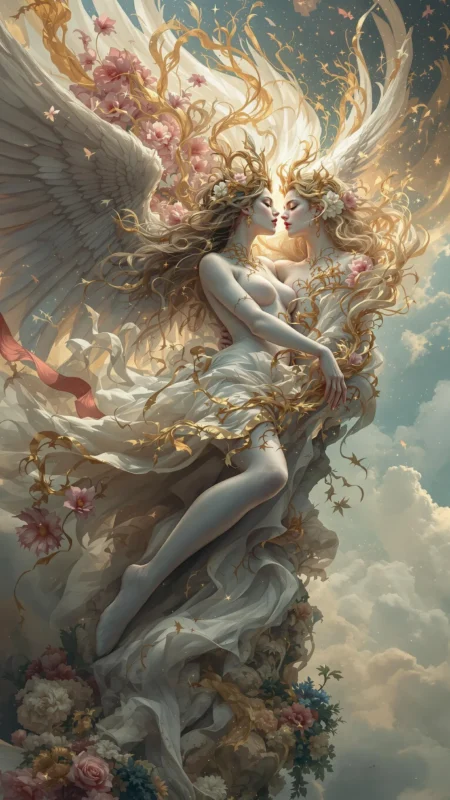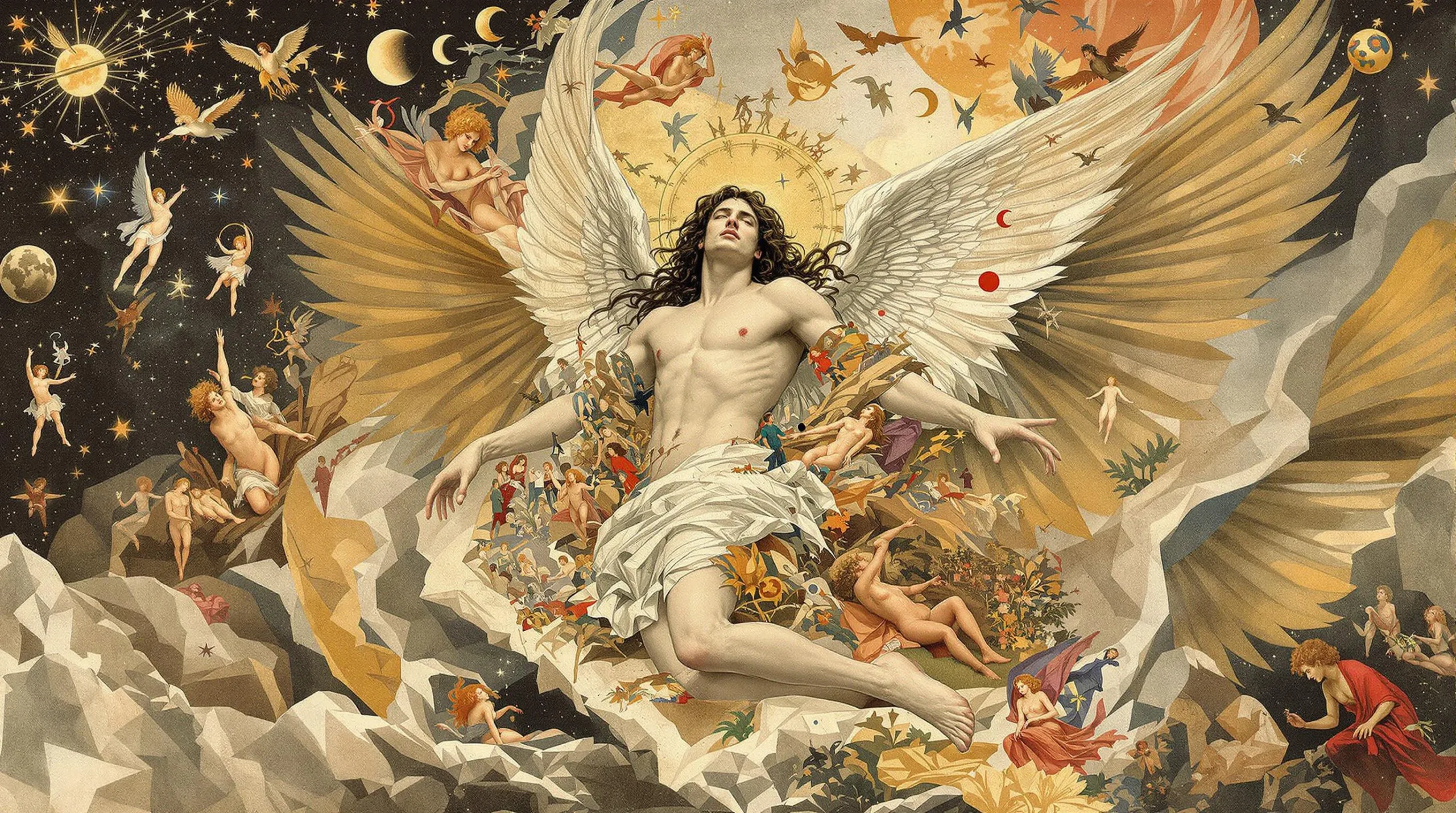


Eros

Archetype Meaning & Symbolism

Connecting, Creative, Desiring, Generative, Passionate, Volatile, Compulsive, Unifying, Alchemical, Fecund

  • Do not seek to possess beauty, but to become a conduit through which it flows into the world.

If Eros is part of your personal mythology, you may...

Believe

  • That the universe is fundamentally benevolent and trends toward connection and beauty.
  • That the most profound truths are revealed through relationships, art, and the heart, not through pure logic or detached observation.
  • That one's purpose is to be a vessel for creative and loving energy, and that a life lived without passion is not truly a life at all.

Fear

  • Apathy and numbness: the state of being unable to feel desire, passion, or a meaningful connection to anyone or anything.
  • Profound, soul-deep isolation; the feeling of being fundamentally unseen, unheard, and unloved in the universe.
  • That your own desires could become a destructive, consuming fire, hurting those you love or leading you to lose yourself entirely.

Strength

  • An almost magical ability to create profound, transformative bonds with people, ideas, and creative work.
  • A vast wellspring of creative energy and an innate drive to bring new things into being, from art to communities.
  • A deep, intuitive empathy that allows you to perceive the hidden connections and underlying unity in the world, making you a natural healer and peacemaker.

Weakness

  • A tendency toward obsession, where a person, project, or idea can consume your entire reality and blot out all other aspects of life.
  • Difficulty maintaining healthy boundaries, which can lead to enmeshed relationships, codependency, or being emotionally exploited by others.
  • An extreme vulnerability to heartbreak, rejection, and creative failure, with such events having the power to trigger existential crises.

The Symbolism & Meaning of Eros

In the modern psyche, Eros is often tragically diminished, reduced to the cherubic archer of Valentine’s cards or the simple engine of romantic desire. Yet, to see it as part of one’s personal mythology is to restore its cosmic grandeur. Eros is the primordial glue of the universe. It is the force that counters entropy, the inherent pull in all things toward relationship, toward a higher synthesis. Your personal myth, then, may not be a hero’s journey of conquest, but a creator’s journey of connection. You are not slaying dragons; you are perhaps gathering the scattered parts of yourself, your world, your relationships, and weaving them into a new, more vibrant tapestry. This archetype represents the animating principle itself, the deep conviction that to be alive is to be in a state of creative and relational becoming.

This archetype symbolizes the power that lies in the space between things. It is the electrical arc between two poles, the tension of a violin string just before it sings, the gravitational field that holds a galaxy together. For the individual, this means that meaning may be found not within the self as an isolated unit, but in the quality of one's connections. The mythos of Eros suggests a life lived at the fertile edge where you meet the other: the other person, the other idea, the raw material of your art. It is a life of profound engagement, where the world is not an object to be analyzed but a presence to be encountered, courted, and co-created with. To live this myth is to value the hyphen in “self-other,” to find divinity in the dialogue.

The symbolism of Eros also carries a necessary element of vulnerability and dissolution. Its arrow does not just provoke love; it pierces the armor of the ego. To be touched by Eros is to consent to being changed, to allow your carefully constructed sense of self to be broken open by an encounter with beauty, with love, with a compelling idea. It is the patron of all who create, for creation demands that the artist be unmade and remade by their work. Your personal mythology may therefore be punctuated by moments of ecstatic surrender, of letting go of who you thought you were in order to become who the relationship, the art, or the moment is calling you to be.


Eros Relationships With Other Archetypes

The Psyche

Perhaps the most intimate and storied of Eros's relations is with the Psyche, the very archetype of the Soul. Theirs is not so much a meeting as a fated entanglement, a cosmic knot of passion and consciousness. Eros may be the arrow, unseen and electric, that first pierces the veil of ordinary life, but Psyche is the wound itself, which must be tended to, labored over, and understood before it can transform into a source of light. The soul, it seems, cannot remain in a state of naive grace once touched by this divine fire; it is tasked with a journey, often through darkness and impossible trials, to earn the love it was so freely, and perhaps so blindly, given. Eros may provide the initial, ineffable spark, but the Psyche's journey is what refines this raw, primordial energy into the chastening and durable gold of a conscious, reciprocal love.

The Thanatos

In the grand theater of existence, Eros could be seen as locked in an eternal, symbiotic waltz with Thanatos, the quiet force of dissolution and death. They are not necessarily antagonists but may be the two inseparable faces of a single, profound mystery. The feverish peak of life, the creative frenzy that Eros inspires, might draw its very intensity from the silent, ever-present knowledge of its own end. One could say that the most ecstatic union is a small death of the ego, a momentary dissolution of the self into something larger. Eros builds the sandcastle with frantic, loving hands at the edge of the sea, and Thanatos is the inevitable tide. This relationship suggests that the drive to connect, to create, and to feel intensely is perhaps a beautiful, defiant response to the void, a flash of warmth and color against the cool, infinite canvas of oblivion.

The Artist

The Artist often serves as a precarious and vital conduit for the Eros archetype. This relationship is less about romantic union and more about the channeling of a divine, creative madness. Eros, in this context, is the untamable current, the bolt of lightning that seeks a terrestrial home, and the Artist is the lightning rod, daring to draw that chaotic energy down and give it form. It is a dangerous compact. The Artist may be granted moments of sublime epiphany, the power to transmute raw life-force into paint, or sound, or language, but they also risk being consumed by the very fire they seek to wield. This dynamic could suggest that all great art is a kind of love affair with existence itself, a passionate, and sometimes destructive, attempt to capture the fleeting, surging pulse of the world and hold it still, if only for a moment.

Using Eros in Every Day Life

Navigating Creative Stagnation

When a project feels like a desert, the Eros archetype invites you not to force the work, but to fall in love with the question again. It suggests a retreat not into discipline, but into fascination. You might revisit the initial spark, the first glimpse of beauty that launched the inquiry, and court it as a lover, allowing the animating passion, rather than the pressure to produce, to draw the creation out of you.

Healing Relational Distance

In a relationship that has grown cool and distant, invoking Eros is not about grand romantic gestures. It is about locating the subtle, gravitational pull that still exists. It could be a shared glance over a mundane task, a forgotten piece of music, a memory of laughter. Eros encourages you to tend to this single, surviving ember, to build a small fire around it, trusting that the heat of a genuine, small connection can eventually warm the entire landscape of the relationship.

Discovering a Vocation

When your life's path feels meaningless, Eros suggests that purpose is not found, but felt. It is the practice of paying attention to what quickens your pulse, what makes your world feel suddenly saturated with color and meaning. This could be a social cause, a scientific mystery, or an artistic medium. Following this thread of desire, this pull, may lead you away from a conventional career and toward a vocation that feels less like a job and more like a fateful encounter.

Eros is Known For

The Unifying Force

Eros is the cosmic principle of attraction, the invisible magnetism that draws disparate elements into a new, unified whole. It is the urge that pulls planets into orbit, ideas into a symphony, and two souls into a transformative bond.

The Creative Impulse

It is the primordial spark that precedes all creation. Not merely the muse for art, but the generative fire behind a new life, a scientific breakthrough, a garden, or a community. It is the universe's inherent drive to become more complex, more beautiful, more conscious.

Passionate Connection

Eros is known for the intensity of connection it fosters. This is not the calm affection of friendship but the urgent, world-altering pull toward another being, an idea, or a life's work. It is a state of being so deeply engaged that the boundaries of the self may seem to dissolve.

How Eros Might Affect Your Personal Mythology

How Eros Might Affect Your Mythos

When Eros is a central force in your personal mythos, your life story is likely not a linear progression toward a goal, but a spiraling dance around a center of gravity. That center could be a person, a calling, or a core creative question. The key plot points in your narrative are not battles won or mountains climbed, but moments of profound connection or devastating severance. Your personal epic may be measured in terms of the relationships that transformed you, the art that you brought into being, or the ideas that captured your soul. The central conflict of your story might be the tension between connection and autonomy, between passion and discipline, between the desire to merge and the need to maintain a self.

Your myth may be structured as a quest for wholeness through relationship. You are the Alchemist, seeking the 'coniunctio', the sacred marriage of opposites, whether within your own psyche or in the world at large. Your allies are not warriors, but muses, collaborators, and soulmates. Your treasures are not gold, but moments of insight, intimacy, and creative flow. The narrative arc may feel cyclical, with periods of intense, generative connection followed by periods of fallow solitude, necessary for gestation. The meaning of your life story is not found in the final destination, but in the beauty and intensity of the dance along the way.

How Eros Might Affect Your Sense of Self

With Eros shaping your self-concept, you may perceive your identity as fundamentally relational and fluid. You are not a static noun, but an active verb: connecting, creating, desiring. Your sense of self might feel most potent and real when you are in the act of engagement, when you are loving, arguing, building, or being inspired. In moments of isolation, you may feel a disquieting sense of fading, as if your colors become muted without a world to reflect them. This can be a source of great vitality, a self-concept rooted in the dynamic flow of life rather than in rigid definitions or achievements.

This perspective may also mean your self-worth is deeply entwined with your capacity to connect and create. You might feel valuable not because of your status or possessions, but because you can love deeply, inspire passion in others, or bring something beautiful into existence. This can lead to a rich inner life, but it also creates a profound vulnerability. A creative failure or a relational rupture might feel like an existential threat, a fundamental challenge to your very being. The core task for the self becomes learning to carry the fire of Eros without being consumed by it, to find a sense of self that can withstand the inevitable ebb and flow of passion and connection.

How Eros Might Affect Your Beliefs About The World

Your worldview, under the influence of Eros, may be one of an enchanted, interconnected web. You might see the universe not as a cold, indifferent machine, but as a dynamic, relational process, pulsing with a drive toward beauty and synthesis. The most fundamental laws of nature, from gravity to quantum entanglement, could appear as cosmic expressions of this archetypal urge to connect. This is a worldview that finds meaning in the patterns that link things, in the harmony of an ecosystem, the structure of a poem, or the empathy between two people. Separation may seem to be the great illusion, and connection the underlying truth.

Consequently, you might see art, relationship, and empathy not as soft skills or leisure activities, but as essential, world-building practices. A good conversation may seem as important as a political treaty. The creation of a beautiful garden could feel like a profound act of cosmic repair. This perspective tends to be holistic and non-dualistic; it resists breaking the world into competing binaries and seeks instead the third, unifying principle. It is a worldview that instinctively understands that how we relate to the world, to each other, and to ourselves is the very substance of reality itself.

How Eros Might Affect Your Relationships

For you, relationships are likely the primary crucible of transformation. They are not sought merely for companionship or security, but for a kind of sacred alchemy where both individuals are changed. You may be drawn to an intensity in connection that others find daunting, seeking a depth of intimacy where souls touch and the mundane world falls away. The ideal relationship is a creative partnership, a space where new ideas, new ways of being, and perhaps even new life can be generated. You might place an immense value on authenticity, passion, and shared purpose in your bonds.

However, this Eros-driven approach can also make relationships a place of great peril. The desire for merger can blur necessary boundaries, leading to enmeshment or a loss of self. The high value placed on intensity can lead to a turbulent cycle of dramatic connection and painful separation, mistaking drama for passion. There may be a tendency to project mythic qualities onto a partner, seeing them not as a flawed human but as a savior, a muse, or a twin flame, an idealization that the reality can never sustain. The challenge is to honor the transformative power of relationship without becoming addicted to its fire or devastated by its absence.

How Eros Might Affect Your Role in Life

You may perceive your role in life as that of a Connector, a Weaver, or a Bridge-builder. Your purpose is not to lead from the front or command from above, but to work within the web of relationships, strengthening threads, and tying disparate parts together. You might be the person who introduces two collaborators who go on to do great things, the one who can articulate a unifying vision for a fractured group, or the artist whose work helps people connect with a forgotten part of their own humanity. Your influence is often subtle, catalytic, and relational.

This may also cast you in the role of the Alchemist or the Midwife of potential. You have an intuitive sense for what wants to be born, be it an idea, a project, or a more authentic version of a person. Your role is to create the loving, charged environment where that potential can emerge. This is a role of profound service, but it can also be draining. You might feel a deep responsibility to carry the emotional and creative energy for others, to be the constant source of warmth and inspiration, which requires learning to replenish your own wellspring.

Dream Interpretation of Eros

When Eros appears in your dreams in a positive context, it may manifest not as a person, but as a dynamic force or an atmosphere. You might dream of flying effortlessly, of light pouring into you, or of two separate streams merging into a powerful river. A dream of discovering a hidden, beautiful garden, composing a perfect piece of music without effort, or being part of a joyous, dancing crowd could all be messages from a well-integrated Eros. These dreams often leave a feeling of profound peace, vitality, and wholeness. They may suggest that you are aligned with your creative life force and are experiencing a healthy flow of connection in your waking life, whether with others, with your work, or with yourself.

In a negative or challenging context, a dream influenced by Eros can be deeply unsettling. You might dream of being bound by golden threads that cut into your skin, of being relentlessly pursued by a figure who is both alluring and terrifying, or of watching a beautiful object or person decay before your eyes. Dreams of insatiable thirst or hunger, or of being trapped in a maze of mirrors with a distorted reflection, could also point to the shadow of Eros. These images may signal a fear of intimacy, a destructive obsession, a creative block, or the pain of a severed bond. The dream is perhaps asking you to look at where your desire has become a prison or where your fear of connection is starving you of life.

How Eros Archetype Might Affect Your Needs

How Eros Might Affect Your Physiological Needs

From the standpoint of your personal mythology, the basic physiological needs of the body may be viewed as sacred rites of connection. Eating is not just refueling; it is a communion with the sun, the soil, and the life that was sacrificed. You might find great meaning in preparing and sharing food, seeing it as a primary way to weave community and express love. The need for shelter is not just about a roof over your head, but about creating a 'temenos', a sacred space that fosters intimacy, creativity, and restoration. The body is the instrument through which Eros is experienced, the vessel of all sensation and connection.

Therefore, the care of the body becomes a central practice in your mythos. Sleep is not merely downtime; it is the darkness in which new life and new ideas gestate. Breath is not just an automatic function; it is the constant, rhythmic exchange between the self and the world. Physicality, sensation, and the sensual world are pathways to the divine. Neglecting the body's needs might feel like a spiritual crisis, a severing of your connection to the life force itself. Your body's well-being is directly linked to your capacity to create and to love.

How Eros Might Affect Your Ideas of Belonging

For you, the need for belonging and love is not just one level in a hierarchy of needs; it is the foundation of the entire structure. It may be the central quest of your personal mythos. This is not simply a desire for social acceptance, but a profound, often spiritual, yearning to dissolve the boundaries of the isolated ego and merge with something greater. This could be a romantic partner, a community, a divine presence, or a creative project. Love is not an emotion you feel from time to time; it is the very element you breathe, the fabric of your reality.

This powerful drive makes you exceptionally gifted at fostering intimacy and creating spaces of genuine welcome for others. You understand that belonging is created through acts of empathy, shared vulnerability, and mutual recognition. However, this same deep need can make you acutely sensitive to social exclusion or emotional distance. A lack of intimate connection may feel like a kind of starvation, leading to a desperate search for a place to belong or a tendency to lose yourself completely once you find it. The journey is to find the union that enhances, rather than annihilates, the self.

How Eros Might Affect Your Feelings of Safety

If Eros is your guide, your sense of safety is likely rooted not in fortifications, but in attachments. You may feel most secure not when you are alone and protected, but when you are enmeshed in a web of strong, life-giving relationships. The true fortress is a loving partnership, a trusted community, or a deep connection to your life's work. The presence of these bonds creates a psychological and spiritual safety net that feels far more real and protective than any material security. Your instinct in a crisis may be to reach out, to connect, to strengthen ties, rather than to retreat and build walls.

Conversely, the greatest threat to your safety is not physical danger but the terror of profound isolation. The ultimate vulnerability is to have your vital connections severed. Rejection, betrayal, or the loss of a loved one can feel like a tearing of your own substance, leaving you exposed and adrift in a meaningless cosmos. Your personal mythology may therefore involve a continual, active effort to tend to your relational world, as you understand, on a primal level, that your very survival depends on it. Safety is the warmth of a shared fire, and the wilderness is the cold of being alone.

How Eros Might Affect Your Views of Esteem

Your esteem needs are likely fulfilled through the act of giving and receiving love and through the process of creation. You may feel a deep sense of accomplishment and self-worth when you see the spark of inspiration you've ignited in another person, or when you successfully nurture a relationship through a difficult period. Your value is reflected back to you in the eyes of a beloved, in the health of your community, or in the completion of a work of art that feels true. Esteem is not about being better than others, but about being deeply connected to them.

Achievement, for you, is measured by the quality of your creations and your relationships. You may feel proudest of a poem that perfectly captures a feeling, a conversation that healed a rift, or a meal that brought friends together in joy. The respect you seek is not one of authority, but one of appreciation for your capacity to love and create. This makes your self-esteem powerfully resilient to conventional metrics of success, but also deeply vulnerable to relational or creative failures, which can feel like a judgment on your fundamental worth as a person.

Shadow of Eros

The shadow of Eros emerges when the creative, unifying impulse becomes a compulsive, possessive force. This is not the desire to connect, but the need to consume. It manifests as obsession, where a beloved person is no longer a separate individual to be cherished but an object to be owned, leading to jealousy, stalking, and emotional tyranny. In the creative realm, it is the artist who sacrifices their health, family, and morality for their work, turning their art into a demanding idol that devours their life. This shadow turns the relational impulse into a desperate addiction, flitting from one intense affair to the next, seeking a high that can never be sustained, leaving a wake of broken hearts and promises. It is the fire of passion turned into a conflagration that burns down the house it was meant to warm.

When Eros is repressed or denied, its shadow appears as a chilling negation of life. This can be a profound cynicism, a bitter conviction that love is an illusion and all connection is transactional. It might manifest as a crippling fear of intimacy, an emotional sterility that keeps the world at a safe, gray distance. A person in this state might feel like a ghost in their own life, going through the motions without passion or vitality. Creativity withers, relationships remain superficial, and the world appears as a collection of disconnected objects. This deep freeze is the other side of the consuming fire: a life without the animating, risky, and beautiful force of connection is a kind of living death.

Pros & Cons of Eros in Your Mythology

Pros

  • You experience life with a richness and intensity that is extraordinary; the world is saturated with color, meaning, and beauty.
  • You have a natural gift for fostering creativity, empathy, and unity, often acting as a catalyst for healing and collaboration in your family, work, and community.
  • You are capable of experiencing profound states of joy, ecstasy, and transcendence through your connections and creative acts, touching a dimension of life that many people only read about.

Cons

  • You are exquisitely sensitive to the pain of loss, rejection, and separation, and a broken bond can feel like a wound to your very soul.
  • The powerful pull of your passions can lead you to neglect practical responsibilities, personal boundaries, and the more mundane aspects of a balanced life.
  • The line between divine madness and destructive obsession can be perilously thin, requiring constant self-awareness to keep your great passion from becoming a great fault.