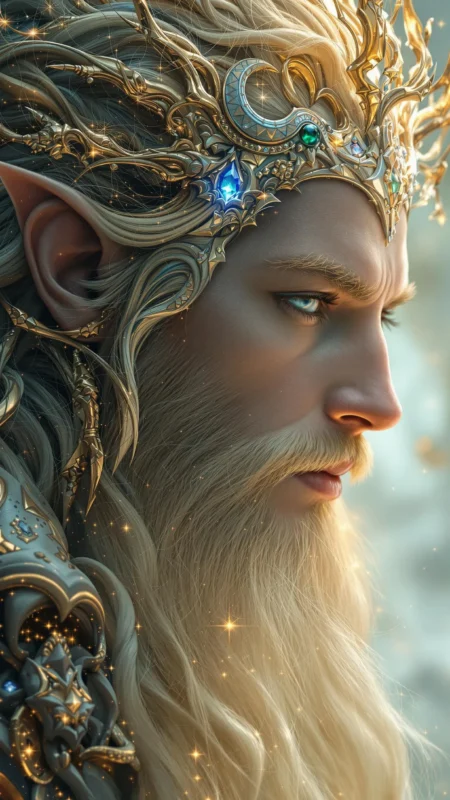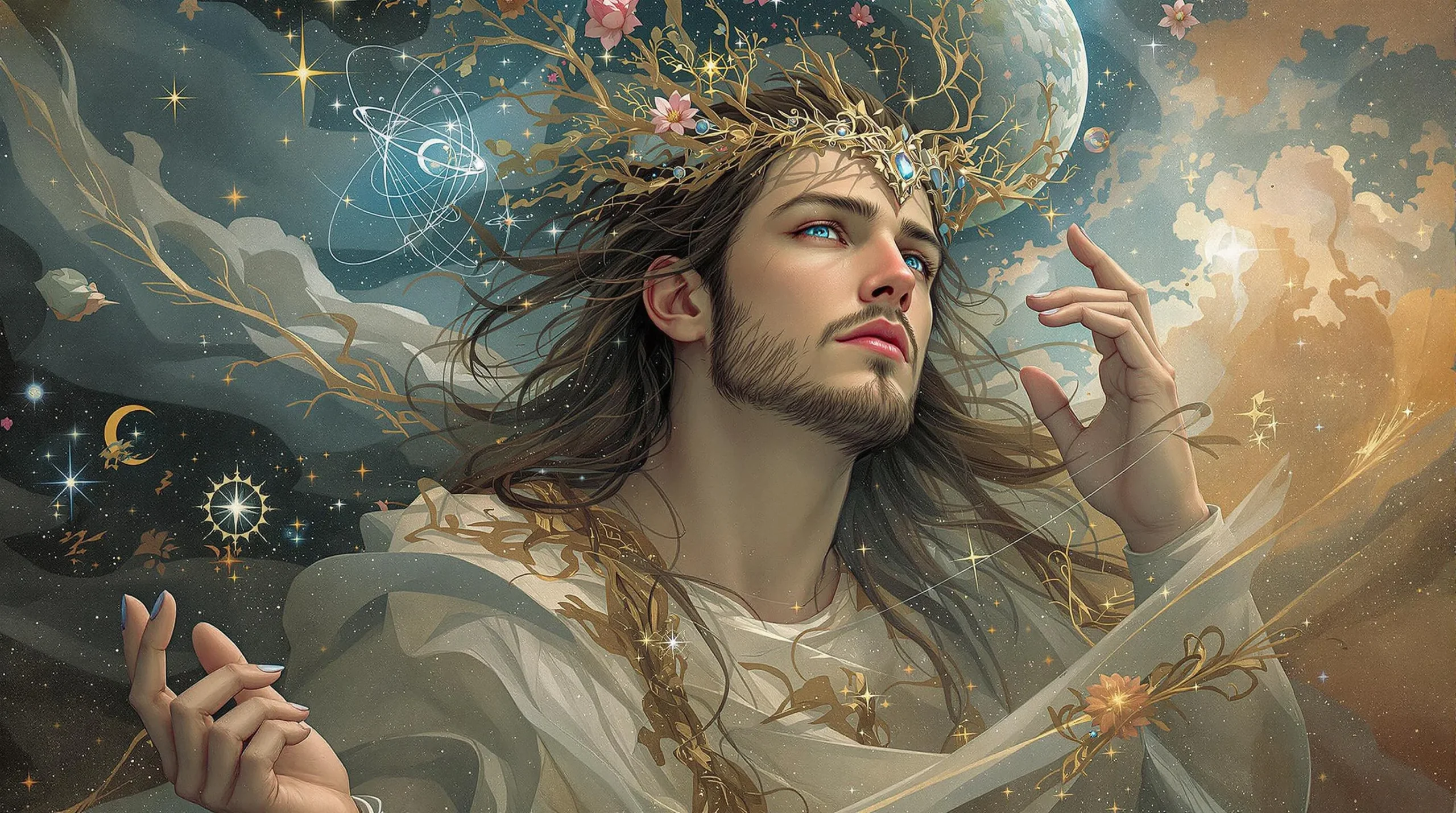


Elrond

Archetype Meaning & Symbolism

Wise, weary, prescient, judicious, authoritative, burdened, stern, kind, diplomatic, enduring

  • My memory reaches back even to the Elder Days. My father was Eärendil, who was born in Gondolin before its fall. And my mother was Elwing, daughter of Dior, son of Lúthien of Doriath. I have seen three ages in the West of the world, and many defeats, and many fruitless victories.

If Elrond is part of your personal mythology, you may...

Believe

  • History is not a dead subject but a living force, and to understand its repeating patterns is the most vital form of intelligence.
  • True strength is found not in acts of domination but in the quieter, more difficult arts of preservation, endurance, and the fostering of hope in others.
  • Wisdom often lies in recognizing what is not your burden to carry and what is not your decision to make, accepting your specific role with grace.

Fear

  • A deep, abiding fear that all efforts are ultimately futile, that history's darkest chapters are doomed to repeat no matter what is done to prevent them.
  • The terror of being the last one standing, of outliving everything and everyone you love, leaving you an isolated monument of memory.
  • The anxiety that your foresight is a curse, that you will see catastrophe coming but be ignored or powerless to stop it, forced only to witness the inevitable.

Strength

  • An almost supernatural composure in the midst of chaos, providing a point of stillness and clarity when others are consumed by panic.
  • Exceptional foresight and strategic thinking, the ability to analyze complex systems and accurately anticipate their long-term consequences.
  • The unique gift of creating sanctuary, of building physical, emotional, or intellectual environments where others can find rest, healing, and renewed purpose.

Weakness

  • A powerful leaning toward cynicism or melancholy, a weariness of the soul born from seeing too many hopes fail and too many cycles of strife.
  • An emotional aloofness that prevents you from fully immersing yourself in the present moment, as you are always observing and contextualizing rather than simply feeling.
  • A subtle tendency toward control that masquerades as guidance, an impulse to manage the lives of others because you are convinced you know what is best.

The Symbolism & Meaning of Elrond

Elrond may symbolize the weight and wisdom of living history. He is not merely knowledgeable; he is a living archive, his consciousness a library of ages. Within a personal mythos, he represents the part of the self that remembers everything: the ancestral traumas, the cultural victories, the personal heartbreaks that still echo in the present. To align with this archetype is to accept the burden of a long memory, to see the current moment not as an isolated event but as a single, resonant note in a vast and ancient symphony. This perspective grants a profound, almost geological patience, an understanding that true significance unfolds over epochs, not afternoons.

The archetype is also a potent symbol of sanctuary. Rivendell is more than a location; it is an ideal, a psychological state of being. It represents the capacity within to build a space for profound healing, contemplation, and counsel amidst a chaotic world. For an individual, this could manifest as the creation of a home that is a true refuge, or the cultivation of a mind so well-ordered it becomes a source of calm for others. The Elrond within is the architect of inner peace, the one who knows that before any great quest can be undertaken, there must be a Last Homely House where maps can be studied, wounds can be tended, and hope can be rekindled.

Finally, Elrond embodies the paradox of immense power used with immense restraint. As the bearer of Vilya, he wields one of the great rings, yet its power is expressed as preservation, not conquest. He has the authority to command and the foresight to dictate, but he chooses instead to advise, to convene, to permit others their own choices, however flawed. This represents a highly mature form of influence. It is the wisdom to know what you can control versus what you must entrust to others, the strength to guide a hero to the precipice of their destiny and then let them walk it alone. It is leadership that finds its greatest expression in letting go.


Elrond Relationships With Other Archetypes

The Fading Star

The Elrond may find a sibling soul in The Fading Star, for both offer a light that has traveled across an impossible gulf of time. This is not the warm, immediate blaze of a hearth fire, but the cool, silver guidance of a celestial body whose greatest brilliance may have occurred in an age now lost to myth. Its light could be seen as a map written in a dead language of brilliance, offering direction but not company, illuminating a path while simultaneously reminding the traveler of the immense, cold distance of history. There is a profound melancholy in this relationship—the melancholy of providing guidance long after one’s own world, one’s own fire, has been spent, leaving only the ghost of its light to race across the void.

The River

A deep and knowing kinship could exist with The River, that patient sculptor of canyons and carrier of secrets. The Elrond does not command the currents of fate, but rather sits by its banks, learning to read its eddies and listen to the stories its waters tell as they drag the stones of the past along its bed. The River’s surface may reflect the fleeting anxieties of the sky—the passing clouds of war, the shimmer of a hopeful dawn—but its true nature is in its depth, its cold, inexorable pull toward the sea of what must be. This archetype understands that The River can be a force that both sustains a hidden valley and, when summoned, can rise in a sudden, cleansing fury to sweep away that which does not belong.

The Surgeon's Scalpel

One might not expect to find a parallel in The Surgeon's Scalpel, yet the relationship is perhaps the most telling. There is a shared, cold glint of clarity; an understanding that healing sometimes requires not a gentle balm but a swift and painful cut. The Elrond, in its capacity for judgment, must occasionally embody this unflinching precision, excising a creeping poison before it can corrupt the whole, regardless of the wound it leaves behind. This relationship isn't about comfort, but about a stark and terrifying necessity. It suggests that true wisdom may not always feel gentle or kind, but is instead concerned with the stark, unadorned health of the body politic, even if the cure itself is a form of violence.

Using Elrond in Every Day Life

Navigating Generational Conflict

When family dynamics feel trapped in a repeating cycle of miscommunication and old wounds, the Elrond archetype offers a lens of immense historical depth. Instead of reacting to the immediate argument, you might find yourself tracing its roots back through generations, seeing your parents' behavior as an echo of their parents' struggles. You could become the family's quiet archivist, the one who understands the long, sorrowful story and can therefore offer a path to reconciliation that isn't about winning today's battle, but about healing a much older wound.

Making a Difficult, Long-Term Decision

Faced with a choice whose consequences will ripple out for years, a career change, a move, or a commitment, you may convene a private "Council of Elrond" within your own mind. This involves summoning not just logic, but the wisdom of your entire life's experience: past failures, unexpected triumphs, moments of clarity. Like Elrond weighing the fate of the Ring, you might assess the decision from all angles, considering its impact on your community and your future self, choosing the path that, while perhaps harder, holds the most hope for lasting good.

Creating a Sanctuary

The archetype might compel you to build a "Rivendell" in your own life. This need not be a physical place, though it could manifest as a home that is a haven for friends. It could be a psychological space: a disciplined mental practice, a curated library of books, or a circle of friends dedicated to deep conversation. This sanctuary is where you and others can retreat from the chaos of the world to heal, learn, and gather the strength to venture out again.

Elrond is Known For

Founding Rivendell

He established the hidden valley of Imladris, known as Rivendell or the Last Homely House, as a sanctuary of Elven lore, healing, and refuge against the encroaching darkness for thousands of years.

The Council of Elrond

He presided over the pivotal council that debated the fate of the One Ring, bringing together representatives of the Free Peoples and facilitating the decision that would lead to the formation of the Fellowship of the Ring.

Bearer of Vilya

He was entrusted with Vilya, the Ring of Air, one of the three great Elven Rings of Power. He used its subtle power not for domination, but for preservation and healing, sustaining the beauty and safety of Rivendell through the long years of its watch.

How Elrond Might Affect Your Personal Mythology

How Elrond Might Affect Your Mythos

Integrating the Elrond archetype may shift your personal mythos from a story of individual heroism to one of solemn stewardship. Your life's narrative might cease to be about your own singular quest for a glorious prize and become instead the story of a guardian. You are the keeper of the family stories, the preserver of a community's traditions, the living link in a chain stretching far into the past and reaching toward an unseen future. The key events in your mythos may not be personal triumphs, but moments when you successfully passed on vital knowledge, provided crucial sanctuary, or facilitated the success of another. Your story becomes one of quiet, enduring significance.

The narrative of your life could also become deeply colored by a theme of bittersweet departures and the necessity of decline. The Elrond archetype understands that all beautiful things in one age must eventually fade to make way for the next. Your personal mythos may be defined by a series of graceful goodbyes: letting go of a past identity, a beloved home, or even a particular dream for the world. The climax of your story might not be a victory, but a profound act of acceptance, acknowledging that your role is complete and that the future belongs to others. It is a mythos that finds beauty not in permanence, but in playing a crucial part in a much larger, ever-unfolding tale.

How Elrond Might Affect Your Sense of Self

You might come to view yourself as a vessel of accumulated experience, your identity forged not by ambition but by endurance. This perspective can cultivate a quiet, unshakable inner authority. Your self-worth may be anchored in the depth of your understanding and the stability you provide, rather than in external validation or fleeting successes. You see your scars not as flaws, but as the lines on a map that proves where you have been. This can lead to a profound sense of self-possession, a feeling of being a still point in a turning world.

Conversely, this archetype can foster a sense of profound detachment from your own life. By constantly seeing the grand, repeating patterns of history, your own passions and struggles can feel strangely small and predictable. You might feel a peculiar weariness, a sense of being older than your years, burdened by a foresight that isolates you from the simple, urgent present. You may observe your own emotions with the calm, distant interest of a scholar, analyzing your joy or sorrow rather than fully inhabiting it, making you a stranger in your own heart.

How Elrond Might Affect Your Beliefs About The World

Your worldview could become that of a geological historian: you see the present moment as a thin layer of sediment deposited upon millennia of previous ages. This grants an immense, almost unnerving patience. Political upheavals, cultural shifts, and personal crises may appear not as shocking emergencies, but as recurring patterns, the ebb and flow of a timeless tide. You might view progress as a slow, cyclical process, punctuated by long periods of shadow. This long view allows you to maintain hope, but it is a tempered, quiet hope, a flickering candle in a vast, dark hall, not a blazing bonfire.

This perspective may also shade your worldview with a deep-seated pessimism. If all things have been tried before, if every new hope is but an echo of a past, failed one, then what is the point of striving? You may become highly attuned to the potential for entropy and failure in any new venture, focusing more on what can be preserved from the wreckage than on what can be built anew. The bright-eyed optimism of others might seem touchingly naive, and you may find it difficult to invest fully in causes, seeing their eventual decline as an inevitability. The world becomes a place of beautiful, tragic cycles, and your role is to witness their turning.

How Elrond Might Affect Your Relationships

In relationships, you may naturally assume the role of the anchor, the counselor, the steadfast harbor in a storm. Your love could be expressed not through grand romantic gestures, but through unwavering reliability, insightful advice, and the creation of a safe emotional space for your loved ones. You might be the keeper of your friends' and family's histories, the one who remembers the important stories and provides context in times of confusion. Connections for you are deep, abiding things, meant to be preserved and honored over decades.

This same quality can create an invisible wall of separation. Your wisdom, meant to be a comfort, may sometimes feel like judgment. Your partner or friends might feel that you are analyzing their problems from a lofty height rather than sitting with them in their mess. Your tendency to foresee consequences can make you seem like a killjoy, dampening spontaneous fun with sober warnings. There's a risk of being perceived as the eternal parent or teacher in your relationships, a figure of authority more than a peer, which can create a profound and lonely distance.

How Elrond Might Affect Your Role in Life

You may perceive your primary role in life as the Wise Counselor or the Guardian of the Threshold. You are not the hero destined to bear the Ring into fire, but you are the one with the wisdom to identify the Ring-bearer, the one who provides the sanctuary where the quest is conceived, and the one who offers the crucial map. Your purpose is found in enabling the greatness of others. You are the foundation upon which grander deeds are built, the deep roots that nourish the tree so it may bear fruit. Your satisfaction comes from seeing the seeds of your counsel blossom in another's actions.

This can also lead to a persistent feeling of being secondary, of being perpetually left behind on the shores as the ships you've helped provision sail off to history. While the heroes of the story embark on world-changing adventures, your role is to wait, to watch, to maintain the sanctuary they may or may not return to. This can engender a sense of stasis and a quiet sorrow, a feeling that your great purpose is to exist in the background of more exciting stories, a vital but ultimately static figure.

Dream Interpretation of Elrond

In a positive dream context, an encounter with an Elrond figure could represent your subconscious mind granting you access to your own deepest reserves of wisdom. The dream may be an encouragement to step into your authority, to trust your accumulated experience when facing a difficult choice. His appearance might be a signal to take the long view on a current problem that seems overwhelming, or a call to consciously create a 'Rivendell' in your waking life—a project, a relationship, a physical space—that will serve as a source of healing and clarity for yourself and others. It is an affirmation of your capacity for sound judgment and providing sanctuary.

In a more troubling dream, Elrond's presence could symbolize a part of you that has grown rigid, cynical, and world-weary. He might represent a voice of crushing pessimism that dismisses new ideas as foolish and new hopes as naive. This dream figure could be the embodiment of your fear of failure, warning you away from a necessary risk and urging you to retreat into the lonely safety of what is known. His council in the dream might feel less like wisdom and more like a sentence, condemning you to repeat the past and trapping you in a fortress of your own making.

How Elrond Archetype Might Affect Your Needs

How Elrond Might Affect Your Physiological Needs

The Elrond archetype may foster an approach to the body as a historical artifact, a vessel to be preserved with careful, dignified stewardship. Your relationship with physiological needs—food, sleep, movement—could become methodical and disciplined, aimed at longevity and sustainable function, not at fleeting pleasure or peak athletic bursts. You might prioritize rest as a vital act of restoration, understanding that the body, like a well-managed realm, requires periods of peace to endure the long siege of time. Health is a matter of long-term conservation.

Alternatively, the psychological burdens of this archetype could manifest as a deep somatic weariness. The weight of memory, foresight, and responsibility may translate into a tangible physical heaviness, a persistent fatigue that sleep doesn't seem to touch. You might feel a profound disconnect from your body’s more vital, primal energies, living instead in the vast, echoing archives of the mind. Physical sensations could feel muted, as if experienced from a great distance, because your true reality is the immense inner landscape of thought and memory.

How Elrond Might Affect Your Ideas of Belonging

A sense of belonging, for you, is likely found not in the boisterous crowd but in the quiet council. You connect most deeply in small groups forged by mutual respect, shared purpose, and a commitment to a long-term vision. Love and friendship are not ephemeral sparks; they are deep, slow-moving rivers, carved over time. You belong with those who value the weight of your counsel and seek the sanctuary you provide. Your tribe is one of thoughtful souls who understand that the strongest bonds are woven from threads of loyalty, wisdom, and shared history.

This very depth can also be the source of a profound and unshakable loneliness. Possessing a perspective that spans metaphorical ages can make you feel like a different species from those around you. You may listen to the immediate concerns of others with a kind of loving pity, while feeling that no one can truly grasp the scale of your own. You host the fellowship, you offer them your hall and your wisdom, but there is a part of you that remains utterly separate, the ancient observer who can never fully dissolve into the group, leaving you feeling like a solitary, timeless peak surrounded by a bustling, temporary forest.

How Elrond Might Affect Your Feelings of Safety

Your need for safety is likely expressed through the meticulous construction of defensible perimeters in your life. Like the hidden valley of Rivendell, your home, finances, and personal routines are probably designed with foresight and planning to be bastions against chaos. Safety, for you, is not just a locked door; it is an intellectual and emotional fortress. It is built upon anticipating risks, having contingency plans, and possessing the wisdom to neutralize threats before they can ever reach the gates of your well-ordered world.

This relentless pursuit of sanctuary can, however, become its own form of jeopardy. The fortress designed to keep danger out can easily become a cage that keeps life out. You may become so risk-averse that you refuse to venture into the metaphorical 'wild' where adventure, growth, and unexpected joy reside. Your definition of safety might become so rigid that any deviation from the plan, any unforeseen event, triggers intense anxiety. The need to control every variable can lead to a smaller, more fearful life, where you are safe but not truly living.

How Elrond Might Affect Your Views of Esteem

Your self-esteem is likely built upon the solid bedrock of your integrity and foresight. It is earned through being a reliable source of wisdom, a stabilizing force in crises, and a trusted advisor. You derive a deep sense of worth from the respect of serious, thoughtful individuals, caring little for fleeting popularity or public acclaim. Your esteem is not something you seek externally; it is something you build internally, brick by brick, with every sound decision, every piece of good counsel, and every moment you choose long-term preservation over short-term gain.

This foundation for esteem can also be brittle. Your self-worth might become perilously tied to being 'right' or having the 'answer.' When your advice is ignored and things go wrong, or when events unfold in a way you failed to predict, it can trigger a deep crisis of identity. Furthermore, you may begin to fear that you are valued only for your function—your wisdom, your stability—and not for your essential self. This can lead to the quiet dread that if you ever ceased to be the counselor, you would cease to be worthy of love or respect.

Shadow of Elrond

The shadow of Elrond is a cold, suffocating pessimism that masquerades as wisdom. In this state, the wise counselor becomes the cynical gatekeeper, using his vast knowledge not to illuminate paths but to barricade them. He meets every new idea with a weary sigh and a story of its previous failure. Hope is dismissed as naivete; courage is rebranded as folly. This shadow self hoards knowledge, dispensing it only with a side of scorn to ensure that no one ever feels hopeful enough to act. The sanctuary of Rivendell transforms from a place of respite into a beautiful, gilded prison where inhabitants are kept safe from the world but also from their own potential, their dreams dying quietly within its protected walls.

This shadow can also manifest as a complete paralysis of the will. The weight of all possible futures, informed by all past tragedies, becomes so immense that any action feels pointless. Why begin the journey when you can already foresee its painful end? Why build something new when you know it will eventually turn to ruin? This is not patience; it is nihilistic stasis. The Elrond shadow is the seductive whisper that says, 'Do nothing. Stay here. Let the world sort itself out. You have seen this all before.' It is the ultimate abdication of responsibility, a surrender to weariness that chooses the preservation of a static past over the risk of any possible future.

Pros & Cons of Elrond in Your Mythology

Pros

  • You are a source of profound stability and wisdom, serving as an invaluable anchor for your family, friends, and community in turbulent times.
  • You possess a rare long-term perspective, enabling you to make sound, sustainable decisions in your personal and professional life, avoiding short-sighted pitfalls.
  • You are gifted at creating environments of safety, learning, and healing, which benefits not only you but everyone you welcome into your life.

Cons

  • You may be perceived as emotionally distant, cold, or overly critical, which can make it challenging to form and maintain close, spontaneous relationships.
  • A predisposition to melancholy and a pessimistic outlook can rob you of everyday joy and make it difficult to embrace new opportunities with genuine enthusiasm.
  • You may struggle with feeling like a supporting character in life's drama, forever facilitating the quests of others while your own story remains static and unfulfilled.