Believe
 Fear
Fear Strength
 Weakness
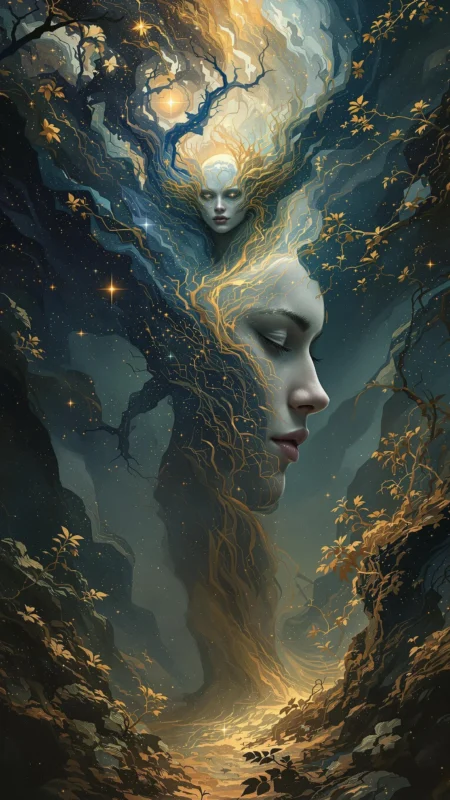
In the personal mythology of a modern life, the Earth archetype may represent a profound connection to the tangible, the real, the 'what is'. It is an anchor in a digital sea, a quiet rebellion against the ephemeral. To have Earth in your mythos is perhaps to possess a personal geology of memory, where experiences are not fleeting data points but stratified layers of self, each one contributing to the solid mass of your identity. You might find its symbolism not in dramatic mountains, but in the patient lichen on a stone wall, in the worn smoothness of a wooden banister, in the heft of a ceramic mug. It is the part of your story that values substance over spectacle, the slow work of becoming over the quick flash of arrival.
The archetype could also symbolize a deep, instinctual wisdom that operates below the level of conscious thought. It is the gut feeling, the body's knowledge, the inherited sense of how to endure. This isn't about intellect, but about a kind of cellular intelligence. Your personal myth might feature a character who can 'read' the landscape of a room, who understands the subtle tectonics of a family gathering, who knows when to be firm as granite and when to be yielding as clay. This is the wisdom of foundations, an understanding that the most important structures are often invisible, holding everything else up from below.
Furthermore, Earth may be the symbolic repository of your history and heritage. It is the land of your ancestors, the soil that holds their bones and stories. In your mythos, this could manifest as a powerful sense of place, a feeling that your identity is inextricably linked to a specific geography, a cityscape, a coastline, a patch of dirt. It speaks to the part of you that is not self-made, but is instead the product of a long, slow, geological process of inheritance. Your story is not just your own: it is the latest stratum laid down upon a deep and ancient foundation.