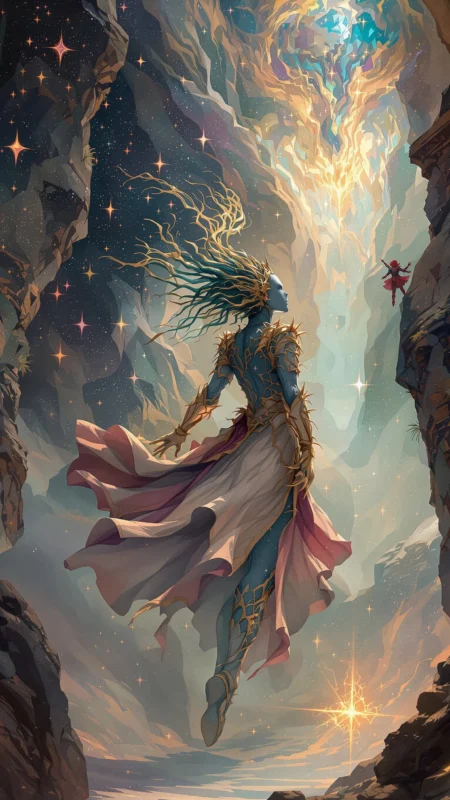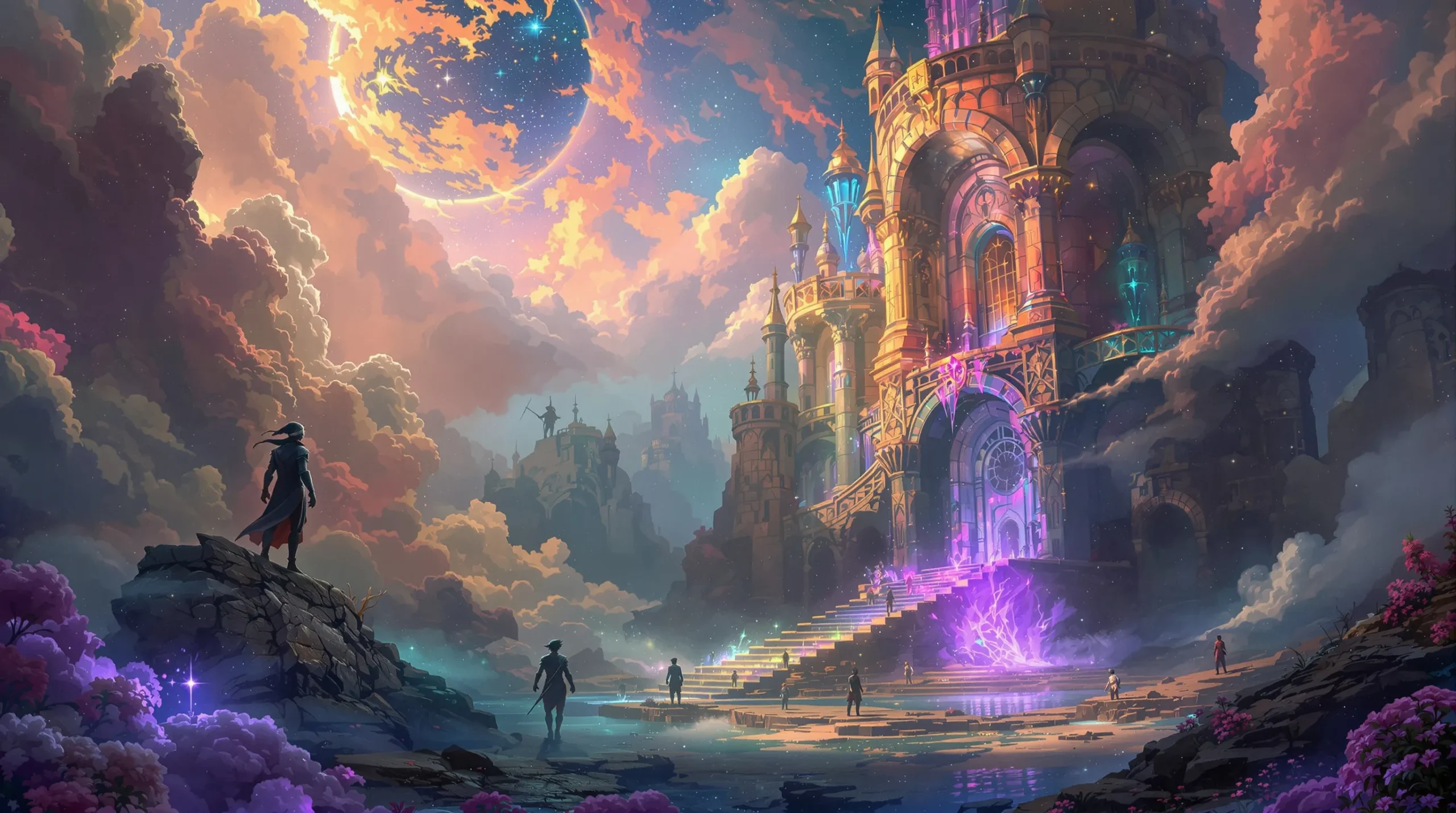


Dungeon

Archetype Meaning & Symbolism

Hidden, labyrinthine, challenging, revealing, subconscious, ancestral, containing, transformative, dangerous, ancient

  • The only way out is through, and the greatest treasure I guard is the truth you've buried about yourself.

If Dungeon is part of your personal mythology, you may...

Believe

  • The most valuable truths are always hidden and must be earned through a difficult journey.

    Every person contains a vast, secret world, and true understanding requires exploring it.

    Confronting darkness is not only necessary but is the primary path to growth.

Fear

  • Being permanently trapped in a state of psychological distress or confusion, a maze with no exit.

    What you might discover about yourself or your past in your deepest, unexamined corners.

    That the 'monster' within you—your anger, your sorrow, your shadow—is more powerful than you are.

Strength

  • A profound self-awareness and a rare capacity for deep introspection.

    An impressive resilience in the face of psychological hardship, crisis, and emotional pain.

    An ability to see beyond surfaces and understand the hidden complexities in people and situations.

Weakness

  • A tendency towards isolation, melancholy, or becoming lost in cycles of overthinking.

    A habit of projecting your own inner complexities and dangers onto others and the world, leading to distrust.

    Difficulty enjoying simple, surface-level pleasures without searching for a hidden, darker meaning.

The Symbolism & Meaning of Dungeon

In modern personal mythology, the Dungeon is the primary metaphor for the subconscious mind. It is the sprawling, unlit architecture of all that you are but do not yet know. Its winding corridors are the pathways of memory, its locked doors the repressed traumas and forgotten desires, its echoing silence the vast potential of the un-thought. To have the Dungeon as part of your mythos is to acknowledge that the most significant part of your landscape is internal and largely unexplored. Your life might be a quest not for external achievement but for a map to your own depths, a torch bright enough to illuminate what lies waiting in the dark, still places of your own psyche.

Furthermore, the Dungeon represents the crucible: a place of alchemical change born of pressure and darkness. It is not merely a prison, but a container for transformation. This is the landscape of the dark night of the soul, the therapist's office, the solitary studio, the long period of grief. It is any space or time in life where one is confined with their own unvarnished self. Within its walls, illusions are stripped away, and resilience is forged. The monsters encountered are the un-integrated parts of the self—the rage, the fear, the shame—that must be faced, understood, and perhaps even befriended to find the way out. The treasure is the wisdom gained from the ordeal.

The deepest levels of the Dungeon may connect to something older and broader than the individual. They can symbolize ancestral memory, the inherited psychological DNA of your family line. Here reside the family secrets, the unresolved grief of generations past, the powerful patterns of behavior that snake through the bloodline. Going this deep is a shamanic journey, an attempt to heal not just the self but the lineage. It suggests a belief that your personal struggles are interwoven with a larger story, and that by navigating your own lower levels, you might just find a key that unlocks a door for generations to come.


Dungeon Relationships With Other Archetypes

The Hero

The Dungeon and the Hero exist in a state of symbiotic necessity. The Dungeon is the stage upon which the Hero proves their mettle; it provides the trial, the monster, and the treasure that defines the Hero's journey. Without the Dungeon, the Hero is just a person with a sword and good intentions. They need the descent, the confrontation with the unknown within its walls, to be transformed. The Dungeon, in turn, needs the Hero, for without an explorer, its treasures remain lost and its secrets unrevealed. It waits for the one with the courage to bring a torch into its forgotten chambers and give its existence meaning.

The Key

The Key is the Dungeon's foil and its purpose. While the Dungeon represents confinement, mystery, and complexity, the Key embodies solution, access, and singular insight. An entire journey through the labyrinth may be a quest for a single key, which might unlock not an exit, but a deeper, more secret level. In a personal mythos, the Key could be a sudden realization, a crucial piece of information, or a specific person who provides access to a new way of being. The Dungeon presents the problem in the form of a lock; the Key represents the hard-won moment of clarity that allows passage.

The Monster

The Monster is the Dungeon's most famous resident, the living embodiment of its danger and its secret. The Monster and the Dungeon are inseparable: the Monster gives the place its terror, and the Dungeon gives the Monster its power and its hiding place. In one's personal mythology, the Monster is the raw, untamed aspect of the psyche—a core fear, a primal rage, a deep-seated shame—that guards the greatest treasure. The relationship is not always adversarial. The journey might reveal that the Monster is not something to be slain, but something to be understood, integrated, or even redeemed, a guardian whose trust must be earned before it will step aside.

Using Dungeon in Every Day Life

Navigating Creative Blocks

When inspiration feels lost, the Dungeon archetype suggests the issue is not a lack of ideas, but a lost map to the place where they are stored. The creative process becomes an archaeological dig into the self. You might engage in journaling, dream analysis, or revisiting childhood memories—not to find a finished product, but to uncover a potent symbol, a forgotten feeling, or a single, resonant image from a deep chamber that can serve as the key to a new body of work.

Understanding Generational Patterns

To confront a recurring family dynamic—a pattern of addiction, silence, or anxiety—is to consciously descend into the family dungeon. This archetype frames the work not as blaming ancestors, but as exploring an inherited architecture. You may become a cartographer of your lineage, tracing the winding passages of trauma and resilience through old stories and photographs, seeking to understand which monsters are truly yours to fight and which are merely ghosts guarding empty rooms.

Facing a Personal Crisis

During a profound life upheaval like a divorce or career collapse, the Dungeon provides a map for the 'dark night of the soul.' It reframes the experience from a random catastrophe to a necessary trial. This is your descent. You are not simply failing; you are being tested in the depths. The goal is not to escape the pain quickly, but to move through it with purpose, to find the 'Minotaur'—the core truth of the crisis—and emerge not just as a survivor, but as someone reborn with the treasure of self-knowledge.

Dungeon is Known For

Confinement and Trials

The Dungeon is primarily known as a place of testing, where heroes and individuals are forced to confront their limits. It represents the necessary struggles—psychological, emotional, or spiritual—that contain the seeds of transformation.

Hidden Treasures:

Beyond the danger, the Dungeon is a repository of things lost or deliberately hidden. This could be a literal treasure, but more often it symbolizes repressed memories, dormant talents, ancestral wisdom, or a profound truth about the self, guarded and waiting to be reclaimed.

Monstrous Inhabitants:

The corridors of the Dungeon are rarely empty. They are home to guardians, monsters, and tricksters which often personify the very fears, traumas, and shadow aspects of the individual that must be confronted to proceed deeper or to escape.

How Dungeon Might Affect Your Personal Mythology

How Dungeon Might Affect Your Mythos

When the Dungeon is a central feature of your personal mythos, your life story is less a linear progression and more a series of descents and returns. Periods of difficulty, depression, or confusion are not viewed as interruptions to the narrative but as essential chapters in themselves. Your story is plotted by these journeys below the surface. A lost job is not just a failure; it is 'The Descent into the Cavern of Worthlessness.' A painful breakup is 'The Labyrinth of Lost Love.' This framing imbues struggle with meaning and purpose, transforming suffering into a heroic quest for a hidden boon, be it resilience, wisdom, or a deeper understanding of your own soul.

The entire narrative of your life may be organized around a central mystery, a locked room at the heart of your personal dungeon. This could be an unanswered question about your origins, a piece of family history shrouded in silence, or a fundamental enigma about your own nature. Your life's purpose, then, becomes a slow, careful exploration of the corridors that might lead to it. Major life events, relationships, and career choices are all assessed based on whether they provide a map, a key, or a torch for this deep, internal quest. The story is not about what you achieve in the world, but about how close you get to solving the riddle in the center of your own labyrinth.

How Dungeon Might Affect Your Sense of Self

You may perceive yourself as a place of immense and sometimes daunting complexity. Your sense of self is not a single, cohesive identity but a sprawling architecture of rooms, corridors, and cellars, many of which you have yet to visit. This can foster a profound curiosity about your own motivations and history, leading to a life rich with introspection and self-discovery. There's an acceptance, and perhaps even an appreciation, for your own shadow—the parts of you that are angry, frightened, or strange. They are not bugs in the system but rightful inhabitants of your lower levels, creatures to be studied and understood rather than exterminated.

This internal landscape can also feel like a burden. You may feel that you contain dangerous things, that your own mind is a place of hidden traps and sleeping monsters. This can lead to a cautious, watchful personality, someone who is wary of their own impulses and slow to trust their own heart. There can be a persistent feeling of being haunted by your own depths, a sense that a part of you is always imprisoned or lost. Self-acceptance might be a struggle, as you are acutely aware that the neat, well-lit rooms you present to the world are built upon a foundation of something much darker, wilder, and more chaotic.

How Dungeon Might Affect Your Beliefs About The World

Your worldview may be defined by a fundamental belief in hidden depths. You might see the entire world as a surface layer, a sunlit courtyard built over a vast and ancient dungeon. Social conventions, political discourse, and corporate structures are all seen as the accessible upper floors, while the real power dynamics, historical traumas, and unspoken truths reside far below. This perspective makes you a natural detective of the human condition, always looking for the trapdoor, the secret passage, the basement where the real story is unfolding. You might be distrustful of simple explanations and sunny optimism, believing that truth is almost always complex, messy, and found in the dark.

This can cultivate a kind of profound, if sometimes melancholic, wisdom. You are not easily fooled by appearances and possess a keen eye for the subtext in any situation. The world is a text to be interpreted, its symbols decoded to reveal a deeper meaning. However, it may also lead to a degree of paranoia or cynicism, a tendency to see conspiracy and shadow everywhere. It can be difficult to simply enjoy the light without contemplating the darkness it holds at bay, to trust in goodness without searching for the secret cellar where its opposite is being kept chained.

How Dungeon Might Affect Your Relationships

In relationships, you may seek a rare and profound form of intimacy: a willingness to explore each other's inner dungeons. A deep connection, for you, is not forged in comfort and ease, but in the shared courage of a joint expedition into the psyche. You might value partners who are not afraid of your darkness and who allow you to witness theirs. The most romantic gesture is not a bouquet of roses, but the offering of a key to a locked room within the self. Love is the act of holding the torch for another while they face the monster they have kept hidden for a lifetime.

This quest for depth can, however, complicate relationships. You might unconsciously create tests and trials for partners, making them navigate a labyrinth of your own making to prove their worth. A fear of being trapped or confined by another person can lead you to see relationships themselves as potential dungeons, leading to a push-pull dynamic of seeking deep connection while simultaneously guarding your escape routes. There may be a tendency to project your own complex inner world onto a partner, assuming they too have labyrinthine motives, which can erode trust and prevent the simple, easy joy of shared presence.

How Dungeon Might Affect Your Role in Life

You may feel your role in life is that of an explorer, a guide, or a keeper of secrets. You might be drawn to the role of the Psychologist, the Archaeologist, or the Artist, dedicating your life to mapping the hidden territories of the human soul. Your work, regardless of the field, may involve delving beneath the surface to uncover what is hidden, whether it's a forgotten historical event, a client's repressed trauma, or the deep symbolic meaning in a work of art. Your purpose is to bring a lamp into dark places and report back on what you have found.

Alternatively, you might feel you embody the role of the Prisoner or the Guardian. You may feel defined and limited by the walls of your own history, psychology, or a secret you are compelled to keep. Your life story could be one of trying to escape this confinement or, conversely, of accepting your role as the warden of a particular family truth or personal trauma. This role can feel burdensome and isolating, but it may also imbue your life with a powerful, albeit heavy, sense of duty and purpose: to protect the treasure, or to contain the monster, that resides within.

Dream Interpretation of Dungeon

In a positive context, dreaming of a dungeon can symbolize a promising engagement with your subconscious. If you navigate the corridors with a torch, find a map, or feel a sense of purpose, it may indicate you are making progress in understanding a complex aspect of yourself or your life. Discovering a treasure, a beautiful fountain, or a sunlit room within the dungeon is a powerful omen of integration and healing. It suggests that by confronting what is difficult or hidden, you are on the verge of unlocking a new strength, talent, or profound piece of self-knowledge.

In a negative light, a dream of being lost, trapped, or pursued within a dungeon often reflects overwhelming feelings of anxiety, helplessness, or confusion in your waking life. The dream may be a direct metaphorical representation of being imprisoned by a situation, a relationship, or a pattern of thought. The nature of the threat—whether it is a monster, a rising flood, or collapsing walls—can provide clues to the specific fear you are grappling with. An endless, featureless labyrinth may point to a sense of meaninglessness or a lack of direction, a sign that your conscious mind has lost the map to its own inner world.

How Dungeon Archetype Might Affect Your Needs

How Dungeon Might Affect Your Physiological Needs

For one with the Dungeon in their mythos, basic physiological needs like shelter are imbued with deep psychological significance. A home is not just for physical safety; it is a fortress for the soul. It must have its own secure 'dungeon'—a basement, a private study, a quiet attic—a place where one can retreat to safely engage with the inner world. The act of stocking a pantry may feel like preparing for a long, internal winter of introspection. Food and water are not just fuel for the body, but sustenance for the difficult work of self-exploration, resources needed for the long journey underground.

This can also manifest as a complex relationship with the body itself, which may be perceived as a biological dungeon confining a limitless spirit. This perspective could lead to disciplined, ascetic practices aimed at mastering the physical self. Rigorous exercise, fasting, or endurance challenges become methods for testing the limits of the physical prison to achieve a state of mental or spiritual liberation. The body is the first level of the labyrinth, and controlling its needs and impulses is seen as the first step toward navigating the deeper levels of the psyche.

How Dungeon Might Affect Your Ideas of Belonging

A sense of belonging is often forged in shared darkness rather than in common light. You may feel truly connected not with those who share your hobbies, but with those who share your willingness to discuss what is difficult, hidden, and complex. Intimate friendships and romantic partnerships are deep alliances, formed by the mutual trust required to explore each other's inner worlds. Belonging is a small, torchlit circle of fellow travelers who are not afraid of your ghosts because they are on speaking terms with their own. Love is not rescuing someone from their dungeon, but willingly going inside with them and helping them read the inscriptions on the walls.

This can also foster a profound and painful sense of alienation. You might feel that your inner world is so intricate, so dark, or so strange that no one could ever truly understand or accept it. This belief can create an invisible wall around you, preventing true intimacy. You may keep others in the well-lit upper rooms of your personality, convinced that if they ever saw the entrance to the basement, they would run. The fear of being seen as monstrous or broken can become a self-fulfilling prophecy, creating the very isolation you dread.

How Dungeon Might Affect Your Feelings of Safety

Safety may not be found in the avoidance of danger, but in the thorough knowledge of it. For you, true security comes from having courageously mapped the perilous landscapes within yourself. It is the confidence of the seasoned explorer who knows the terrain, who can recognize the signs of a hidden trap, and who has already met the monsters that lurk in the shadows. Safety, then, is a function of self-awareness. It is the feeling that, no matter what darkness you might encounter in the world, you have faced something similar or more frightening within yourself and have survived. You carry your own torch.

Conversely, this archetype can breed a chronic and pervasive sense of insecurity. The belief that both the self and the world are filled with unseen threats and hidden motives can lead to a state of hyper-vigilance. You may constantly be on the lookout for the metaphorical loose floorboard that will plunge you into a crisis. This can create a deep-seated anxiety that you are never truly safe, that a hidden danger from your past or a monstrous impulse from within could emerge at any moment to sabotage your life. Security remains elusive because you know better than anyone how many locked doors and dark corners truly exist.

How Dungeon Might Affect Your Views of Esteem

Self-esteem is not built upon external accolades but is forged in the fires of internal trials. Your sense of worth may be directly tied to your history of surviving your own descents. You respect yourself for the courage it took to face your shadow, to navigate a period of profound grief, or to unravel a painful knot from your past. Accomplishments are measured in terms of psychological resilience and the wisdom you brought back from your journeys underground. Your self-respect comes from knowing you are a person who does not flee from the necessary darkness.

On the other hand, the Dungeon can be the architecture of low self-esteem. If you identify more with the prisoner than the explorer, you may feel defined by your flaws, secrets, and past mistakes. Your self-worth is held captive by the 'monster in the basement'—the aspect of yourself you are most ashamed of. No amount of external success can quiet the knowledge of what you keep locked away. This creates a painful impostor syndrome, a feeling that your respectable public self is a fragile facade built over a dungeon of unworthiness.

Shadow of Dungeon

The shadow of the Dungeon, in its excess, is a self-made prison of the mind. It is the state of being perpetually and pathologically introspective, trapped in a labyrinth of self-analysis from which there is no escape and no treasure. Every thought leads to a darker corridor, every feeling is a new monster to be cataloged. This can manifest as debilitating anxiety, paranoia, or a deep, immovable depression where the individual becomes the permanent, willing captive of their own narrative of brokenness. The vital work of self-exploration sours into a morbid fascination with one's own wounds, and the courageous explorer becomes a prisoner who has forgotten they hold the key.

The opposite shadow, a deficit of the Dungeon archetype, creates a life of perilous superficiality. This is the person who refuses all descent, who cements over the basement door and pretends the subterranean levels do not exist. They live exclusively on the surface, denying their own complexities, repressing traumas, and projecting their unexamined darkness onto others. Their inner monsters, ignored and starved, rattle the foundations of their life, causing unexplained phobias, volatile emotional outbursts, and addictions that serve only to numb the echoing from below. They are haunted by a house they refuse to explore, living in fear of a basement they claim isn't there.

Pros & Cons of Dungeon in Your Mythology

Pros

  • You may possess an uncommon depth of character and a quiet wisdom gained from facing internal challenges.

    You are likely unafraid of difficult conversations, emotional complexity, and the less sanitized aspects of the human psyche.

    You may develop powerful resilience, rooted in the knowledge that you can survive journeys into psychological darkness and return to the light.

Cons

  • You may be prone to bouts of melancholy, social withdrawal, and a persistent feeling of being fundamentally different from others.

    There is a significant risk of becoming trapped in 'analysis-paralysis,' over-complicating issues and finding it difficult to take decisive action.

    You might struggle to trust people or situations at face value, always suspecting hidden motives and unseen dangers beneath the surface.