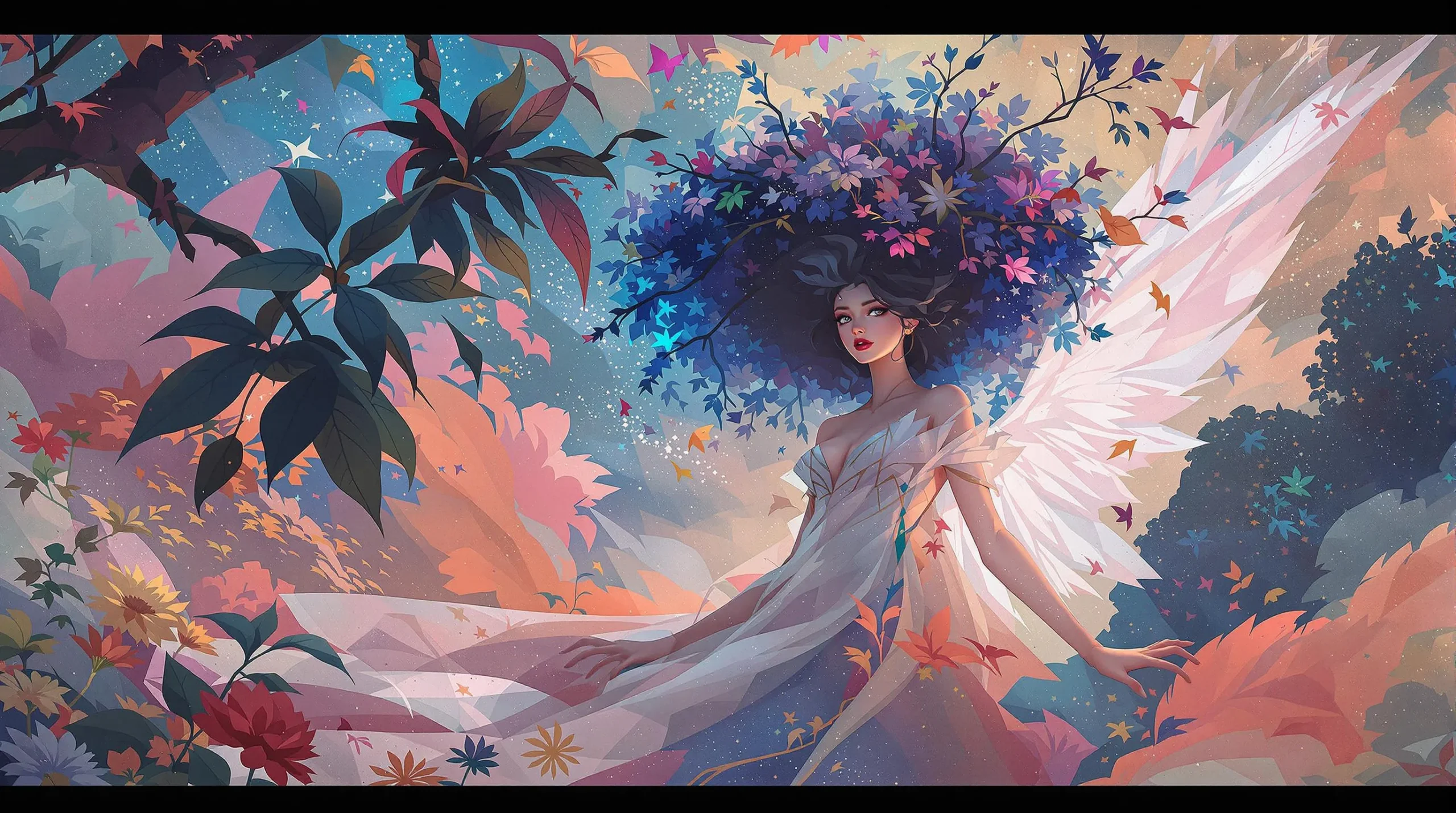


Dreamer

Archetype Meaning & Symbolism

Visionary, imaginative, ethereal, impractical, hopeful, detached, intuitive, nebulous, sensitive, creative

  • Reality is just the dream from which we have not yet awoken; the trick is to dream a better one.

If Dreamer is part of your personal mythology, you may...

Believe

  • That the unseen world of thought and potential is more real, and more potent, than the material world.
  • That every limitation is merely a failure of imagination.
  • That your primary purpose is to bring a unique vision into the world, a piece of beauty or insight that only you can contribute.

Fear

  • A life of quiet conformity, where your dreams are slowly eroded by practicality until they are forgotten.
  • The ridicule of others, the dismissal of your deepest visions as naive or foolish.
  • The terror of discovering that your grand dream is, in the end, nothing more than a delusion.

Strength

  • An inexhaustible well of creativity and hope, allowing you to see possibility where others see only dead ends.
  • The ability to inspire others with your vision, to rally them to a cause that transcends the everyday.
  • A profound resilience against despair, as you can always retreat into your inner world to craft a new and better reality.

Weakness

  • A tendency toward inaction and procrastination, where the pleasure of imagining substitutes for the hard work of creating.
  • Difficulty with the mundane but necessary details of life, from paying bills to maintaining relationships.
  • A vulnerability to disappointment when the real world and the people in it fail to conform to your idealized visions.

The Symbolism & Meaning of Dreamer

To have the Dreamer as a central force in your personal mythology is to place the faculty of imagination at the very axis of your being. You may see yourself as an architect of the unseen, your primary work being the drafting of possibilities. This archetype symbolizes the profound belief that consciousness is not a passive mirror reflecting the world but an active lamp that illuminates it, and in some cases, creates it. The Dreamer is the keeper of your soul's potential, the part of you that remembers the original, uncompromised version of your life's purpose. It is the quiet, persistent voice that asks, 'What if?' in the face of a world that screams, 'What is.' In your story, the Dreamer is the cartographer of worlds that do not yet exist, from the next great novel to a more compassionate way of living.

The Dreamer acts as the permeable membrane between the conscious and unconscious, the logical and the magical. It is through this archetype that the raw, symbolic language of the deep psyche is translated into art, innovation, and spiritual insight. Your mythos may be one of constant translation, where you take the chaotic, beautiful energy of your inner world and attempt to give it form in the outer. This is why the Dreamer is the patron of artists, inventors, and mystics. It represents a fundamental trust in the invisible, a faith in the gut feeling, the sudden inspiration, the synchronicity that hints at a deeper order. It is the courage to take a feeling seriously, to build a life around a whisper.

Yet, the symbolism is inherently dual. The Dreamer is both a source of divine inspiration and a siren of dangerous delusion. Its presence in your mythos introduces a central tension: the call to build a better world versus the temptation to simply retreat into a fantasy of one. The archetype represents both the potential for boundless creativity and the risk of complete inaction. Your life's journey might be defined by this very struggle: how to ground the visions in the soil of reality without clipping their wings, how to be in the world but not entirely of it, how to build a bridge from your island of dreams to the mainland of shared human experience.


Dreamer Relationships With Other Archetypes

The Sovereign

The Dreamer's relationship with the Sovereign is that of prophet to a king. The Sovereign holds the power, the resources, and the authority to command and build, but without the Dreamer, their rule risks becoming hollow, a kingdom of efficiency without a soul. The Dreamer provides the 'why'—the grand vision, the noble purpose, the aspirational narrative that transforms a mere territory into a cherished realm. The Sovereign may grow impatient with the Dreamer's lack of practical detail, while the Dreamer may despair at the Sovereign's focus on politics over poetics. When in harmony, they create a kingdom that is both functional and magical, a legacy that is both built and believed in.

The Warrior

The Warrior and the Dreamer are action and inspiration in a delicate, necessary dance. The Warrior archetype provides the discipline, courage, and strategic force needed to protect the dream and carve out a space for it in a hostile world. A Warrior without a dream is merely a mercenary, fighting for coin or for the fight itself. A Dreamer without a Warrior sees their visions trampled and dismissed. In a personal mythos, this dynamic might represent the internal struggle between generating ideas and executing them. The Dreamer conceives of the quest for the Holy Grail; the Warrior is the one who actually saddles the horse and faces the dragons along the way.

The Realist

The relationship with the Realist is perhaps the most fraught and the most essential. The Realist is the anchor, the grounding force, the one who asks the hard questions about budget, physics, and human nature. The Dreamer may perceive the Realist as a cynical, joyless naysayer, the embodiment of every limitation they seek to transcend. The Realist, in turn, may see the Dreamer as a dangerously naive child, floating toward a cliff's edge. This archetypal tension within one's psyche is the crucible of all viable creation. For a dream to become manifest, it must survive the loving, critical gaze of the Realist. Without it, the Dreamer builds castles in the air; with it, they can learn to build them on the ground.

Using Dreamer in Every Day Life

Navigating Creative Blocks

When the path forward seems to vanish, the Dreamer archetype does not search for the old road but imagines a new one into being. It encourages a retreat from frantic effort into quiet contemplation, listening for the whisper of an unorthodox solution. This may manifest as allowing yourself to pursue a seemingly unrelated hobby, knowing the answer you seek lies not in direct pursuit but in the cross-pollination of ideas that happens when the conscious mind steps aside.

Reimagining Personal Failure

A failed project, a broken relationship, a career dead-end: to the Realist, these are endings. To the Dreamer, they are merely plot twists. In your personal mythology, the Dreamer allows you to reframe failure as a necessary redirection, a chapter that had to conclude to make way for a more compelling one. It is the power to look at the rubble of a fallen plan and see not a ruin, but the raw materials for a different, perhaps more magnificent, castle.

Cultivating Hope in Despair

In moments of personal or collective darkness, the Dreamer serves as the keeper of an inner flame. It is the faculty that allows you to construct a sanctuary of possibility in your own mind, a vision of a future dawn that provides the strength to endure the present night. This is not blind optimism, but a conscious act of imaginative resistance against the tyranny of circumstance, a belief that a new world can be born first in thought.

Dreamer is Known For

World-Building

This is the capacity to construct intricate, coherent, and deeply personal inner landscapes. The Dreamer is known for having a mind that is a universe unto itself, complete with its own histories, laws, and aesthetics, a place of refuge and inspiration.

Prophetic Insight

The Dreamer is often credited with flashes of intuition that feel like glimpses of the future. This is not about predicting lottery numbers, but about sensing the underlying currents of a situation and seeing where they are likely to lead, often resulting in uncanny foresight.

Aversion to the Mundane

A hallmark of the Dreamer is a fundamental impatience with the uninspired. They are known for their tendency to either mentally check out of tedious situations or to actively try and infuse them with a sense of magic, story, and significance, sometimes to the bafflement of others.

How Dreamer Might Affect Your Personal Mythology

How Dreamer Might Affect Your Mythos

When the Dreamer is a cornerstone of your personal mythos, your life story ceases to be a linear progression of external events. It becomes, instead, a tapestry woven with two threads: the life lived and the life imagined. The narrative of your past is not just a sequence of actions and consequences, but a history of visions, of worlds that almost were, of paths not taken that remain vividly real in the cartography of your mind. Your personal mythos may be punctuated by moments of profound, world-altering insight that are just as significant as any physical journey or material achievement. The 'you' of your story is not a static character but a vessel for unfolding potential, making your myth a continuous act of creation.

The central conflict of your mythos may revolve around the chasm between the inner vision and the outer world. The 'dragons' you must slay are not external monsters, but the internal specters of cynicism, self-doubt, and the seductive call of a comfortable, ordinary life. The antagonists in your story might be those figures, both real and symbolic, who insist that you 'get your head out of the clouds.' Your epic quest, then, is the act of manifestation itself. The holy grail is not an object to be found, but a vision to be made real, and the story of your life is the account of that perilous, noble, and perhaps lifelong, endeavor.

How Dreamer Might Affect Your Sense of Self

Your sense of self may feel remarkably fluid, less a solid object and more a shimmering field of possibilities. If the Dreamer archetype is strong, you might locate your 'true self' not in your current job, relationships, or accomplishments, but in the potent, unrealized future you carry within you. This can be a source of immense resilience; no failure can truly destroy you because 'you' are always one step ahead, residing in the next idea, the next world to be built. However, it can also create a disquieting sense of never quite arriving, a perpetual feeling of being 'not yet,' which can shade into dissatisfaction with a perfectly good present.

Consequently, your self-worth might be intricately linked to the originality and vibrancy of your inner life. You may value your intuition and imagination as your most essential, defining traits. An insult to your ideas could feel far more personal and wounding than an insult to your appearance or actions, as it strikes at the very core of your perceived identity. You might measure your own value not by what you have, but by what you can envision. This makes you fiercely protective of your creative solitude and deeply sensitive to environments or people that feel imaginatively sterile or cynical.

How Dreamer Might Affect Your Beliefs About The World

Your worldview may be fundamentally permeable. You might perceive the 'rules' of reality—social conventions, economic laws, even the arrow of time—as constructs, narratives that have become solidified through collective belief but are ultimately subject to revision. The world, through the Dreamer's eyes, is not a fixed and finished object but a text that is still being written, and you feel you hold one of the pens. This can foster a deep and abiding belief in things that defy simple explanation: synchronicity, the power of intention, the subtle magic woven into the fabric of the everyday.

This perspective transforms how you engage with problems. A dead end is not a wall but a prompt to imagine a door. A societal crisis is not a sign of collapse but an invitation for a radical new vision. You may view humanity as being in a collective dream, one that is often a nightmare of conflict and limitation, and you might feel a deep, personal responsibility to contribute to a better, more beautiful dream. Your worldview is not one of discovery, finding out what the world is, but one of artistry, participating in what the world is becoming.

How Dreamer Might Affect Your Relationships

In relationships, you may seek a 'communion of dreams.' A deep connection, for you, might be defined by the capacity for two inner worlds to touch, overlap, and co-create. You could feel drawn to partners and friends who not only tolerate your imaginative flights but are eager to join you on them. A relationship that operates purely on the practical, logistical, or even emotional plane, without this shared dimension of dreaming, may feel profoundly lonely or incomplete. You might seek a 'soulmate' who is, in essence, a co-conspirator in the project of imagining a better reality.

This can also introduce a unique challenge. You may have a powerful tendency to fall in love not with the person who is, but with the potential you see within them. You project a luminous, idealized version onto them and then interact with that projection. While this can be a beautiful gift, inspiring another to see the best in themselves, it can also be a heavy burden. It can lead to persistent disappointment when they fail to embody the dream-version you have created, and it can make them feel unseen and unloved for who they actually are, in all their flawed, un-magical reality.

How Dreamer Might Affect Your Role in Life

You may feel that your role in life is not one that comes with a pre-existing title or job description. If the Dreamer archetype shapes your sense of purpose, you likely see your role as that of an innovator, a pioneer, or a visionary. You are not here to neatly fit into a slot that society has already carved out; you are here to carve a new one. Your life's work may be the invention of a new art form, a new model for community, a new way of thinking about an old problem. You are the architect, not the bricklayer.

This can lead to a feeling of being a perpetual outsider, living on the frontier of culture. Your role is that of the scout who ventures into the wilderness of what's possible and returns with reports of new territory. You may live with a constant sense of being on the verge of the 'real' work, that your life so far has been a preparation or a preamble. This can be exhilarating, a life pregnant with purpose. It can also be unsettling, as your role lacks the clear validation and markers of progress that come with more conventional paths. Your role is to hold the vision, to be the keeper of the map to a world that, for now, only you can see.

Dream Interpretation of Dreamer

When the Dreamer archetype appears in your dreams in a positive light, it may signal a powerful alignment between your conscious life and your deepest creative potential. Its appearance could be an affirmation from your psyche, a message that you are on the right path by trusting your intuition and nurturing your unique vision. This dream might feel luminous, expansive, and filled with a sense of wonder. It could be a direct call to action: to start the project, to write the first page, to trust the nascent idea. It suggests a period of immense creative fertility is upon you and that the veil between your inner and outer worlds is unusually thin.

Conversely, if the Dreamer appears in a negative context—perhaps in a dream that is confusing, stagnant, or filled with anxiety—it may serve as a warning. It could be pointing to a dangerous slide into pure escapism, where you are lost in fantasies to the neglect of your life and responsibilities. The dream might highlight a refusal to face a difficult reality, a paralysis where the pleasure of imagining has completely supplanted the necessary effort of doing. It could be a caution from your deeper self that your castles in the air have no foundations and are about to collapse, leaving you with nothing but the dust of what might have been.

How Dreamer Archetype Might Affect Your Needs

How Dreamer Might Affect Your Physiological Needs

The Dreamer's influence may relegate physiological needs—food, water, sleep, shelter—to the status of inconvenient distractions. When in the grip of a powerful vision, you might see the body's demands as a frustrating tether to a mundane reality you wish to transcend. Forgetting to eat, working through the night, ignoring physical discomfort: these might not be seen as self-neglect, but as noble sacrifices at the altar of creation. The body can feel less like a home and more like a recalcitrant vehicle that requires periodic, annoying maintenance on the road to more important destinations.

Alternatively, a personal mythos shaped by the Dreamer might seek to elevate these very needs into acts of art. The physiological is not ignored but transfigured. A meal becomes an aesthetic experience, a curated palette of flavors and colors. A home is not mere shelter but a meticulously crafted sanctuary, an 'engine for dreaming.' Sleep is not just a biological reset but a sacred pilgrimage into the unconscious, the very source of the Dreamer's power. In this way, the most basic requirements of life are not seen as constraints on the dream, but as opportunities to enact it on a small, daily scale.

How Dreamer Might Affect Your Ideas of Belonging

The need for love and belonging is filtered through the specific and often esoteric lens of the Dreamer. You may not seek to belong to a tribe defined by geography, family, or shared history, but to a 'tribe of the mind.' True kinship is felt with those who share not your past, but your vision of the future. This search for fellow dreamers can lead to the formation of intense, deeply bonded, but often unconventional communities, whether they be artistic collectives, spiritual groups, or simply a handful of friends who 'get it.'

However, this can also foster a profound and persistent sense of loneliness. When your inner world is your true homeland, you may feel like a permanent exile in the outer world. Finding others who can speak the specific language of your dream can feel like an impossible quest, leaving you surrounded by people yet feeling utterly misunderstood. This loneliness is not from a lack of company, but from a lack of resonance, a feeling that no one else can see the world that is so vividly, achingly real to you.

How Dreamer Might Affect Your Feelings of Safety

For a consciousness guided by the Dreamer, traditional notions of safety and security may appear as gilded cages. A stable career, a predictable routine, a comfortable retirement plan—these cornerstones of a secure life can feel like a slow death to the imagination. The greatest danger is not poverty or uncertainty, but the stultifying safety of a life without risk, a world devoid of wonder. You might find that you feel most 'safe' when you are creatively or intellectually at risk, venturing into the unknown where new discoveries are possible.

This creates a life script that may prioritize adventure over stability, leading you to take leaps of faith that others would view as reckless. You might quit the secure job to write a novel, or invest your savings in an unproven idea. The risk, of course, is that the line between a courageous leap and a foolish one is often only visible in hindsight. The shadow side of this disregard for conventional safety is a potential for genuine precarity, where the refusal to engage with the world's practical demands leaves you exposed to its very real dangers.

How Dreamer Might Affect Your Views of Esteem

Esteem, for the Dreamer, is an inside job. It is not built upon the praise of others, the accumulation of wealth, or the climbing of social ladders. Instead, it is forged in the quiet, solitary act of being true to one's own vision. Self-respect is earned by protecting the fragile, nascent idea from the harsh winds of external cynicism and internal doubt. Your esteem may come from the courage to continue believing in your private world, even when no one else does. The accomplishment is not the finished product, but the act of faith that kept it alive in your mind.

This inward-facing source of esteem is both a fortress and a potential prison. It can make you remarkably resilient to criticism, but it can also make your self-worth dangerously dependent on the perceived quality of your own imagination. If a cherished, long-held dream proves to be unworkable, or if you go through a period of creative drought, the blow to your esteem can be catastrophic. The challenge is to learn to separate your intrinsic worth as a person from the fluctuating fortunes of your creative output, to know that you are more than your best idea.

Shadow of Dreamer

The shadow of the Dreamer archetype manifests as the Escapist. This is the individual for whom the inner world is not a blueprint for a better reality, but a heavily fortified bunker in which to hide from the current one. Imagination ceases to be a creative tool and becomes a powerful narcotic, providing all the satisfaction of achievement with none of the effort or risk. This shadow self may spend a lifetime meticulously planning a masterpiece that is never started, perpetually sketching the schematics for a life they never live. They may cultivate a gentle, superior pity for those grubby souls engaged in the messy business of the real world, blind to the fact that their own existence is one of elegant, self-imposed paralysis.

In its more active and malignant form, the shadow Dreamer becomes the Tyrant of Fantasy. This figure does not just retreat into their dream; they attempt to violently impose it upon others. They refuse to see people for who they are, seeing them only as characters cast in their private drama. They manipulate relationships, careers, and family dynamics to fit a preconceived narrative, and react with anger or withdrawal when others deviate from the script. This is the stage parent who forces a child into a career they themselves wanted, or the partner who demands their significant other live up to an impossible romantic ideal. They do not collaborate with reality; they wage a cold war against it, and the casualties are the real, autonomous people in their lives.

Pros & Cons of Dreamer in Your Mythology

Pros

  • You are a natural source of innovation, capable of generating novel solutions and seeing pathways that are invisible to more linear thinkers.
  • Your inherent belief in possibility can serve as a powerful beacon of hope, lifting the spirits of yourself and those around you during difficult times.
  • You experience a life that is rich with meaning, beauty, and wonder, perceiving a layer of magic and potential in everyday existence.

Cons

  • You may be perceived by others as unreliable, impractical, or 'flaky,' leading to friction in professional and personal contexts that demand groundedness.
  • You are vulnerable to profound disillusionment and heartbreak when the messiness of reality inevitably fails to match the perfection of your inner vision.
  • Your intense focus on your rich inner world can lead to periods of social isolation and a chronic feeling of being fundamentally misunderstood.