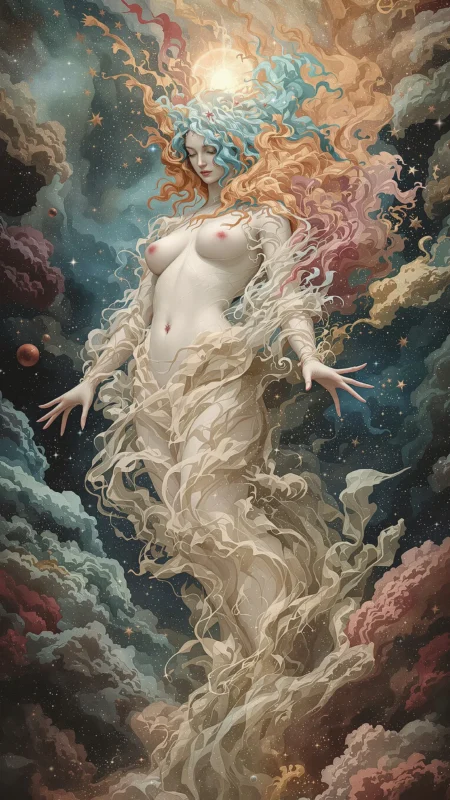


Disinheritance

Archetype Meaning & Symbolism

exiled, resourceful, independent, solitary, resilient, alienated, innovative, untethered, orphaned, self-made

  • The will I was left was silence. From that, I learned to compose my own music.

If Disinheritance is part of your personal mythology, you may...

Believe

  • I am the sole architect of my destiny, and my worth is measured by what I build, not by what I was given.

  • Legacy and tradition are often cages, and being cast out was a painful liberation.

  • Belonging is not a birthright to be assumed, but a conscious choice to be made and earned every day.

Fear

  • That the initial rejection was justified, and that there is a fundamental flaw in me that makes me unworthy of belonging.

  • That I will unconsciously replicate the pattern of exclusion, casting others out of my own life to protect myself from being hurt again.

  • That the world I have built for myself is a fragile artifice, and a single mistake could cause it all to vanish, leaving me with nothing once more.

Strength

  • A radical self-reliance that allows you to thrive in situations where others would falter, and an immunity to the pressures of authority and convention.

  • An immense capacity for empathy, especially for other outsiders, outcasts, and underdogs.

  • A powerful creative and innovative drive, born from the necessity of having to invent your own rules, systems, and solutions.

Weakness

  • A deep-seated difficulty with trust and intimacy, often creating emotional distance in relationships to preempt potential abandonment.

  • A chronic sense of alienation or 'otherness,' even when you are fully accepted and loved by a community.

  • A tendency to reject help and support, believing that to rely on anyone else is a sign of weakness and a step toward losing control.

The Symbolism & Meaning of Disinheritance

In personal mythology, Disinheritance is the story of the severed branch that, against all odds, learns to grow its own roots. It symbolizes the profound and often painful schism from a source: a family, a culture, a belief system, or a promised future. This is not the gentle departure of the fledging from the nest; it is the forceful expulsion, the locked gate, the rescinded invitation. The core of its meaning lies in the vacuum this act creates. Where once there was a defined identity, a set of expectations, and a clear lineage, there is now a stark and echoing emptiness. This void becomes the ultimate creative canvas, a space where one is forced, out of sheer necessity, to become a self-creator.

The archetype speaks to a modern condition of existential rootlessness. We may feel disinherited from a stable job market, from coherent political narratives, from the natural world, or from spiritual traditions that no longer resonate. To embody this archetype is to walk with the ghost of a legacy, to feel the phantom limb of a birthright that was meant to be yours. It is to understand that your identity is not an inheritance to be polished, but a structure to be built, brick by painful, deliberate brick, on unproven ground. The symbolism is one of both immense loss and radical potential: the loss of a given story and the potential to write a masterpiece.

Ultimately, Disinheritance is about the alchemy of rejection. It explores whether the bitterness of being cast out can be transformed into the fierce resolve of the self-made. It asks what happens when the foundation is removed: do you crumble, or do you learn to fly? For the individual whose mythos is shaped by this archetype, life may become a testament to the idea that the most profound sense of belonging is the one you build for yourself, not the one you are simply born into. It is the quiet, enduring power of the person who stands in a castle of their own making and knows its every stone.


Disinheritance Relationships With Other Archetypes

The Sovereign:

The relationship with The Sovereign is one of shadow and aspiration. The disinherited was often meant to have a place in the Sovereign's court, perhaps as the heir. The archetype of Disinheritance is born from the Sovereign's decree of exile. Consequently, the disinherited may spend their life trying to build a rival kingdom, one with different rules, to prove the old ruler wrong. Or, they may eventually embody The Sovereign archetype themselves, having learned from the ground up what it means to rule justly, their authority derived not from bloodline but from resilience and hard-won wisdom.

The Orphan:

Disinheritance is the mechanism that creates The Orphan. While the Orphan speaks to the initial state of abandonment and vulnerability, Disinheritance is the ongoing narrative that follows. The Orphan laments the lack of parents or protection; the disinherited grapples with the specific knowledge of what was lost, the memory of the home they can't return to. Their journey is not just to find a family, but to contend with the ghost of the family that rejected them, making their quest for belonging both more complex and more urgent.

The Pioneer:

Once cast out, the disinherited has little choice but to become The Pioneer. The old maps are useless, the old territories forbidden. They are pushed to the frontier of their own lives, forced to navigate uncharted psychological and social landscapes. While The Pioneer may choose the wilderness for the sake of discovery, the disinherited is thrust into it. This relationship is one of necessity breeding invention. The survival skills, the innovative thinking, and the relentless forward motion of The Pioneer are the tools the disinherited must adopt to build a new world in the empty space left by the old one.

Using Disinheritance in Every Day Life

Navigating Career Upheaval:

When a career path evaporates through a layoff or a company’s collapse, the Disinheritance archetype provides the narrative scaffolding for a pivot. Instead of seeing it as a failure to maintain a position, one may see it as being freed from a predetermined trajectory. This is the moment to build a new professional identity from scratch, perhaps launching a venture that is wholly one's own, beholden to no prior corporate culture or inherited set of expectations. The severance becomes the catalyst for true innovation.

Reconciling Family Estrangement:

For those cut off from a family of origin, whether by choice or by edict, this archetype reframes the pain. It moves the story from one of pure loss to one of potential. The energy once spent trying to fit into a role you were never meant to play can be redirected into creating a 'chosen family.' It’s about recognizing that the inheritance of blood is not the only legacy; one can consciously build a legacy of connection, support, and shared values with people who choose you back.

Leaving a High-Demand Group:

Exiting a restrictive religious or ideological community can feel like losing your entire world. The Disinheritance archetype offers a map for this wilderness. It acknowledges the profound loss of identity and community while celebrating the newfound sovereignty of thought and belief. It is the story of learning to trust one's own moral compass after years of relying on an external one, and discovering that the self, stripped of its inherited dogma, is more than enough.

Disinheritance is Known For

The Primal Wound

This is the initial act of severance: being written out of the will, cast out of the family, exiled from the tribe. It is the foundational event that severs the individual from their expected legacy and safety net.

Forging a New Path:

With no map to follow, the disinherited individual must become a cartographer of their own life. This is known for the creation of new values, new traditions, and new communities from the raw material of experience.

The Burden of Freedom:

While liberation is a key aspect, it is paired with the immense weight of total responsibility. Every success and every failure rests solely on one's own shoulders, a terrifying and exhilarating condition.

How Disinheritance Might Affect Your Personal Mythology

How Disinheritance Might Affect Your Mythos

When Disinheritance shapes your personal mythos, your life story is fundamentally a narrative of origin, not succession. You are not the next chapter in a long-running family saga; you are the first word of a new book entirely. This mythos is often structured around a dramatic inciting incident: the moment of exile, the discovery of being left out, the closing of a door. The rest of the story becomes a response to this initial wound. It is a tale of building a kingdom on barren land, of proving that one's worth is not tied to a name, a property, or a preordained role. The central theme becomes one of radical self-creation.

The narrative arc may not be about returning home to reclaim a birthright, as in many classical tales. Instead, the triumph might be in making the concept of that old home irrelevant. The climax of your mythos could be the moment you realize you no longer crave the approval of those who cast you out. Your story becomes a testament to resilience, a chronicle of forging identity in the crucible of rejection. It is the myth of the founder, the outcast-turned-creator, whose greatest legacy is the simple, powerful fact that they endured and built something new.

How Disinheritance Might Affect Your Sense of Self

The presence of Disinheritance may instill a sense of profound and paradoxical self-conception. On one hand, there can be a persistent, deep-seated feeling of being fundamentally ‘less than,’ a nagging voice that whispers you were cast out because you were unworthy. This can create a fragile ego, one that constantly seeks external validation to patch over the initial wound of rejection. The self is perceived as an island, adrift from the mainland of family, tradition, and inherited identity, leading to a state of perpetual, low-grade loneliness.

On the other hand, this same archetype could forge a self-concept of radical independence and adamantine strength. If you survived the ultimate rejection, what else is there to fear? The self is not seen as a product of its environment but as its own prime mover, a source of immense pride. Every achievement is magnified because it was accomplished without a safety net, without a head start. This creates a person who may trust their own judgment implicitly, having been forced to rely on it exclusively for survival. The self is a fortress, built by hand, and defended fiercely.

How Disinheritance Might Affect Your Beliefs About The World

A worldview colored by Disinheritance may be one of deep skepticism toward institutions, traditions, and inherited power structures. The world is not seen as a benevolent place offering succor and safety, but as a neutral, and sometimes hostile, territory that must be navigated with caution and self-reliance. Rules, social contracts, and hierarchies may seem arbitrary, having experienced firsthand their capacity for exclusion. There is a keen awareness that safety nets have holes, and promises can be rescinded.

This perspective could also foster a profound appreciation for merit and authenticity. If you cannot rely on a name or a legacy, then what a person does and who a person is become the only true measures of worth. This worldview champions the underdog, the self-made, and the authentic creator. It may lead to a life dedicated to building more inclusive systems or, conversely, a complete withdrawal from systems altogether, preferring to live by a personal code on the periphery. The world is a place where you get what you build, not what you are given.

How Disinheritance Might Affect Your Relationships

In the landscape of relationships, the disinherited may navigate with a constant, low-level fear of abandonment. The foundational experience of being cut off can make true intimacy a significant challenge. There might be a tendency to test the loyalty of partners and friends, subconsciously waiting for the other shoe to drop, for the moment they too will be cast out. This can lead to preemptive distancing or the construction of emotional walls that are difficult for others to scale. Trust is not a given; it is a precious and fragile commodity, earned over long periods and through significant trials.

Conversely, this archetype can also create an immense capacity for forming 'chosen families.' Having lost a family of origin, the individual may pour extraordinary energy into building deep, powerful, and intensely loyal bonds with friends and partners. These relationships become the new legacy. The disinherited individual may be the most loyal friend, the most committed partner, because they understand the profound value of belonging that is chosen, not assigned by birth. They don't take love for granted, because they know its absence all too well.

How Disinheritance Might Affect Your Role in Life

Your perceived role in life shifts from that of an heir to that of a founder. You are not here to maintain a legacy, uphold a family name, or follow a prescribed path. Your role, as you may see it, is to create a new one. This can feel both liberating and terrifyingly burdensome. You are the architect, the lawmaker, and the storyteller of your own lineage, which begins with you. This might manifest as a powerful entrepreneurial drive, a passion for artistic creation, or a commitment to building new kinds of communities.

This can also lead to a persistent feeling of being an outsider, an observer rather than a participant. Even within groups where you are accepted, you might feel as if you are watching from behind a pane of glass, studying the mechanics of belonging without ever feeling it viscerally. Your role becomes that of the commentator, the critic, the one who sees the system from the outside and can therefore analyze it with a clarity unavailable to insiders. You are not a cog in the machine; you may be the one who writes the manual for how to build a new one.

Dream Interpretation of Disinheritance

In a positive context, dreams featuring the Disinheritance archetype may not be about the act of exclusion itself, but about the freedom that follows. You might dream of a vast, empty landscape, but instead of feeling fear, you feel a sense of boundless potential, holding seeds in your hand. Dreams of building a house from scavenged materials, of finding a key to a door you've never seen before, or of sailing a small boat on an open ocean all speak to the creative and resilient aspects of this archetype. These dreams affirm that you have the tools to build a new world and that the wilderness is not a threat, but a canvas.

In a negative or cautionary context, these dreams tap into the core wound of rejection. Common dream scenarios could include arriving at a family dinner to find the door is locked, or watching a celebration from outside in the cold. You might dream of being given a will that is written in invisible ink or of falling with no net to catch you. These dreams often highlight unresolved grief and fear of abandonment. They may be signaling that the shadow of the past is preventing you from trusting your present relationships or from fully embracing the task of building your own sense of security and belonging.

How Disinheritance Archetype Might Affect Your Needs

How Disinheritance Might Affect Your Physiological Needs

The mythology of Disinheritance may tether your story to a heightened awareness of physiological needs. The foundational belief is that provision is not guaranteed; it must be secured by your own hand. This can create a deep-seated survivalist instinct, a part of your mythos where you are the sole hunter and gatherer for your own life. The narrative isn't one of abundance flowing from a benevolent source, but of cycles of feast and famine, where resources must be diligently acquired and fiercely protected. The body itself might be viewed as a primary tool for survival, something to be kept strong and ready.

This can manifest in complex behaviors. Your personal story might involve a period of intense scarcity that now informs a habit of hoarding resources: food, money, supplies. The cupboards are always full, just in case. Alternatively, it could lead to an extreme minimalism, a belief that owning little means having little to lose, making you mobile and unburdened. Your physiological story is one of radical self-sufficiency, a deep, cellular knowledge that to eat, to be warm, to be sheltered, is a victory you must win for yourself each day.

How Disinheritance Might Affect Your Ideas of Belonging

The archetype of Disinheritance strikes at the very heart of belongingness. Your mythos is defined by the loss of your primary place of belonging, making the search for it the defining epic of your life. This isn't a casual search for friendship; it is a profound, existential need to recreate a sense of tribe, of being a part of something larger than yourself. The story is not about finding your way back to the old tribe, but about the arduous and sacred task of building a new one.

This can shape you into a master of creating connection. You may be the person who organizes the gatherings, who remembers the birthdays, who initiates the traditions for your 'chosen family.' You don't take community for granted. However, the initial wound may leave a scar. Even when surrounded by love, a part of your narrative might always involve a feeling of being the 'guest,' the adopted member, never quite shaking the fear that this belonging, too, could be revoked. Your life story becomes a testament to the idea that family is not a matter of blood, but of fierce, intentional love.

How Disinheritance Might Affect Your Feelings of Safety

Within your personal mythos, the need for safety becomes a central quest. The act of disinheritance is the ultimate destruction of the safety net; the home, the tribe, the family that was supposed to catch you has been removed. Therefore, your narrative may be a chronicle of building a fortress. This fortress can be literal: a secure home, financial independence, a career that no one can take from you. It can also be metaphorical: a fortress of intellectual prowess, emotional detachment, or rigid personal routines that create a predictable and controllable world.

This constant pursuit of safety can mean that you perceive threats where others see none. The world in your story is fundamentally an unpredictable place. A stable job feels temporary, a secure relationship feels conditional. The central tension in your mythos may be the conflict between the deep need for a safe harbor and the core belief that no harbor is ever truly safe. This can make you exceptionally prepared and resilient, but it can also prevent you from ever truly relaxing, from laying down your arms and trusting that you are secure.

How Disinheritance Might Affect Your Views of Esteem

Esteem, in the mythos of the disinherited, cannot be borrowed or inherited; it must be forged in fire. With no family name, social standing, or legacy to lean on, your sense of self-worth is tied directly and relentlessly to your own accomplishments and character. Your story is that of the builder, and your esteem rises and falls with the strength of what you have built: your career, your relationships, your personal integrity. This can be a source of incredible strength, a deep, unshakable pride in being self-made.

However, this also creates a fragile foundation for esteem. It can lead to a relentless drive to prove your worth, a feeling that you must constantly justify your existence through achievement. There is no resting on laurels, because there are no laurels but the ones you earned this morning. The narrative may lack a sense of inherent worthiness; the feeling that you are valuable simply for being, not for doing. The core conflict in your story of esteem is learning to separate your value as a person from the ever-shifting fortunes of your self-made kingdom.

Shadow of Disinheritance

When the Disinheritance archetype falls into shadow, it transforms from a story of resilience into a narrative of bitter resentment. The shadow figure is consumed by what was lost, unable to move beyond the primal wound. This individual may define their entire existence in opposition to the power that cast them out, becoming a saboteur who seeks to tear down the legacies of others. They do not build a new kingdom; they dedicate their lives to salting the earth of the old one. Their freedom becomes a new kind of prison, a cell of cynicism and perpetual grievance, where every success of others is perceived as a personal insult.

Another facet of the shadow is the disinherited who becomes a tyrant in their own right. Having built a world from scratch, they may become pathologically controlling of it, terrified of losing what they so painfully created. They might enforce rigid loyalty tests on their 'chosen family,' recreating the very dynamic of conditional belonging that wounded them. In their fear of being cast out again, they become the one who exiles anyone who threatens their absolute authority. The self-made sovereign becomes the paranoid king, and the cycle of disinheritance begins anew, with them now holding the keys to the gate.

Pros & Cons of Disinheritance in Your Mythology

Pros

  • You are free from the burdens of ancestral expectations, allowing you to define success and happiness on your own terms.

  • You develop profound resilience and resourcefulness, equipping you to handle life's uncertainties with a competence others may lack.

  • Your unique, outsider perspective allows you to see possibilities and flaws that are invisible to those embedded within a system.

Cons

  • You may carry a foundational wound of rejection that can manifest as lifelong trust issues and a persistent feeling of loneliness.

  • The constant pressure of total self-reliance can be exhausting, leading to burnout and an inability to accept needed help.

  • You may lack a sense of rootedness or history, which can create a feeling of being untethered and existentially adrift.