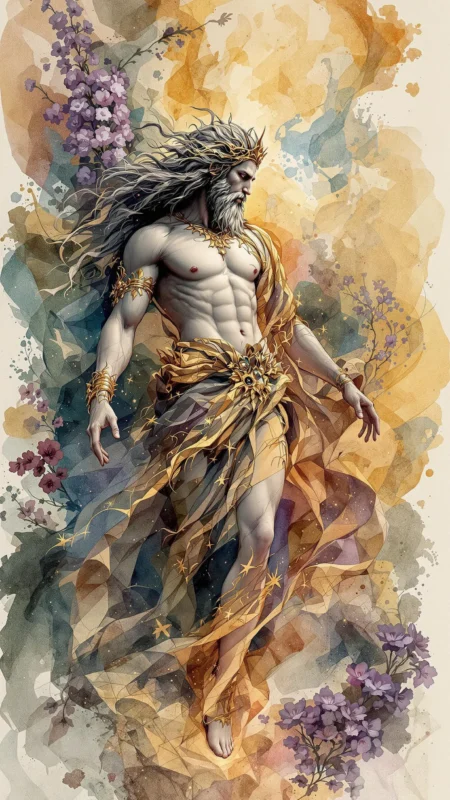
Dionysus

Archetype Meaning & Symbolism

ecstatic, chaotic, liberating, fertile, frenzied, androgynous, disruptive, creative, intoxicating, primal

  • The straight path is a clever lie. Dance in the crooked, the wild, the unexpected: that is where the god lives.

If Dionysus is part of your personal mythology, you may...

Believe

  • That chaos is not the enemy of order, but its necessary partner, the fertile ground from which all new life springs.
  • That true liberation is found not in transcending the body and its passions, but in fully inhabiting them with sacred intention.
  • That your identity is not a thing to be found, but a performance to be endlessly, joyfully, and creatively enacted.

Fear

  • A deep, visceral fear of stagnation: that life could become predictable, sterile, and devoid of passion or surprise.
  • A terror of being trapped by social conventions, the expectations of others, or a single, fixed identity that suffocates the soul.
  • A latent fear of losing control completely, of being permanently consumed by the frenzy and never finding the way back to stable ground.

Strength

  • An immense capacity for creativity, spontaneity, and discovering novel solutions by dismantling established structures and thinking in non-linear ways.
  • A profound ability to connect with others on an authentic, emotional level, fostering relationships of unusual depth and transformative power.
  • A remarkable resilience in the face of change and crisis, viewing upheaval not as a disaster but as a sacred opportunity for shedding an old skin and being reborn.

Weakness

  • A tendency towards excess, self-indulgence, and escapism, where the pursuit of ecstatic experience can curdle into self-destructive behavior or addiction.
  • Difficulty with commitment, routine, and the mundane but necessary tasks of daily life, which can lead to instability and a lack of grounding.
  • A potential to overwhelm, disrupt, or be perceived as unreliable by those who value stability and predictability, leading to relational conflict or alienation.

The Symbolism & Meaning of Dionysus

In the modern psyche, Dionysus may represent the vital, untamable life force that resists categorization. He is the patron saint of the outsider, the artist, the queer, the ecstatic, and anyone who feels their true self exists on the margins of the neatly manicured lawn of social acceptability. To find Dionysus in your personal mythology is to honor the part of you that must dance, create, and sometimes, shatter the structures that confine it. He is not a god of being, but of becoming: a perpetual process of dissolution and rebirth, where identity is not a fixed point but a fluid, dynamic performance. He is the sacred permission to be gloriously, divinely incomplete.

The archetype speaks to the necessity of creative chaos. Where his celestial foil, Apollo, represents form, order, and rational clarity, Dionysus brings the raw, undifferentiated energy from which all new forms arise. For the artist, the entrepreneur, or the thinker, this Dionysian impulse is the moment of the messy first draft, the wild brainstorming session, the deconstruction of an old paradigm before a new one can be built. He reminds us that true innovation requires a kind of 'sparagmos,' a ritual tearing-apart of what is known and comfortable, a necessary descent into confusion before a more profound and integrated clarity can emerge.

Dionysus is also a god of radical authenticity, but in a paradoxical way. He is the god of masks, yet his purpose is to reveal, not conceal. In our world of curated online personas and professional veneers, the Dionysian mythos suggests that we can only touch our true selves by trying on other faces. By playing a role, we discover the limits of our own ego. By embracing the mask of the dancer, the fool, or the lover, we find aspects of our own soul we never knew existed. The ultimate goal is not to find one true self, but to become comfortable in the dance of many selves, recognizing the divine spark in all of them.


Dionysus Relationships With Other Archetypes

The Apollonian

The relationship between Dionysus and the Apollonian is not one of simple opposition, but perhaps the tense, necessary harmony of a lyre string, which only sings because it is pulled in two directions. Apollo may build the temple of reason with sun-bleached marble and perfect, rational lines, but Dionysus is the earthquake that reminds us the ground is alive, the wild ivy that cracks the foundation. They are the twin faces on a single, ancient coin, each giving the other its meaning and its edge. One could argue that the clearest, most sunlit consciousness is haunted by the shadow of its opposite, and the most ecstatic abandon is shaped, however subtly, by the memory of form. The Apollonian gives the Dionysian frenzy a vessel to overflow, and Dionysus gives the Apollonian order a glimpse into the sublime, generative chaos from which it was wrested.

The Mask

The Mask is not a shield for Dionysus, but a doorway. It is the ritual object that sanctions the dissolution of the self, the sacred portal through which the ordinary accountant or bureaucrat may be bled out, leaving a vessel ready to be filled by the god. This relationship is one of profound, almost alchemical, transformation. By hiding the known face, the mask paradoxically reveals a deeper, more primal truth, untethering its wearer from the sober ledger of their own identity. It could be seen as the ultimate instrument of liberation, a tool that allows one to borrow the face of a satyr, a ghost, or a king, and in doing so, to understand that the face we wear each day is also a kind of mask, albeit a more rigid and less forgiving one. The Mask offers a temporary, ecstatic death of the ego, which is the central promise of the Dionysian experience.

The Wilderness

Dionysus does not simply walk in the Wilderness; he may well be its consciousness, its animating and intoxicating breath. This is not a relationship of a figure to its landscape, but of a spirit to its own body. The tangled roots that trip the unwary traveler, the disorienting shadows of the deep woods at dusk, the scent of fermenting fruit on the damp earth—these are all articulations of the Dionysian. The Wilderness is the cathedral where his rites are most purely observed, a place beyond the grid of the city and the logic of the cultivated field. It serves as a constant, breathing reminder of the primal chaos from which all human order is borrowed, a beautiful, terrifying debt that the Dionysian spirit periodically arrives to collect in a flurry of dance and dissolution.

Using Dionysus in Every Day Life

Navigating Creative Blocks

When the well of inspiration runs dry and the page remains stubbornly blank, the Dionysian archetype suggests the cure is not more discipline but less. It invites you to abandon the goal, to engage in a period of sacred play. This might mean dancing wildly in your studio, taking an unplanned trip, or following a chain of absurd, non-linear thoughts. The breakthrough comes not from forcing the lock but from dissolving the door itself, allowing the chaotic, fertile energy of the unconscious to flood the barren ground.

Overcoming Social Rigidity

In social situations that feel stiff with unspoken rules and performative identities, channeling a Dionysian spirit can be a quiet act of liberation. It is not about becoming the loudest person in the room, but about granting yourself permission to be authentic. It may manifest as sharing a vulnerable, unpolished thought, laughing with uninhibited joy, or simply listening with a deep, present empathy that cuts through pretense. It is the practice of finding connection not through shared masks, but through the shared humanity underneath.

Healing from Burnout

For the soul depleted by the relentless demands of modern productivity, Dionysus offers a remedy that is not mere rest but ecstatic renewal. Burnout is a symptom of a life starved of joy and spontaneity. The Dionysian cure is to schedule not another meeting, but a moment of release: a concert, a feast with friends, a walk in a storm. It is the intentional pursuit of experiences that serve no productive purpose other than to remind the body and spirit of what it feels like to be fully, thrillingly alive.

Dionysus is Known For

Ecstatic Ritual

The god is known for the wild, frenzied rites of his followers, the Maenads, who would abandon societal constraints for a rapturous, and sometimes violent, communion with the divine in nature.

The Theater

As the patron of Greek theater, Dionysus represents transformation, the power of the mask to reveal a deeper truth, and the communal catharsis found in dramatic performance.

Wine and Intoxication

Dionysus gave humanity the gift of wine, a substance that loosens inhibitions, alters consciousness, and provides a direct, tangible gateway to a state of ecstatic release and divine madness.

How Dionysus Might Affect Your Personal Mythology

How Dionysus Might Affect Your Mythos

When Dionysus enters your personal mythos, the narrative structure of your life may shift dramatically. The traditional hero’s journey, with its linear progression of challenges and triumphs toward a singular goal, may dissolve. In its place, your life story might resemble a spiral dance, a series of cyclical deaths and rebirths. The plot is punctuated not by external achievements, but by moments of profound internal transformation. The chapters of your life might be titled not by career moves or relationship statuses, but by the masks you wore and shed: 'The Time of Wild Wandering,' 'The Season of Quiet Observation,' 'The Era of the Joyful Fool.'

Furthermore, crisis and breakdown are recast within this mythos. They are no longer narrative dead ends or tragic flaws, but sacred initiations. The loss of a job, the end of a relationship, a period of deep depression: these are not failures but the god arriving to tear apart a reality that has become too small. This is the 'sparagmos' of the personal myth. Your story becomes one that finds wisdom in dissolution, meaning in madness, and rebirth in the wreckage. You are the protagonist who walks into the fire of chaos and emerges not unscathed, but more fully, vibrantly alive.

How Dionysus Might Affect Your Sense of Self

To carry the Dionysian archetype is to see the self not as a solid, stable fortress, but as a flowing river. Your identity is not a noun but a verb: a constant process of becoming, shifting, and transforming. This view can be profoundly liberating. It frees you from the pressure of having it all 'figured out.' You may see your personality, your desires, and your beliefs as a collection of masks or costumes, each to be worn with commitment and joy for a time, and then gracefully set aside when it no longer serves the dance. Self-knowledge is not a destination, but a continuous, creative exploration.

Consequently, you may develop a deep tolerance, even a love, for the so-called 'irrational' aspects of your being. The sudden surges of emotion, the contradictory impulses, the wild and untamable thoughts are not seen as problems to be solved or pathologies to be medicated. Instead, they are recognized as vital transmissions from the primal self, sources of immense energy, creativity, and insight. You learn to trust the wisdom of the body, the gut feeling, the ecstatic impulse, viewing these as communications from the god within just as valid, if not more so, than the careful deliberations of the rational mind.

How Dionysus Might Affect Your Beliefs About The World

A Dionysian worldview perceives reality not as a predictable machine governed by immutable laws, but as a living, breathing, and often chaotic organism. There is a deep and abiding appreciation for mystery, paradox, and ambiguity. Logic and reason are useful tools, but they are not the only, or even the primary, ways of knowing. This perspective finds beauty in the overgrown garden, not just the manicured one, and sees the storm as just as divine as the sunny day. Order is understood to be a temporary, fragile state that is constantly being challenged and renewed by the forces of chaos.

This worldview actively dismantles rigid binaries. The clean lines that society draws between sacred and profane, sane and insane, masculine and feminine, civilized and wild, are seen as artificial constructs. The Dionysian eye perceives the divine in the gutter and the profane in the temple. It understands that wisdom can sound like madness, that strength can be found in surrender, and that the most profound truths are often spoken in jest. The world is a place of constant, messy, glorious intermingling, where everything is connected in a vast, ecstatic dance of creation and destruction.

How Dionysus Might Affect Your Relationships

In the realm of relationships, a Dionysian influence may prioritize intensity, authenticity, and transformative potential over stability and predictability. You may find yourself drawn to connections that challenge your worldview, disrupt your comfort zones, and catalyze personal growth. The ideal relationship is not a peaceful harbor, but a shared vessel for navigating the wild seas of experience. Connection is forged in the crucible of shared vulnerability, ecstatic joy, and the mutual courage to witness and embrace each other's full, unedited selves, shadows and all.

This can redefine the very nature of love and commitment. The goal may not be a seamless fusion into a single unit, but a dynamic dance between two whole, sovereign individuals who choose to revel together. The concept of a singular 'soul mate' might be less compelling than the idea of a 'thiasus,' a sacred band of fellow travelers and ecstatic companions. Love is an event, an art form, a happening. It is less about building a fortress against the world and more about opening the gates and inviting the world in to celebrate.

How Dionysus Might Affect Your Role in Life

If Dionysus is a part of your story, you might resist being cast in a single, static role for life. The archetypes of 'the stable provider,' 'the dutiful child,' or 'the corporate professional' may feel like ill-fitting costumes. Instead, you may perceive your role in the world as that of a shapeshifter, a catalyst, or a sacred fool. You are the artist when creativity is needed, the trickster when systems become too rigid, the healer when emotional release is required. Your function is not to fit into the machine, but to be the ghost in it, reminding it of its humanity.

Your primary contribution to your family, community, or workplace might be as a liberator. You may be the person who instinctively questions assumptions, challenges unspoken rules, and creates space for more authentic expression. Your role is to uncork the bottle, to start the music, to remind people of the joy they’ve forgotten. This can be a disruptive, and not always welcome, function. Yet, it is a vital one: to be an agent of change, a purveyor of necessary chaos, and an inviter to the dance of a more vibrant life.

Dream Interpretation of Dionysus

In a positive context, a dream of Dionysus—perhaps manifesting as a wild, joyful feast, uninhibited dancing, the taste of rich wine, or encounters with leopards and goats—can be a powerful summons from the deep psyche. It may signal a profound need to break free from excessive control, rigidity, or emotional repression in your waking life. The dream is an invitation to embrace spontaneity, reconnect with your body’s wisdom, and allow for a period of fertile chaos. It suggests that a part of your soul is starved for joy, and that liberation and creative renewal await if you are brave enough to answer the call.

Conversely, a Dionysian dream can take a darker turn. If the dream features a terrifying mob, a loss of self in a frenzied crowd, intoxication that leads to danger, or being hunted by wild animals, it may serve as a potent warning. This could indicate that the archetype's energy is operating in its shadow aspect in your life. It might point to a slide into self-destructive hedonism, a dangerous loss of boundaries, or being consumed by a group's chaotic energy. The dream is a message from the unconscious to seek balance and ground yourself, to build a safer container for these powerful energies before they become destructive.

How Dionysus Archetype Might Affect Your Needs

How Dionysus Might Affect Your Physiological Needs

From a Dionysian mythological perspective, the body's physiological needs are not mere maintenance requirements but gateways to sacred experience. Food is not just fuel; it is the substance of the feast, a communion with the earth and with others. Drink, especially wine, is not just for hydration; it is a medium for altered consciousness and social bonding. Sleep is not just downtime for the brain; it is a descent into the rich, chaotic, and revelatory world of dreams. The body itself is the primary instrument for experiencing the divine, and its needs are calls to engage deeply with the material world.

This mythos could encourage a cyclical, intuitive approach to the body's rhythms rather than a rigid, disciplined one. There may be periods of feasting followed by periods of fasting, times of intense physical exertion and dancing followed by deep rest and stillness. There is a deep listening to what the body craves: not just nutrients, but movement, touch, release, and sensation. Physiological needs are interpreted as the body’s own form of speech, a primal wisdom that, when heeded, keeps one grounded in the ecstatic, messy, beautiful reality of being alive.

How Dionysus Might Affect Your Ideas of Belonging

The need for belonging, when viewed through a Dionysian lens, is not satisfied by mere conformity or acceptance into a mainstream group. Belonging is not about fitting in; it is about being witnessed and celebrated in your most authentic, untamed state. A person with this mythos may feel profoundly alienated by groups that demand adherence to strict social norms. True belonging is found in a 'communion of outsiders,' a chosen family or tribe where individuality is the ticket of entry, not a barrier to it. Love and connection are forged not in shared opinions, but in shared vulnerability and ecstatic experience.

This quest for belonging may lead one to the fringes of society: to artistic communes, subcultures, spiritual circles, or any gathering where emotional intensity and radical self-expression are the norm. The feeling of being 'home' is achieved in the midst of a dance floor at 3 a.m., in the heated passion of a creative collaboration, or in the deep, vulnerable intimacy of a conversation that lasts all night. It is a belonging earned not by erasing one's edges, but by courageously sharing them.

How Dionysus Might Affect Your Feelings of Safety

Safety, in a personal mythology shaped by Dionysus, may not be found in predictability, stability, or the accumulation of resources. In fact, an obsession with such Apollonian forms of security could be viewed as a kind of soul-death, a sterile prison. Paradoxically, true safety might be located in one’s capacity to embrace uncertainty and adapt to chaos. Security is not a high wall, but the skill and grace to dance in the earthquake. It is the resilience that comes from having faced dissolution and survived, knowing that you can be torn apart and reborn.

This does not imply a reckless disregard for all safety. Rather, the need for safety is transmuted into the need for a 'safe container' for intense experiences. Instead of a safe house, one might seek a safe circle of friends, a 'thiasus,' where the wildest parts of the self can be expressed without fear of judgment or abandonment. Safety might be found in an artistic practice, a therapeutic relationship, or a ritual space—a defined time and place where one can consciously engage with the chaotic, ecstatic, and sometimes dangerous energies of the archetype, and then return to the ordinary world, integrated and renewed.

How Dionysus Might Affect Your Views of Esteem

Esteem, for one whose mythos includes Dionysus, is rarely derived from the standard metrics of success: status, wealth, or public accolades. Such external validation may feel hollow. Instead, self-worth is cultivated from within, rooted in the courage to live an authentic, unconventional life. Esteem comes from the act of creation, from the process of turning one’s life into a unique work of art, regardless of whether it is ever understood or applauded by the outside world. It is the quiet, fierce pride of the survivor of chaos, the creator of beauty, the dancer in the storm.

This can also mean that esteem is a fluid, dynamic force, not a static reservoir. It ebbs and flows with the tides of creative energy and emotional experience. One might feel a surge of self-worth after a night of profound connection or the completion of a passionate project, and feel it recede during periods of quiet fallowness. The ultimate source of esteem is not in being 'good' or 'successful,' but in being fully present and alive. It is the self-respect that comes from having the courage to embrace the totality of one’s being, both the ecstatic peaks and the shadowy valleys.

Shadow of Dionysus

When the Dionysian archetype operates in shadow, its life-affirming ecstasy sours into pure, mindless destruction. This is the god in his aspect as 'The Loosener' untethered from any sacred purpose. The liberating glass of wine becomes the bottle that fuels addiction. The joyful dissolution of ego in a crowd becomes the terrifying, violent anonymity of a mob. The creative chaos that births new art becomes a trail of broken relationships and abandoned responsibilities. In its shadow, the pursuit of freedom becomes a desperate flight from the self, a hedonistic rampage that consumes everything in its path, leaving only wreckage and regret.

The shadow also manifests in its polar opposite: total repression. When the Dionysian is ruthlessly denied, life becomes a sterile, brittle, and joyless prison of pure order. This creates immense psychic pressure that inevitably leads to a violent eruption. This is the shadow that produces the scandal of the uptight puritan, the sudden, shocking public breakdown of the meticulously controlled executive, or the inexplicable act of rebellion from the 'perfect' child. The tragedy here is not the final frenzy, but the arid, lifeless existence that made such a destructive explosion the only possible path to release.

Pros & Cons of Dionysus in Your Mythology

Pros

  • A life uncommonly rich with passion, creativity, and intense, memorable experiences that create a powerful personal narrative.
  • A deep sense of personal freedom and authenticity, derived from living in alignment with one's own truth rather than external expectations.
  • The ability to foster vibrant, deeply connected communities and inspire others to shed their inhibitions and live more fully.

Cons

  • A potential for profound instability in career, finances, and relationships due to a natural resistance to structure, routine, and long-term planning.
  • A significant risk of burnout, addiction, or self-destructive behavior stemming from a relentless pursuit of intensity and a difficulty with moderation.
  • The possibility of being perpetually misunderstood, judged, or alienated by a world that largely operates on and rewards Apollonian principles of order, reason, and control.