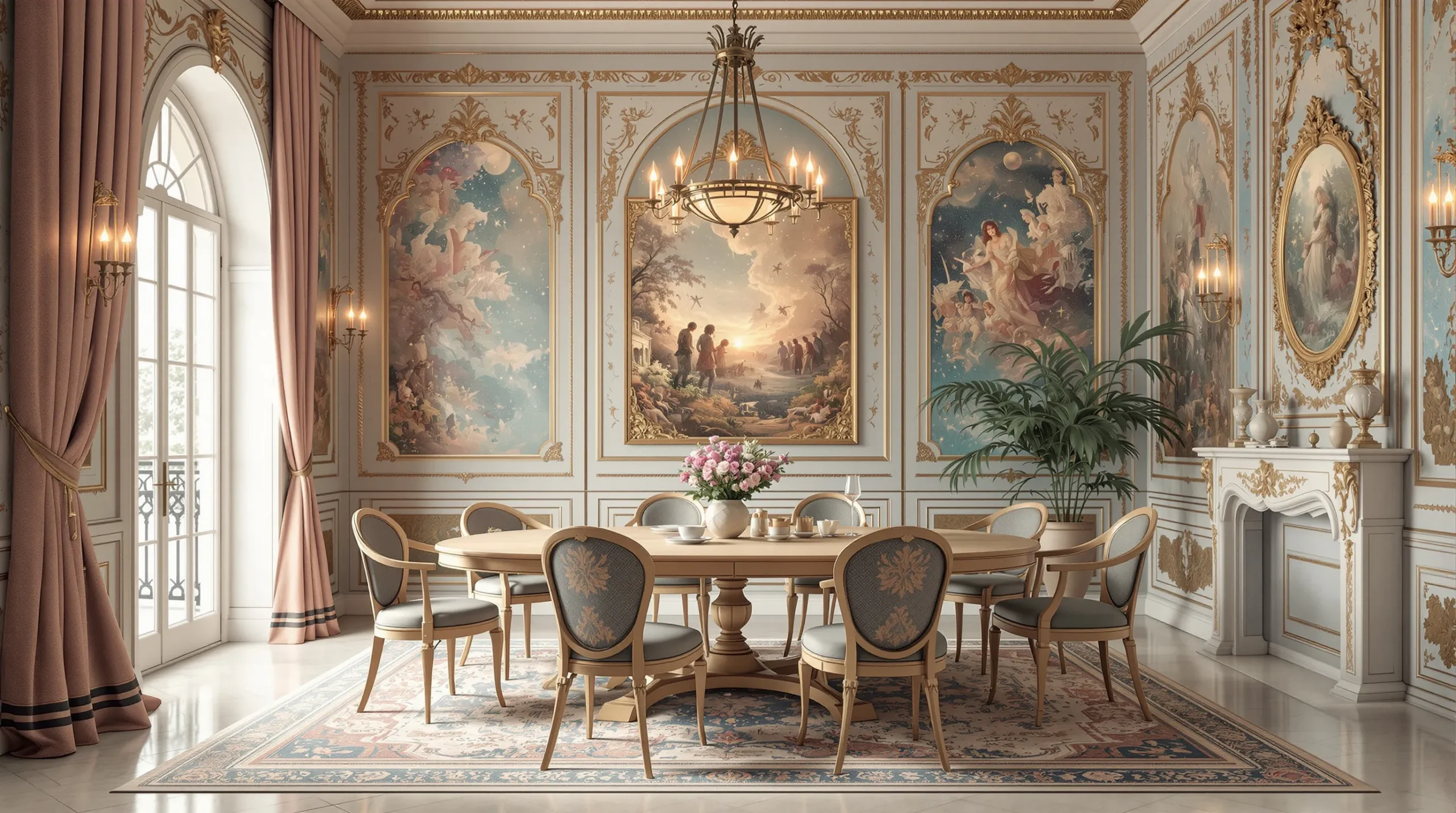


Dining Room

Archetype Meaning & Symbolism

Communal, structured, performative, traditional, tense, celebratory, obligatory, revealing, formal, nourishing

  • Come, sit. The truth is always served here, whether it is on the menu or not.

If Dining Room is part of your personal mythology, you may...

Believe

  • The way a person behaves at the dinner table reveals their true character.
  • A shared meal is the highest form of communion, capable of healing rifts and building lasting bonds.
  • Tradition and civility are the essential structures that hold a family, and society, together.

Fear

  • Having no one to share a meal with, or being uninvited from the gathering.
  • The eruption of open, messy conflict that shatters the polite facade.
  • That you will be judged and found wanting by the other members at the table.

Strength

  • An innate ability to create spaces of community and facilitate connection through hospitality.
  • A deep appreciation for ritual and structure as stabilizing forces in life and relationships.
  • Grace under pressure, especially in formal social situations where unspoken rules govern interactions.

Weakness

  • A tendency to prioritize form and appearance over authentic emotional connection.
  • An over-reliance on structure that can stifle spontaneity and lead to rigidity.
  • A profound discomfort with chaos and unresolved conflict, often leading to avoidance.

The Symbolism & Meaning of Dining Room

In personal mythology, the Dining Room is the formal stage upon which the private drama of the family is enacted. It is less about the food consumed and more about the truths, lies, and power dynamics that are ritually ingested. This is the realm of structured communion, where relationships are given a physical form: a seating chart of hierarchy and affection. The table itself might be a map of your personal history, with every scratch and water stain a record of a past battle, a forgotten celebration, or a tense silence. The light from the chandelier, perhaps, does not illuminate so much as it exposes, catching the subtle flicker of resentment in a glance or the forced curve of a smile.

The archetype speaks to a fundamental human need to create order out of the chaos of relational life. It provides a container, a predictable rhythm in the form of meals and gatherings, where the performance of 'family' or 'community' can take place. Your mythos might be defined by the role you played in this theater: the jester who diffused tension, the diplomat who brokered peace between warring factions, or the ghost who was present physically but absent emotionally. The Dining Room could be your personal Camelot's Round Table, a place of noble council, or it could be the scene of a long, cold war, where the clinking of silverware is the only sound that punctuates the silence.

Ultimately, the Dining Room represents a crucible of identity. It is where we may have first learned our culture's scripts about civility, obligation, and decorum. It is where we may have practiced wearing our public masks, learning to swallow our true feelings along with our meal. For some, its memory is a warm hearth, a symbol of unconditional belonging and sustenance. For others, it is a cold, polished surface reflecting a distorted version of themselves, a self they have spent their entire lives trying to escape or redefine. Your relationship with this space dictates your mythology of community: whether it is something to be sought, built, or dismantled.


Dining Room Relationships With Other Archetypes

The Kitchen

The Kitchen is the chaotic, steaming heart of the home, a place of alchemy and raw ingredients. The Dining Room is its curated and formal counterpart, the front-of-house to the Kitchen's backstage. The Kitchen may represent the messy, authentic emotions and the hard work of providing, while the Dining Room is the composed presentation of those efforts. A person with a strong Kitchen archetype might feel stifled by the Dining Room's formality, while one dominated by the Dining Room might be deeply uncomfortable with the Kitchen's uncontrolled, creative energy. Their relationship in one's mythos speaks to the balance between authentic, private creation and curated, public performance.

The Sovereign

The Sovereign archetype finds its natural throne at the head of the table. The Dining Room is often the Sovereign's court, the space where their authority is made manifest and their decrees on family matters are issued. The seating arrangement is a direct reflection of their power, with those in favor seated closer, and those on the periphery literally pushed to the margins. A healthy Sovereign uses the table to foster unity and ensure all are fed, both literally and emotionally. A shadow Sovereign, however, may use the Dining Room as a tool of control, where loyalty is tested and dissent is punished through pointed silence or public admonishment.

The Wilds

The Wilds represents everything the Dining Room is not: untamed, unpredictable, and free from social constructs. The Dining Room is a bastion of civilization built to keep the chaos of The Wilds at bay. Its four walls and rigid etiquette are a defense against nature, both external and internal. Someone whose mythos is rooted in the Dining Room may view The Wilds as a terrifying, savage place. Conversely, a soul aligned with The Wilds might see the Dining Room as a cage, a place of artificiality and repression. The tension between these two archetypes could define a central conflict in one's life story: the call to civilization versus the longing for freedom.

Using Dining Room in Every Day Life

Mediating a Found Family Dispute

When your chosen family faces a schism, invoking the Dining Room archetype means creating a specific, neutral space for the conversation. It is not a casual talk in a living room but a designated council. You might set a table, not with food, but with the intention of formalizing the discussion, giving each person an equal seat and a chance to speak without interruption, mirroring the structured civility the archetype provides.

Reclaiming Personal History

If your memories of family dinners are fraught with tension, the archetype can be used for healing. You may consciously create new rituals in your own dining space. This could involve hosting dinners with new rules: only affirmations are allowed, or each guest shares a story of gratitude. This act reclaims the space, overwriting the old, painful script with a new mythology of chosen connection and intentional nourishment.

Making a Major Life Decision

When facing a crossroads, you might use the Dining Room as a mental construct. You could visualize a table and invite archetypal advisors to have a seat: your Inner Critic, your Sage, your Child Self. You then host a formal, internal meeting, allowing each part of you to voice its perspective, giving weight and structure to your internal chaos and allowing a clear decision to emerge from the council.

Dining Room is Known For

The Ceremonial Meal

This is the central performance, the holiday gathering or Sunday dinner where family roles are enacted and the tribe's narrative is reinforced. It is a theater of belonging, where the food is secondary to the unspoken dynamics being served.

The Unspoken Rules:

The Dining Room is governed by invisible laws: who sits where, which topics are forbidden, how much one is allowed to reveal. Mastery of these rules is key to navigating the family power structure.

The Empty Chair:

A potent symbol of what is missing. It may represent a loved one lost, a member who has been exiled, or a future yet to be filled. Its presence is a quiet but powerful testament to the stories of absence that define a family as much as stories of presence.

How Dining Room Might Affect Your Personal Mythology

How Dining Room Might Affect Your Mythos

If the Dining Room is a central archetype in your life, your personal mythos may be structured like a multi-act play set in a single location. Major life events are not quests across vast landscapes but pivotal dinner scenes where secrets are revealed, alliances are forged, and destinies are altered by a single, loaded phrase passed across the table. Your origin story might be the story of a specific holiday meal that defined your family forever. Your great betrayal might not be a sword in the back, but a bitter toast or an empty chair. The recurring characters in your story are the archetypal figures around that table: the Matriarch, the Rebel, the Peacemaker, the Silent Witness.

The narrative arc of your life could be a journey to either escape that room or to finally set the table in a way that feels true. Your quest may be to find the words you never could say at that childhood table, or to recreate its warmth and security with a chosen family. The ghosts that haunt you are the ghosts of dinners past, the unspoken resentments that linger in the air long after the plates are cleared. Your mythology is one of inheritance, tradition, and the quiet, intense drama of what it means to belong to a tribe.

How Dining Room Might Affect Your Sense of Self

Your sense of self may be deeply entwined with the role you were assigned, or chose, at the dining table. You might see yourself fundamentally as a host, someone whose purpose is to gather others, to smooth over conflict, and to ensure everyone is nourished. Your identity could be that of the perpetual guest, always slightly on the outside, observing the dynamics with a polite detachment. Perhaps you are the dissident, the one who challenges the unspoken rules and speaks uncomfortable truths, defining yourself in opposition to the established order. This role becomes a kind of internal architecture, shaping how you see your worth and capabilities long after you have left that specific room.

This archetype can lead to a self that is highly attuned to social nuance and the subtle currents of group dynamics. You may possess a profound grace and an intuitive understanding of etiquette, not as a set of rigid rules, but as a language for showing respect and creating psychological safety. Conversely, you might carry a deep-seated fear of judgment, feeling that your every action is being scrutinized for its adherence to an invisible code of conduct. The self, in this context, is a performance, and the core wound may be a feeling that your true, unadorned self is not welcome at the table.

How Dining Room Might Affect Your Beliefs About The World

With the Dining Room as a foundational archetype, you might perceive the world as a highly structured social affair governed by invisible rules of engagement. Society is a grand banquet, and success depends on knowing which fork to use, when to speak, and how to navigate conversations with those seated next to you. You may believe that civility, order, and tradition are the essential pillars that prevent society from descending into chaos. Politics, business, and social interactions are all seen through this lens: a series of negotiations and performances where presentation is paramount. You might have an innate respect for hierarchy and institutions, seeing them as the necessary containers for human interaction.

This worldview could also foster a deep cynicism. You may see the polite veneer of society as just that: a thin, polished surface covering a tangle of hidden agendas, ancient resentments, and brutal power plays. You might believe that what is said is rarely what is meant, and that the real conversations happen in whispers after the guests have gone. The world, then, is not a place of authentic connection but of strategic positioning. Your philosophy may be one of careful observation, of understanding that the most important dynamics are the ones that are never openly acknowledged.

How Dining Room Might Affect Your Relationships

Relationships may be understood through the metaphor of a dinner party. You might categorize people based on who you would invite to an intimate meal versus a large, formal gathering. The process of deepening a connection could be seen as moving someone from the metaphorical 'kids' table' to the main table, a place of more significant trust and conversation. Intimacy, for you, might not be about chaotic passion but about the quiet, sustained comfort of sharing countless meals together, of knowing someone's preferences without asking. You may place a high value on hospitality and the rituals of connection, believing that breaking bread together is a sacred act of building community.

However, this archetype could also incline you towards relationships that are more performative than authentic. You might prioritize a partner who 'looks good on paper' or who plays their social role flawlessly, over one who offers a deeper, if messier, connection. Conflict in relationships may be particularly terrifying, as it threatens to 'make a scene' and disrupt the carefully constructed harmony of the 'meal.' You might struggle with raw, spontaneous expressions of emotion, preferring to let resentments simmer beneath a surface of polite conversation, which can lead to a profound sense of loneliness even when surrounded by others.

How Dining Room Might Affect Your Role in Life

Your perceived role in life might be defined by your position relative to the table. You could feel a deep calling to be the Provider, the one who is responsible for bringing the feast to the table, ensuring the security and sustenance of your clan. This role is not just about material provision, but emotional and spiritual nourishment as well. Alternatively, you might see your role as the Storyteller or Historian, the keeper of the family lore that is passed down during these gatherings, the one who reminds everyone of who they are and where they came from. Your purpose is to maintain the narrative thread that binds the group together.

Conversely, you may see your role as the Server or the Cleaner, the one who facilitates the experience for others but rarely gets to sit and enjoy the meal. This can manifest as a life pattern of putting others' needs before your own, of managing the emotional messes of your family or community, and feeling that your own nourishment is a secondary concern. Or perhaps you are the designated Guest, a role that involves being charming, appreciative, and unobtrusive, but can lead to a sense of not truly belonging anywhere, of always being a visitor in the lives of others without a table of your own to preside over.

Dream Interpretation of Dining Room

In a positive context, dreaming of a Dining Room can symbolize a deep sense of connection, harmony, and belonging. A dream featuring a bountiful table filled with light, laughter, and loved ones may suggest that you are feeling nourished in your waking life, both physically and emotionally. It can point to a period of successful integration, where different parts of your psyche or different factions in your life are coming together in a harmonious council. If you are serving a meal, it might represent a newfound confidence in your ability to provide for yourself and others. Being welcomed as a guest could signify an acceptance into a new community or a new phase of self-acceptance.

In a negative context, the Dining Room in a dream can be a place of profound anxiety and alienation. Dreaming of an empty table, a room with decaying food, or a silent, tense meal could reflect feelings of emotional starvation, unresolved family conflict, or deep-seated loneliness. Being unable to find your seat, or having your chair pulled away, might speak to fears of exclusion or a fragile sense of belonging. An argument erupting at the dream table often represents an internal conflict or a repressed confrontation in your relationships that is demanding your attention. The food itself being inedible or poisonous could symbolize toxic ideas or relationships you are being forced to 'swallow' in your waking life.

How Dining Room Archetype Might Affect Your Needs

How Dining Room Might Affect Your Physiological Needs

The Dining Room archetype connects the physiological need for food directly to the psychological need for order and ritual. For you, nourishment might not be a simple act of consumption but a structured, almost sacred event. You may feel that food tastes better, that it nourishes more deeply, when consumed in a specific setting, at a specific time, with the proper decorum. This can lead to a mindful and appreciative approach to eating, where the ceremony of the meal is as important as the food itself. The body's rhythms may align with this structure, anticipating the regularity of shared meals as a cornerstone of daily well-being.

Conversely, a negative imprinting from this archetype could create a disconnect from the body's natural cues of hunger and satiety. You may have learned to eat when you are told, not when you are hungry, or to clean your plate regardless of how you feel. Food might become entangled with performance and approval, leading to a complicated relationship with eating where physiological needs are overridden by social or emotional ones. The dining room's tension can manifest physically, with meals leading to indigestion or a feeling of being 'stuffed' with unspoken words, causing the body to process not just food, but also repressed conflict.

How Dining Room Might Affect Your Ideas of Belonging

Belonging, in the mythology of the Dining Room, is simple and absolute: you have a designated seat at the table. This physical place holder is a powerful symbol of your inclusion in the tribe. It signifies that you are an essential part of the whole, that your absence would be noted, creating the 'empty chair.' The shared experience of the meal, the passing of dishes, the participation in a common conversation, all serve to weave individuals into a collective. Love and belonging are demonstrated through the consistent act of showing up, of taking your place and being counted among the family or community.

Conversely, the archetype can create a very conditional form of belonging. Your seat at the table might feel contingent upon your adherence to the family's spoken and unspoken rules. To belong, you must perform your role correctly, silence dissenting opinions, and maintain the group's harmonious facade. This can lead to a fragile sense of connection, where you fear that one wrong move, one inconvenient truth, could result in your exile. Love may feel less like unconditional acceptance and more like a reward for good behavior, creating a lifelong anxiety around being 'found out' and having your invitation revoked.

How Dining Room Might Affect Your Feelings of Safety

Safety, through the lens of the Dining Room, may be defined by predictability and social order. The unwavering ritual of the family meal, the known seating chart, the familiar cadence of conversation—these elements can create a powerful container against the anxieties of a chaotic world. Safety is knowing your place, understanding the rules, and trusting that the structure will hold. In this context, the four walls of the dining room are not just physical, they are psychological boundaries that protect the sanctity of the family unit from outside threats. The ritual itself becomes a shield, a weekly or daily affirmation that order prevails.

However, for many, the Dining Room is the antithesis of safety. It can be the primary arena for psychological warfare, where passive aggression, veiled insults, and silent judgments are served alongside the main course. For a child in a volatile family, the summons to dinner could be a source of profound dread, not safety. The rigid structure, rather than feeling protective, can feel like a trap. In this shadow aspect, safety is only achieved by escaping the room, by avoiding the forced intimacy and the potential for emotional harm that lurks beneath the veneer of civility.

How Dining Room Might Affect Your Views of Esteem

Esteem needs, when filtered through the Dining Room archetype, are often met or denied based on one's performance within its walls. Self-worth can become tied to being listened to at the table, to having your opinions valued by the presiding Sovereign, or to being praised for your contributions, whether it's the meal you cooked or the witty anecdote you shared. The table acts as a microcosm of the world, and earning respect here feels like earning respect in life. Positive reinforcement in this setting—being given a voice, being truly seen—can build a solid foundation of self-esteem based on your value within a community.

More often, perhaps, the Dining Room is where esteem is systematically dismantled. It can be a courtroom where you are judged and found wanting. Perhaps your voice was consistently ignored or talked over, teaching you that your thoughts were unimportant. Perhaps you were criticized or compared unfavorably to a sibling. This can instill a deep-seated belief that your worth is external and must be earned through the approval of authority figures. You might spend your life seeking validation from others, trying to finally secure the respect that was denied to you at the family table.

Shadow of Dining Room

The shadow of the Dining Room archetype emerges when its emphasis on order and appearance becomes a suffocating performance of normalcy. In this shadowland, the family meal is not about connection but about control. It is a stage for a lie, where everyone plays their part in a hollow drama of a happy family, while bitterness and resentment are the true nourishment being consumed. The politeness is a weapon, the silence is a threat. It is the home of indigestible truths, where children learn to swallow their feelings and develop a chronic ache of alienation. This is the Dining Room as a courtroom, where judgments are passed down without trial and sentences are served in years of quiet misery.

Another shadow manifests in the complete opposite: the total abandonment of the dining room. This is the family that never eats together, that scatters to separate rooms with their separate screens, a collection of disconnected individuals under one roof. Here, the lack of structure leads not to freedom, but to a profound sense of isolation and a failure to form a cohesive unit. The absence of the ritual creates a void where a shared identity might have grown. This shadow is a cold hearth, a testament to a tribe that has lost its center, its members starving for a connection they no longer have a space or a script to create.

Pros & Cons of Dining Room in Your Mythology

Pros

  • It provides a reliable and sacred structure for creating and maintaining connection.
  • It cultivates an appreciation for the art of conversation, hospitality, and community.
  • It serves as a powerful container for the creation and transmission of family traditions and stories.

Cons

  • Its inherent formality can feel stifling and discourage authentic expression.
  • It can become a stage for passive aggression and the reinforcement of toxic family dynamics.
  • It can enforce rigid hierarchies and outdated roles, resisting change and individual growth.