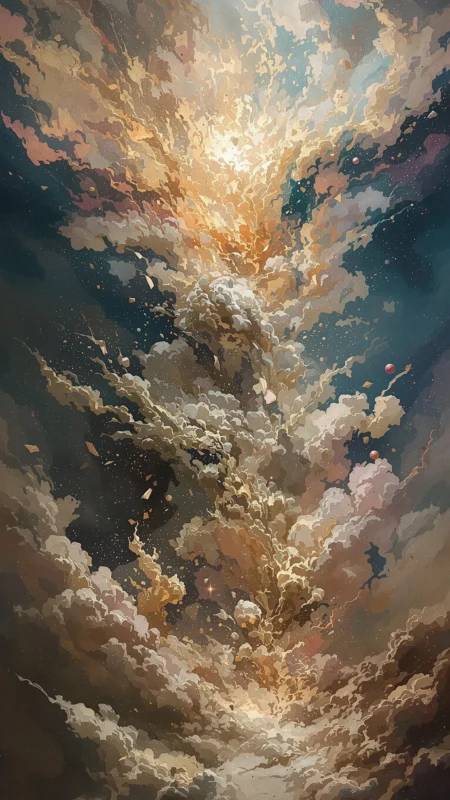
Destruction

Archetype Meaning & Symbolism

Cathartic, Unsentimental, Liberating, Sudden, Volcanic, Necessary, Violent, Transformative, Final, Creative

  • Do not mourn the tower I topple. Look instead at the unobstructed view of the horizon you now possess.

If Destruction is part of your personal mythology, you may...

Believe

  • You may believe that endings are not failures, but graduations. Each conclusion is a sign that a particular lesson has been learned and it is time to move on to the next curriculum.

  • You may believe that the most compassionate act is sometimes the one that causes the most immediate pain. A clean break, a hard truth, a necessary demolition—these are preferable to the slow poison of decay and denial.

  • You may believe that nothing is truly sacred except the process of change itself. Institutions, traditions, beliefs, and even identities are all temporary structures that must eventually be dismantled to serve the relentless flow of life.

Fear

  • You may fear that you will become only a blunt instrument, losing the wisdom to know when to wield your power. The fear is of becoming destruction for its own sake, untethered from the purpose of renewal.

  • You may fear that after you have cleared the ground, nothing new will grow. This is the existential dread of the void, the terror that you might destroy the only thing you had and be left with permanent emptiness.

  • You may fear your own inability to build anything that lasts. You might worry that your internal wiring makes you incapable of the patience, maintenance, and compromise required for enduring love, stable community, or a lasting legacy.

Strength

  • You may possess an extraordinary fearlessness in the face of change. While others cling to the wreckage, you are already swimming for a new shore, intuitively understanding that the old one has sunk beneath the waves.

  • You may have a surgical ability to cut through complexity, denial, and social niceties to get to the absolute heart of a problem. This clarity allows you to make decisive choices that can be liberating for yourself and others.

  • You may have a profound, almost limitless capacity for self-reinvention. Your life is a testament to the fact that it is never too late to start over, because you have mastered the art of the controlled demolition of the self.

Weakness

  • You may have a tendency toward impatience and a 'scorched earth' policy. In your haste to clear the ground, you might burn valuable things that could have been salvaged or repurposed, causing unnecessary collateral damage.

  • You may struggle immensely with the acts of maintenance, nurturing, and gradual growth. Your energy is explosive and catalytic, not steady and sustaining, which can make it difficult to see things through the long, quiet middle phase.

  • You may inadvertently alienate or wound people who value security, tradition, and predictability. Your necessary disruptions can feel like personal attacks or acts of careless cruelty to those who do not share your archetypal framework.

The Symbolism & Meaning of Destruction

In the personal mythos, Destruction is not the antagonist but the catalyst, the flint strike in the dark. It symbolizes the uncomfortable but essential truth that growth requires pruning, that omelets require breaking eggs, that the universe itself was born from a cataclysm. To have this archetype active in your story is to be intimate with endings. It suggests a life path not of gentle slopes, but of sheer cliffs and new plateaus. You may come to see collapse not as failure, but as a field-clearing operation, a necessary harrowing of the soul's soil to make way for a crop you couldn't have imagined planting before.

This archetype may also represent a profound commitment to truth, no matter the cost. It is the force that topples corrupt institutions, exposes secrets, and shatters comforting illusions. It is the part of the personal narrative that refuses to paper over the cracks. It insists on demolishing the facade to see what, if anything, is holding the building up. It is the fierce, unsentimental love that would rather see something beautiful end than watch it slowly decay into a lie. This can make for a life of high drama and high stakes, where peace is found not in stability, but in the relentless pursuit of authenticity.

Furthermore, Destruction could be the symbolic embodiment of letting go. It is the energy that allows you to walk away from the sunk cost, to release the person you once were, to forgive in a way that truly severs the toxic bond. It is not a gentle release; it is an exorcism. It is the understanding that some things are too heavy to carry, and the only sane response is to drop them, to let them shatter, and to walk on, lighter and freer, even with the echoes of the crash still ringing in your ears.


Destruction Relationships With Other Archetypes

The Creator:

Destruction and The Creator are two sides of the same cosmic coin, locked in an eternal, generative dance. The Creator cannot build on crowded ground; Destruction provides the empty canvas. In a personal mythos, this relationship might manifest as intense cycles of manic invention followed by periods of complete self-reinvention where old projects, ideas, and even identities are ruthlessly discarded. One cannot exist without the other; to embrace one is to call forth its partner. A fear of Destruction may lead to creative stagnation, while unchecked Destruction could become a nihilistic force that never allows anything to take root.

The Phoenix:

The Phoenix is not just a partner to Destruction; it is its direct descendant. Destruction is the fire, the consuming flame, the reduction to elemental ash. The Phoenix is the impossible, beautiful life that rises from that very ash, transformed and renewed. If Destruction is part of your myth, The Phoenix may be its promise. You might experience devastating personal collapses—of careers, relationships, beliefs—only to find yourself reborn in a new form, stronger and wiser. The presence of Destruction is the necessary, painful prerequisite for the magic of The Phoenix to occur; you must be willing to be consumed to be renewed.

The Trickster:

The Trickster can often be the agent of Destruction, the one who pulls the pin from the grenade. While Destruction itself can be a clean, impersonal force like a lightning strike, The Trickster introduces an element of chaos, irony, and unsettling laughter. It might be The Trickster archetype that engineers the 'accident' that reveals a devastating secret, or that pushes the button that brings the whole system crashing down, often for reasons that seem absurd or trivial. This relationship suggests that sometimes the most profound transformations are initiated not by solemn tragedy, but by a cosmic joke that forces you to see the fragility of your own constructions.

Using Destruction in Every Day Life

Leaving a Career Path

You may find yourself in a profession that was once a perfect fit but has become a gilded cage, its comforts constricting your soul. The Destruction archetype does not counsel quiet resignation or a gradual transition. It might instead compel a sudden, clean break: the abrupt resignation, the deletion of the corporate email address from your phone, the symbolic burning of a business card. This act is not about simple job-hopping; it is a ritual severing, a declaration that the person who walked into that office every day no longer exists, clearing the debris field of your life for an entirely new foundation to be poured.

Ending a Foundational Relationship

When a core relationship—a marriage, a lifelong friendship—becomes a monument to a past you no longer inhabit, Destruction may appear not as a whisper but as a tectonic shift. It could manifest as the conversation that cannot be un-had, the one that lays bare the unworkable truths with surgical precision. This is not the slow erosion of affection, but the deliberate detonation of a shared reality. It is the painful, necessary act of razing a structure that is no longer sound, acknowledging that the shared space has become a ruin, and choosing the open, uncertain wilderness over the shelter of a lie.

Shedding an Old Identity

Perhaps you have curated an identity—the reliable one, the successful one, the easygoing one—that now feels like a costume. The Destruction archetype could provide the energy to rip it off in a single, decisive motion. This might look like a sudden change in appearance, the abandonment of a long-held political or religious belief, or the refusal to perform an expected social role any longer. It is an internal demolition project, where you take a sledgehammer to the load-bearing walls of your own personality, trusting that a more authentic self can be built from the resulting rubble.

Destruction is Known For

Creative Destruction

This is the core paradox of the archetype. It is known for the principle that new creation can only occur after the old forms have been cleared away. It is the forest fire that allows for new saplings, the bankruptcy that clears the way for a new venture, the shattering of an illusion that reveals a profound truth.

Finality:

Unlike gradual change, Destruction is known for its decisiveness. It is the slammed door, the burned bridge, the final word. It represents endings that are not open to negotiation, forcing a confrontation with the reality that some things are, and should be, over for good.

Radical Liberation:

The archetype is known for the profound, if terrifying, freedom it offers. By annihilating old structures, expectations, and identities, it returns you to a state of pure potential. It is the ultimate release from the prisons we build for ourselves, even if the release itself is a violent one.

How Destruction Might Affect Your Personal Mythology

How Destruction Might Affect Your Mythos

When Destruction is a central force in your personal mythos, your life story may not read as a linear novel but as a collection of starkly different novellas, each with its own dramatic conclusion. The narrative arc is not one of steady accumulation, but of periodic reinvention. Your story might be defined by the 'Before' and 'After' of seismic events: the life before the big move, the person you were before the relationship ended, the worldview you held before your faith shattered. These moments of rupture are the primary plot points, the chapter breaks that give your life its shape and meaning. You might see yourself as a character who must periodically burn their own world down to survive.

This mythos could also be characterized by a sense of being an agent of change, a force of nature in the lives of others and in your own. You may be the character who always speaks the uncomfortable truth that ends the dinner party, who leaves the secure job to the shock of your family, who instigates the necessary crisis. Your narrative role is not to maintain the status quo but to challenge and, if necessary, dismantle it. This can be a lonely path, as your story will be filled with goodbyes and scenes of walking away from the rubble. The central theme of your mythos might be the relentless, painful, and ultimately liberating quest for a truth that requires periodic sacrifice.

How Destruction Might Affect Your Sense of Self

Your view of self may be unusually fluid and resilient. If you identify with the Destruction archetype, you might not cling to a fixed identity. Instead, you could see your 'self' as a series of versions, each one built on the lessons learned from the demolition of the last. This can foster a deep, unconventional self-trust: not a trust that you will always make the 'right' choice, but a trust that you can survive any choice, that you have the capacity to endure collapse and begin again. You may see your scars not as flaws, but as architectural plans for the next, stronger iteration of you.

Conversely, this identification could lead to a sense of self as inherently disruptive or even dangerous. You might feel like a walking catalyst for chaos, someone who cannot help but break things. This could lead to periods of deliberate isolation, a fear of getting too close to people or projects for fear of the damage you might inevitably cause. There can be a profound loneliness in seeing yourself as the earthquake or the forest fire, a necessary force, perhaps, but not one that is easily loved or welcomed. You might struggle to reconcile the creative, liberating aspect of your nature with its immediate, painful consequences.

How Destruction Might Affect Your Beliefs About The World

Your worldview could be profoundly shaped by the principle of impermanence. You may see the world not as a collection of stable institutions and enduring structures, but as a dynamic, chaotic system in a constant state of flux. You might look at a powerful corporation, a political empire, or a rigid social norm and see not its strength, but its inevitable decay. This is not necessarily a cynical view; it can be a liberating one. It frees you from attachment to outcomes and from the fear of loss, because you understand that loss is a fundamental cosmic law, the engine of all change.

This perspective may also lead you to be deeply suspicious of anything that claims to be permanent, perfect, or 'too big to fail.' You might have a keen eye for the hairline fractures in any foundation, the subtle rot beneath the polished surface. Your focus would not be on preservation at all costs, but on adaptation and renewal. You might believe that societies, like ecosystems, need periodic fires to clear out the underbrush of corruption, dogma, and inefficiency. You might see global crises not just as disasters, but as messy, painful opportunities for a global reset.

How Destruction Might Affect Your Relationships

In relationships, you may operate with a kind of fierce, unsentimental clarity. You might possess a low tolerance for stagnation, pretense, or the slow, quiet suffering that characterizes many long-term connections. This could lead you to initiate difficult conversations and necessary endings that others would avoid for decades. Your love may be intense and transformative, but it might also feel conditional on mutual growth and brutal honesty. You might leave a relationship not because love has died, but because the structure of the relationship is preventing both parties from becoming who they need to be.

This approach can be profoundly alienating to those who crave stability and comfort. Partners and friends may perceive you as ruthless, impatient, or fickle, unable to appreciate the value of endurance and compromise. You may find yourself drawn to relationships that are themselves transformative and intense, but struggle to build lasting, quiet partnerships. The challenge for you in the relational sphere is to learn the difference between a structure that needs to be demolished and one that simply needs renovation, to discern when the sledgehammer is required and when a more delicate tool will suffice.

How Destruction Might Affect Your Role in Life

You may perceive your role in life as that of a catalyst or a truth-teller. In any group, family, or organization, you might naturally gravitate towards the role of the one who points out the elephant in the room, who challenges the unquestioned assumption, who asks the 'what if we just stopped?' question. This is not necessarily a consciously chosen role, but a way of being that seems to flow from your core. You might be the person who quits the committee on principle, resigns from the toxic job, or moves away from the dysfunctional family, thereby forcing a crisis that leads to change.

This role is often a thankless one. You may be labeled a 'troublemaker,' 'negative,' or 'not a team player.' Yet, you might feel a deep, almost spiritual obligation to your disruptive function. Your sense of purpose could be tied not to building, but to clearing. You may feel that your greatest contribution is to remove the obstacles—be they outdated ideas, corrupt systems, or toxic dynamics—that prevent others from building something better. Your legacy, in your own eyes, might not be the monuments you constructed, but the prisons you helped tear down.

Dream Interpretation of Destruction

In a positive context, dreaming of Destruction—witnessing a building being professionally demolished, watching a controlled burn of a field, or personally taking a sledgehammer to a wall—could symbolize a healthy and conscious process of shedding limitations. It may suggest that your psyche is actively clearing out old beliefs, fears, and identities to make way for a new phase of life. Such a dream can feel empowering, a sign that you are taking control of your own transformation and are no longer a passive victim of change, but its willing agent. It points to a necessary ending that you are ready and equipped to handle.

In a negative context, dreams of uncontrolled destruction—being caught in a collapsing building, running from a volcanic eruption, or watching your home be consumed by a senseless fire—may point to a fear of losing control. It could suggest that the forces of change in your life feel overwhelming and chaotic, rather than purposeful. This might reflect a shadow aspect of the archetype running rampant, where destruction has become untethered from creation. It could be a warning from your subconscious about a self-sabotaging tendency, a relationship that is destructively volatile, or an external situation that threatens to tear down your sense of security without any promise of renewal.

How Destruction Archetype Might Affect Your Needs

How Destruction Might Affect Your Physiological Needs

The physiological needs for air, water, food, and rest might be viewed through a lens of cycles and purity. You may feel a deep need to periodically 'cleanse' your system, not just through diet, but through intense physical exertion that breaks down muscle for regrowth, or through fasting that allows for cellular renewal (autophagy). The body's own constant process of destroying old cells to make way for new ones could become a powerful metaphor for your entire life philosophy. Your physical well-being might feel intrinsically linked to this process of breaking down and rebuilding, finding health not in stasis, but in dynamic equilibrium.

There might also be a tendency to push the body to its limits, to court physical collapse as a way of triggering a mental or spiritual breakthrough. The energy of Destruction can be immense and volatile, and it may seek a physical outlet. This could manifest as a drive towards extreme sports, grueling endurance tests, or other activities that involve a dance with physical limits. The goal is not just fitness, but a kind of physiological catharsis, a way to embody the archetype and burn off its excess energy before it turns inward in a self-destructive way.

How Destruction Might Affect Your Ideas of Belonging

The need for love and belonging can be a complex and painful area for someone whose mythos is driven by Destruction. Intimacy requires a degree of stability and predictability that may be antithetical to your nature. You might feel like a transient force in the lives of others, a whirlwind that cannot stay in one place for long without causing damage. This could lead to a series of intense, transformative, but short-lived relationships, where your role is to catalyze change in another person and then move on. True belonging might feel like an impossible dream.

However, you may find your 'tribe' not in conventional communities but among fellow agents of change: artists, revolutionaries, innovators, and outsiders. Your bonds might be forged in moments of shared crisis or in a mutual commitment to tearing down an unjust system. Love, for you, might not be about creating a comfortable, safe harbor together. It could be about finding the one person who is willing to stand with you in the fire, who sees the beauty in the collapse, and who is not afraid to build something new with you from the ashes, over and over again.

How Destruction Might Affect Your Feelings of Safety

Your need for safety may be defined in a paradoxical way. You might not find security in stable employment, a mortgage, or a predictable routine. In fact, these things could feel like traps, fragile structures waiting to collapse. True safety, for you, may lie in your own adaptability and resilience. You might feel most secure when you have an escape route, a 'go-bag' for the soul, and the confidence that you could survive losing everything. Safety is not the strength of your walls, but your proven ability to live without them.

This can lead to a life that appears reckless to others. You might court a certain amount of chaos and instability, believing it keeps you sharp and prevents complacency. You may feel that the greatest danger is stagnation, and so you deliberately introduce disruptive elements into your life to test your own foundations. This might mean frequent moves, career changes, or a minimalist lifestyle that allows for rapid pivots. Your security is not rooted in assets or attachments, but in your own internal capacity to weather any storm and rebuild from nothing.

How Destruction Might Affect Your Views of Esteem

Esteem needs, such as the desire for respect, status, and recognition, may be fulfilled in unconventional ways. Your self-esteem might be directly tied to your courage: the courage to leave, the courage to speak truth to power, the courage to tear down your own life when it is no longer authentic. You might respect yourself not for what you have built or accumulated, but for what you have had the strength to let go of. Each necessary ending, however painful, could be a mark of honor, a testament to your commitment to a higher principle than comfort or social approval.

This can put you at odds with conventional measures of success. You may not gain the respect of those who value stability and tradition. Instead, your esteem might come from a small circle of peers who understand your path, or it may have to be a purely internal affair. There is a risk of developing a kind of 'martyr esteem,' a pride in being misunderstood and disruptive. The healthy manifestation is a quiet, profound self-respect based on your integrity and resilience, a knowledge that you have faced the fire and walked out, ready for what's next.

Shadow of Destruction

When the shadow of Destruction falls, its creative purpose is lost, and what remains is nihilism. It ceases to be the forest fire that clears the way for new growth and becomes the arsonist's blaze, lit out of boredom, rage, or a desire to simply watch the world burn. The shadow aspect manifests as self-sabotage on a grand scale: torpedoing the promising relationship just as it becomes intimate, quitting the dream job right before the big promotion, alienating loyal friends for no reason. It is a compulsive need to break things simply to feel the rush of power and to prove that nothing is permanent, including one's own happiness.

In its outward expression, the shadow can be deeply cruel. It is the critic who tears down without offering a better alternative, the partner who uses devastating truths as weapons, the revolutionary who is more in love with the revolution than with the society they hope to build. This is destruction untethered from wisdom, a force that creates vacuums rather than possibilities. It dismantles not just what is false or corrupt, but also what is good, vulnerable, and beautiful, leaving a barren wasteland in its wake, both internally and externally.

Pros & Cons of Destruction in Your Mythology

Pros

  • You may experience profound liberation from situations, beliefs, and identities that have become stagnant or oppressive. You have the key to your own cages.

  • You are likely to develop immense resilience and adaptability. Having navigated numerous personal collapses, you fear very little, knowing you can survive and rebuild.

  • Your life is a canvas for authentic new beginnings. By clearing away the old, you constantly create space for something truer and more aligned with your present self to emerge.

Cons

  • Your life may be marked by a pattern of instability and upheaval that can be exhausting for you and those around you. The peace of quiet continuity may elude you.

  • You risk being perceived by others as chaotic, ruthless, or unreliable. This can lead to loneliness and difficulty forming lasting, stable bonds and communities.

  • There is a constant danger of acting prematurely or with excessive force, destroying things that might have been healed or transformed with more patience and a less drastic approach.