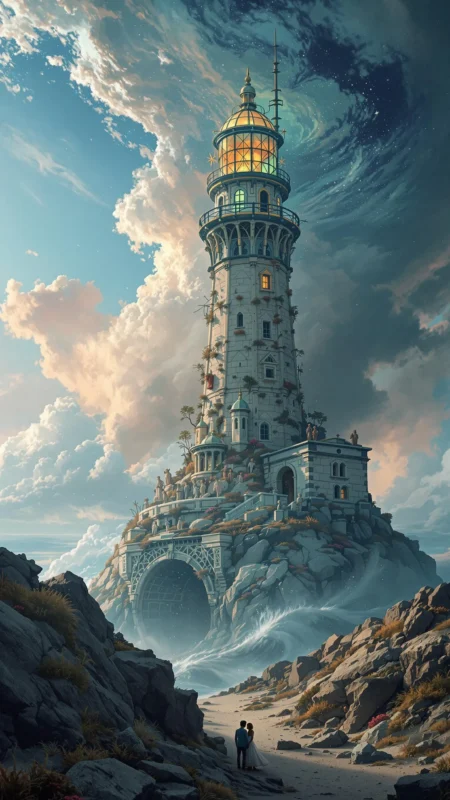


Deserted Lighthouse

Archetype Meaning & Symbolism

Solitary, stoic, weathered, obsolete, resonant, hollow, observant, defiant, mnemonic, enduring

  • My light is out, but the structure still teaches the shape of the shore. You do not need to shine to be a landmark.

If Deserted Lighthouse is part of your personal mythology, you may...

Believe

  • That true wisdom is found in observation, not intervention. The greatest understanding comes from watching the tides of life ebb and flow from a stable vantage point.
  • That a purpose served is more honorable than a purpose perpetually sought. There is a profound dignity in completing a task and accepting the quiet that follows.
  • That your personal history is your greatest asset. Your scars, your memories, and your obsolete skills are not liabilities but the very material that makes you who you are.

Fear

  • That you have become truly irrelevant, a relic that no one sees or values anymore. Your greatest fear is not being attacked, but being utterly forgotten.
  • An internal collapse. The fear that the solitude will curdle into despair and that the structure you rely on will crumble from within, leaving you a pile of ruins.
  • A future devoid of connection. That in becoming a fortress, you have permanently locked everyone out and will spend the remainder of your days in a profound, unreachable loneliness.

Strength

  • Profound self-reliance. You possess an uncommon ability to be alone without being lonely, drawing strength and perspective from within.
  • Unwavering resilience. Having already weathered the loss of a primary function, you are not easily shaken by life's storms or the changing winds of fortune.
  • Deep perspective. Your vantage point allows you to see the bigger picture, to recognize patterns that others, caught in the fray, might miss. You offer the gift of context.

Weakness

  • A tendency toward isolation. Your self-reliance can become a fortress that prevents new relationships and experiences from reaching you.
  • Resistance to change. You may be so rooted in your history and structure that you refuse to adapt, even when a new kind of 'light' or purpose is called for.
  • A melancholic disposition. The quiet, observant nature can sometimes slip into a state of nostalgia-tinged sadness for a past that is gone forever, preventing full engagement with the present.

The Symbolism & Meaning of Deserted Lighthouse

The Deserted Lighthouse is a potent symbol for a purpose that has been honorably retired. It is not a ruin, but a monument to a completed task. In your personal mythology, it may represent a significant chapter of your life—a career, a core relationship, a parental role—that has concluded. Its presence suggests that your identity is not erased when your function changes. Instead, that past purpose has shaped you into a landmark, a point of reference for yourself and others. The winds and waves of life may have rendered your old 'light' obsolete, perhaps through technological change, personal growth, or the simple passage of time, but they have also revealed the enduring strength of your foundation.

This archetype also embodies a profound and chosen solitude. Unlike the loneliness of a forgotten ruin, the lighthouse's isolation is structural, intentional. It was built to stand apart. If this archetype resonates, you might find a strange comfort in your own company, a sense of self that is defined not by its connections but by its ability to stand alone. It speaks to the wisdom gained not in the marketplace of ideas, but in the silent observation tower of your own mind. The world is viewed from a distance, not with cold detachment, but with the long perspective of one who has seen countless ships—goals, people, ambitions—pass by on the horizon.

Ultimately, the Deserted Lighthouse is about the beauty of what remains. In a culture obsessed with novelty and perpetual utility, it champions the grace of obsolescence. It asks you to find value not in what you are doing, but in what you have become. The peeling paint, the salt-bleached stone, the hollow echo in the lantern room: these are not signs of failure, but the patina of experience. It could symbolize a trust in your own inner structure, a quiet confidence that even without a shining beacon, your presence is enough to alter the landscape.


Deserted Lighthouse Relationships With Other Archetypes

The Sea

The relationship between the Deserted Lighthouse and The Sea is one of ancient, resolved conflict. The Sea was the adversary the lighthouse was built to tame with its light, the chaos it was meant to order. Now, in its silence, the relationship has deepened into a kind of companionship. The Sea's relentless waves are no longer a threat to be warned against, but a rhythm, a constant presence that washes and weathers the stone. For an individual, this may symbolize a newfound peace with the chaotic, emotional, or untamable aspects of life. What you once fought to control or illuminate may now be accepted as a fundamental, even beautiful, part of your environment.

The Archivist

The Deserted Lighthouse is a silent, living document, and The Archivist is its natural interpreter. The Archivist is drawn to the stories held in the lighthouse’s weathered stone, the history of the storms it has endured, the memory of the light it once cast. While the lighthouse simply exists, The Archivist gives its existence a narrative. In your personal mythos, this could represent the part of you that seeks to understand and honor your own past. It is the dialogue between your lived experience (the lighthouse) and your conscious effort to make sense of it, to catalog your own scars and triumphs into a coherent story (The Archivist).

The Ghost

Where there is a deserted structure, there is often The Ghost: the lingering energy of what came before. The Ghost is not necessarily a frightful specter, but perhaps the memory of the last keeper, the echo of the turning light, the psychic residue of a purpose fulfilled. The lighthouse is the perfect vessel for this archetype, holding the memory of its own vitality. This relationship could speak to how your past self or a former life role haunts your present. It is the feeling that the 'you' who was a parent, an artist, a leader, still walks the spiral stairs of your consciousness, a silent, mnemonic presence that informs who you are today.

Using Deserted Lighthouse in Every Day Life

Navigating Career Obsolescence

When your professional skills or entire industry become outdated, this archetype offers a map. Instead of scrambling for a new light, you may find profound value in your accumulated experience. Your career, like the lighthouse, becomes a landmark. Its existence provides context and wisdom to others navigating a similar shoreline, even if its original function—its specific job title—is gone. You become a testament to a time and a way of doing things, your value shifting from active production to passive, structural wisdom.

Processing the End of a Defining Role

After raising children, ending a long-term caregiving situation, or retiring from a vocation that defined you, the sense of being a 'deserted lighthouse' can be potent. This archetype allows you to inhabit that space without judgment. It suggests that the love, protection, and guidance you offered are now baked into your very structure. You may no longer need to actively 'shine' for others, but your presence, shaped by that former purpose, continues to offer a form of silent, unwavering support and perspective to those who know your story.

Embracing Creative Fallow Periods

For an artist, a writer, or any creative, the terror of the empty page or the silent studio can feel like utter failure. The Deserted Lighthouse reframes this. It proposes that this is not emptiness but a necessary quiet. The structure is still sound, the view from the top is still unparalleled. This period may be a time for observation, for letting the elements weather you, for allowing new ideas to form like barnacles on a solid foundation. The purpose is not to force the light back on, but to trust the integrity of the vessel while it waits.

Deserted Lighthouse is Known For

The Vacant Lantern Room

A space of former purpose, now a glass-eyed observatory. It represents a capacity for great vision that is no longer in active use, a perspective gained that is now held in quiet repose rather than broadcast.

The Unyielding Structure:

Its ability to withstand ceaseless wind and water long after its keepers have left. This speaks to an inherent resilience, a core self that persists even when its societal function or primary relationship has been stripped away.

The Spiral Staircase:

The internal journey, often dark and winding, that leads to the highest viewpoint. It symbolizes the difficult, introspective work required to gain perspective, a path one must walk alone to reach the pinnacle of self-awareness.

How Deserted Lighthouse Might Affect Your Personal Mythology

How Deserted Lighthouse Might Affect Your Mythos

When the Deserted Lighthouse enters your personal mythos, your life story may pivot from a narrative of relentless becoming to one of profound being. The central quest is no longer about finding your purpose, but about understanding the person you have become now that a major purpose has been served. Your personal history ceases to be a series of stepping stones to a future goal; instead, it becomes the very bedrock of your identity. The climax of your story may have already happened, and the current chapters are about inhabiting the magnificent structure that past events have built. This is a mythos of endurance, observation, and the quiet dignity of survival.

Furthermore, your narrative may be marked by a significant 'extinguishing of the light,' a moment when a defining role or belief was rendered obsolete. This event, rather than being a tragedy, becomes the central transformative experience in your mythos. It is the point where you ceased to be a tool for others—a guide for their journeys—and began a deeper journey inward. Your story becomes one of learning to navigate by starlight instead of a manufactured beam, trusting the older, more permanent fixtures of the cosmos and your own internal landscape. It is a mythos that finds its power not in the light it projects, but in the darkness and silence it has learned to hold.

How Deserted Lighthouse Might Affect Your Sense of Self

Your sense of self, under the influence of this archetype, may become deeply rooted and self-contained. You might no longer require external validation to feel whole, as your self-worth could be based on your own history and resilience: the storms you have weathered. There may be a quiet pride in your own obsolescence, a feeling of having graduated from the frantic need to be useful in a conventional sense. This can lead to a powerful, albeit lonely, form of self-reliance, where your own mind is the most interesting place to be, and your own perspective is the one you trust above all others.

This archetype may also foster a self-view that is layered and historical. You may see yourself not as a single, static entity, but as a structure built over time, with each layer of paint and each crack in the stone telling a part of your story. This perspective can lead to a great deal of self-acceptance, as flaws and scars are not seen as imperfections to be fixed, but as honorable marks of experience. However, it could also mean you feel 'haunted' by past versions of yourself, the echo of the lightkeeper still polishing a lamp that will never be lit again, creating a sense of internal distance or poignant nostalgia.

How Deserted Lighthouse Might Affect Your Beliefs About The World

Your worldview might be colored by a deep appreciation for the beauty in decay and the wisdom in silence. You may find yourself drawn to things the world has passed over: old books, forgotten music, overgrown paths, and people whose stories are etched on their faces. The relentless pursuit of progress and innovation might seem naive or even hollow. Instead, you could see the world as a museum of past efforts, each one leaving a mark, with true value residing in things that have endured rather than things that are new. This is a long-view perspective, one that sees current crises and trends as mere squalls on the surface of a deep and ancient ocean.

This perspective might also foster a certain skepticism towards loud, declarative truths. If your own 'light' has gone out, you may understand that all beacons are temporary and contingent. You might come to believe that true guidance is rarely found in the blinding glare of certainty, but rather in the subtle landmarks and constellations available to anyone willing to look closely. Your worldview could be one of patient observation, trusting that meaning reveals itself slowly, over time, like the shape of a coastline emerging from the morning mist, rather than being beamed out from a single, authoritative source.

How Deserted Lighthouse Might Affect Your Relationships

In relationships, you may operate from a position of quiet, steady presence rather than active engagement. You might not be the person who offers constant advice or effusive support, but you are the one friends turn to when they need a non-judgmental witness, a solid structure in their storm. Your way of showing love could be simply by being there, an unwavering point on their map. This can lead to incredibly deep, resilient bonds with a select few who understand and appreciate your nature, who do not need you to shine for them but simply value your existence.

However, this same quality could make forming new connections challenging. Your self-contained nature and lack of an obvious 'light' might be misinterpreted as aloofness, disinterest, or even sadness. You may struggle with the performative aspects of modern friendship, the constant signaling and communication. You might feel out of sync with a world that equates connection with constant contact, and you may inadvertently keep others at a distance, safe within your stone walls. The challenge is learning when to lower the gangplank and let someone climb the winding stairs to see the view with you.

How Deserted Lighthouse Might Affect Your Role in Life

Your perceived role in your family, community, or workplace may shift from that of an active guide to that of a passive landmark. You might have once been The Fixer, The Planner, or The Beacon of information, but now you may feel your role is to be The Witness or The Anchor. Your value no longer comes from what you do, but from what you represent: stability, history, a calm perspective. People may not come to you for a quick answer, but they might come to you to feel grounded, to be reminded of a larger context, to simply sit in your quiet, steady presence.

This can be a difficult transition, potentially fraught with a sense of lost importance. The ego may resist moving from a dynamic, functional role to a static, symbolic one. The challenge of this archetype is to embrace the dignity and power of this new position. It is the role of the elder, the historian, the contemplative. It requires letting go of the need to direct the ships and instead finding purpose in being the unmovable point by which they can, if they choose, find their own way. Your role becomes less about intervention and more about orientation.

Dream Interpretation of Deserted Lighthouse

To dream of a deserted lighthouse in a positive context may signal a profound moment of self-acceptance and peace. Climbing its spiral stairs with ease and looking out from the lantern room over a calm sea could suggest that you have successfully integrated a past identity. You are no longer mourning a lost purpose but are using the perspective it gave you to survey your current life with wisdom and tranquility. Seeing the lighthouse from a distance, standing strong and beautiful against a sunset, might indicate an appreciation for your own resilience and the journey that has shaped you. It can be a dream of quiet, solitary triumph.

In a negative context, this dream could symbolize deep-seated fears of irrelevance, isolation, and decay. If the lighthouse is crumbling, inaccessible, or shrouded in a terrifying storm, it may reflect a feeling that your inner structure is failing or that you are being overwhelmed by circumstances beyond your control. Being trapped inside the dark, hollow tower could represent a profound and frightening loneliness, a sense that your inner light has gone out for good and you have become disconnected from the world. A cracked or broken lantern glass might symbolize a shattered worldview or a cynical loss of a guiding belief.

How Deserted Lighthouse Archetype Might Affect Your Needs

How Deserted Lighthouse Might Affect Your Physiological Needs

From the standpoint of personal mythology, the Deserted Lighthouse archetype may influence your physiological needs by prioritizing stillness and conservation of energy. You might feel a deep, instinctual need for quiet, for environments that are not overstimulating. Just as the lighthouse stands impassive against the wind, you may find that your body craves a state of calm homeostasis, reacting poorly to excessive stress, noise, or frantic activity. The need for rest is not about laziness; it is about structural integrity, allowing the system to settle and endure rather than constantly perform.

There could also be a heightened sensitivity to your environment, a kind of bodily listening. You may be acutely aware of atmospheric pressure, the quality of light, the sound of the wind. Your body might not feel like a vehicle for action but more like a finely tuned barometer, registering the subtle shifts in your surroundings. This can lead to a preference for spartan comforts: simple food, solid shelter, and the basic, elemental needs being met without fuss or excess. It is the physiology of endurance, not of indulgence.

How Deserted Lighthouse Might Affect Your Ideas of Belonging

The need for belongingness may be one of the most complex and challenging aspects for someone with this archetype. The very nature of a deserted lighthouse is its aloneness. You may feel a fundamental sense of 'apartness' from groups, a constitutional inability to fully merge with a collective. Your sense of belonging might not come from being 'one of' a group, but from being a recognized, unique feature in the landscape of that group. You belong not because you are the same, but because your distinct, solitary presence is valued by the whole.

This can lead to a feeling of being understood by very few people. The longing for love and connection is still present, but it may be a desire for a profound, quiet companionship rather than a bustling social life. You might seek a partner who is like an island, visible from your tower, who understands and respects your need for space. The ultimate sense of belonging might be found not with other people, but with time, with history, with the natural world. It is the belongingness of a mountain to its range, a belonging defined by shared endurance and presence, not by interaction.

How Deserted Lighthouse Might Affect Your Feelings of Safety

Your need for safety may be understood in terms of structural and psychic fortitude. Physical safety is important, but the primary focus could be on emotional and mental defensibility. You might invest a great deal of energy in building strong personal boundaries, creating a life that is a fortress against the chaos of the outside world. This isn't necessarily born of fear, but from a deep understanding that your internal peace is a resource to be protected. Safety means having a place—be it a home, a mindset, or a relationship—that is your unbreachable stone tower.

This can also manifest as a decreased need for conventional safety nets, such as constant social approval or a clear career ladder. Having weathered the 'abandonment' of a primary function, you may have already faced a significant threat to your identity and survived. This experience could create a deep-seated trust in your own ability to endure. Safety is not the absence of storms; it is the confidence in your foundation's ability to withstand them. The risk is that this can shade into isolation, where safety is achieved by cutting oneself off from any potential new threat, which also means cutting oneself off from new connections.

How Deserted Lighthouse Might Affect Your Views of Esteem

Esteem may be derived not from accomplishments or praise, but from a quiet sense of your own permanence and history. Your self-worth could be anchored in the knowledge of what you have survived and the perspective you have gained. Seeing the 'scars' and 'weathering' on your own psyche as marks of honor rather than flaws is a core source of esteem. It is the pride of the veteran, the survivor, the elder. You may not need to be the brightest light in the room because you have a deep, internal sense of your own substance and weight.

This can create a powerful immunity to criticism and the fluctuating opinions of others. Your esteem is not 'for sale' in the social marketplace. However, the challenge lies in maintaining this esteem when the world no longer recognizes your former role. If your self-worth is entirely tied to a past identity (the 'active' lighthouse), its desertion can trigger a crisis. True esteem, for this archetype, comes from transferring that sense of value from the function (the light) to the structure itself (the tower). It is the realization that you are worthy simply because you exist, because you have stood your ground.

Shadow of Deserted Lighthouse

The shadow of the Deserted Lighthouse emerges when its stoicism curdles into a bitter, impregnable isolation. In its shadow form, the structure is no longer a landmark of quiet wisdom but a spire of resentment. It silently judges the bustling, brightly-lit ships and newer, more efficient beacons on the shore. This can manifest as a deep-seated cynicism, a belief that nothing new has value and that the world's ignorance is the cause of your solitude. Instead of offering perspective, the shadow lighthouse hoards it, becoming a lonely, critical hermit who takes a grim satisfaction in the failures of others, muttering 'I could have told them so' from its dark, empty lantern room.

Another facet of the shadow is a complete abdication of presence, a crumbling into ruin. Here, the lighthouse doesn't just accept its obsolescence; it despairs in it. This manifests as a profound neglect of self, a letting-go of the very structural integrity that defines the archetype's strength. It is the 'what's the point' mentality taken to its extreme. Boundaries collapse, not to let others in, but because the energy to maintain them is gone. It is a slow, silent collapse into depression and irrelevance, becoming a genuine hazard to those who might have once sought its guidance, a monument to what happens when endurance gives way to despair.

Pros & Cons of Deserted Lighthouse in Your Mythology

Pros

  • You possess a powerful core of self-sufficiency and are not dependent on external validation for your sense of worth.
  • You offer a rare and valuable form of presence to others: a calm, stable, non-judgmental anchor in the storms of their lives.
  • You have a unique ability to see the long view, making you a source of profound wisdom and perspective, unswayed by fleeting trends.

Cons

  • You may struggle to form new connections, as your self-contained nature can be perceived as aloofness or disinterest.
  • You might become stuck in the past, overly identified with a former role or identity, making it difficult to adapt to new chapters of life.
  • Your solitude can sometimes cross the line into a deep, painful loneliness that you find difficult to escape or even admit to.