 Believe
 Fear
Fear Strength
 Weakness
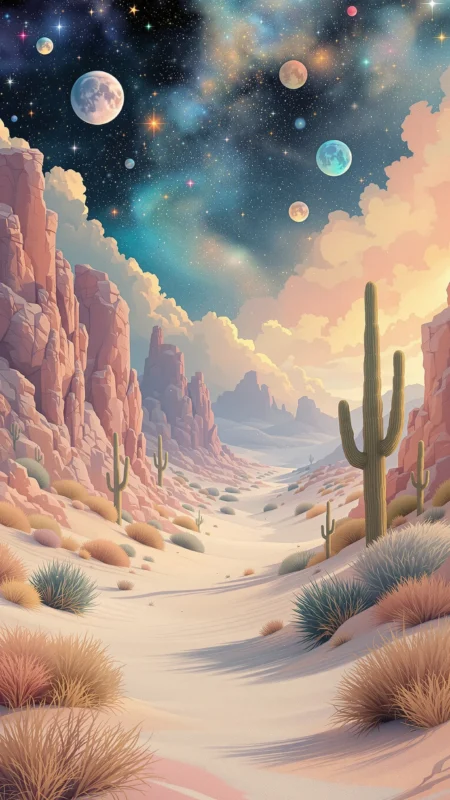
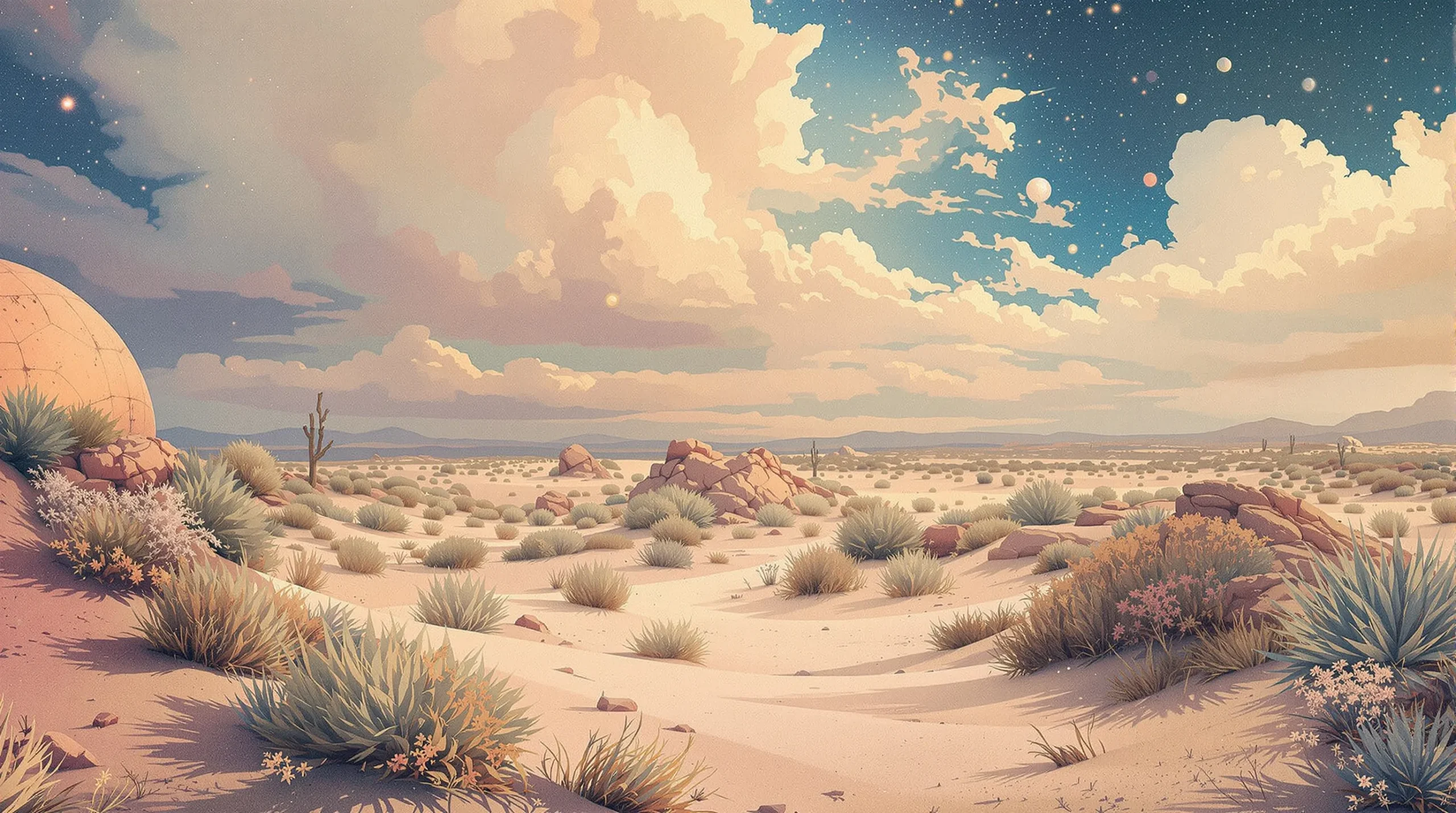
In the personal mythos, the Desert is the landscape of the soul stripped bare. It is the psychic space one enters, willingly or not, when the lush foliage of daily distraction withers away. Here, under an unrelenting sky, there is nowhere to hide from the self. It may symbolize a period of necessary austerity, a spiritual or creative drought that, while painful, serves to clarify what is truly essential for survival. It is the silence after the noise, the stark clarity after confusion. To have the Desert as part of your inner geography suggests a journey characterized by tests of endurance, leading not to worldly riches, but to the unadorned, resilient core of your own being.
This archetype challenges the modern cult of abundance. It whispers that growth can also happen through subtraction. The Desert’s beauty is not one of soft comfort but of stark geometry, of survival, of light and shadow. In one's life, this could translate to an aesthetic of minimalism, a philosophy of essentialism, or a profound comfort with solitude. It represents the peace that can be found not in having more, but in needing less. It is the internal quiet that allows one to hear the subtle frequencies of truth, both within the self and in the world.
Ultimately, the Desert is a place of transformation. Nothing enters this landscape and leaves unchanged. The heat purifies, the vastness humbles, the silence clarifies. It may be a crucible where old identities are burned away, leaving a more authentic, heat-tempered self. It symbolizes the profound encounter with emptiness that is not a void, but a space of pure potential. It is the recognition that from this seeming nothingness, the most profound revelations and the most tenacious forms of life can emerge.