Believe
 Fear
Fear Strength
 Weakness
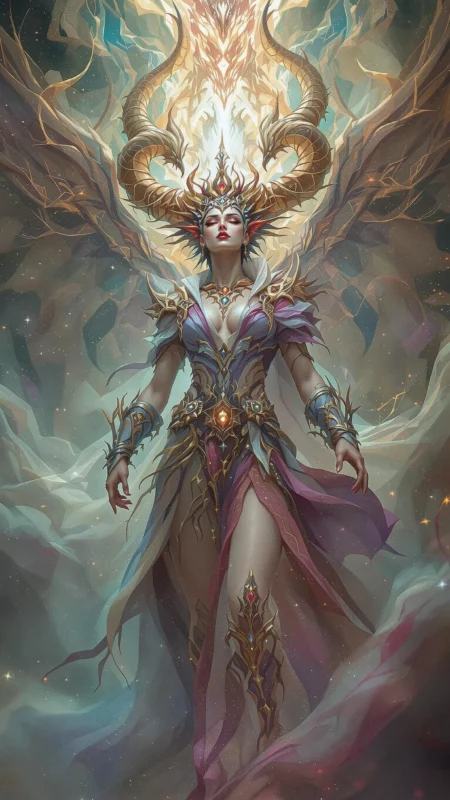
In personal mythology, the Demon Hunter symbolizes the active, often aggressive, confrontation with one's own inner darkness. These 'demons' are not supernatural entities, but rather the embodied forms of our deepest traumas, addictions, destructive habits, and crippling self-doubts. To have this archetype is to accept, perhaps unwillingly, a sacred duty to face these parts of the self head-on. It is the aspect of the psyche that refuses to be a passive victim of its own history. The symbolism is one of transformation through conflict: scars are not blemishes but proof of survival, and exhaustion is the honorable price of vigilance. The Hunter's path is fundamentally lonely, for the demons they hunt are unique to their own internal landscape, invisible to the outside world.
This archetype may also represent a profound form of personal integrity. The Demon Hunter's code is not imposed by society, but forged in the crucible of inner battles. Their righteousness is a private, hard-won thing. It suggests a life lived with immense purpose, where every choice is weighed against the ongoing war. The 'hunt' could be the daily struggle against depression, the lifelong work of unlearning harmful inherited beliefs, or the constant effort to remain ethical in a compromised world. The Demon Hunter finds meaning not in a final, mythical victory, but in the nobility and necessity of the fight itself. It is the choice to light a single candle and stand guard, rather than curse the overwhelming darkness.
Furthermore, the archetype carries the symbolism of the liminal space, the place between light and shadow. The Demon Hunter is not purely an agent of light; to hunt the darkness, one must understand it, walk within it, and perhaps even adopt some of its characteristics: its cunning, its patience, its ruthlessness. This creates a complex, often paradoxical, figure within one's personal mythos. They are both protector and predator, healer and warrior. This duality suggests that true wholeness may not come from eradicating the shadow, but from developing a conscious, disciplined relationship with it, becoming its master rather than its servant.