 Believe
 Fear
Fear Strength
 Weakness
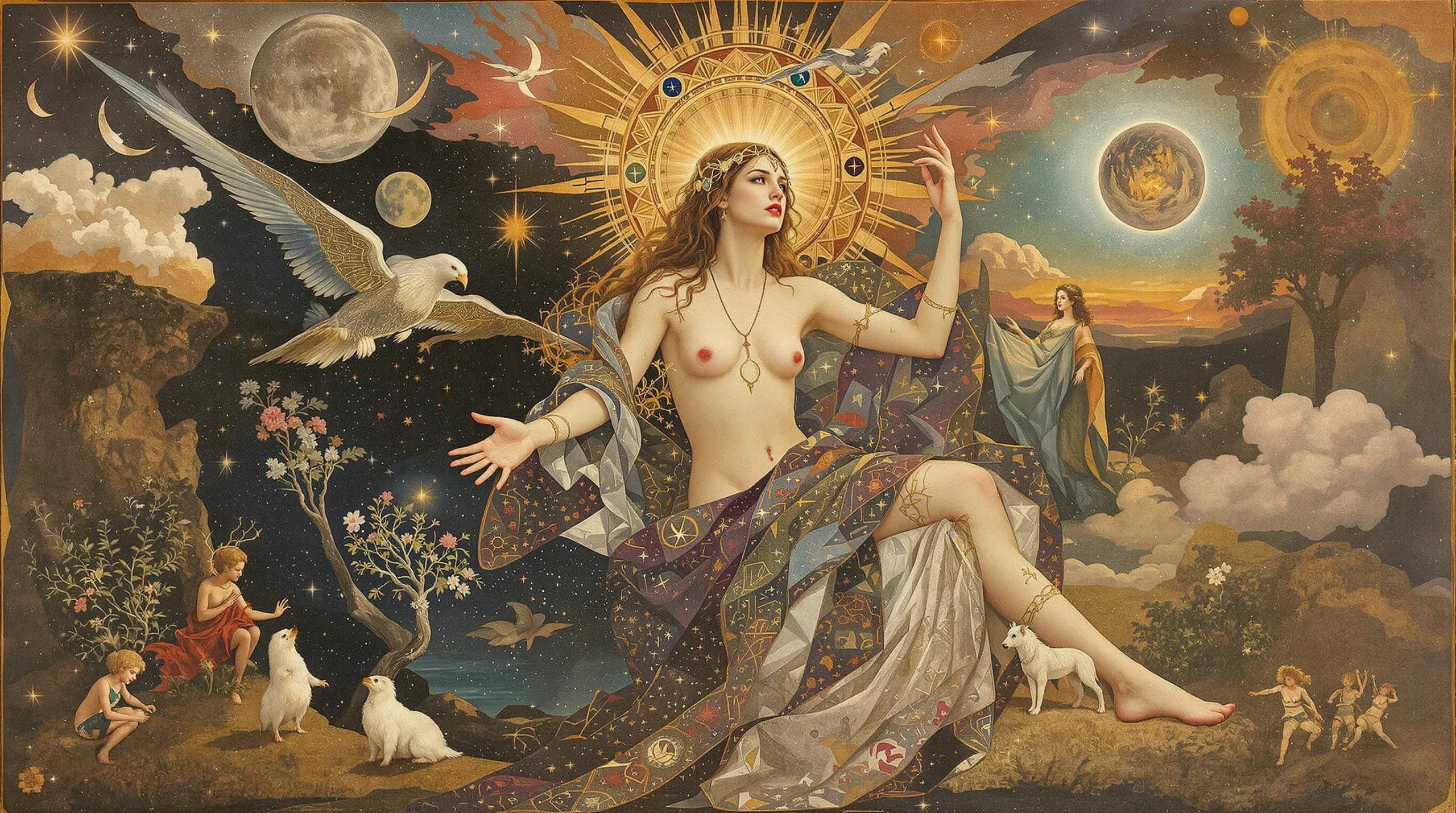
In the modern psyche, Demeter symbolizes the profound, untamable force of generative love. She is the archetype of the nurturer, the creator, the mother in all its forms: not just of children, but of art, of communities, of gardens, of ideas. To have Demeter in your personal mythology is to understand love as an act of cultivation. It is the patient tending of a seed in the dark, the fierce protection of the sprouting green, the joyous celebration of the harvest, and the deep, abiding grief when the field is empty. She represents a connection to the earth that is not abstract but visceral, a wisdom that flows from the body and the seasons rather than the intellect alone.
Her story is also one of life's most essential and painful bargains: the dance between connection and separation. Demeter's love is powerful enough to stop the world, yet she cannot prevent her daughter's journey into the underworld, into her own life. This archetype speaks to the part of us that must learn to let go of what we have created so it can become itself. The meaning of Demeter today is perhaps found in this tension. She is the anchor and the harbor, but she must also bless the ship that sails for unknown shores. She embodies the truth that the most powerful form of creation involves an eventual, necessary loss of control.
Furthermore, Demeter is the keeper of cycles. She teaches that life is not a linear progression towards a single goal but a recurring rhythm of growth, decay, and regeneration. A fallow period is not failure; it is preparation. Grief is not an end; it is the winter that makes spring possible. This could manifest as a deep, intuitive trust in life's processes, an ability to find meaning not just in the bloom but in the decomposition that enriches the soil. Your personal mythology might be less about a hero's journey to a single treasure and more about a gardener's lifelong relationship with a plot of land, finding divinity in the turning of the seasons within and without.