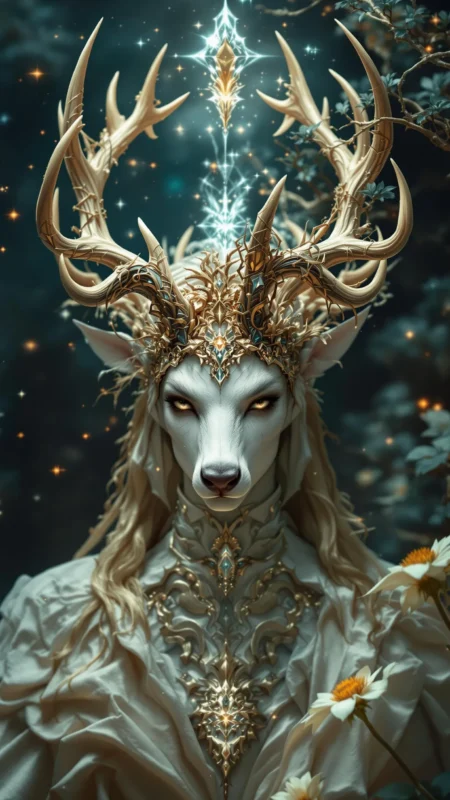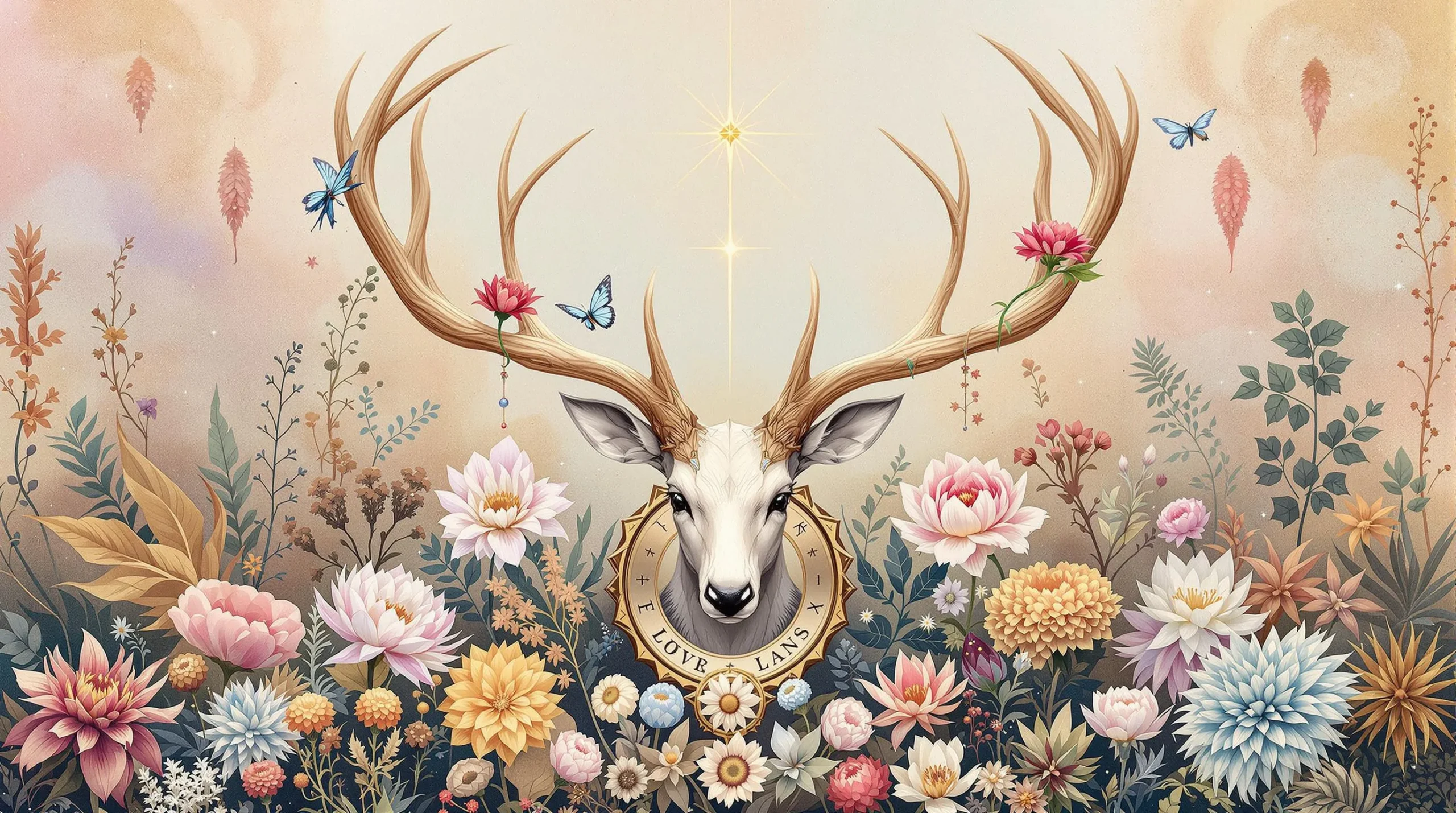


Deer Antler

Archetype Meaning & Symbolism

Cyclical, ornamental, shed, weapon, crown, sensitive, temporary, branching, resilient, burdensome

  • Let go of what weighs you down. It is not an ending, but a preparation for a more glorious crown.

If Deer Antler is part of your personal mythology, you may...

Believe

  • That all endings are merely the prelude to a new and different beginning.

  • That vulnerability is not weakness, but the fertile ground from which true strength grows.

  • That one's greatest achievements are also one's greatest burdens, and both must eventually be laid down.

Fear

  • The terror of the fallow period: the fear that after shedding, nothing new will grow back.

  • Getting your ambitions hopelessly entangled with another's, leading to mutual destruction or stasis.

  • That the new growth, the next version of yourself, will be a diminished, less impressive form than the last.

Strength

  • Profound resilience. You have an innate understanding that you can recover from loss and reinvent yourself.

  • A patient and deep-seated wisdom. You trust in the timing of cycles and do not panic during dormant periods.

  • The ability to establish and defend powerful, clear boundaries when challenged.

Weakness

  • A tendency to be weighed down by your own successes and responsibilities, like a crown that has grown too heavy.

  • A cyclical pattern of confidence that can plummet during 'shedding' phases, leaving you feeling defenseless and exposed.

  • A susceptibility to pride and status games, especially when you are at the peak of your power.

The Symbolism & Meaning of Deer Antler

At its core, the Deer Antler is a story of magnificent renewal, written in bone. Its presence in your personal mythos suggests a life that may not be linear but is profoundly cyclical. Where others see endings, you might perceive the quiet, necessary preparation for a new beginning. The shedding of the antler is a potent symbol for the voluntary release of what has become a burden: the job title that no longer fits, the relationship that has run its course, the version of yourself you have outgrown. This is not a passive loss but an active, biological imperative for growth. It suggests a belief that what is let go of makes room for something more vital, more attuned to the current season of your life. The antler teaches a patient, trusting wisdom: the void is not empty, it is fallow.

The antler’s dual nature is a lesson in paradox. It is at once a crown of exquisite, branching beauty and a dangerous weapon, capable of locking in fatal combat. This could point to a personality that integrates deep sensitivity with formidable strength. The velvet stage, that period of soft, vulnerable growth, is a reminder that new strength is often born from tenderness, that our most powerful attributes require a season of being fragile and receptive. To have the Deer Antler in your mythos is perhaps to understand that your capacity for beauty and your capacity for defense spring from the same root; your gentleness does not negate your power, and your power does not have to extinguish your grace.

Furthermore, the antler acts as a kind of organic satellite, a sensory extension of the self reaching into the world. Its branching form mirrors the dendritic patterns of neurons, river deltas, and lightning bolts, connecting the individual to the larger patterns of the cosmos. It could symbolize a heightened intuition, a way of feeling the subtle shifts in the emotional or spiritual atmosphere. It is a crown, but not one of inherited authority. It is a crown that is grown, carried, lost, and regrown each year, signifying a sovereignty that must be continually earned, a connection to the sacred that is always in process, never complete.


Deer Antler Relationships With Other Archetypes

The Forest Floor:

The relationship between the Deer Antler and the Forest Floor is one of cyclical decomposition and nourishment. When the antler is shed, it falls to the forest floor, where it is slowly broken down by rodents and bacteria, returning its rich calcium to the soil that will, in turn, grow the plants that feed the deer. In a personal mythos, this represents a profound connection to one's roots and the understanding that past identities, when released, do not vanish but instead become the fertile ground for future growth. It is an alliance that honors the entire cycle, not just the peak, suggesting that what you let go of can still nourish you in unseen ways.

The Hand Tool:

Since prehistory, humans have collected shed antlers and shaped them into tools: flint knappers, handles, needles. This relationship with the Hand Tool archetype transforms the antler from a symbol of wild sovereignty into an object of utility and craft. It speaks to a life phase after the shedding, where past experiences, triumphs, and even old defenses are repurposed into practical wisdom. Your past 'crown' may no longer be part of your living identity, but it can be honed into a tool that serves a new purpose, a skill you can use to shape your present reality. This is a relationship of practical alchemy, turning the ornamental into the functional.

The Crown:

While the antler is a natural crown, its relationship with the archetypal Crown of human royalty is one of contrast and commentary. The royal crown is permanent, inherited, and forged from inert metals. The antler crown is temporary, self-generated, and made of living, growing bone. This dynamic suggests a different kind of authority: one that is earned through personal growth, not lineage. It’s a leadership that understands seasons of power and seasons of retreat. It suggests that true sovereignty lies not in holding onto power indefinitely, but in the recurring ability to generate it from within, to wear it with grace, and to let it go without a fight when its season is over.

Using Deer Antler in Every Day Life

Navigating Career Transitions:

When leaving a long-held profession, the Deer Antler archetype offers a map. The act of departure is not a failure but a shedding, a necessary release of a structure that has served its purpose but now hinders movement. You may consciously treat the transition not as a void, but as the sensitive, velvety stage of new growth. It is a period of vulnerability, yes, but also of incredible potential, where the blueprint of a future, more intricate and suitable career—a new rack—is being formed from within.

Healing from Heartbreak:

After the loss of a significant relationship, the pain can feel like a part of you has been broken off. The Deer Antler reframes this. It is a clean break, a casting off. The process acknowledges the weight and form of what was lost but focuses on the body’s innate capacity to heal the wound and begin again. Your personal mythology doesn't end with the loss; it incorporates the loss as a catalyst. The energy once used to carry that connection is now redirected inward, fueling the growth of a new, perhaps more profound, sense of self.

Overcoming Creative Block:

For an artist or writer, a creative block can feel like a barren winter. The Deer Antler suggests this is a feature, not a bug, of the creative cycle. This fallow period is the season after the shedding. The old ideas, the previous project's grand rack, have been dropped. It is a time for quiet, for gathering nutrients, for allowing the ground of the mind to rest. By embracing this emptiness, you trust that it is the necessary prelude to the next velvety nub of an idea, which will eventually branch into something complex and new.

Deer Antler is Known For

Annual Shedding and Regrowth

The most defining characteristic is the cycle of losing and regenerating. This process, unique among mammals, is a powerful metaphor for resilience, transformation, and the idea that one must let go of old structures to make way for new, often stronger, ones.

Velvet Stage:

Before hardening into bone, antlers exist in a 'velvet' stage: a soft, fleshy covering rich with blood vessels and nerves. This phase represents periods of extreme sensitivity, rapid growth, and vulnerability that are necessary for the development of strength.

Combat and Display:

Antlers serve a dual purpose as formidable weapons in battles for dominance and as elaborate ornaments for attracting mates. This duality speaks to the integration of power and beauty, of defense and attraction, of the capacity for both conflict and courtship.

How Deer Antler Might Affect Your Personal Mythology

How Deer Antler Might Affect Your Mythos

When the Deer Antler becomes a central object in your personal mythos, the narrative structure of your life story may shift from a linear progression to a spiral or a series of concentric rings. The plot ceases to be about a single climb towards a final peak, but rather a recurring cycle of growth, attainment, release, and renewal. Each major life transition—a career change, the end of a relationship, a spiritual awakening—is not just an event but a 'shedding.' Your life story becomes an epic of serial rebirths. The protagonist, yourself, is defined not by any single achievement but by the resilient, alchemical ability to transform loss into the foundation for a new, more elaborate crown.

This mythos may also be deeply concerned with the 'cost of the crown.' The narrative might explore the burdens of your own strengths, ambitions, and responsibilities. The antlers, symbols of your success and status, are also heavy. They can catch in the undergrowth, they can be a target for rivals, and they demand immense energy to grow and carry. Your story, then, might be a cautionary tale about the weight of glory, or a wisdom tale about learning how to carry your power with grace and knowing precisely when it is time to lay it down, not in defeat, but in preparation for what comes next.

How Deer Antler Might Affect Your Sense of Self

A self-concept informed by the Deer Antler may be remarkably fluid and resilient. You might not see your identity as a static, monolithic entity, but as a living process. The 'you' of five years ago is a shed antler: a respected, perhaps beautiful, part of your history, but not who you are now. This perspective could foster a powerful detachment from both past successes and past failures, allowing you to adapt to changing circumstances with less existential dread. You may find it easier to forgive yourself for past mistakes, seeing them as part of a previous rack that has already been discarded.

This archetypal influence could also cultivate a keen awareness of your own energetic seasons. You may recognize periods of 'velvet' growth—times of intense learning, vulnerability, and sensitivity—as crucial and not to be rushed. Conversely, you might feel the 'weight' of your responsibilities and achievements more acutely, understanding that they are not meant to be carried forever. This can lead to a practice of conscious release, periodically auditing your life to see which 'antlers' are no longer serving you and need to be shed to conserve energy for new growth.

How Deer Antler Might Affect Your Beliefs About The World

Your worldview could be one that finds deep meaning in natural cycles and trusts in the process of creative destruction. You may look at societal shifts, economic downturns, or cultural transformations not as apocalyptic endings but as part of a larger, regenerative pattern. The collapse of an old system, like the shedding of an antler, might seem necessary to you, a clearing of the way for new, perhaps more equitable or sustainable, structures to grow. This perspective fosters a long-term patience and a certain faith in the world's ability to heal and reinvent itself.

This lens may also lead you to be skeptical of claims of permanence or 'final victories.' Whether in politics, business, or art, you might view any peak as temporary, a seasonal display. This could manifest as a healthy distrust of dogma and rigid institutions, and a preference for adaptable, living systems. Your philosophy might be that true progress is not a straight line upwards, but a spiral dance of growth, decay, and regrowth, where wisdom lies in participating gracefully in the cycle rather than trying to conquer it.

How Deer Antler Might Affect Your Relationships

In the realm of relationships, the Deer Antler archetype may instill a perspective that accepts the seasonality of human connection. You could view some friendships and romances as meant only for a certain period of growth. Their ending, while perhaps painful, is not a failure but a natural shedding. This allows you to hold connections with a lighter touch, appreciating them for the season they flourish in, and letting them go with gratitude rather than resentment when the time comes. It allows for the possibility that both you and the other person need to shed the relationship to grow in new directions.

The antler's dual use as display and weapon can also profoundly shape how you navigate intimacy and conflict. You might be acutely aware of your own 'points'—your sharp words, your rigid boundaries, your intellectual pride—and how they can both protect you and keep others at a distance. During courtship or the building of a new connection, you may engage in a kind of sparring or display, a dance of revealing your strengths and testing the other's. The danger lies in getting your antlers locked with another's in a conflict of pride, a stubborn battle from which neither can withdraw without great damage.

How Deer Antler Might Affect Your Role in Life

Your perceived role in life might be that of the 'Cyclical Steward' or the 'Renewable Sovereign.' You may feel called to positions of leadership or influence, but you understand this authority as temporary and conditional upon your continued growth. Unlike a king with a permanent crown, your right to lead is something that must be re-earned, season after season. This can make you a humble and effective leader, one who knows when to take charge during a 'peak growth' phase and, just as importantly, when to step back, shed the role, and enter a period of quiet reflection and renewal, allowing others to lead.

Alternatively, you might see your role as that of a 'Connector' or 'Network Weaver.' The branching, dendritic form of the antler could symbolize your place at the center of a complex web of relationships, ideas, or projects. Your purpose may not be to dominate, but to foster intricate connections, creating a structure that is both beautiful and strong. You might be the person who brings different people together, who sees the overarching patterns in a field of study, or who builds a family or community with many interdependent branches.

Dream Interpretation of Deer Antler

In a positive context, to dream of a Deer Antler may signal a burgeoning of power, creativity, and self-assuredness. Seeing antlers grow rapidly on your own head could symbolize a period of accelerated personal development, where your confidence and status are rising. To find a perfectly shed antler on the forest floor might represent the discovery of a profound piece of wisdom or a valuable resource derived from a past experience that you have successfully let go of. It suggests that the past, once released, can offer gifts. Holding an antler might mean you are coming to terms with your own capacity for both beauty and defense, integrating disparate parts of yourself into a cohesive whole.

In a more challenging light, a dream of antlers could speak to anxieties about status, conflict, and burden. To dream of a broken or misshapen antler might reflect a blow to your ego, a fear of losing face, or a sense of diminished power. Being pursued by a creature with menacing antlers could symbolize an overwhelming conflict or an aggressive rival in your waking life. Perhaps the most unnerving dream is one of being entangled by antlers—your own or another's. This can represent being trapped by your own ambitions, caught in a pointless struggle of wills, or burdened by responsibilities that have become a cage rather than a crown.

How Deer Antler Archetype Might Affect Your Needs

How Deer Antler Might Affect Your Physiological Needs

From a mythological standpoint, the Deer Antler archetype may foster a sacred respect for the body’s need for cyclical rest and exertion. You might not view fatigue as a failure of will, but as the body signaling a necessary 'shedding' phase. This is a time to release the accumulated stress of a period of high performance. Honoring this need for downtime becomes a ritual, a conscious unburdening that allows the body’s systems to repair and gather resources for the next phase of 'growth,' whether that is a demanding project, an athletic season, or a period of intense caregiving.

The antler’s 'velvet' stage could also provide a powerful metaphor for how you interpret physical sensitivity and pain. During times of healing from an injury or illness, or even during the 'growing pains' of adolescence or other life transitions, you may perceive this physical vulnerability not as a weakness but as evidence of profound internal construction. The body is tender because it is flooded with the resources for building something new and strong. This perspective reframes pain as a productive, albeit uncomfortable, process, a sign that renewal is underway.

How Deer Antler Might Affect Your Ideas of Belonging

Your need for belonging might be interpreted through a seasonal lens. The Deer Antler suggests that you may not be meant to belong to one group or community for a lifetime. Instead, you may find your tribe for a specific 'season' of your life, a group that supports and reflects your current stage of growth. When you or the group changes, the sense of belonging may wane, signaling a natural time for 'shedding.' Your mythos would frame this not as rejection or failure, but as a necessary transition, allowing you to move on and find a new herd where your next phase of growth can occur.

Furthermore, the antlers are a social signal, a physical manifestation of status and vitality that communicates one's place within the herd. For you, a sense of belongingness and love could be deeply tied to being 'seen' and acknowledged for who you are in this moment. You might feel most connected when your partner, friends, or community recognize and respect the 'crown' you are currently wearing—be it a crown of success, of creative output, or even the vulnerable, velvety nub of a new beginning. Love and belonging are felt when others can honor the season you are in.

How Deer Antler Might Affect Your Feelings of Safety

With the Deer Antler in your mythos, your sense of safety may not be rooted in permanent fortifications, but in your dynamic ability to regenerate your defenses. Security is not a static wall; it is the capacity to grow what is needed for the present challenge. This could mean you feel safest when you are most adaptable, trusting your ability to shed outdated coping mechanisms or defunct boundaries and grow new ones that are precisely suited to your current environment. Safety lies in the process of renewal, not in the illusion of an impregnable fortress.

However, the antler itself introduces a paradox of safety. As a weapon, it provides a means of defense, a clear signal of your boundaries and your capacity to enforce them. Yet, this very display of strength can attract challenges from rivals who wish to test it. Your personal mythology may therefore involve a complex negotiation: learning when to display your strength to ward off threats, and when to be quiet and conserve energy. Safety becomes a sophisticated dance of knowing that the very tools that protect you can also invite the conflicts you must face.

How Deer Antler Might Affect Your Views of Esteem

Self-esteem, under the influence of the Deer Antler, may become a cyclical and renewable resource rather than a fixed quantity. It grows, it peaks, and, crucially, it must be let go of to be grown again. This model provides a profound resilience against the blows of failure or criticism. Your fundamental worth is not located in the magnificent 'rack' of a past achievement, but in your innate, enduring capacity to grow another one. This frees you from the tyranny of having to defend a past success, allowing your esteem to be based on your present-tense vitality and potential.

Your esteem might also be built upon the antler's elegant synthesis of beauty and function. Your sense of self-worth could be derived equally from your innate qualities—your character, your creativity, the unique 'shape' of your soul (the ornament)—and your ability to effectively navigate the world, protect your boundaries, and achieve your goals (the weapon). A healthy esteem, in this view, is not just about feeling good about yourself in the abstract, but also about recognizing your tangible competence and power in the world. It’s the confidence of knowing you carry both a crown and a sword.

Shadow of Deer Antler

The shadow of the Deer Antler emerges when the cycle is denied. This can manifest as a desperate clinging to a shed rack—a past glory, an old identity, a defunct title. The individual refuses to let go, decorating their life with the bones of who they once were. This refusal to embrace the vulnerability of new growth leaves them brittle, their energy consumed by preserving a museum of the self rather than living. Alternatively, the shadow can appear as an obsession with size and status, a 'rack envy' that turns life into a perpetual, exhausting contest. Every interaction is a battle for dominance, and the antlers become not a crown of sovereignty but a cage of pride, locking them into pointless conflicts.

Another dark manifestation is the misuse of the antler's power. The capacity for self-defense curdles into unthinking aggression. The sharp points, meant to protect, are turned outward indiscriminately, goring loved ones, wounding colleagues, and creating ruin. The individual becomes a tyrant of their own small domain, using their intellectual or positional power to intimidate and control. The beautiful, branching structure that should connect them to the world becomes a weapon that ensures their ultimate isolation, feared but never truly respected or loved.

Pros & Cons of Deer Antler in Your Mythology

Pros

  • You possess a deep well of resilience, capable of regenerating your sense of self and purpose after significant loss or failure.

  • Your perspective is naturally long-term; you have an intuitive trust in life's seasons, which grants you immense patience.

  • You can cultivate and embody a rare synthesis of grace and power, of beauty and formidable strength.

Cons

  • You are subject to cyclical periods of acute vulnerability and diminished confidence that can be frightening and destabilizing.

  • The very successes and responsibilities you cultivate can become a heavy weight, limiting your freedom and draining your energy.

  • Your strength and status can make you a target for rivalry, and your own pride can be a trap, luring you into destructive conflicts.