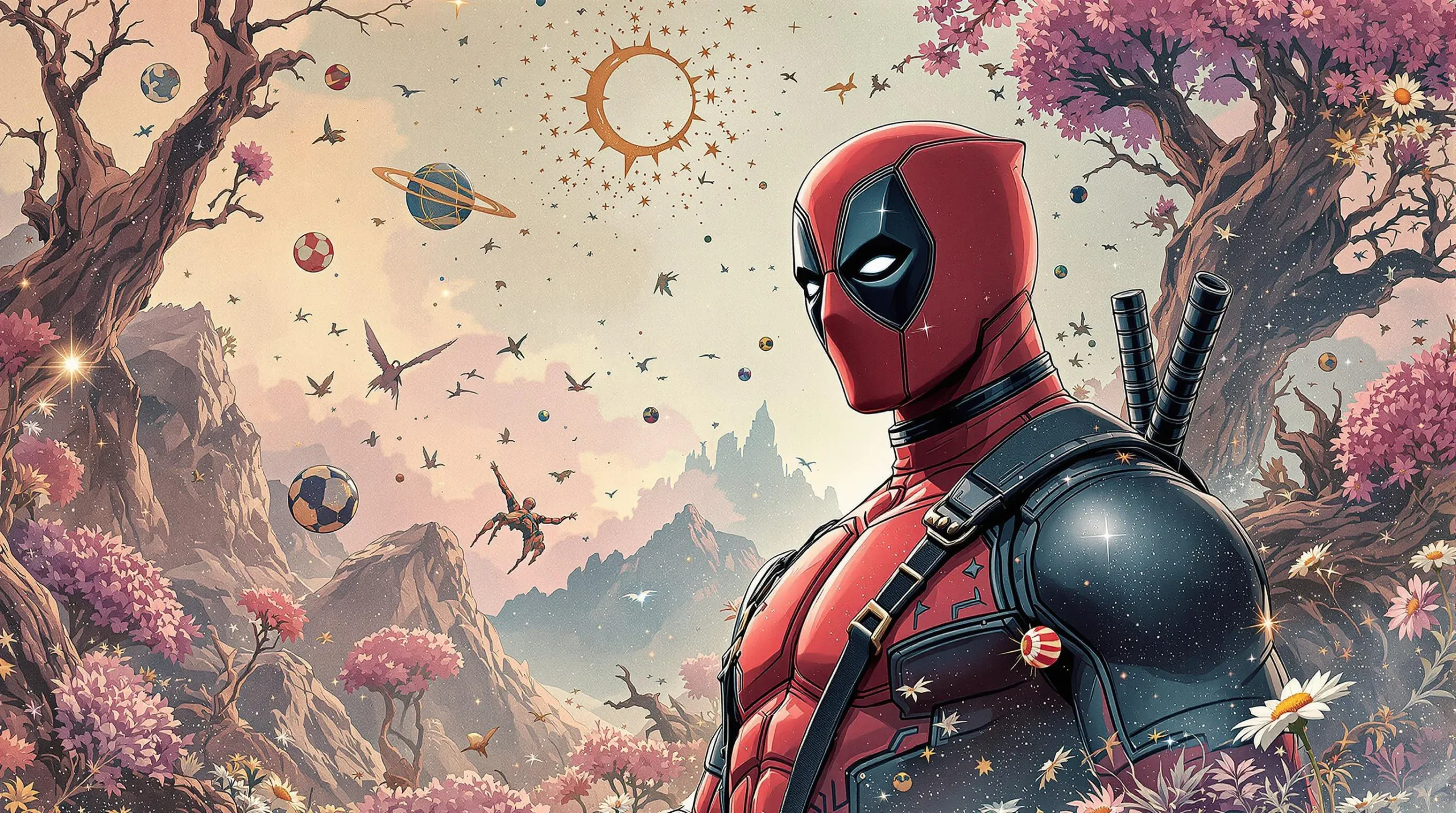


Deadpool

Archetype Meaning & Symbolism

irreverent, chaotic, resilient, self-aware, nihilistic, loyal, witty, broken, regenerative, impulsive

  • Life is an endless series of trainwrecks with only brief, commercial-like breaks of happiness.

If Deadpool is part of your personal mythology, you may…

Believe

  • That humor is not just a coping mechanism, but the highest form of intelligence and the only truly sane response to a fundamentally absurd existence.
  • That scars, both physical and emotional, are not flaws to be hidden but narrative devices that make one’s personal story more compelling and authentic.
  • That most rules, conventions, and even the ‘fourth wall’ of social interaction are optional suggestions at best, meant to be questioned, bent, or broken for strategic or comedic effect.

Fear

  • A secret terror of sincerity and boredom; the fear of a quiet, stable life where there is no chaos to manage and no tragedy to joke about, forcing an encounter with unadulterated, unironic emotion.
  • The deep-seated anxiety that if the jokes ever stop, there will be nothing left but the raw, unmedicated pain that the humor was designed to obscure.
  • A profound fear of true loneliness, that your caustic wit and chaotic nature will ultimately self-sabotage every connection, leaving you as the sole, alienated audience member to your own tragicomedy.

Strength

  • An almost supernatural resilience, the capacity to endure immense psychological and emotional damage and regenerate with a joke, seemingly stronger and more self-aware than before.
  • A disarming and unique charisma, powered by a wit that can defuse tense situations, win over the most unlikely of allies, and cut through layers of pretense with surgical precision.
  • A radical adaptability and talent for improvisation that allows you to not only survive but thrive in chaotic environments, often turning disastrous situations to your distinct advantage.

Weakness

  • A powerful impulse towards self-sabotage, where the need for a punchline or a chaotic turn of events undermines genuine opportunities for stability, connection, or happiness.
  • An emotional guardedness that uses humor as an impenetrable shield, making true vulnerability and the deep intimacy that comes with it incredibly difficult, if not impossible, to achieve.
  • A nihilistic streak that can curdle into carelessness, causing you to treat serious matters with a flippancy that creates significant collateral damage in your life and the lives of others.

The Symbolism & Meaning of Deadpool

The Deadpool archetype is perhaps the jester in the court of personal tragedy. Its core symbolism is entwined with the alchemical power of laughter to transform suffering. Where other archetypes offer stoicism or righteous fury in the face of hardship, this one offers a sardonic wink. It suggests that the universe may be a cosmic joke, and that the sanest response is not to solve the riddle but to appreciate the punchline. To integrate this figure is to find a strange holiness in the profane, to build a cathedral of coping mechanisms out of irony and wit, allowing one to stand in the ruins of a life plan and comment on the shoddy architecture.

Beneath the mask, the symbolism deepens into a narrative of radical self-acceptance. The scarred, broken visage is not a shameful secret but a fundamental truth of the character, inseparable from the whole. This could represent an embrace of one’s own trauma and imperfections. The personal mythos here is not about healing into a flawless, ‘before’ state, but about integrating the broken pieces into a functional, even formidable, new form. It is the kintsugi philosophy applied to the psyche: the cracks are not hidden but highlighted with the gold of self-aware humor.

Furthermore, Deadpool may symbolize a very contemporary form of creative nihilism. In a world where grand narratives of religion, nation, and progress may seem to falter, this archetype presents an alternative: the creation of a purely personal, self-referential meaning. He is the patron saint of the improviser, the one who knows the script is nonsense and decides to write his own dialogue in the margins. For an individual, this could be a powerful permission slip to abandon prescriptive life paths and to find meaning not in a predetermined destination, but in the witty, chaotic, and utterly unique narration of the journey itself.


Deadpool Relationships With Other Archetypes

The Fourth Wall

The relationship here may be less a matter of breaking a barrier and more one of a prisoner conversing with his own reflection in a one-way mirror. The Deadpool archetype does not merely speak to an audience; he seems to perceive the very architecture of his own narrative as a tangible, and often deeply flawed, construct. This awareness could be the source of his power, a kind of cosmic insider trading that allows him to anticipate the plot’s next lurch. Yet, it could also be the wellspring of a profound and inescapable loneliness. He is, perhaps, the only sane man in an asylum where everyone else is blissfully unaware of the walls, a prophet whose only gospel is that nothing is sacred, least of all himself. His quips, aimed directly at us, may be less a performance and more a desperate attempt to feel seen by the gods who write his lines and watch his suffering for sport.

The Jester

One might view this archetype as the Jester’s ghost, haunting the grim court of postmodernity. Where the classic Fool used wit as a scalpel to expose the absurdities of power, The Deadpool wields it as a blunt instrument, a slapstick cudgel wrapped in barbed wire. The relationship is one of lineage, but also of mutation. If the traditional Jester was a canary in the coal mine of a kingdom’s health, this modern iteration may be the explosion that follows, a chaotic force whose laughter is indistinguishable from the shriek of a siren. He could be said to serve a similar function—to speak a terrifying truth through the disarming guise of comedy—but his truth is not for a king. It is, perhaps, a diagnosis delivered to an entire culture, a relentless reminder of our own complicity in the spectacle.

The Scar

The Scar is not merely a mark on the skin for this archetype; it is the landscape of his soul, a geography of trauma that his relentless healing can never fully remap. His relationship with the Scar is a paradox. His body may be a palimpsest, perpetually erased and rewritten by regeneration, but his psyche is the indelible ink beneath. This constant, physical renewal might rob him of the dignity of his wounds, the very evidence of his survival. The humor, then, could be seen as a form of scar tissue itself—a tough, frantic, and often ugly defense grown over a wound that refuses to close. He is in a constant, losing battle with the memory of pain, a state that suggests true immortality is not the absence of death, but the eternal presence of every hurt one has ever sustained.

Using Deadpool in Every Day Life

Navigating Overwhelming Failure

When faced with a setback that feels like a finale, this archetype offers a different script. Failure is not an ending; it is a bizarre plot twist, a non-sequitur to be commented upon. One might metabolize a job loss not as a tragedy, but as the moment ‘our hero was unexpectedly written out of the boring corporate procedural.’ This reframes the event, not to deny its pain, but to rob it of its power to define the entire narrative.

Confronting Existential Dread

In moments of quiet nihilism, when the search for meaning yields nothing, the Deadpool mythos provides a strange comfort. It suggests that if there is no inherent meaning, one is free to invent it, and humor is as valid a source as any other. The archetype encourages a direct conversation with the void, not with a scream, but with a wisecrack, acknowledging the absurdity of the human condition as a feature, not a bug.

Challenging Unspoken Social Contracts

This archetype can be a tool for deconstructing the invisible rules that govern our lives. When feeling constrained by social expectations or professional decorum, one might internally ‘break the fourth wall’ on the situation. By asking, ‘Who wrote this scene, and why is the dialogue so stilted?’, you may find the courage to improvise, to speak a plain truth, or to simply walk off the set of a drama you never auditioned for.

Deadpool is Known For

Fourth-Wall Breaking

A signature ability to address the audience directly, acknowledging his own fictional nature. This serves as a metaphor for a kind of meta-awareness in life, the capacity to see the ‘script’ of social conventions and personal narratives.

Regenerative Healing Factor

The power to recover from nearly any physical injury. In personal mythology, this translates to an extreme psychological resilience, an ability to endure trauma and bounce back, albeit often with new scars integrated into the self.

Chaotic Neutral Morality

A moral compass that is wildly unpredictable, often pointing towards self-interest or sheer entertainment value. This may represent a rejection of rigid, dogmatic ethical systems in favor of a fluid, situational, and highly personal code of conduct.

How Deadpool Might Affect Your Personal Mythology

How Deadpool Might Affect Your Mythos

To welcome the Deadpool archetype into one’s personal mythos is to hire a chaotic, unreliable narrator for the story of your life. The grand, linear progression of the hero’s journey may be discarded in favor of something more fractured, like a picaresque novel punctuated by stand-up comedy. Your life story ceases to be a sacred text and becomes, instead, a story that knows it is a story. Major triumphs may be undercut with ironic asides, and deep tragedies might be framed as absurd plot twists. The mythos becomes a meta-narrative, less concerned with what happens and more concerned with the commentary on what happens.

This could reshape personal history into a series of ‘episodes’ or ‘issues.’ A painful childhood might be re-contextualized as a ‘gritty origin story,’ and a difficult breakup could be the ‘season finale that frankly should have happened two years ago.’ This is not necessarily an act of diminishing the pain but of seizing narrative control. It is a way of looking at the past and, instead of being its victim, becoming its sarcastic, all-knowing commentator. Your personal myth becomes less about what fate has dealt you and more about how cleverly you can re-edit the footage.

How Deadpool Might Affect Your Sense of Self

The self, as viewed through a Deadpool lens, may become a fascinating collage of contradictions. One might cultivate a profound, almost supernatural resilience, an ability to psychologically regenerate from wounds that would shatter others. Yet, this strength could be twinned with a deep-seated sense of alienation. The self becomes the perpetual outsider, the one who sees the scaffolding of reality and can no longer participate in the play with a straight face. This might foster a lonely vantage point, a feeling of being the only one in on the joke.

There is also a radical permission for imperfection. The archetype suggests one does not need to be whole to be effective, or even heroic. The self is not envisioned as a pristine marble statue but as a piece of salvaged technology, battered and jury-rigged, but still powerfully functional. One may find a strange confidence in their own scars, viewing them not as flaws to be concealed, but as crucial plot points that make the character more interesting. Self-worth is not tied to being unbroken, but to being unbreakable.

How Deadpool Might Affect Your Beliefs About The World

A worldview informed by this archetype might be one of playful, piercing cynicism. The grand institutions that structure society—governments, corporations, cultural traditions—may be seen as elaborate, often poorly scripted, works of fiction. This perspective has a way of puncturing pretense, of looking at a pompous authority figure and seeing only a flawed actor struggling with their lines. The world becomes a theater of the absurd, and the individual is both audience member and critic, looking for the absurd truth beneath the glossy veneer of things.

This could lead to a rejection of traditional, external sources of meaning and an embrace of a more personalized reality. If the world is a chaotic, glitchy video game rather than a divine drama, then the goal is not to uncover its purpose but to find the most entertaining way to play. Meaning is not found; it is generated, often through humor, creativity, and the deliberate subversion of expectations. The world is not a map to be followed, but a sandbox to be played in, with all the creative and destructive potential that implies.

How Deadpool Might Affect Your Relationships

In relationships, the Deadpool archetype may foster a style that prizes brutal honesty and performative wit over polite fictions. This individual could be the one in a group who says what everyone else is thinking, puncturing a tense silence with an observation that is both true and uncomfortable. This can forge incredibly strong, authentic bonds with those who appreciate such unfiltered reality. However, it can just as easily alienate those who prefer a gentler, more diplomatic social contract, leaving a trail of scorched-earth encounters.

Intimacy, then, becomes a complex negotiation. There might be a fierce, almost feral loyalty to a chosen few, a small band of fellow misfits. This loyalty exists alongside a profound fear of vulnerability. The mask is both literal and metaphorical. Humor and relentless chaos can be used as a sophisticated defense system, keeping others at a comfortable distance from the scarred reality underneath. Love, in this mythos, may be the quest to find the rare person who sees the pain behind the punchline and, instead of fleeing, decides to stay for the whole strange, unpredictable show.

How Deadpool Might Affect Your Role in Life

One’s perceived role in the world may shift from protagonist to meta-narrator. Instead of feeling the crushing weight of being the hero destined to save the day, one might adopt the lighter, more agile role of the commentator who points out the absurdity of the ‘day’ needing ‘saving’ in the first place. This is the role of the sacred clown, the disruptor, the pattern-breaker whose function is to remind the system that it is, in fact, a system, and a rather arbitrary one at that. The purpose is not to lead the charge, but to heckle from the sidelines with such precision that the charge itself falters.

This could manifest as a role within a family or workplace that defies easy categorization. They may not be the ‘leader’ or the ‘nurturer’ but the ‘catalyst’ or the ‘truth-teller.’ This is the person who solves a problem by refusing to follow the established procedure, who brings innovation by questioning the foundational assumptions everyone else takes for granted. Their role is defined less by how they fit into the existing structure and more by the unique, often chaotic, space they carve out for themselves by refusing to fit.

Dream Interpretation of Deadpool

In a positive context, dreaming of the Deadpool archetype could signify a powerful breakthrough in psychological resilience. The dream may be a message from the subconscious that it has found a new tool for processing pain: humor. To see this figure, or to embody his traits in a dream, might suggest that you are beginning to regenerate from an emotional wound, learning to reframe a tragedy as a dark comedy. It can be a psychic permission slip to stop carrying a burden with so much solemnity and to find the liberating exit door of laughter.

In a negative context, a threatening or out-of-control Deadpool in a dream could be a potent warning. It might symbolize a part of the self where cynicism has curdled into destructive nihilism. This dream figure could represent a tendency to use humor not to heal, but to inflict pain, to self-sabotage, and to push away genuine connection. It may be a caution from your deeper mind that your inner jester is no longer just heckling the court but is actively trying to burn the castle down, with you and everyone you care about inside it.

How Deadpool Archetype Might Affect Your Needs

How Deadpool Might Affect Your Physiological Needs

The archetype’s influence on one’s relationship with their physiological needs may manifest as a philosophical disregard for the body’s conventional limits. Sleep, balanced nutrition, and rest could be viewed as mundane plot points to be minimized or skipped in favor of more exciting action. The body is not a temple to be worshipped but a beat-up, reliable getaway car for the mind’s chaotic journey. It might be pushed to its limits, running on caffeine, adrenaline, and sheer willpower, with a kind of pride taken in its ability to function amidst self-imposed neglect.

Conversely, the regenerative aspect could inspire an obsession with bodily resilience, though not in a conventional ‘wellness’ sense. This might translate into a kind of personal bio-hacking: extreme workouts, experimental diets, and unconventional therapies aimed at making the body as indestructible as the will. The goal is not gentle health but formidable endurance. This approach treats the body as a high-performance machine that must be relentlessly optimized and fortified to ensure it can withstand the psychic turmoil and physical risks the individual courts.

How Deadpool Might Affect Your Ideas of Belonging

Belongingness, for one who resonates with this archetype, may be a thorny and paradoxical affair. The mythos fosters a fierce independence that is almost allergic to group identity. The very act of joining, of assimilating, can feel like a betrayal of one’s unique perspective. To belong fully to a club, a movement, or a conventional social circle might feel like accepting a pre-written script, and this archetype’s entire purpose is to see through and mock such scripts. The result can be a feeling of perpetual outsider status, even when surrounded by people.

And yet, belonging is still sought, albeit on highly specific terms. It is not the comfort of the herd but the camaraderie of the pack of strays. Love and friendship are found not through shared norms but through a shared appreciation for breaking them. It is belonging with the other weirdos, the fellow commentators, the ones who also see the absurdity of it all. This creates a small, fiercely loyal tribe—a self-selected ‘X-Force’ of misfits—forged not in conformity, but in a shared, subversive reality and genuine, if highly unconventional, affection.

How Deadpool Might Affect Your Feelings of Safety

Within a Deadpool-inflected mythos, the concept of safety—a stable job, a predictable future, a secure home—may be viewed with deep suspicion, as a comforting but ultimately flimsy illusion. The world is understood to be inherently chaotic and unsafe. Therefore, the pursuit of traditional security might seem like a fool’s errand. True safety, in this worldview, is not found in building higher walls, but in becoming so adaptable and resilient that the dangers of the world lose their terror. It is the safety of the surfer, not the fortress-builder.

This can lead to a life of calculated, and sometimes uncalculated, risks. It is a preference for the precarity of the freelancer over the perceived shackles of a salaried job, the freedom of the nomad over the anchor of a mortgage. The locus of security becomes internal. It is a deep, abiding faith in one’s own ability to regenerate from any setback: financial, social, or emotional. One might feel safest when untethered and unpredictable, when fate itself cannot get a clean shot because the target is always moving.

How Deadpool Might Affect Your Views of Esteem

Esteem, in this personal mythology, is rarely derived from external validation. Trophies, promotions, and public accolades may be viewed as little more than punchlines, hollow signifiers in a meaningless game. Instead, self-esteem is cultivated on a private, internal scoreboard that measures things differently. Points are awarded for the cleverness of a comeback, the grace with which a disaster was navigated, or the speed of one’s emotional regeneration after a blow. It is the esteem of the master improviser, proud of their ability to perform without a net.

While the respect of others is not entirely dismissed, it is only valued from a select few who ‘get it.’ Being misunderstood or even disliked by the mainstream could be worn as a badge of honor, a confirmation of one’s singular vision. Esteem is found when one is recognized for their sharp wit, their unbreakable spirit, and their unflinching honesty. It is the respect earned not for coloring inside the lines, but for turning the whole coloring book into a brilliant, chaotic collage.

Shadow of Deadpool

The shadow of the Deadpool archetype is a desperately lonely place. When humor metastasizes from a healing balm into a compulsive pathology, it no longer bridges gaps but digs moats. The individual becomes a prisoner of their own irreverent persona, unable to drop the act even in moments that cry out for simple, human sincerity. Every bid for genuine connection is deflected with a sarcastic quip; every moment of shared vulnerability is sabotaged by a cynical aside. The result is not a clever narrator but a tragic clown, performing an endless routine to an empty room, where the only sound is the echo of their own hollow laughter.

In its most extreme manifestation, the shadow transforms resilience into a horrifying carelessness. The belief that one can regenerate from any wound breeds a profound recklessness, not just for the self, but for others who do not share this mythic ‘healing factor.’ This is the friend who makes a cruel joke at a funeral, the partner who instigates drama purely for entertainment, the colleague who burns every professional bridge for the sake of a fleeting, anarchic thrill. The shadow archetype mistakes its own nihilism for wisdom and inflicts its unhealed pain on the world, believing the ensuing chaos is just part of the show.

Pros & Cons of Deadpool in Your Mythology

Pros

  • You may possess an extraordinary capacity to cope with adversity, using humor and meta-perspective to navigate life’s darkest moments without being consumed by despair.
  • You are likely perceived as refreshingly authentic and unafraid to speak difficult truths, puncturing the balloons of pretension and challenging unjust authority.
  • Your adaptable, quick-witted mind may make you a brilliant problem-solver, especially in unpredictable situations where conventional, linear thinking is bound to fail.

Cons

  • You may struggle to form and maintain deep, lasting emotional bonds, as your reflexive use of humor as a defense mechanism can keep others at a perpetual distance.
  • Your inherent disregard for rules and conventions can lead to chronic instability in your career and personal life, alienating those who value order, predictability, and respect.
  • You run the constant risk of falling into a corrosive cynicism, where the habit of deconstructing everything leaves you with nothing solid to believe in, not even your own capacity for happiness.