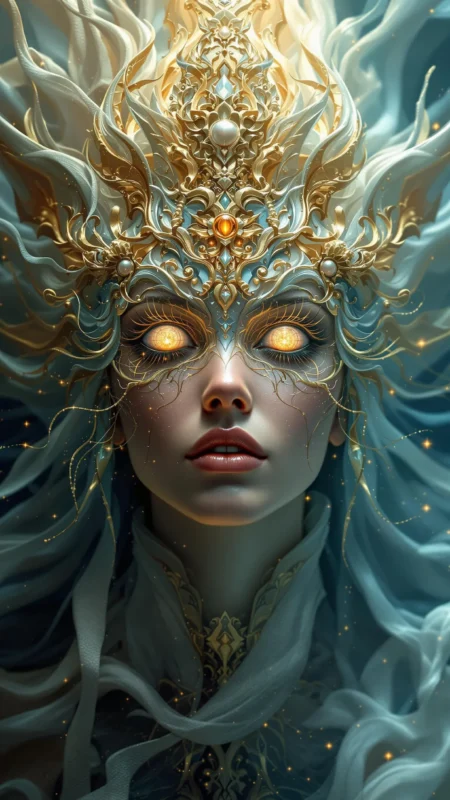
Cyclops

Archetype Meaning & Symbolism

Focused, powerful, singular, primitive, misunderstood, artisan, isolated, direct, unrefined, forceful, creator, lonely

  • Nobody, my friends, is trying to kill me by treachery, not by force.

If Cyclops is part of your personal mythology, you may...

Believe

  • That a single, powerful truth underlies all of life's complexity, and your job is to find and hold onto it.
  • That actions are the only real form of communication; words are mostly decoration or deception.
  • That self-reliance is the highest virtue, and depending on others is a form of weakness.

Fear

  • Being made to look foolish, especially by someone who uses wit and words to undermine your strength.
  • That your life's work, the one great thing you have built, will prove to be meaningless or be destroyed.
  • A profound and inescapable isolation, the feeling of being the last of your kind.

Strength

  • An unparalleled capacity for deep focus, allowing you to achieve a state of 'flow' and mastery that is inaccessible to most.
  • A foundational self-sufficiency that allows you to function and even thrive in conditions of extreme isolation or pressure.
  • A commitment to direct, unvarnished truth, which can cut through confusion and inspire trust in those who value honesty over comfort.

Weakness

  • A critical 'tunnel vision' that causes you to miss vital context, leading to disastrous misjudgments.
  • A profound difficulty with social and emotional intelligence, making it hard to build and maintain healthy, reciprocal relationships.
  • A susceptibility to being outmaneuvered by strategic thinkers who can exploit your literal-mindedness and predictable patterns.

The Symbolism & Meaning of Cyclops

To have the Cyclops wander into your personal mythology is to reckon with the awesome power of the singular vision. This archetype is the patron saint of the specialist, the hermit artist, the obsessive engineer. Its one eye is not a disability but a tool of immense focus, a lens that burns away all that is superfluous. It symbolizes a way of being that prioritizes depth over breadth, action over discourse, and tangible creation over abstract theory. When this energy is part of your story, you might find that your greatest achievements arise not from multitasking, but from a period of monastic dedication to a single, consuming project. The Cyclops teaches that to build a thunderbolt, you must be willing to shut the door to the rest of the world and live for a time by the light of your own forge.

Yet, this figure also carries the weight of the primal and the pre-social. The Cyclops is the raw, untamed power that exists within us before it is civilized by society’s rules. It is gut instinct over intellectual analysis, physical presence over polished rhetoric. To embody the Cyclops is to trust the wisdom of your hands and the force of your will. This could manifest as a profound connection to a craft, a way of knowing the world through making and doing. It is the part of you that feels most alive when building, fixing, or wrestling with a physical problem. It finds its truth not in conversation, but in the heft of a tool, the heat of the fire, and the silent, slow transformation of raw material into something of immense power and purpose.

Consequently, the Cyclops is often the great outsider, the misunderstood giant. Its directness can be perceived as crudeness, its focus as ignorance, its strength as brutality. If this archetype resonates with you, you may carry a narrative of being fundamentally different, of living by a simpler, more direct code in a world that values complexity and nuance. This can be a lonely path, the path of Polyphemus in his cave, feared and ultimately tricked by a world he cannot comprehend. But it is also a path of profound self-reliance, a mythos where your worth is not reflected in the eyes of others, but is forged in the solitary darkness of your own unique and powerful vision.


Cyclops Relationships With Other Archetypes

The Hero

The Hero arrives in the Cyclops’s world as a kind of troubling echo, a multiplicity that the singular gaze cannot resolve. Where the Cyclops is a creature of stone and unbroken earth, the Hero is perhaps a thing of water and light, all shimmering surfaces and deceptive depths. The relationship is not merely one of antagonism, but of ontological friction. The Hero, like Odysseus, may use language as a solvent, offering a name like “No-man” that dissolves the Cyclops’s concrete reality into a paradox. The Hero could be seen as a shard of a broken mirror, reflecting the world in a thousand fractured, clever pieces, while the Cyclops is the unblinking eye of the sun itself, a force that can only be met with a trick of the light, a feint, a story. The Hero, in essence, may represent the triumph of narrative over sheer, unblinking presence.

The Labyrinth

The Labyrinth and the Cyclops may be thought of as inverse architectures of terror. The Labyrinth is a dread of infinite, branching choice, a paralysis of possibility where every corridor is a question. Its horror is cerebral, a slow unraveling of the self in a maze of mirrors. The Cyclops, by contrast, could be the terror of a single, unbranching path—a corridor with no turns, no exits, only a brutal and oncoming finality. It embodies an absolute, locomotive certainty that is, in its own way, as maddening as the Labyrinth’s doubt. To encounter the Cyclops may be to find oneself in a spiritual Labyrinth whose only path is a straight line leading to one’s own consumption. He is the monster you see coming from a mile away, and the horror, perhaps, lies in the perfect, simple geometry of his approach.

The Forge

In the Forge, the Cyclops’s singular vision is redeemed; it is no longer a sign of brutish limitation but of sublime, creative focus. Here, the single eye is not a handicap but a necessary lens, one that can withstand the blinding glare of creation and see the essential form within the molten chaos. The Forge could be the one sanctuary where the Cyclops's nature is not monstrous but sacramental. Its relationship with this place is symbiotic, a covenant of hammer and heat. The Cyclops provides the unwavering will, the rhythmic, percussive force that beats meaning into raw material, while the Forge offers a vessel for this primal energy, a crucible where monolithic power is refined into a singular, world-altering object—a thunderbolt, a trident, a helm of darkness. The Cyclops may be the hammering, insistent heartbeat of all creation.

Using Cyclops in Every Day Life

Forging a Creative Breakthrough

When faced with a complex creative project, the Cyclops archetype invites you to enter the forge. This means shutting out the endless scroll of inspiration, the cacophony of critical voices, and the paralysis of infinite options. Your task is to find the single, white-hot core of the idea and hammer it into shape. It is a mythology of deliberate exclusion, where genius is not about knowing everything, but about ignoring almost everything to give one thing your total, undivided, primal power.

Navigating Information Overload

In an age that demands we have a nuanced opinion on all things, the Cyclops offers a radical respite: the power of the single lens. When overwhelmed by data or societal pressures, you may adopt its perspective. You could choose one metric, one value, one question, and view the situation through that eye alone. This is not ignorance, it is a strategic simplification. It is a way to find a solid truth, a single stone upon which to stand, in a river of conflicting information.

Establishing Unbreachable Boundaries

The Cyclops in his cave is a master of territory. When your personal space, psychic or physical, feels invaded, invoking this archetype can be a powerful act of self-preservation. It is the practice of becoming a mountain. It means communicating your limits with a simple, unadorned directness that requires no further explanation. The boundary is not a polite request; it is a fact of the landscape, and those who do not respect it will find the encounter brief and decisive.

Cyclops is Known For

Singular Vision

The iconic single eye, representing a powerful, sometimes dangerously narrow, focus. It symbolizes a way of seeing that penetrates directly to the core of a matter, forgoing peripheral distractions.

Primal Strength

A raw, untamed power that is of the earth itself. The Cyclops embodies a strength that is not learned or refined but inherent, a force of nature that builds and destroys with equal simplicity.

Master Craftsmanship

In one tradition, the Cyclopes were the divine smiths who forged Zeus's thunderbolts. This aspect represents the lonely, obsessive genius of the artisan, capable of creating objects of immense power through singular dedication.

How Cyclops Might Affect Your Personal Mythology

How Cyclops Might Affect Your Mythos

When the Cyclops becomes a central figure in your personal mythos, your life story may cease to be a winding river and instead become the forging of a single, great spear. Your narrative could be one of specialization, a deep dive into one domain where you become a master. The defining chapters of your life might be marked by periods of intense, isolated focus: the years spent perfecting a craft, building a business from scratch, or developing a singular skill to an almost supernatural level. Your myth is not that of the hero with a thousand faces, but the artisan with one perfect creation. The central conflict of your story may be the struggle to protect this singular vision from a world that constantly tries to distract, dilute, or dismantle it.

Alternatively, your mythos may be defined by your relationship to this raw, singular power, either as its wielder or its opponent. Perhaps your life is a chronicle of taming your own inner Cyclops: learning to temper your brute force with wisdom, to widen your narrow focus with empathy, and to use your great strength for creation rather than destruction. Or, your story could be an Odyssean epic, where your primary challenge is to outwit a great, simple-minded obstacle in your life—be it a rigid system, a powerful but unintelligent competitor, or a brutish aspect of your own past. In this narrative, your triumph comes not from matching strength with strength, but from using cleverness, strategy, and insight to blind the unseeing eye of the problem.

How Cyclops Might Affect Your Sense of Self

To see yourself through the eye of the Cyclops is to perceive your identity as being rooted in competence and power. Your self-worth may be inextricably linked to what you can build, create, or master. There could be a quiet, solid pride in your ability to focus, to shut out the noise and get things done. You might view yourself as a pillar of strength, a self-reliant force capable of weathering any storm through sheer endurance and will. This self-perception is not built on social validation but on tangible evidence: the finished project, the solved problem, the protected flock. You are the forge, and your self-esteem is the fire within it, burning hottest when you are engaged in the act of creation.

However, this singular self-image could also cast a long shadow of loneliness. You may see yourself as fundamentally other, a simpler creature in a world of complex games and social subtleties you can't, or won't, play. There can be a sense of being perpetually misunderstood, your directness mistaken for aggression, your silence for stupidity. This can foster a guarded, isolated sense of self, one that is proud of its independence but secretly yearns for a connection that doesn't require translation. You may feel like a giant living in a world built for smaller, more agile beings, and the core of your self-perception might be a quiet, aching solitude.

How Cyclops Might Affect Your Beliefs About The World

With the Cyclops as your guide, you may view the world as a place of raw potential, a quarry of uncut stone. Problems are not seen as intricate knots to be untangled, but as boulders to be shattered or carved. This perspective is profoundly direct and action-oriented. You may trust what is tangible and provable, and harbor a deep suspicion of elaborate theories, silver-tongued rhetoric, and bureaucratic complexity. The world is judged by its utility: what works, what is strong, what endures. It is a worldview that values bedrock over filigree, a world where the laws of physics and the results of hard labor are the ultimate arbiters of truth.

This lens, however, can render the world in a stark, brutalist black and white. The rich spectrum of human motivation, the subtle grays of ethical dilemmas, and the necessity of diplomatic compromise might be invisible to the Cyclops's eye. The world may become a simple binary: friend or foe, useful or useless, obstacle or tool. This can provide a powerful, if simplistic, moral clarity. But it is a clarity that comes at a cost, potentially blinding you to the interconnectedness of things and the humanity of those who operate with a different, more nuanced code. It is a worldview that can build great things but may struggle to foster a truly flourishing ecosystem.

How Cyclops Might Affect Your Relationships

In relationships, the Cyclops archetype may manifest as a powerful, uncomplicated, and fiercely protective form of love. If this is your pattern, you might express affection through acts of service and provision. You build the safest cave, you guard the flock, you forge the strongest tools. Your loyalty is a monolith: simple, massive, and immovable. You may offer your loved ones a fortress of stability and a shield against the harshness of the world. The language of your love is not poetry; it is the solid, reliable fact of your presence and your strength.

Yet, this singular approach can create deep chasms in intimacy. You may struggle with the unspoken language of emotion, the delicate dance of social nuance, and the need for verbal affirmation. Your directness, intended as honesty, could be received as a lack of care. A partner might feel protected but not seen, sheltered but not understood. A deep-seated fear of being tricked or manipulated, the primal wound of Polyphemus, may cause you to be suspicious of those who are emotionally articulate or complex. This can lead you to push away the very intimacy you crave, choosing the safety of your cave over the vulnerability of a truly shared heart.

How Cyclops Might Affect Your Role in Life

Your perceived role in life, under the influence of the Cyclops, is often that of the 'Master Builder' or the 'Indispensable Specialist'. You may believe your purpose is to contribute something singular and tangible to the world. You are not meant to be a king, a politician, or a socialite; you are the one who forges the king's crown, builds the city's aqueducts, or writes the code that runs the entire system. Your identity is fused with your function. Your place in the world is secured not by your connections, but by your unique and irreplaceable skill. You find your meaning in the solitary workshop, not the crowded forum.

Another possible role is that of the 'Guardian at the Gate'. You may see yourself as the unshakeable protector of a principle, a place, or a people. This is a role defined by strength, boundary, and unwavering resolve. You are the one who says 'no', the one who holds the line when others falter. Your function is to be the immovable object, the bulwark against chaos or compromise. This role doesn't require cleverness or adaptability; it requires the simple, immense power of conviction. You are the foundation upon which more complex structures can be safely built, the quiet, powerful anchor for your community or family.

Dream Interpretation of Cyclops

In a positive context, dreaming of a Cyclops could be a potent symbol from your unconscious, signaling a time of powerful and productive focus. To see a Cyclops at a forge or tending a flock suggests you are successfully harnessing your primal energies toward a creative and life-affirming goal. The dream might be an encouragement to simplify a problem that seems overwhelming, to trust your gut instincts, and to pour your attention into a single, worthy endeavor. It is a sign that the raw, untamed part of your psyche is being integrated in a constructive way, becoming a source of immense power and creation.

Conversely, to be pursued or trapped by a menacing Cyclops in a dream often points to a significant blind spot or a singular, overwhelming obsession in your waking life. The monster could represent a problem you are viewing with terrifying, narrow focus, or it may symbolize a brutish, unexamined part of your own personality—a prejudice, a destructive habit, or a raw anger—that is running rampant. The dream is a warning from your deeper self that your tunnel vision is becoming dangerous, causing you to act with destructive force and to be blind to the humanity of others or to crucial, peripheral details that could save you.

How Cyclops Archetype Might Affect Your Needs

How Cyclops Might Affect Your Physiological Needs

When the Cyclops informs your personal mythos, your relationship with your physiological needs becomes grounded and primal. The body is a tool, a furnace that requires fuel. There could be a profound satisfaction found in meeting basic needs simply and directly: hearty, uncomplicated food; deep, dreamless sleep; the solid reality of a secure shelter. These are not just biological functions; they are rituals that connect you to a more fundamental reality. Health is measured in strength, endurance, and the capacity for hard labor. It is a mythology that honors the body’s power and its direct connection to the physical world.

This perspective, however, might lead to a neglect of the body's finer requirements. You may see the body as a machine to be pushed to its limits, ignoring the subtle signals of distress until a major breakdown occurs. Holistic health, nutritional science, or the mind-body connection might be dismissed as frivolous. The focus on raw power could lead to a lifestyle that is functional but not necessarily nourishing in the long term. The Cyclops might eat to live and work, but may miss out on the subtle joys and wisdom that come from a more nuanced and attentive relationship with one's own physiology.

How Cyclops Might Affect Your Ideas of Belonging

In the Cyclops's world, belonging is not about being liked by many, but about being essential to a few. If this archetype shapes your story, you might find your sense of connection within a very small, tightly-defined unit: a family, a business partnership, a creative duo. Love and belonging are demonstrated through fierce loyalty and tangible acts of protection. You are the shepherd of your chosen flock, and your place is earned through your strength and utility within that small circle. It is a profound, if narrow, sense of community, built on shared purpose and mutual defense rather than broad social pleasantries.

The great struggle for the Cyclops, however, is the pervasive sense of being an outsider to the human race at large. Your directness, singular focus, and lack of social grace may create a constant, low-grade feeling of alienation. You might crave a deeper connection but feel ill-equipped to build it, as if you speak a different language from everyone else. This can result in a painful solitude, where you are surrounded by people but feel seen by none. The need for love and belonging may be thwarted by the very traits that make you powerful: your intimidating strength and your impenetrable, self-reliant nature.

How Cyclops Might Affect Your Feelings of Safety

For a person with the Cyclops in their mythos, safety is a fortress to be built, not a state to be wished for. Your narrative of security may revolve around self-reliance and the creation of impenetrable defenses. This could manifest as a drive for financial independence, the pursuit of a home that feels like a remote and defensible 'cave', or the mastery of a skill so specialized that it makes you indispensable and therefore secure. Safety is not found in the goodwill of others, but in your own strength and the solid walls you have built around your life. It is an active, ongoing project of forging security in a world perceived as potentially hostile.

Yet, this fortress can easily become a prison. The Cyclops's singular focus on threats can breed paranoia and a deep-seated suspicion of the outside world. The fear of being tricked or exploited—the 'Nobody' syndrome—can lead to a state of hyper-vigilance where every stranger is a potential threat and every offer of help is a suspected trap. This quest for physical and financial security may come at the cost of psychological safety. True peace remains elusive, because while the walls may keep dangers out, they also lock the loneliness in.

How Cyclops Might Affect Your Views of Esteem

Esteem, in the Cyclopean mythos, is forged, not granted. It comes from the deeply personal satisfaction of a job well done, a problem solved, a thing well made. Your self-worth is likely tied to your competence and the tangible proof of your abilities. You may not require applause or external accolades; the respect you crave is your own. This internal validation is powerful and robust. It is the esteem of the master artisan who knows the quality of their own work, regardless of what the marketplace says. It is a quiet confidence born from the knowledge that you can shape the world with your own hands and your own will.

Nonetheless, the foundation of this esteem can be perilously narrow. If your entire sense of self-worth rests on a single skill or role, you may be devastated if that role is taken away or rendered obsolete. Furthermore, while you may not seek widespread approval, the feeling of being respected for your power but not liked for your personhood can be corrosive. There may be a lingering insecurity that people value what you can do for them, but not who you are. This can lead to a disconnect where you feel competent and powerful, yet simultaneously unloved and fundamentally unworthy of personal affection.

Shadow of Cyclops

When the shadow of the Cyclops falls, its focused strength becomes monstrous tyranny. This is the individual so consumed by a singular goal that all other considerations—ethics, compassion, the humanity of others—are obliterated. In this shadow state, people become mere instruments or obstacles in the path of a great, unthinking will. It is the CEO who drives a company to success by destroying the lives of their employees, or the zealot who, in the name of a single truth, commits acts of unspeakable cruelty. This is not necessarily calculated evil; it is the far more terrifying blindness of obsession. The Cyclops's eye, in its shadow form, sees its object of desire and nothing else, and like Polyphemus, it will devour whatever stands in its way to satisfy a primal, simple appetite.

The inverted shadow of the Cyclops is a state of impotent, aimless rage. This is the giant blinded, robbed of his singular vision and left with immense, unchannelled power. An individual in this state feels a tremendous force locked within them but has no purpose, no forge, no great work to pour it into. This undirected energy curdles into bitterness, resentment, and self-pity. They may become sullen and permanently aggrieved, isolating themselves in a cave of their own misery, lashing out at any who come near. Their strength, once a source of pride, becomes a torment, a constant reminder of a potential they can no longer see how to fulfill.

Pros & Cons of Cyclops in Your Mythology

Pros

  • You can achieve a profound level of mastery and create works of lasting value and power.
  • You are grounded in a deep sense of self-reliance, making you resilient and difficult to manipulate through social pressure.
  • Your directness and simplicity can bring clarity to complex situations and provide a stable anchor for others.

Cons

  • Your singular focus makes you vulnerable to blind spots and catastrophic errors in judgment.
  • You may struggle with deep loneliness and a feeling of being misunderstood, finding it difficult to form emotionally rich connections.
  • Your lack of nuance and suspicion of cleverness can make you easy prey for strategic manipulation by those who understand your psychology.