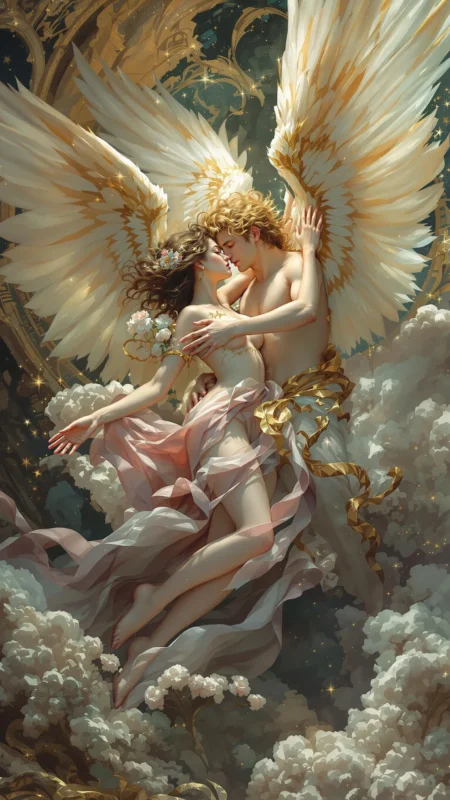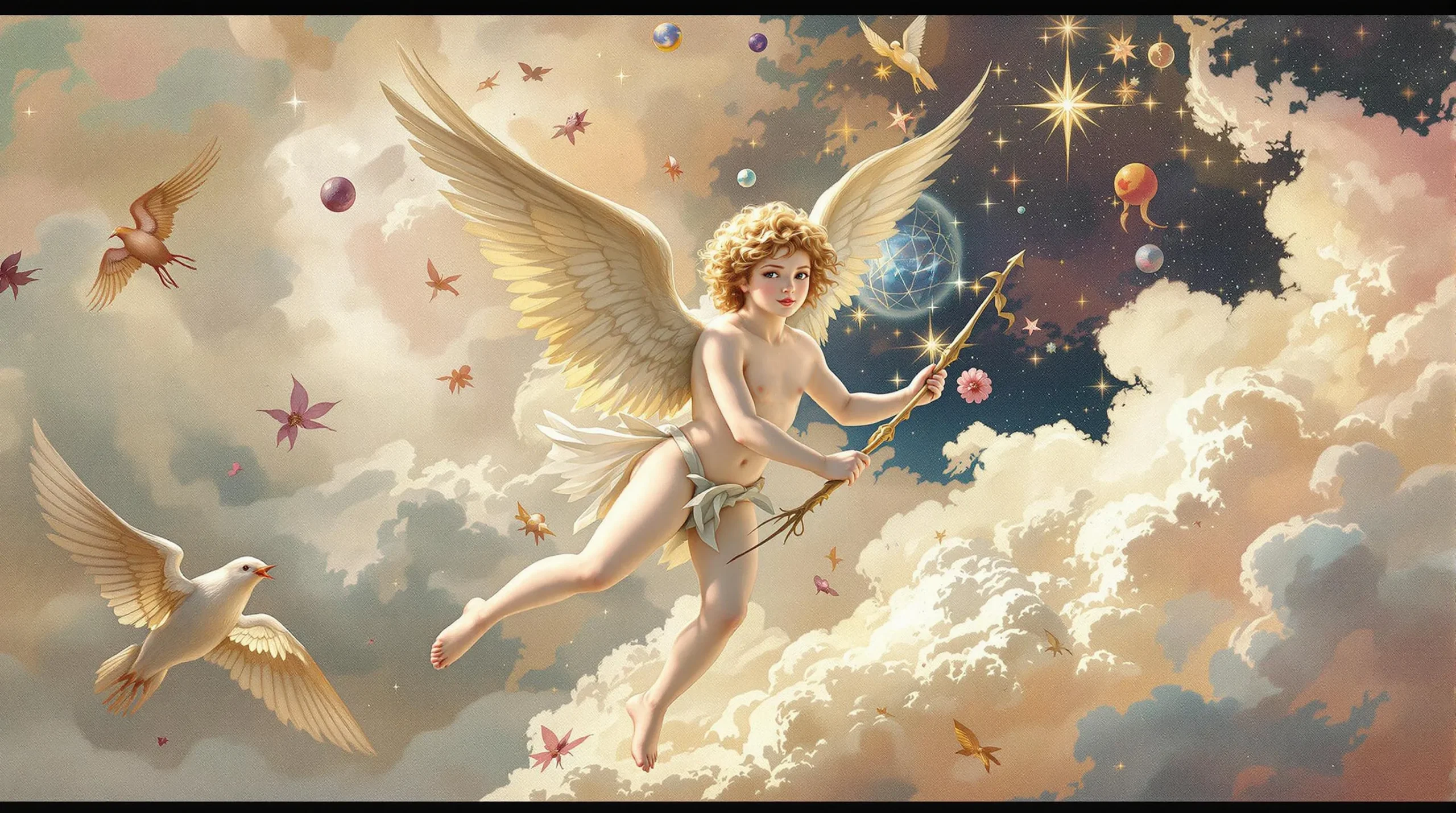


Cupid

Archetype Meaning & Symbolism

Impulsive, Meddlesome, Playful, Fickle, Potent, Unpredictable, Desirous, Catalyst, Unseen, Inevitable

  • Fear not, Psyche, my loveliest. I am your husband. All these things you see are yours.

If Cupid is part of your personal mythology, you may...

Believe

  • You may believe that the most significant events in life are not chosen, but arrive like a stray arrow, demanding a response.
  • You may believe that logic and reason are poor instruments for navigating matters of the heart and soul.
  • You may believe that being a catalyst for connection in the lives of others is a sacred and vital role.

Fear

  • You may fear a life devoid of passion, a state of immunity to the arrow's strike.
  • You may fear the loss of control that comes with overwhelming desire, being swept away by a force beyond your command.
  • You may fear that love is fickle, and an arrow that brings two together can just as easily be followed by one that drives them apart.

Strength

  • You may possess an intuitive ability to see potential connections between people, ideas, and opportunities.
  • You may have a profound courage to act on impulse and embrace transformative, unpredictable experiences.
  • You may exude a charismatic and playful energy that draws others in and fosters an atmosphere of creative possibility.

Weakness

  • You may have a tendency towards meddling in the affairs of others, sometimes with unintended and chaotic consequences.
  • You may have a potential for fickleness or a short attention span, always seeking the next spark rather than tending the existing flame.
  • You may be vulnerable to becoming lost in desire, prioritizing the thrill of passion over stability and long-term responsibility.

The Symbolism & Meaning of Cupid

To see the world through the lens of Cupid is to understand that the universe is not governed by cold physics alone, but by a web of unseen attractions, a shimmering network of affinities and repulsions. He represents the spark, the initial, often illogical catalyst that sets everything in motion. He is the force that connects the atom to the atom, the bee to the flower, the idea to the mind, the lover to the beloved. In a personal mythology, Cupid is not the chubby cherub of greeting cards, but a potent and sometimes terrifyingly amoral agent of change. He is the recognition that the most pivotal moments in life are rarely planned; they simply arrive, an arrow from an unseen bow, and demand a new story be written.

The Cupid archetype speaks to the profound wisdom of the irrational. He is the patron of the whim, the gut feeling, the sudden obsession that redirects a life. While other gods may preside over war, wisdom, or harvest—all things with discernible metrics and strategies—Cupid governs the one realm that defies all of them: desire. His presence in one's personal story suggests that the truest path is not always the most sensible one. It validates the choices made from a place of inexplicable passion, suggesting these are not deviations from the path, but are the path itself. He is the divine permission slip to fall in love, not just with a person, but with a project, a place, or a version of oneself.

His duality is essential. With arrows of both gold and lead, he reminds us that connection is a razor's edge. The same force that creates intoxicating love can also create bitter aversion. To have Cupid in your pantheon is to acknowledge that every attraction contains the seed of a potential repulsion, that every beginning carries the ghost of an end. He is the master of emotional intensity, forcing an engagement with life at its most vibrant and volatile. He symbolizes the beautiful, terrifying risk of opening oneself to another, to an idea, to the world, without any guarantee of the outcome.


Cupid Relationships With Other Archetypes

The Arrow

The Arrow may be seen not as a weapon, but as the physical vessel for an intangible whisper of fate. Where the Cupid is the intention, the grand, mischievous design, the Arrow is the moment of irrevocable contact—the sharp, silent flight that collapses the distance between two solitudes. It is, perhaps, the tangible form of a decisive word or an unshielded glance, an object that knows nothing of the messy, glorious aftermath it is engineered to create. The Cupid's relationship with the Arrow could be that of a poet to their final, perfect verb; the Arrow does not question its trajectory, it simply carries the entire, flighty weight of a potential love story and delivers it, piercing the veil of the mundane with a pinpoint of divine will.

The Alchemist

In the quiet, crucible-lit workshop of the soul, the Cupid and the Alchemist might be seen as kindred spirits, each devoted to a profound and mysterious transmutation. While the Alchemist labors to turn leaden reality into golden truth, the Cupid works with a similar, volatile material: human indifference, loneliness, and longing. The goal is a kind of emotional alchemy, the catalyzation of a reaction that turns the base metal of solitude into the radiant, priceless substance of connection. Theirs could be a shared understanding of process—of patient waiting, of combining volatile elements, of accepting that some experiments will simply explode, while others, perhaps by sheer grace, yield a glow that warms the entire world.

The Wallflower

The Wallflower is not an object of pity for the Cupid, but rather a kind of secret garden, a reservoir of untapped wonder. The relationship here may not be one of intervention, but of subtle curation. The Cupid does not shove the Wallflower into the dizzying center of the dance but, instead, might reroute the music of the room so that a single, poignant melody finds its way to their quiet corner. It is a partnership of potential, where the Cupid acts as a gentle turning of the light, illuminating the intricate beauty that has been there all along. In the Wallflower, the Cupid perhaps finds their most rewarding challenge: not to create a spectacle, but to arrange the elements so that a quiet, genuine magic can finally be perceived.

Using Cupid in Every Day Life

Navigating Creative Blocks

When inspiration feels like a walled garden, the Cupid archetype invites you to stop rattling the gate and instead look for an unexpected point of entry. It suggests that the next great idea may not come from disciplined effort but from a sudden, irrational affection for a forgotten novel, a conversation with a stranger, or a peculiar color. To invoke Cupid here is to allow yourself to be smitten by a random concept, to follow a whim not because it is logical, but because it feels alive and electric, letting that arrow of fascination pierce your creative inertia.

Rekindling a Long-Term Partnership

In the comfortable landscape of a lasting relationship, Cupid may be invited not as the instigator of initial romance, but as a divine prankster. His energy encourages the reintroduction of playful chaos: a spontaneous trip, a secret joke, a shared pursuit of something utterly new and slightly absurd. It is a reminder that love doesn't just thrive on stability; it requires moments of delightful disruption, of seeing your partner struck anew by a strange and wonderful light, reminding both of you that the initial, inexplicable spark is a renewable resource.

Making A Major Life Decision

Faced with a choice between the safe path and the passionate one, the Cupid mythos champions the leap. He is the patron saint of the decision that makes no sense on paper but feels like destiny in your bones. To consult this archetype is to ask: which option makes my heart beat faster? Which choice is not merely an improvement, but a seduction? It prioritizes the visceral, physiological pull toward a future, suggesting that the most profound commitments are not reasoned into, but fallen into, as if by a stray, golden arrow.

Cupid is Known For

The Golden and Leaden Arrows

Wielding arrows with two distinct purposes: golden-tipped ones to incite uncontrollable love and desire, and lead-tipped ones to create aversion and revulsion, making him a master of emotional polarity.

His Mother, Venus

His complex and often contentious relationship with his mother, the goddess of love. He frequently acts as her agent, carrying out her jealous or whimsical commands, yet he is also a powerful, independent force who can defy her.

The Tale of Cupid and Psyche

His own epic love story, in which he is sent to punish the beautiful mortal Psyche but accidentally pricks himself with his own arrow and falls in love with her. Their tale explores the trials required to unite the soul (Psyche) with desire (Cupid/Eros).

How Cupid Might Affect Your Personal Mythology

How Cupid Might Affect Your Mythos

When Cupid is a foundational figure in your personal mythos, your life story may cease to be a linear progression and instead become a constellation of potent, defining moments of connection. The narrative is punctuated not by achievements on a timeline but by the “arrow strikes”: the chance meeting that changed your career, the sudden fascination with a subject that became your life’s work, the love that reordered your universe. Your story is less a biography and more a collection of epic poems about these collisions. The plot is driven by serendipity and fateful encounters, with you as the protagonist who must constantly adapt to the beautiful, unpredictable disruptions orchestrated by this divine meddler.

This mythos could also cast you in the role of the arrow’s target, suggesting a life theme of surrender and response. You may interpret your history as a series of moments where you were “chosen” by a passion, a person, or a calling, rather than actively selecting it. This creates a narrative rich with a sense of destiny and magic, where the universe is an active participant in your tale. The central conflict in your story might be the ongoing tension between your own plans and the magnetic, often chaotic, pulls from this external, divine force. Your personal legend becomes about how gracefully you learn to dance with the unexpected.

How Cupid Might Affect Your Sense of Self

Integrating Cupid into your personal mythology may radically alter your self-concept, fostering an identity built on your capacity for passionate connection. You might see yourself as a vessel for a force larger than your ego, a conduit for the creative, generative power of desire. This perspective could liberate you from the tyranny of pure rationality, allowing you to accept and even celebrate the parts of yourself that are impulsive, whimsical, and driven by the heart rather than the head. You may come to value your own emotional intensity not as a flaw, but as a kind of superpower, a sensitivity to the unseen currents of attraction that flow through the world.

Furthermore, you might perceive a dual nature within yourself: you are both the target of the arrow and, at times, the archer. This means you may see yourself not just as a passive recipient of fate, but as a catalyst in your own right. You could feel a sense of purpose in your ability to spot potential connections and bring them to life, whether by introducing two friends who later marry, connecting a colleague with a dream job, or fusing two disparate ideas into a brilliant innovation. Your identity is tied to being an agent of serendipity, a playful meddler in the grand scheme of things, whose greatest talent is the ignition of possibility.

How Cupid Might Affect Your Beliefs About The World

A worldview shaped by the Cupid archetype is one that perceives the world not as a machine, but as a great, ongoing romance. It is a reality undergirded by a principle of attraction, where events are orchestrated by sympathy, affinity, and an invisible choreography of desire. In this view, synchronicity is not a mere coincidence but the primary language of the cosmos, the evidence of Cupid’s arrow at work. You may look for the poetic connections between things, the narrative threads, the magnetic pulls, rather than simple cause and effect. The world feels less like a problem to be solved and more like a mystery to be fallen in love with.

This perspective may also engender a certain comfort with chaos and a distrust of rigid systems. If the most important things in life—love, inspiration, calling—arrive unexpectedly, then grand, five-year plans may seem foolishly arrogant. Life is best lived with a kind of alert readiness, an openness to being delightfully ambushed by fate. This worldview prioritizes presence and responsiveness over meticulous planning. It finds meaning not in the predictable unfolding of a strategy, but in the gasp of surprise when an arrow, fired from an unknown quarter, finds its mark and changes everything.

How Cupid Might Affect Your Relationships

In the realm of relationships, the Cupid archetype prioritizes the genesis, the electrifying spark of initial connection. You may believe that the foundation of any significant bond—romantic or platonic—is a moment of inexplicable, mutual recognition, a feeling of being “struck.” This could lead you to value the “meet-cute” and the magic of the beginning, seeing it as the sacred text to which the relationship must always refer. You might be exceptionally skilled at creating the conditions for such sparks, both for yourself and others, fostering an atmosphere of playfulness and possibility where attraction can ignite.

However, this focus on the spark carries a shadow. You may struggle with the quieter, more laborious work of maintaining a flame after the initial blaze has calmed. The Cupid mythos can foster a certain fickleness, a restlessness that constantly seeks the thrill of a new arrow strike rather than the deep, steady warmth of a tended hearth. There could be an underlying fear that if love arrives by magic, it can depart just as mysteriously. Relationships, therefore, may feel both fated and precarious, a beautiful dance on the edge of a delightful, but potentially dangerous, whim.

How Cupid Might Affect Your Role in Life

Adopting the Cupid archetype may shape your perceived role in life into that of a Connector or Catalyst. You might not see yourself as a leader who directs or a follower who obeys, but as the essential third party who makes things happen by bridging gaps. This could be the person who introduces the co-founders of a future company, who suggests the artistic collaboration that wins awards, or who simply knows, with an uncanny intuition, which two lonely people at a party need to talk to each other. Your purpose is not to be the main event, but the magical incident that sets the main event in motion.

This role is one of wielding a subtle but potent influence. You may feel your function is to be a purveyor of delightful disruption, to gently nudge the world off its predictable axis and into more interesting configurations. It is a role that requires a light touch, a sense of play, and a profound faith in the power of connection. You may believe your greatest contribution to your community, your workplace, and your family is not what you build yourself, but the beautiful, generative chaos you unleash by putting the right elements in touch with one another at the right time.

Dream Interpretation of Cupid

To dream of Cupid in a positive light, perhaps seeing him wink at you or watching his arrow fly true to its mark, is often an auspicious sign of impending connection. This dream may signal the arrival of a new love, a surge of creative inspiration, or a sudden, passionate calling toward a new life path. It suggests that your soul is ready for a new chapter, and the universe is about to deliver the catalyst. Being struck by his golden arrow in a dream could symbolize a profound opening of the heart, a readiness to embrace vulnerability, and the beginning of an experience that will be deeply transformative and soul-enriching.

Conversely, a dream featuring a malevolent or menacing Cupid can be deeply unsettling. If he appears as a cruel trickster, firing arrows indiscriminately, or if you feel the sting of a leaden arrow, it may point to anxieties about love and connection. This could represent a fear of manipulation, a toxic relationship where affection is used as a weapon, or a feeling of being trapped by an unwanted obsession. Such a dream might be a warning from your subconscious about a connection that feels more like a curse than a blessing, or it could reflect your own shadow tendencies to play with the affections of others, highlighting the potential for emotional cruelty inherent in the archetype.

How Cupid Archetype Might Affect Your Needs

How Cupid Might Affect Your Physiological Needs

When Cupid is part of your personal mythology, your physiological needs might be interpreted through the lens of arousal and desire. The body's signals—a racing heart, a knot in the stomach, flushed skin—are not just biological responses; they are oracles. You may believe that your physical reactions to people, places, and ideas are the most reliable compass you have. The need for food, water, and shelter is filtered through a desire for experiences that also feed the soul's craving for intensity. You might prefer a simple meal shared with someone who fascinates you over a feast eaten in dull company, prioritizing the physiological thrill of connection over mere satiation.

This archetype grounds your existence in the visceral. The body becomes the primary site of knowing, the sacred ground where the divine spark makes contact with the mortal self. You may feel a deep need for physical touch, for the electricity of presence, and for environments that stimulate the senses. Neglecting this need for vibrant, physical engagement with the world can feel like a kind of starvation. Your well-being is directly tied to keeping the body in a state of alert readiness, tuned to the frequency of desire, prepared to receive and respond to the next arrow strike.

How Cupid Might Affect Your Ideas of Belonging

With Cupid in your mythos, the need for belonging is not met by assimilation or finding a group where you fit in. Instead, belonging is an active, often volatile, event. It is the experience of being “claimed” by a person, a tribe, or a cause through an undeniable, magnetic pull. You may believe you don't choose where you belong; you recognize it when you feel the arrow's strike. This creates intense, passionate bonds, where the feeling of belonging is akin to a homecoming you never knew you were seeking.

You might feel that your place is not with a static group, but within the dynamic, ever-shifting dance of connection itself. Your sense of belongingness is fulfilled by playing your part as a catalyst, a matchmaker, a bearer of sparks. You belong to the process. This can lead to a feeling of being connected to everyone and everything in potential, even if your immediate community is small. The need for love is met not just by receiving it, but by being an agent of its unpredictable, generative power in the world.

How Cupid Might Affect Your Feelings of Safety

The Cupid archetype presents a paradox of safety. On one hand, it creates a profound sense of insecurity by championing the unpredictable. To live by this mythos is to accept that your life can be upended at any moment by a force beyond your control. The safety of a stable, predictable life is sacrificed for the thrill of a fated one. There is a constant, low-grade vulnerability to being “struck,” which can be both exhilarating and terrifying. The walls you build for protection are seen as obstacles to the very thing that makes life worth living.

On the other hand, a deeper sense of security may be found not in avoiding the arrow, but in trusting your ability to survive its impact. Safety becomes a matter of resilience and adaptability. You may cultivate an inner certainty that you can handle the chaos of love, the pain of heartbreak, and the upheaval of sudden change. True security, in this worldview, is the confidence that even when passion wounds you, it will also transform you for the better. It is the safety of knowing that a life without the risk of Cupid's arrow is no life at all.

How Cupid Might Affect Your Views of Esteem

Esteem, in the context of the Cupid archetype, may be deeply entwined with desirability and the power to evoke passion. On a surface level, your self-worth might fluctuate based on your ability to attract others or be the object of desire. This can be a precarious foundation for esteem, tying it to external validation. However, a more profound sense of esteem can arise from a different source: the courage to be vulnerable to the arrow and to wield it responsibly.

Your self-respect may be built upon your willingness to act on passionate conviction, to take the risks that love and inspiration demand. Esteem comes from saying “yes” to the unpredictable journey, from trusting the wisdom of your heart over the caution of your mind. Furthermore, you may derive immense self-worth from your role as a catalyst for others. Seeing the positive connections that you've helped foster—the businesses, the art, the relationships that exist because of your playful meddling—can build a deep and abiding sense of purpose and value that is resilient to the whims of personal romance.

Shadow of Cupid

The shadow of Cupid emerges when the playful meddler becomes a malicious puppeteer. In this darker aspect, connection is not a sacred event but a game, and other people’s hearts are simply pieces on the board. The shadow Cupid delights in orchestrating drama for their own amusement, pairing people they know are incompatible, whispering secrets to incite jealousy, and watching the fallout with detached curiosity. This is the energy of the gossiper who weaponizes intimacy, the agent of chaos who uses the pretense of love to sow discord. The golden arrow is replaced by a poisoned dart, and the goal is not union, but an assertion of power through emotional manipulation.

At a personal level, the shadow manifests as obsession. The sweet pang of desire curdles into a fixation that disrespects boundaries and autonomy. The beloved is no longer a person but an object, a prize to be won at any cost. This can lead to stalking behaviors, possessiveness, and a refusal to accept rejection, as the shadow Cupid believes desire confers ownership. It is a desperate, hungry ghost of love, unable to distinguish between the life-giving force of genuine attraction and the destructive energy of an unfulfilled ego. This shadow turns the beauty of connection into a cage, trapping both the archer and the target in a cycle of suffering.

Pros & Cons of Cupid in Your Mythology

Pros

  • Your life is likely infused with a sense of magic, serendipity, and the potential for profound, unexpected connections.
  • You may possess a rare talent for bringing people and ideas together, acting as a vital catalyst for creativity, community, and innovation.
  • You are comfortable with spontaneity and risk, allowing you to seize transformative opportunities that more cautious individuals might miss.

Cons

  • You may experience a degree of emotional instability, as your life path is guided by the unpredictable whims of passion rather than a steady, rational plan.
  • You might be perceived as meddlesome or fickle, potentially damaging relationships by interfering or by abandoning commitments when the initial spark fades.
  • Your profound vulnerability to desire can make you susceptible to manipulation by others or lead you into destructive, obsessive patterns of your own.