The Straight Man
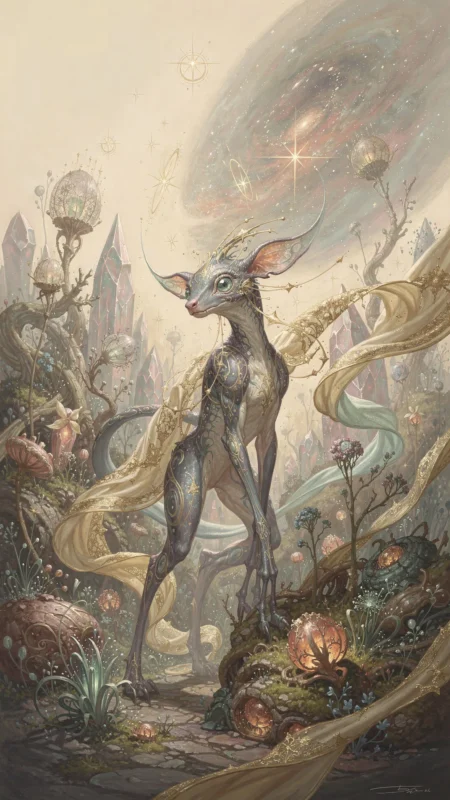
The relationship between The Critter and The Straight Man is perhaps less an opposition than a kind of cosmic symbiosis, the silent, unyielding cliff face to the Critter’s chattering, effervescent sea. The Straight Man provides the essential architecture of normalcy, the flat plane of reality against which The Critter’s anarchic spirit can finally achieve dimension. One might say The Critter does not exist to tear down the wall, but to dance upon its ramparts, to find every logical crack and fill it with the moss of absurdity. Without this stoic surface, this predictable gravity, The Critter’s energy could dissipate into a fine, invisible mist, a joke whispered in an empty room. The Straight Man, in his quiet refusal to break, gives the chaos its shape and, paradoxically, its purpose.
The Cage
The Cage, in all its forms—be it social etiquette, a rigid ideology, or a literal room—may seem The Critter’s natural enemy, but their dynamic could be more complex. The Critter seems to treat the bars of any confinement not as an obstacle but as a musical instrument, a percussive plaything upon which to drum out a frantic, joyful rhythm of escape. It is a creature of impossible physics, for whom a locked door is merely a suggestion. The Cage represents a legible world, a system of predictable consequence, and The Critter is the glitch in that system, the living refutation of its code. Its existence suggests that freedom is not about breaking the cage, but about realizing it was only ever a phantom of consensus, a shared dream from which The Critter has already awoken, laughing.
The Mirror
To confront a Mirror is perhaps The Critter’s most profound and terrifying trial. For a being composed of ceaseless motion, a frantic collage of borrowed voices and improvised faces, the still, singular image can feel like an accusation. The Mirror does not applaud the performance; it merely returns a silent, unblinking gaze. In that silvery depth, the frantic dance may slow, the cacophony of voices may fall quiet, revealing, for a terrible instant, the quiet sadness or the profound loneliness that the whirlwind of personality is designed to obscure. The Critter may try to outrun its reflection, to shatter it with a shriek or charm it with a manic grin, but the Mirror simply waits, holding the one truth that cannot be subverted: the image of the self, alone and unadorned.

 Believe
 Fear
Fear Strength
 Weakness