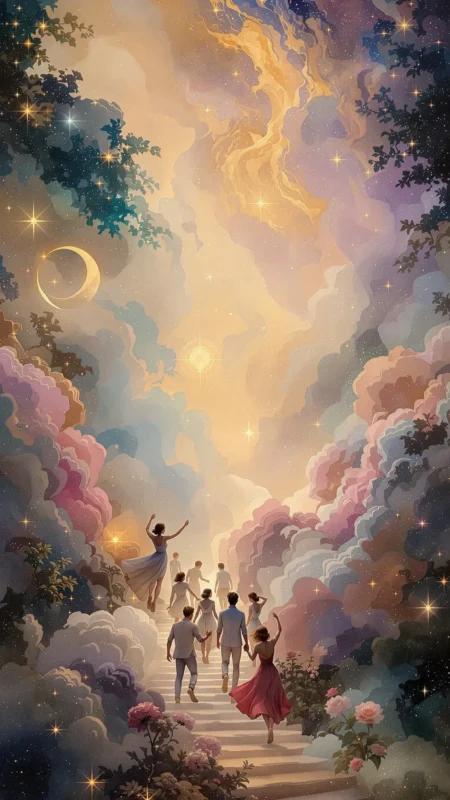
Concert

Archetype Meaning & Symbolism

Communal, cathartic, ephemeral, resonant, loud, unifying, chaotic, transcendent, synchronized, overwhelming

  • Find your note, then lose it in the chorus. True harmony is not about being heard, but about becoming the sound itself.

If Concert is part of your personal mythology, you may…

Believe

  • That the most potent form of spirituality is communal and loud, found in a field with thousands rather than alone in a quiet room.

    That a shared love for a song can create a bond that is as real and binding as any traditional tie of family or nation.

    That a life is best measured by its collection of peak moments, not by its steady accumulation of material things.

Fear

  • The silence and stillness that follows the show’s end, representing a return to a less vibrant, less connected reality.

    That you will one day become too old or too cynical to feel the pure, unadulterated joy of being in the crowd.

    Discovering that a person you admire has vastly different, or ‘bad,’ musical taste, perceiving it as a fundamental flaw of character.

Strength

  • A profound ability to be present in the moment, to surrender control and fully immerse yourself in a sensory experience.

    An innate talent for finding community and building rapport with strangers based on shared passions.

    A deep resilience, knowing that even after profound emotional lows, there is another ‘show,’ another peak experience of joy on the horizon.

Weakness

  • A tendency to chase the ‘high’ of the peak experience, potentially leading to neglect of the responsibilities and relationships of everyday life.

    A potential for confusing the intensity of a shared experience with genuine, lasting intimacy with the people involved.

    A vulnerability to groupthink, where the emotional swell of the crowd can override individual judgment and critical thinking.

The Symbolism & Meaning of Concert

The Concert is a modern, secular cathedral. It is a pilgrimage site where disparate souls gather for a shared ritual of communion, not with a deity, but with a sound, an artist, a feeling. In this space, the boundaries of the self become permeable. The personal mythology of one who embodies this archetype may be less about a lone hero’s journey and more about a search for moments of ecstatic dissolution into a greater, vibrating whole. It symbolizes the profound human yearning to be part of something larger than the solitary ego, to feel one’s own heartbeat sync with thousands of others in the presence of a unifying force. It is the ritualized surrender of the ‘I’ for the overwhelming power of the ‘we’.

This archetype also speaks to the profound power of amplification. A single human voice, a single guitar string, is made immense, capable of filling a vast space and touching every person within it. In a personal mythos, this could symbolize the belief that a single idea, a personal truth, or a private passion has the potential to become a resonant, culture-shaping force if it can find the right amplifier. It is about understanding that personal significance can be magnified through technology, community, and shared focus, transforming a quiet internal reality into a world-shaking external event.

Ultimately, the Concert is a masterclass in the beauty of the ephemeral. It is an intensely constructed reality that exists for only a few hours before vanishing, leaving only ringing ears, a faded wristband, and a memory burnished by its own brevity. For a personal mythology, this imparts a deep appreciation for the peak moment, a recognition that the most meaningful experiences are often fleeting. It fosters a life philosophy centered on the pursuit of temporary, transcendent states, understanding that their value is not in their permanence, but in their powerful, life-altering intensity.


Concert Relationships With Other Archetypes

The Shaman:

The lead performer often embodies the Shaman archetype, with the Concert serving as their ritual space. They do not merely play songs; they guide the assembled tribe on a sonic journey. Through rhythm and incantation (lyrics), the Shaman induces a collective trance state, facilitating a mass catharsis. The Concert is the Shaman’s sacred ground, where they channel emotion and energy, healing the assembled by making them forget, for a time, their individual wounds in favor of a collective ecstasy.

The Campfire:

The Concert stage is the electric descendant of the primordial Campfire. It is the central point of light and sound around which the community gathers, not for physical warmth, but for communal warmth. Here, the stories of the tribe are told not through spoken word, but through song. The flickering light of the campfire is replaced by strobes and spotlights, but the function remains: to hold the darkness at bay and affirm a shared identity through the performance of a common narrative.

The Storm:

The Concert has a deep, symbiotic relationship with the Storm archetype. It is a controlled tempest, a way for humans to experience overwhelming, elemental power within a defined container. The slow build-up of a song is the gathering of clouds; the crashing crescendo of a chorus is the thunder and lightning; the quiet aftermath is the clean, rain-washed air. A person with the Concert in their mythos may seek out these controlled storms as a way to engage with and release their own internal chaos in a way that feels both thrilling and safe.

Using Concert in Every Day Life

Processing Overwhelming Emotion:

When emotions like grief or rage become too vast for words, the Concert archetype offers a container for catharsis. It suggests that the solution is not to quiet the feeling, but to find a space where you can scream it, dance it, or let it be drowned out and carried by an even greater noise. It provides a model for finding a healthy, temporary oblivion, a ritual space to let the internal storm match an external one.

Forging New Community:

In moments of profound loneliness or transition, this archetype can serve as a blueprint for connection. It posits that the fastest way to build a tribe is through a shared peak experience. It encourages seeking out gatherings based on a common passion: music, art, a cause. The lesson is that deep bonds can be forged not just through slow, intimate conversation, but in the instantaneous, non-verbal understanding of singing a shared anthem in a crowd of strangers.

Navigating Apathy:

For a life that has grown gray and monotonous, the Concert archetype is a call to sensory reawakening. It is a prescription for feeling something, anything, intensely. It may guide you to seek out experiences that overwhelm the senses: the bone-shaking bass, the blinding lights, the sheer physical presence of a crowd. It’s a reminder that part of being alive is to occasionally submit to an experience that is bigger, louder, and more powerful than oneself.

Concert is Known For

Collective Effervescence

The almost tangible, electric energy generated by a large group of people focused on a single stimulus. It is the sociological term for the palpable buzz of a crowd united in emotion, a feeling of simultaneous individual and group transcendence.

The Encore

A ritual of manufactured endings and triumphant returns. This shared performance between artist and audience symbolizes a collective refusal to let a peak moment die, a shared belief in the possibility of one more song, one more surge of joy against the inevitable silence.

The Setlist

The carefully curated emotional journey of the event. It is a narrative structure built of sound, guiding the audience through valleys of quiet intimacy and mountains of explosive energy, proving that a sequence of songs can tell a story more profound than words alone.

How Concert Might Affect Your Personal Mythology

How Concert Might Affect Your Mythos

When the Concert is a cornerstone of your personal mythos, your life story is not a linear progression but a series of explosive, epoch-defining events. Chapters are not marked by years, but by tours and festivals: ‘The Summer of Lollapalooza,’ ‘The Year I Followed the Dead,’ ‘The Night I Saw Prince in the Rain.’ These are not mere memories; they are sacred texts, turning points where your understanding of yourself or the world was irrevocably altered by a chord, a lyric, a shared moment of silence with fifty thousand people. Your narrative prizes the pilgrimage, the quest for that perfect, fleeting alignment of sound and soul.

Furthermore, your mythos may frame you not as the protagonist, but as a vital member of a chorus. The story is not solely about your journey, but about the journey of your tribe, your scene, your generation. Your significance is measured by your participation, by your voice added to the roar. The heroic act is not slaying the dragon, but singing the anthem loud enough for the person in the back row to feel it. Your legend is intertwined with the legends of the artists you follow and the community you are a part of, a story of collective, not individual, glory.

How Concert Might Affect Your Sense of Self

Your concept of self may be fluid, porous, and defined by what you connect with. Identity is not a fixed, internal state but a reflection of the music that gives your feelings a voice. You understand yourself through the lyrics you identify with and the communities you join. There may be a sense that the ‘truest’ version of you is the one that emerges in the dark, in the crowd, unburdened by the expectations of daily life. This can lead to a powerful, externally-validated sense of identity, but also a potential fear of who you are when the music stops.

This archetype could also cultivate a self that is highly attuned to energetic frequencies. You might see yourself as a resonator, capable of both absorbing and contributing to the emotional tenor of a space. This can manifest as a deep empathy, an ability to feel the mood of a room as a physical sensation. The self is an instrument, and its well-being depends on being in environments that are ‘in tune’ with its own internal vibration, leading to a life spent seeking resonant people and places.

How Concert Might Affect Your Beliefs About The World

A worldview shaped by the Concert archetype may be one of radical, if temporary, optimism. You have witnessed empirical proof that thousands of strangers from all walks of life can put aside their differences and unite in a single, harmonious purpose. This can foster a deep-seated belief in humanity’s potential for unity, seeing conflict and division as states that can be overcome by the right focusing agent, the right ‘song.’ The world is a place where spontaneous, large-scale moments of grace are possible.

Conversely, this perspective might frame the mundane world as a pale, desaturated version of reality. Ordinary life, with its quiet routines and unspoken rules, can feel like a muted intermission between the vibrant, authentic moments found at a show. This can create a worldview of constant searching, a feeling that ‘real life’ is elsewhere. The world may be judged by its capacity to produce these peak experiences, leading to a restlessness and a potential disdain for the quiet, subtle beauty of the everyday.

How Concert Might Affect Your Relationships

Relationships may be forged in the crucible of shared musical devotion. The question ‘What music do you like?’ is not small talk; it is a profound inquiry into the state of another’s soul. The strongest bonds are with those who have shared the pit with you, who understand the secret language of a particular band’s catalogue. These relationships are built on a foundation of shared peak experiences, creating a powerful shorthand for intimacy. A single song can evoke a whole history of shared adventure and emotion.

This can also mean that relationships are filtered through a specific cultural lens, which can be limiting. There may be an unconscious sorting of people into those who ‘get it’ and those who don’t. A partner’s disinterest in your favorite band could be perceived as a deeper incompatibility, a sign that they cannot connect with a core part of you. The Concert archetype can risk turning relationships into an extension of fandom, where love is conditional on sharing the same playlist.

How Concert Might Affect Your Role in Life

Your perceived role in life might be that of the ‘Devotee’ or the ‘Pilgrim.’ Your purpose is not defined by a career or traditional markers of success, but by your dedication to a cause, an artist, or a scene. The role is one of participation and preservation: to bear witness, to keep the flame of a particular culture alive, to pass the stories (and the music) on. You see your life as a service to the art that has shaped you, and your role is to honor it with your presence and energy.

Alternatively, you may adopt the role of the ‘Conduit.’ Having been transformed by these experiences, you feel a duty to connect others to them. You are the friend who makes the perfect mixtape, who buys the extra ticket for someone who has never been, who evangelizes for the obscure artist you know will change their life. Your role is not just to experience, but to curate and to share, to amplify the signal so that others might find their own transcendence in the sound.

Dream Interpretation of Concert

To dream of a positive concert experience—one where you are near the front, the sound is perfect, and you are singing in unison with a joyous crowd—may symbolize a deep sense of harmony and belonging in your waking life. It could suggest that you have found your tribe, that your personal expression is aligned with your community, and that you are experiencing a moment of profound connection. This dream can affirm that you are in the right place, at the right time, contributing your unique energy to a beautiful collective whole.

A negative concert dream, however, might involve being lost from your friends, the music being discordant or painfully loud, or being unable to see the stage. Such a dream could point to feelings of social anxiety, alienation, or a sense of being ‘out of sync’ with those around you. It may be a manifestation of a fear that your voice isn’t being heard, or that you are a spectator to your own life rather than an active participant. It might signal a disconnect between your inner world and your external reality.

How Concert Archetype Might Affect Your Needs

How Concert Might Affect Your Physiological Needs

The Concert archetype honors the body’s need for overwhelming sensory input. In a world that often prizes quiet contemplation, it champions the physiological necessity of loud, vibrating, visceral experience. It suggests your body is not a temple to be kept in silent reverence, but an instrument that needs to feel the bass in its bones and the rhythm in its blood. This translates to a mythos where somatic release through dance, shouting, and intense physical sensation is not a guilty pleasure, but an essential form of maintenance for the nervous system.

This archetype may also underscore a deep, biological need for shared rhythm. The act of thousands of people clapping, singing, or breathing in time creates a literal physiological synchronicity, a powerful biological basis for the feeling of unity. Your personal mythos may hold that true health is not just about individual diet and exercise, but about regularly tuning your own organism to the rhythm of a larger group, finding well-being in collective biological resonance.

How Concert Might Affect Your Ideas of Belonging

For one guided by the Concert archetype, belonging is not a quiet, stable state; it is an ecstatic, transient event. You feel you belong most profoundly when you are losing your voice to a shared anthem, your sweat mingling with that of a thousand strangers. Love and connection are forged in the intense heat of these peak experiences, creating bonds that can feel more immediate and potent than those cultivated over years of quiet conversation. Belonging is a feeling to be chased, not a home to be built.

This can lead to a form of belonging that is intensely tribal and aesthetic. A band t-shirt becomes a clan marking, instantly identifying friend from foe in the wider world. Intimacy is built on a shared cultural lexicon of lyrics, albums, and concert memories. This creates powerful, immediate communities but can also create a barrier, making it difficult to find a sense of belonging with those who do not speak this specific cultural language.

How Concert Might Affect Your Feelings of Safety

Safety, within the Concert archetype, is a paradox: it is found in the heart of chaos. The press of the crowd, a force that might otherwise signal danger, becomes a protective embrace. Individual vulnerability is subsumed into the anonymity and power of the mass. The mythos here suggests that true security lies not in isolation and control, but in surrendering to a collective current. Safety is the feeling of being one of many, too numerous and unified to be a target.

This perspective can also mean that safety is profoundly tribal. Security is contingent on being with your trusted crew, the people who will pull you out of the mosh pit or hold your spot when you leave. Getting separated from them can trigger a primal fear of being alone and unprotected in a volatile environment. This informs a life where safety is not a place, but a small, mobile group of people who navigate the beautiful chaos of the world together.

How Concert Might Affect Your Views of Esteem

Self-esteem may be derived not from individual accomplishment, but from perfect participation. Your value is affirmed by your ability to be a good member of the crowd: to know the words, to clap on the off-beat, to give your energy fully to the performance. Esteem comes from the knowledge that you were an essential component in the creation of a collective magic, a single pixel in a breathtaking mosaic. You matter not because you stood out, but because you perfectly fit in.

Esteem might also be linked to the cultural capital of being a knowledgeable fan. Knowing the deep cuts, the band’s history, the bootleg recordings—this expertise is a source of status and respect within the tribe. Your self-worth is validated by your connoisseurship, your devotion proven by your depth of knowledge. This positions you as a ‘true believer,’ elevating you above the casual observer and solidifying your place in the community’s hierarchy.

Shadow of Concert

The shadow of the Concert archetype arises when the desire for unity becomes a demand for conformity, and the collective joy sours into mob mentality. It is the fan whose identity is so completely subsumed by the group that they lose all sense of individual morality, engaging in destructive or dangerous behavior in the name of devotion. It’s the relentless pursuit of the next sensory high, an escapism that treats real life, with its complex demands and quiet moments, as an inconvenient obstacle to be endured between floods of stimulation.

In its inverse shadow, a lack of this archetype can manifest as a deep-seated alienation or a brittle cynicism. It is the person who stands at the back with their arms crossed, intellectually deconstructing the event, unable to surrender to the simple joy of it. This protective cynicism walls them off from the potential for transcendent connection, leaving them feeling profoundly alone, an outsider observing a ritual whose language they cannot, or will not, understand. The fear of losing control prevents them from ever finding the freedom of release.

Pros & Cons of Concert in Your Mythology

Pros

  • Offers direct access to powerful states of catharsis, joy, and communal transcendence that can be profoundly healing and life-affirming.

    Provides a framework for building instant, powerful communities based on shared passion, combating loneliness and fostering a sense of belonging.

    Teaches the invaluable skill of being present, of surrendering to the moment, and of appreciating the intense beauty of ephemeral experiences.

Cons

  • Can foster a form of addiction to peak experiences, leading to a devaluing of the quiet, subtle, and consistent joys of everyday life.

    Risks the loss of individual perspective and critical thought in the emotional tide of the crowd, making one susceptible to groupthink.

    May lead to the formation of exclusionary social circles or ‘cliques’ based on aesthetic taste, limiting one’s capacity for broader human connection.