Believe
 Fear
Fear Strength
 Weakness
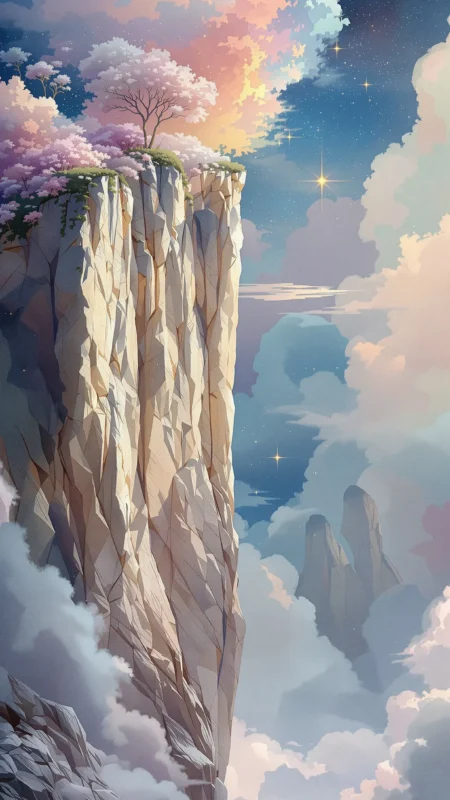
In the personal mythos, the Cliff is rarely about a gentle unfolding. It symbolizes the abrupt, the decisive, and the irrevocable. It is the caesura in the poem of your life, the hard stop that gives the preceding lines their meaning and the subsequent ones their direction. To have the Cliff in your story is to understand that growth is not always organic and slow, like a tree, but can also be tectonic and sudden, like an earthquake. It represents those moments of stark, terrifying clarity where the path forward is a leap and the path back has crumbled into the sea. The Cliff is the patron of the ultimatum, the point of no return, the final declaration after which silence hangs, pregnant with a new world.
Furthermore, this archetype speaks to a certain kind of perception. The world as seen from the cliff's edge is a grand tapestry, a map of possibilities and consequences laid bare. It is a perspective earned through risk. This is not the cozy, enclosed view from the valley floor. It is exposed, windswept, and total. Those who resonate with the Cliff may find themselves seeking these high, lonely places in their minds, detaching from the immediate fray to gain a strategic or philosophical overview. They may be the ones in a crisis who see the whole board, not just the next move, understanding that some situations demand a radical shift in elevation to be comprehended.
The Cliff is also a keeper of memory, its stratified layers a library of epochs. Each line in the rock is a story of pressure, of time, of what was once the sea floor and is now a perch for eagles. In your own mythology, this could manifest as a deep sense of your own history, an awareness that your present self is built upon layers of past experience and pressure. You may not be defined by the past, but you recognize that it gives you your current form, your unyielding strength, your specific, weathered texture. You are a living record of the forces that have shaped you.