

Circus

Archetype Meaning & Symbolism

Spectacular, nomadic, chaotic, collaborative, performative, transient, skilled, risky, joyous, melancholic

  • The only safety net is your skill. The only home is the road. The only moment is this one, under the lights.

If Circus is part of your personal mythology, you may...

Believe

  • The only truly sane response to an absurd world is to create a spectacle of beauty and wonder.

    My chosen family, the troupe I perform with, is more real and binding than any family I was born into.

    Skill, honed through relentless practice, is the only real form of security in a precarious life.

Fear

  • The applause will stop, and I will discover that without an audience, I am nothing.

    I will make a critical mistake without a net, and my failure will be public and catastrophic.

    The caravan will leave without me, and I will be left utterly alone, an outcast with no place to go.

Strength

  • Immense adaptability: you can pitch your tent and create a home anywhere, thriving in chaos and change.

    Mastery of a unique craft: you possess a specialized, highly developed skill that sets you apart and gives you a clear purpose.

    Building community among outsiders: you have a gift for gathering fellow misfits and forging them into a loyal, functional, and vibrant troupe.

Weakness

  • A deep-seated aversion to stillness and permanence, which can prevent the formation of lasting roots.

    A tendency towards a performative self, where authentic emotion is hidden behind a practiced facade, leading to intimacy issues.

    A potential dependence on external validation, where self-worth is dangerously tied to audience reaction and applause.

The Symbolism & Meaning of Circus

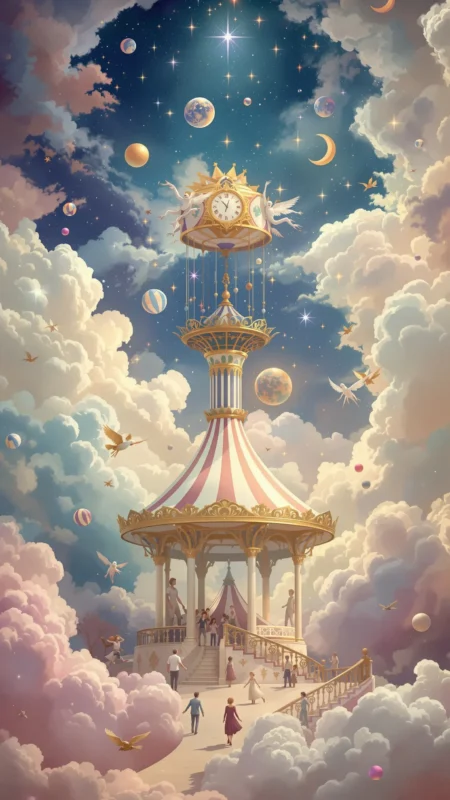
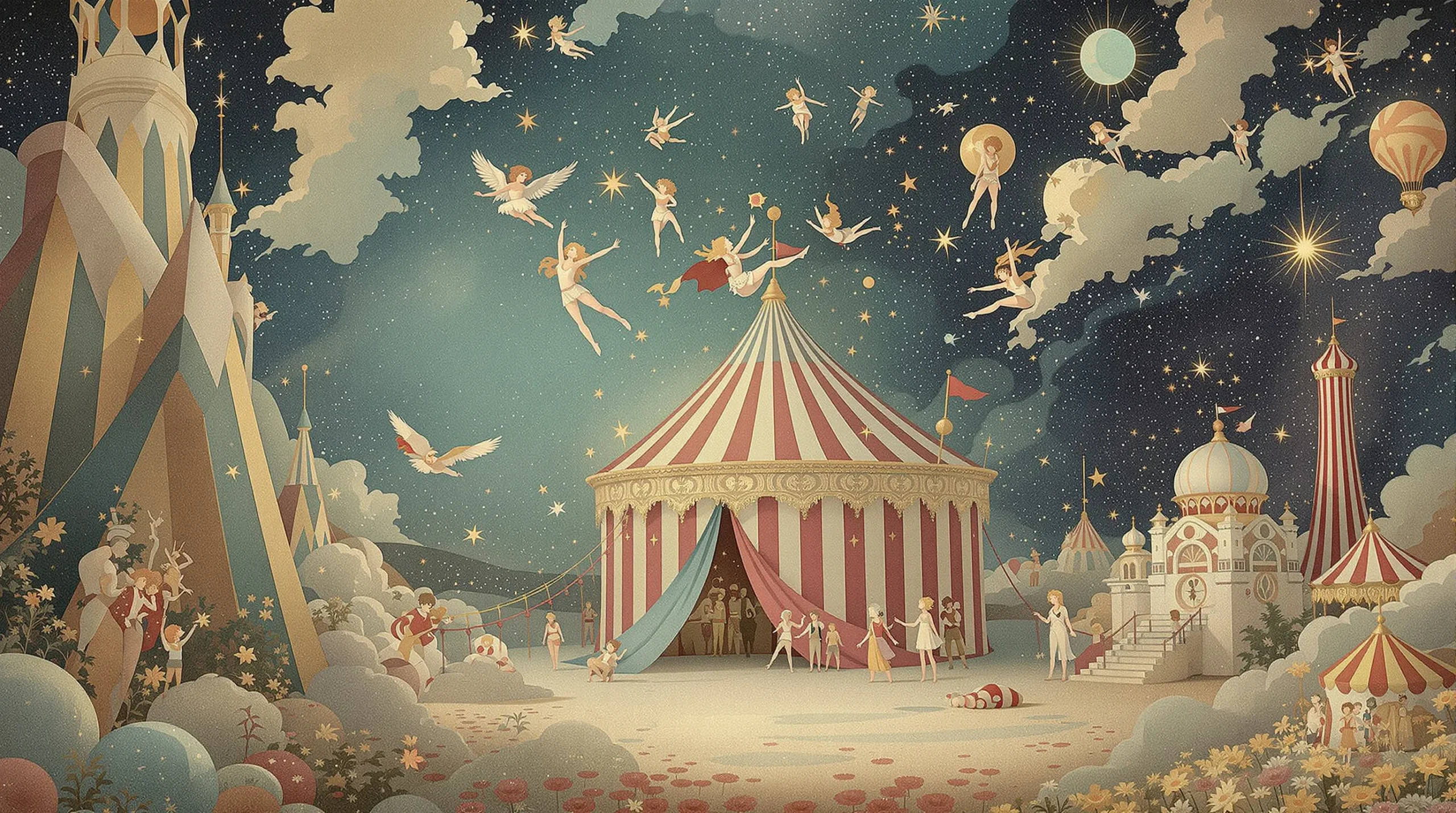
In the personal mythos, the Circus is a cosmology of controlled chaos, a portable universe pitched on the edge of the ordinary world. It symbolizes a life that rejects permanence for the sake of spectacle and experience. To have the Circus as a guiding archetype is to understand that your world is a Big Top you erect yourself, a space where the mundane laws of physics and society are temporarily suspended in favor of wonder. It’s a recognition that life may be a series of brilliant, transient acts rather than a single, stable narrative. The sawdust in the ring is the dust of countless towns you’ve passed through, and the roar of the crowd is the external validation you may both crave and resent.

The Circus also speaks to a profound duality: the dazzling performance versus the gritty reality backstage. Your inner landscape might be a contrast of glittering costumes and weary performers, of effortless grace on the trapeze and the aching muscles that follow. This archetype suggests a deep awareness of artifice, not as a form of deceit, but as a necessary and beautiful construction. You may understand that making the impossible look easy is the highest form of art, and that vulnerability is often best expressed through the mask of a clown, where a painted smile can hold an ocean of sorrow. Meaning is found in the collaborative effort, the split-second timing, and the collective breath held by the audience.

Furthermore, the Circus is a sanctuary for the peculiar. It is the magnetic center for those who possess strange and marvelous talents that have no place in the conventional marketplace. This archetype in your mythos could point to a core identity as a specialist, a misfit, a purveyor of the uncanny. You might feel that your true tribe is a collection of other acrobats, illusionists, and oddities. It is a mythology of radical inclusion, where worth is measured by the uniqueness of one’s contribution to the whole, and the price of admission is the courage to be spectacularly different.


Circus Relationships With Other Archetypes

The Trickster:

The Circus provides the stage upon which the Trickster, in the guise of the Clown, can perform its sacred duty. The Clown is the Circus's anarchic heart, its fool and its conscience. While the Circus is an ordered spectacle of daring feats, the Clown reminds it not to take its own grandeur too seriously. For an individual, this relationship may manifest as a tension between disciplined skill (the Acrobat) and the disruptive, chaotic impulse to subvert expectations (the Clown). Your mythos might involve a constant negotiation between mastery and joyful absurdity.

The Orphan:

The Circus is often a haven for The Orphan archetype. It is a quintessential “found family,” a place where those without roots can join a traveling caravan and create a new, vibrant kinship. The bond is not of blood but of shared risk, sweat, and sawdust. The relationship is symbiotic: The Orphan finds a home and a role within the troupe, and the Circus gains a new, loyal member whose devotion is forged in the absence of other ties. Your personal story may be one of finding your true family among a motley crew of fellow performers on life's fringes.

The Labyrinth:

While a Labyrinth is a confusing path to a single center, the Circus is a confusing spectacle with three centers, or perhaps none at all. It is a kinetic, bewildering space that overwhelms the senses, much like a labyrinth disorients the traveler. Yet, within the chaos of the circus, each performer follows a meticulously planned path. This relationship could symbolize your ability to create and follow your own internal order amidst external chaos. The world may look like a bewildering Labyrinth, but you navigate it with the focused, practiced choreography of a circus performer who knows exactly when to leap.

Using Circus in Every Day Life

Navigating a Multifaceted Career:

When your professional life feels less like a ladder and more like a three-ring spectacle with simultaneous, unrelated acts—a graphic designer who also teaches yoga and reads tarot—the Circus archetype offers a framework. It suggests you are not scattered, but a Ringmaster. Your mythos is not about singular focus but about managing a diverse troupe of talents, understanding that the magic lies in the breathtaking simultaneity of it all, not in a linear progression towards a single goal.

Harmonizing a Chaotic Family:

If your family dynamic resembles a troupe of clowns tumbling out of a tiny car—each member a loud, vibrant, and unpredictable force—the Circus provides a lens of collaborative chaos. Instead of striving for a quiet, conventional structure, you might see the beauty in the performance. Your role could be that of the acrobat, finding balance amidst the movement, or the strongman, providing a stable base. This archetype suggests that love in your family is expressed not through placid harmony, but through shared absurdity and the unspoken trust that everyone will catch each other.

Building Community on the Fringes:

For those who have always felt like outsiders, the Circus archetype models the creation of a “found family.” It affirms the power of gathering with other unique individuals to create your own center, your own traveling town. It’s about building belonging not on shared geography or background, but on a shared ethos of performance, mutual reliance, and a celebrated strangeness. You don’t need to find a place to fit in: you can pitch your own tent and create your own world.

Circus is Known For

The Three-Ring Structure

A metaphor for a life of managed complexity. It represents the capacity to hold multiple, often competing, narratives, projects, and identities in focus simultaneously. The individual is not just one act, but the entire show, requiring immense dexterity of attention.

The High-Wire Act:

Symbolizes the essential nature of risk, balance, and focus. Life is a wire stretched over an abyss, and safety is found not in avoiding the walk, but in mastering the skill to traverse it. It is about embracing precarity with profound concentration.

The Traveling Caravan:

Represents a nomadic existence and the formation of deep bonds outside of conventional societal structures. This is the “found family,” a troupe bound by shared purpose and experience, for whom home is not a place but a collective presence in motion.

How Circus Might Affect Your Personal Mythology

How Circus Might Affect Your Mythos

When the Circus is a cornerstone of your personal mythos, your life story may not read as a linear journey from A to B, but as a series of spectacular, self-contained tours. Each chapter is a new town, a new show, with a distinct beginning, a breathtaking middle, and a definitive end marked by the striking of the tent. Your narrative is episodic, defined by intense periods of performance and camaraderie followed by the melancholy quiet of the road. Major life events are not just milestones: they are center-ring acts, complete with risk, flair, and an audience, whether real or imagined. Your legend is not about the lands you conquered, but about the wonder you created and the caravan you kept together.

This archetype also shapes the very texture of your personal history, infusing it with a sense of the magical and the precarious. You might frame your struggles not as failures but as near-misses on the high wire, your successes as perfectly executed somersaults. Your personal cosmology could be populated by a cast of extraordinary characters—the Strongman who taught you resilience, the Illusionist who revealed the nature of perception, the Ringmaster who showed you leadership. Your mythos becomes a testament to the idea that the most profound life is one lived at the peak of its creative and physical capacity, a brilliant, transient show against the backdrop of an ordinary world.

How Circus Might Affect Your Sense of Self

Your sense of self may be kaleidoscopic, a collection of distinct personas and specialized skills rather than a single, unified identity. You are the acrobat, the clown, the ringmaster, the fire-eater. This is not duplicity, but multifaceted artistry. You may feel most yourself when you are performing, when a specific role allows a facet of your inner world to shine with incandescent clarity. There could be a deep comfort in the costume, the mask, the defined role, as it provides a structure through which to express complex emotions or talents that feel too unwieldy for everyday life. The self is not a static entity but a versatile performer, capable of adapting to the demands of the show.

Consequently, you may struggle with a sense of identity in moments of stillness, when the show is over and the audience has gone home. The quiet between acts can feel like an existential void. Your self-worth might be inextricably linked to your abilities and the applause they generate. This archetype could foster a deep-seated belief that to be ordinary is to be invisible. Therefore, your private self, the one backstage, might be a closely guarded secret, known only to a trusted few within the caravan. You may perceive yourself as a creature of the spotlight, defined by what you can do, rather than simply by who you are.

How Circus Might Affect Your Beliefs About The World

You may view the world not as a stable, predictable machine but as a grand, chaotic, and often absurd performance. Society’s rules are not immutable laws but merely the current act, and you are acutely aware of the rigging, the smoke, and the mirrors that hold it all together. This perspective could foster a healthy skepticism toward authority and convention, coupled with a deep appreciation for genuine skill and artistry wherever it is found. You might see the divine not in silent cathedrals but in the collective gasp of a crowd witnessing a death-defying feat—a moment of shared, transient sublimity.

This worldview embraces impermanence as a fundamental truth. Institutions, relationships, and homes are all tents that will eventually be struck. Therefore, meaning is not sought in permanence but in the intensity and beauty of the present moment. Your philosophy might be one of radical presence: the only reality is the high wire beneath your feet, the only future is the next leap. This can lead to a life of profound engagement and joy in the fleeting, but it can also cultivate a certain detachment, a reluctance to invest too deeply in anything that cannot be packed up and taken on the road.

How Circus Might Affect Your Relationships

Relationships may be understood through the lens of a troupe dynamic: interdependent, role-based, and forged in the heat of performance. Trust is paramount and non-negotiable, for on the high wire, your life is literally in your partner's hands. Bonds are formed with an intensity that outsiders may not understand, a kind of battlefield camaraderie born of shared risk and secrets. You may have a small circle of incredibly close confidants—your fellow performers—and a more transient, performative relationship with the rest of the world, the “audience.” Loyalty to the troupe could supersede all other allegiances.

The transient nature of the Circus, however, can make long-term, stable relationships outside the troupe challenging. The impulse to pack up and move on when the show gets stale or the town grows too familiar might be strong. There may be a pattern of intense but short-lived connections, a series of grand entrances and poignant farewells. Love and friendship are deeply felt but are understood to be part of the tour, not a final destination. The core emotional challenge is learning to balance the profound bonds of the caravan with the desire for roots, and accepting that for some, the two may be mutually exclusive.

How Circus Might Affect Your Role in Life

Your perceived role in life might be that of the specialist, the master of a peculiar and demanding craft. You are not meant to be a jack-of-all-trades in a conventional sense, but the one person who can walk the tightrope, swallow the fire, or make the entire world laugh and cry from behind a painted face. This is not just a job: it is a calling that requires monastic devotion and sets you apart from the mainstream. You may feel a responsibility to bring wonder and a touch of the impossible into a world that is often crushingly mundane. Your purpose is to be the spectacle.

This can also manifest as the role of the Ringmaster or director of your own small, eccentric universe. You may be the one who gathers the misfits, organizes the chaos, and presents it to the world as a coherent and dazzling show. Your function is to create a space where others with unique talents can flourish, to be the still point in the turning, three-ring world. You provide the structure—the tent, the ring, the schedule—that allows for breathtaking acts of freedom and creativity. Your role is to build the world in which you and your chosen family can not only survive, but shine.

Dream Interpretation of Circus

In a positive context, dreaming of the Circus may signal an integration of your many talents and aspects of your personality. It could represent a time of peak creativity, collaboration, and joyful performance in your waking life. Being an audience member filled with wonder might suggest a newfound appreciation for the spectacle of life itself. To be a successful performer in the dream, like a flawless acrobat, could indicate a sense of mastery and balance over a precarious situation. The dream affirms that you are successfully managing the chaos and finding harmony within it.

In a negative light, a circus dream could symbolize a feeling of being overwhelmed by chaos and having to juggle too many things at once. It might point to a fear of being a fraud, of your performance being exposed as a mere trick. A dream of falling from the trapeze or the high wire could articulate a profound fear of failure and the lack of a safety net in some area of your life. A menacing or sad clown might represent a shadow aspect, a forced happiness that conceals deep sorrow or a deceptive force you are contending with, either internally or externally.

How Circus Archetype Might Affect Your Needs

How Circus Might Affect Your Physiological Needs

Your relationship with your body's basic needs may be one of disciplined utility, much like a performer's. Sustenance is fuel for the act. You may adhere to rhythms of extreme physical exertion followed by periods of deep, necessary rest. Food might be less about comfort and more about energy, eaten on the go, a functional part of the itinerant lifestyle. Your body is not a temple for quiet contemplation but a finely tuned instrument for performance, and its needs are met with a practical, sometimes urgent, efficiency. There's little room for indulgence that might compromise the next show.

This archetype could also foster a heightened awareness of the body’s capabilities and limits. You might feel a profound connection to the physical self, a sense of awe at its resilience and grace under pressure. This is the acrobat’s knowledge, stored in muscle and bone. However, this intense physicality can also lead to a commodification of the body, where its worth is tied to its ability to perform. An injury is not just a health issue: it is an existential threat that could end your role in the show, making the body's well-being a source of constant, low-grade anxiety.

How Circus Might Affect Your Ideas of Belonging

Belongingness is not discovered by fitting into a pre-existing community, but by creating a new one from scratch. It is the profound bond of the caravan, the deep, unspoken understanding that unites a group of people who are all, in their own way, outsiders. You belong with the other oddities, the other performers. Love and acceptance are predicated on a shared strangeness and a mutual dependence for the success of the show and the safety of its members. This is a fierce, insular, and deeply loyal form of belonging, a circle of wagons against a hostile or indifferent world.

The challenge lies in connecting with those outside the circle. You may feel a permanent sense of being “other” when interacting with mainstream society, the “townies” who come to watch the show but can never truly be a part of it. Romantic relationships might be most successful with fellow performers who understand the transient lifestyle and the demands of the craft. There can be a profound loneliness in this: to be perpetually on display but rarely truly seen or understood by the audience you captivate. Belonging is intense, but its borders are starkly defined.

How Circus Might Affect Your Feelings of Safety

Safety is not found in static structures like houses or steady jobs, but in dynamic capabilities: skill, trust, and adaptability. The high-wire walker is safe not because the wire is thick or the ground is close, but because she has mastered the art of balance. Your sense of security may come from knowing you can handle risk, that you can land on your feet, that you can pack up and create a new life anywhere. The safety net is not a physical object but the web of trust connecting you to your troupe, the unspoken promise that they will be there to catch you.

This redefinition of safety, however, means you might feel deeply uncomfortable with conventional forms of security. A mortgage, a pension plan, a nine-to-five routine—these may feel like cages rather than shelters. This can create conflict with a world that equates stability with safety. Your safety is active, not passive. It requires constant vigilance, practice, and a willingness to live in a state of heightened awareness. The shadow of this is a pervasive feeling of precarity, the knowledge that a single misstep, a moment of lost focus, could lead to a catastrophic fall.

How Circus Might Affect Your Views of Esteem

Esteem is directly and powerfully linked to your unique skill and your contribution to the performance. It is earned nightly, under the lights, with the successful execution of your act. The roar of the crowd is the most potent affirmation of your worth. This creates a meritocratic sense of self-respect based on demonstrated mastery. You may hold yourself and others to incredibly high standards, believing that respect must be earned through discipline, courage, and a flawless performance. You find pride in being the only one who can do what you do.

This reliance on external validation and performance can make your self-esteem fragile. A bad show, a silent audience, or a period of rest and non-performance can trigger a crisis of worth. Your value feels conditional, contingent on your last success. There may be a relentless internal pressure to constantly top your previous act, leading to burnout. The archetype pushes you to learn how to separate your intrinsic worth as a person from your value as a performer, to find a way to appreciate yourself even when you are backstage and the costume is off.

Shadow of Circus

The shadow of the Circus emerges when the spectacle becomes a prison. The performance is no longer a joyful expression but a desperate, compulsory act. The smile of the clown becomes a rictus of psychic pain, a mask that can no longer be removed. Here, the controlled chaos devolves into a destructive, unmanaged mess. Relationships within the troupe become toxic and exploitative, mirroring the old-timey sideshow where uniqueness is caged and monetized rather than celebrated. The Ringmaster becomes a tyrant, cracking a whip not to guide but to dominate. The nomadic life ceases to be an adventure and becomes a frantic escape, never staying in one place long enough to face the consequences of the wreckage left behind.

In its shadow form, the archetype fosters a profound disconnection from authenticity. The self becomes so identified with the performance that the person backstage withers from neglect. It is a life of smoke and mirrors where even you begin to believe your own illusions, losing the ability to distinguish between the dazzling trick and the mundane truth. This can lead to a hollow existence, filled with the noise of applause but devoid of genuine connection. The love of risk curdles into self-destruction, and the high-wire act becomes a desperate gamble with no regard for one's own well-being, driven by the insatiable need for a bigger gasp from the crowd.

Pros & Cons of Circus in Your Mythology

Pros

  • It fosters an extraordinary resilience and adaptability, allowing one to thrive in dynamic and unpredictable environments.

    It encourages the development of unique, high-level skills and provides a framework for a life built around mastery and creativity.

    It provides a powerful model for creating “found families” and building deep, loyal communities outside of conventional structures.

Cons

  • A perpetual restlessness can make it difficult to establish stability, deep roots, or long-term commitments.

    The emphasis on performance can lead to a disconnect from one’s authentic self and a reliance on external validation for self-worth.

    The high-stakes, high-pressure environment can lead to burnout, anxiety, and a sense that safety is always precarious.