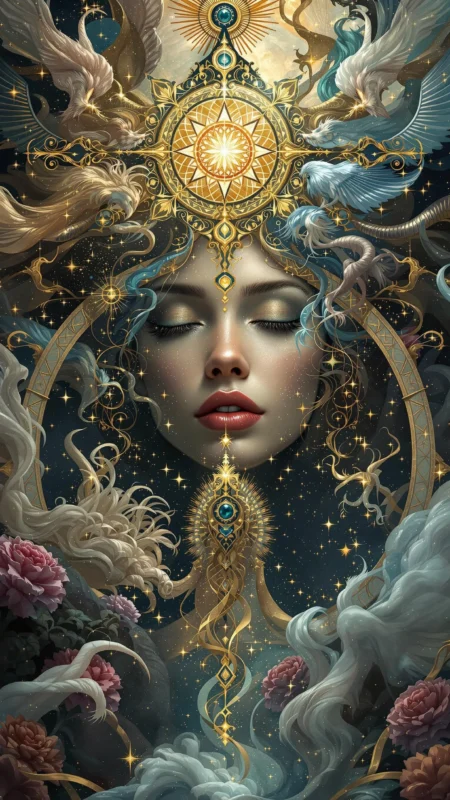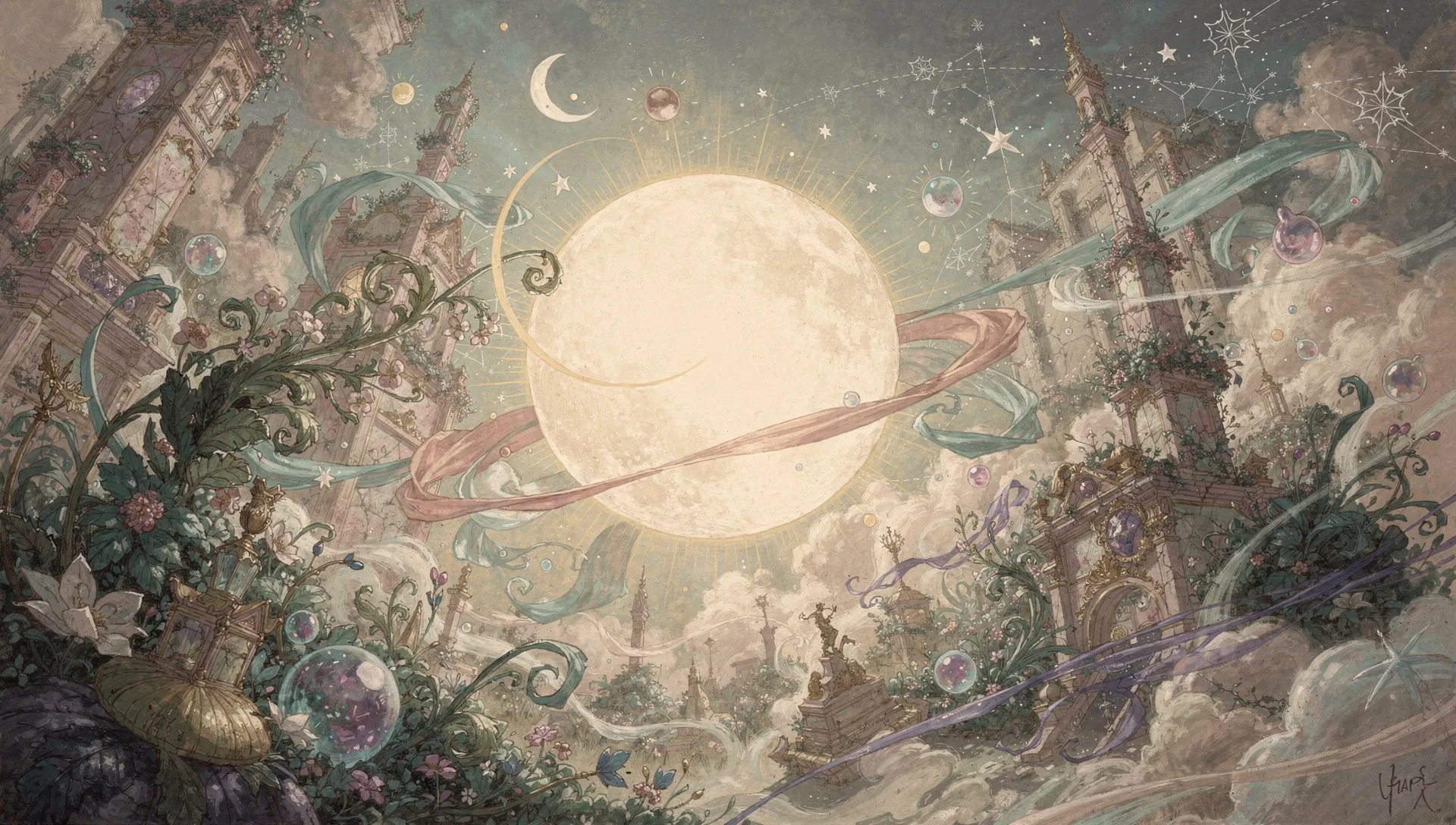


Circle

Archetype Meaning & Symbolism

whole, unified, cyclical, endless, inclusive, protective, repetitive, empty, perfect, containing

  • There is no true start or finish, only the constant, elegant return to what you already are.

If Circle is part of your personal mythology, you may...

Believe

  • That what goes around, comes around; the universe has a natural, cyclical form of justice and consequence.
  • That everything is interconnected, and the separation between self, others, and the world is an illusion.
  • That there are no true endings, only transformations and the beginning of a new cycle.

Fear

  • Being trapped in a meaningless, repetitive loop with no hope of change or escape.
  • The breaking of the circle: the disintegration of a family, the loss of a community, the end of a core relationship.
  • Linearity and finality; a point of no return, an irreversible ending, a problem with no cyclical solution.

Strength

  • The ability to see the big picture, understanding how disparate parts connect to form a whole.
  • Creating and sustaining strong, inclusive, and protective relationships and communities.
  • A deep resilience born from the understanding that difficult phases are part of a cycle and will not last forever.

Weakness

  • A resistance to necessary change or outside influences, leading to stagnation and insularity.
  • A tendency to become stuck in ruts or unproductive patterns, endlessly repeating the same mistakes.
  • Difficulty with direct, goal-oriented tasks or thriving in linear, hierarchical systems that demand a break from cyclical thinking.

The Symbolism & Meaning of Circle

In the personal mythology of a modern life, the Circle may emerge not as a simple shape but as a fundamental principle of being. It is the wedding band, a tangible promise of unbroken connection. It is the round table, where power is not concentrated at a head but distributed equally among its constituents. To have the Circle as a key symbol in your mythos could suggest a life built on the pursuit of wholeness over hierarchy. You may find yourself drawn to unifying disparate ideas, reconciling paradoxes within your own character, and seeking a sense of completion in your projects and relationships that feels less like a triumphant finish and more like a quiet, resonant hum of integrity.

This archetype also deeply informs our perception of time. While the dominant culture often narrates life as a linear progression—a relentless march from birth to success to death—a Circle mythology embraces a cyclical reality. Your story might not be about “making progress” but about deepening your understanding with each revolution. A recurring challenge is not a sign of being stuck, but an opportunity to engage with a core life lesson from a new vantage point. This view could offer profound resilience; setbacks are not dead ends but simply a point on the wheel that will, inevitably, turn upward again. The past is not behind you; it is part of the orbit you perpetually travel.

Furthermore, the Circle speaks to the nature of community and belonging. It is the campfire, the city wall, the shared orbit of a family. It delineates a clear 'inside' from an 'outside,' offering a powerful sense of safety and identity to those within its bounds. Your mythos may revolve around the creation and protection of such spaces. This could be the fierce loyalty of a small group of friends or the holistic, all-are-welcome ethos of a community project you lead. The Circle posits that true strength isn’t in standing alone, but in being a vital, irreplaceable part of a complete and functioning whole.


Circle Relationships With Other Archetypes

The Line

The Line is the Circle's ontological opposite. Where the Circle is inclusive, cyclical, and holistic, the Line is directional, goal-oriented, and sequential. In a personal mythos, these two forces may be in constant tension. A life dominated by the Line is one of milestones, achievements, and forward momentum, often at the expense of holistic well-being. A life guided by the Circle may risk stagnation for the sake of integrity. The challenge for an individual is to integrate them: to walk a path (a Line) that respects the cyclical needs of the self (the Circle), creating a journey that is both progressive and whole.

The Center

The Circle finds its definition in relation to the Center. The Center is the still point, the axis, the source from which the Circle radiates and around which it revolves. Without a Center, a circle is just an empty loop. In one's life story, the Center could be a core value, a foundational relationship, a spiritual belief, or a sense of purpose. The Circle is the life you build around it—the community, the routines, the work. If your mythos includes the Circle, you may be perpetually engaged in the act of defining, discovering, or protecting your Center, for you understand that the integrity of your entire world depends on its stability.

The Spiral

The Spiral is the Circle evolved, imbued with the dimension of time or growth. It represents repetition with a difference, a cyclical journey that elevates with each pass. If the Circle is the comfort of the familiar season, the Spiral is understanding that you are not the same person who experienced that season last year. For someone with the Circle archetype, an encounter with the Spiral can be transformative. It offers a way out of the Circle's potential shadow of stagnation, suggesting that one can return to core themes without simply repeating them. It is the path of mastery: revisiting the basics, but at a higher level of consciousness.

Using Circle in Every Day Life

Navigating Career Transitions

When your professional life feels less like a ladder and more like a wander, the Circle archetype suggests this is not failure but a gathering of disparate points into a whole. A career in law, followed by a pivot to baking, then to community organizing, may not seem linear. Yet, viewed through the Circle, these experiences are not rungs on a ladder but radii of a single self, each contributing to a more complete and integrated professional identity. You are not climbing, but rather, becoming more fully yourself, rounding out your being with each new venture.

Processing Grief

The common narrative of grief is a line: a period of pain one must “get through” to reach an endpoint of acceptance. The Circle reframes this. Grief may be a cycle one revisits, like seasons. The first anniversary of a loss is a return to the starting point, but you arrive with a year’s worth of new perspective. The pain may be familiar, but you are not the same. This archetype allows for grief to be a lifelong companion rather than an enemy to be vanquished, integrating loss into the wholeness of one’s story without the pressure of a finish line.

Approaching Creative Blocks

A creative block often feels like a wall on a linear path. The Circle suggests stepping off the path entirely. Instead of trying to push forward, you could return to your origins: the initial spark of the idea, the influences that shaped you, the fundamental questions you sought to answer. This is not regression; it is a creative pilgrimage to the center of your own wellspring. By completing this loop, you may find the project is not blocked but was simply waiting for you to re-discover its core, its reason for being, allowing the work to flow from a place of renewed integrity.

Circle is Known For

Inclusion and Wholeness

The Circle is known for its ability to contain, to hold all parts within its boundary without hierarchy. It represents a complete system, whether that be a community, a psyche, or a cosmos. Everything inside belongs.

Cyclical Nature

It embodies the eternal return. The Circle is the shape of seasons, of planetary orbits, of life, death, and rebirth. It speaks to the patterns that govern existence, suggesting that nothing is ever truly lost, only transformed and revisited.

Perfection and Infinity

As a geometric form, the circle is a symbol of perfection, with no beginning or end. This connects it to concepts of the divine, eternity, and the infinite, as seen in halos, the Taoist yin-yang, or the Ouroboros devouring its own tail.

How Circle Might Affect Your Personal Mythology

How Circle Might Affect Your Mythos

When the Circle shapes your personal mythos, your life story may eschew the traditional narrative arc of linear ascent. The plot is not about a hero who leaves home, conquers a dragon, and returns a king. Instead, your mythos might resemble a mandala: intricate, symmetrical, and focused on the integration of disparate parts into a unified whole. Your defining moments may not be victories or failures, but moments of profound connection or realization, where you suddenly see how the scattered pieces of your life fit together. The central conflict of your story might be the ongoing struggle to maintain this wholeness against forces of fragmentation and chaos.

Your narrative might be organized by themes rather than chronology. It’s a story of orbits, not timelines. You may find yourself returning to the same places, people, or problems throughout your life, not because you are stuck, but because your mythos demands a deepening engagement with these core elements. The point of your journey is not to arrive at a final destination, but to more fully inhabit the circumference of your own being. Success is measured by integrity and resonance, not by distance traveled from a starting point.

How Circle Might Affect Your Sense of Self

A view of self informed by the Circle is one of inherent completeness. You may not see yourself as a work-in-progress marching toward a future, perfected version. Instead, you may perceive the self as a system that is already whole, containing multitudes: the light and the shadow, the past and the present, the strengths and the so-called flaws. Self-acceptance, in this context, is not a goal to be achieved but a principle to be lived. The task is not to eliminate unwanted parts but to understand how they contribute to the entire circle of your identity.

This can foster a deep, quiet confidence that is not dependent on external validation. Your sense of worth may come from this feeling of internal coherence. However, it might also create challenges in self-assessment. If all parts are equally part of the whole, it can be difficult to motivate change or acknowledge when a particular aspect of the self is causing harm. The quest for wholeness can sometimes look like an excuse for not striving, for not breaking a comfortable, if limiting, personal orbit.

How Circle Might Affect Your Beliefs About The World

Your worldview could be fundamentally relational and systemic. You may see the world not as a collection of separate objects and individuals, but as a vast, interconnected web where every action ripples outward, eventually returning to the source. This perspective could foster a profound sense of responsibility and empathy. Issues like climate change or social injustice are not distant problems but disruptions in a shared whole, breaks in a circle that contains you. History, for you, is not a line of progress but a series of recurring archetypes and patterns, offering wisdom if we are willing to see the cycles.

This holistic view can also breed a certain kind of fatalism or passivity. If everything is part of a grand, cosmic cycle, individual agency may feel diminished. The belief that “what goes around, comes around” could lead to a sense of cosmic justice, but it may also discourage direct intervention, fostering a belief that things will sort themselves out in their own time. The world is a self-correcting system, and your role might feel more like that of an observer than a prime mover.

How Circle Might Affect Your Relationships

In relationships, the Circle archetype fosters a desire for profound, all-encompassing connection. You may seek a partner or a community that creates a complete world with you. The ideal is a bond of mutual inclusion, a safe container where both parties can be fully themselves. These relationships can be incredibly strong, loyal, and nurturing, characterized by a sense of shared destiny and a private, understood universe. The boundary between 'us' and 'the world' may be sharply defined, creating a powerful feeling of sanctuary.

However, this same impulse can create relationships that are insular and closed-off. The perfect circle of a couple or a family can become a fortress, resistant to new people, ideas, or experiences that might threaten its perfect symmetry. There can be a fear of the outside world, and a tendency toward co-dependence, where the identity of the individual becomes lost in the wholeness of the unit. The challenge is to maintain the integrity of the circle while allowing for permeable boundaries that let life in and out.

How Circle Might Affect Your Role in Life

Your perceived role in life might be that of a Unifier or a Container. You may not feel driven to be at the front of the charge, but rather at the center of the gathering. Your purpose could be to create and maintain harmony within a system, whether it’s a family, a team, or a community. You are the one who ensures everyone feels included, who reminds the group of its shared purpose, who holds the space for connection to happen. Your influence is gravitational, pulling disparate elements into a coherent orbit.

This role is essential but often invisible in a world that valorizes linear achievement. You may feel most yourself when you are facilitating, mediating, or simply being the still point around which others revolve. The risk is that this role can become self-sacrificing. As the container, you may neglect your own needs for the sake of the whole. You might hold the circle together at your own expense, feeling the pressure to be the perfect, unbroken boundary for everyone else, leaving no room for your own fragmentation or needs.

Dream Interpretation of Circle

In a positive context, dreaming of circles—a ring, a full moon, a round table, a mandala—may symbolize a powerful psychic event of integration. It could suggest that you are nearing the completion of a psychological or emotional cycle. Perhaps you are finally making peace with a difficult past, or disparate parts of your personality are coming into a harmonious relationship. The dream circle is a sign of wholeness, of psychological health, and of alignment with your own center. It may be an affirmation that you are on the right path, one that is leading you back to the truth of yourself.

Conversely, a circle in a dream can carry a profoundly negative charge. It might manifest as a cage, a vortex, or the terrifying feeling of running in circles and getting nowhere. This could point to a feeling of being trapped in a repetitive, self-defeating pattern in your waking life—an addiction, a toxic relationship, a dead-end job. It can symbolize stagnation, hopelessness, and the shadow side of wholeness: the closed loop that permits no escape or growth. Being circled by predators in a dream could also signify a feeling of being trapped by external threats or internal anxieties, with no clear path to safety.

How Circle Archetype Might Affect Your Needs

How Circle Might Affect Your Physiological Needs

When the Circle informs your mythos, your relationship with your body’s basic needs may be governed by a deep respect for natural cycles. You may find yourself instinctively aligning with circadian rhythms, honoring the need for sleep and wakefulness not as an inconvenience but as a sacred cadence. Eating might not be about rigid diets but about intuitive, cyclical patterns: listening to the body’s seasons of hunger and satiety. This archetype fosters a view of the body as a self-contained, self-regulating ecosystem, a whole system that knows what it needs if you are quiet enough to listen.

This orientation could lead to a profound state of physical well-being, one rooted in harmony rather than forceful control. You might be drawn to practices like yoga or tai chi that emphasize breath and flow, seeing health not as the absence of illness but as the presence of balance. The body is not a machine to be optimized but a world to be inhabited. It is a perfect circle of interconnected systems, and the goal is to maintain its fluid, dynamic equilibrium.

How Circle Might Affect Your Ideas of Belonging

The Circle archetype places the need for belonging at the very core of existence. Love and connection are not just desirable; they are essential for wholeness. To belong is to be an integral part of a circle—a family, a partnership, a circle of friends, a community. Your mythos may be a continuous quest for, and celebration of, these inclusive bonds. You may feel that you are only truly yourself when you are securely held within a relational container of trust and mutual recognition.

This drive can create incredibly deep and resilient relationships. You may excel at fostering a sense of 'us,' a shared identity that provides immense comfort and strength. However, the shadow side of this need is a profound fear of exclusion. Being cast out of the circle is akin to a psychic death. This could make you overly compliant within your groups, afraid to voice dissent for fear of breaking the harmony. It can also lead to a sharp 'us vs. them' mentality, where the safety of the in-group is predicated on the exclusion or suspicion of the out-group.

How Circle Might Affect Your Feelings of Safety

From a personal mythology perspective, the Circle archetype suggests that safety is found in containment and clear boundaries. Your need for security might manifest as a powerful drive to create a 'sacred circle' in your physical world. This could be the home, meticulously curated to be a sanctuary from the chaos outside. It is the circle of the campfire, a primal boundary of light and warmth against the unknown dark. Safety is being inside the line, protected and held.

This need for a secure container could extend to finances, where safety means creating a buffer, a round sum that insulates you from life's sharp edges. It may also inform your sense of personal space, requiring a clear psychic boundary that others may not cross. The danger is that this search for safety can become fortress-building. The protective wall can become a prison wall, isolating you from the very life you seek to safely engage with. True safety, as the Circle might teach, is not about eliminating all threats but about having a secure center from which to face them.

How Circle Might Affect Your Views of Esteem

With the Circle as a key archetype, your esteem needs are likely met not through individual achievement or competitive success, but through a sense of internal coherence and integrity. Self-worth comes from feeling whole. This means acknowledging and integrating all facets of yourself—the successful and the struggling, the joyful and the grieving—into a complete, unified being. Your esteem is not a pyramid you climb, but a sphere you inhabit.

Consequently, you may derive great satisfaction from completing a project to a standard of personal integrity, regardless of external acclaim. Your pride comes from the knowledge that the work is a true and complete expression of its intention. The esteem of others is valued, but it is secondary to the feeling of being centered and balanced within yourself. This can be a source of immense stability, but it can also make it difficult to function in hierarchical, competitive environments that measure worth by linear metrics you may find fundamentally meaningless.

Shadow of Circle

When the Circle archetype casts its shadow, the sacred container becomes a prison. The wholeness it promises curdles into stagnation. This is the realm of the closed system, the echo chamber, the cult. In its grip, the desire for unity becomes a demand for uniformity. Dissent is not tolerated because it threatens the perfect, unbroken line of the boundary. The family that presents a flawless face to the world but is suffocating its members internally is living in the Circle's shadow. It is the company culture of 'we are all family' that demands total loyalty and punishes individuality. Here, the cycle is not one of renewal, but of endless, grinding repetition, a hamster wheel disguised as a mandala.

The shadow also manifests in its absence, as a broken circle. This is the experience of profound fragmentation, alienation, and a lack of a defining center. Life feels chaotic, disjointed, and without meaning. Without a containing boundary, one may feel psychically exposed, unmoored, and perpetually unsafe. This can lead to a desperate search for belonging that makes one vulnerable to unhealthy groups, or it can result in a retreat into isolation. It is the feeling of being a shard from a shattered vessel, forever searching for the other pieces, with a core feeling of being incomplete, disconnected, and not belonging anywhere.

Pros & Cons of Circle in Your Mythology

Pros

  • Fosters a profound sense of wholeness, integration, and self-acceptance, allowing for the embrace of all parts of oneself.
  • Promotes the creation of strong, secure, and deeply loyal bonds within relationships and communities.
  • Offers a resilient and hopeful perspective on life's challenges, viewing them as temporary phases in a larger, meaningful cycle.

Cons

  • Can lead to stagnation, a fear of progress, and a stubborn resistance to necessary change.
  • May create insular and exclusive groups that are suspicious or hostile toward outsiders and new ideas.
  • Can result in difficulty adapting to or succeeding in linear, goal-oriented systems that are prevalent in many aspects of modern life.