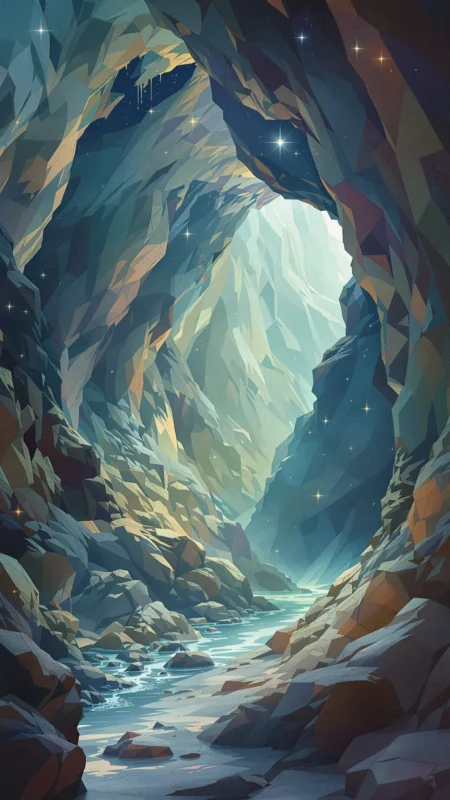


Cave

Archetype Meaning & Symbolism

Womb, tomb, shelter, unknown, resonant, deep, still, ancient, secret, primal

  • Do not fear the dark. Fear the noise that keeps you from hearing what the dark has to say.

If Cave is part of your personal mythology, you may...

Believe

  • The most profound truths are found not in light, but in resonant darkness.

    True strength is the ability to be still and alone in a world that never stops moving and shouting.

    The inner world is infinitely more vast and interesting than the outer world.

Fear

  • That the entrance to the cave will be sealed, trapping you inside forever.

    Being forcibly dragged out into the harsh light before you are ready.

    That if you go deep enough into yourself, you will find nothing there at all, just an empty echo.

Strength

  • A profound capacity for self-reflection and introspection that leads to genuine wisdom.

    An unshakable inner calm and resilience that allows you to weather external storms.

    Access to a deep wellspring of creativity and unique insights, born from time spent in the subconscious depths.

Weakness

  • A tendency towards social isolation and difficulty in forming and maintaining relationships.

    A potential for inaction or procrastination, getting lost in contemplation instead of engaging with the world.

    Being perceived by others as aloof, mysterious, or unapproachable, hindering collaboration and connection.

The Symbolism & Meaning of Cave

In your personal mythology, the Cave is not merely a place of hiding but a site of profound transformation. It is the womb from which you may be reborn and the tomb where outdated versions of yourself are laid to rest. To have the Cave as a central feature of your inner landscape suggests a life rhythm punctuated by cycles of withdrawal and emergence. You may find that your greatest periods of growth do not happen in the dazzling light of public life, but in the quiet, patient dark of introspection. The Cave is the sacred space where the raw material of your experience is slowly, silently transmuted into wisdom, much like water dripping through limestone eventually forms crystalline cathedrals.

The archetype speaks to a fundamental need for an inner sanctum, a place within the self that is inviolable and untouched by the clamor of the world. This inner cave is where you go to hear your own voice, separate from the chorus of external expectations. It symbolizes the journey into the subconscious, a courageous descent to confront what is hidden: the sleeping dragon of your deepest fears, but also the glittering hoard of your greatest strengths. Living with this archetype means learning to be comfortable with the unknown aspects of yourself, trusting that the darkness holds not just monsters, but also unimaginable treasures of insight and creativity.

Furthermore, the Cave in a modern context is an antidote to the age of relentless exposure. It represents the power of privacy, of holding things back, of allowing ideas and identities to gestate in protected darkness before they are ready for the light. It may suggest a personality that values depth over breadth, preferring a single, profound truth to a multitude of superficial facts. Your personal myth might be one of a quiet keeper, a guardian of secrets not out of duplicity, but out of a sacred respect for the slow, geological pace of genuine understanding.


Cave Relationships With Other Archetypes

The Hermit

The Hermit does not create the Cave, but seeks it. This relationship is one of symbiotic purpose. The Cave provides the vessel for the Hermit's work of contemplation and self-discovery. For a person whose mythos includes this pair, solitude may not be a state of loneliness but a sacred vocation. The Hermit brings a lamp, a single point of conscious awareness, into the vast, unconscious darkness of the Cave. This pairing suggests a personality that is not just introverted but actively uses solitude as a tool for illumination, finding universal truths within the confines of a self-imposed, protected isolation.

The Dragon

The Dragon is the legendary guardian at the Cave's mouth, and this archetype represents the fearsome power that often guards our deepest treasures. The Dragon is the personification of the obstacles we must face to access the wisdom within: our own ego, our primal fears, our inherited traumas. In this mythic dynamic, the Cave is the prize, the sanctum of gold and jewels which symbolize self-knowledge and untapped potential. Your relationship with the Cave may therefore be defined by your relationship with its guardian. Do you fight the Dragon, befriend it, or perhaps realize the Dragon is a part of you that must be integrated before entry is granted?

The Fire

Fire, when brought into the Cave, transforms it completely. It pushes back the darkness, revealing the hidden architecture of the walls, the glittering minerals, and the ancient drawings. However, it also creates dancing, monstrous shadows. This relationship speaks to the double-edged nature of consciousness and revelation. The Fire archetype, representing conscious awareness, passion, or a sudden insight, can illuminate the depths of your inner Cave. But it can also distort what it reveals, making small fears loom large like grotesque silhouettes. A mythos involving this pair may be a story of learning how to use the fire of awareness wisely: enough to see, but not so much that the mystery is burned away or the shadows become too terrifying.

Using Cave in Every Day Life

Navigating Creative Stagnation

When the well of ideas runs dry, the Cave archetype suggests a deliberate retreat not to find ideas, but to empty the mind. It is not about brainstorming in a new location, but about entering a state of sensory quietude. You might create a literal 'cave' in your home: a room with minimal light, no screens, no distractions. The goal is to sit in the echoing silence until the pressure to create is replaced by the quiet hum of your own subconscious, from which new, unforced images and concepts may eventually emerge like stalagmites forming over millennia.

Processing Emotional Overwhelm

In moments of intense social or emotional saturation, the Cave offers a model for psychological self-preservation. Instead of pushing through, you could consciously 'enter the cave'. This may look like canceling non-essential plans, muting notifications, or simply sitting in a quiet space without the need to process or 'fix' anything. It is a temporary, intentional withdrawal, a sacred hermitage to let the sediment of feeling settle, allowing clarity to surface naturally, rather than being chased down in the chaotic outer world.

Seeking Deeper Self-Knowledge

For those questioning their path or purpose, the Cave represents the journey inward, the classic descent into the underworld of the self. This could be enacted through practices like meditation, dream journaling, or solitary travel to a place of natural quiet. The archetype guides you to listen to the resonance of your own being, to pay attention to the faint echoes of forgotten desires and truths. It is a pilgrimage to the core of your personal mythos, to consult the oracle that resides only in the deep, undisturbed chambers of your own psyche.

Cave is Known For

Sanctuary

The Cave is the primordial shelter, a geological womb offering protection from the elements and the predatory gaze of the outside world. It is a place of refuge, stillness, and deep rest.

The Unconscious:

As a physical manifestation of depth and darkness, the Cave is a potent symbol for the subconscious mind. It holds forgotten memories, repressed fears, and untapped creative potential in its hidden chambers.

Oracular Power:

Historically, caves were seen as places of divination and connection to the divine or chthonic realms. They are thresholds between worlds, where the whispers of the earth and the ancestors can be heard by those who dare to listen in the silence.

How Cave Might Affect Your Personal Mythology

How Cave Might Affect Your Mythos

When the Cave archetype shapes your personal mythos, your life story may cease to be a linear progression and become a spiral, a series of descents and returns. The pivotal moments of your narrative may not be external achievements but internal shifts that occur in periods of quiet retreat. Your story is not about conquering the world, but about exploring your own. You are the spelunker of your soul, mapping the hidden passages and underground rivers that constitute your true being. Your myth is defined by what you bring back from the dark: a strange crystal of insight, an echo of a forgotten song, a newfound comfort with silence.

This archetype imbues your narrative with a sense of depth and mystery. Others may only see the surface of your life, the small entrance on the side of the mountain, unaware of the vast cathedral that lies within. Your personal history might be marked by distinct phases: times of outward engagement followed by necessary 'winters' of hibernation and reflection. The central conflict in your story may be the tension between the call to retreat into this rich inner world and the demands of the bright, loud, and often superficial outer world. Your heroic journey is not outward into the unknown, but inward into the all-too-known, yet largely unexplored, territory of the self.

How Cave Might Affect Your Sense of Self

Your view of self may be one of profound interiority. You might perceive your true identity not as a public persona, but as a deep, resonant, and somewhat hidden core. This core self is a place of stillness you can retreat to, a sanctuary that provides stability in a chaotic world. You may feel that who you truly are is something that cannot be fully expressed in words or actions, but can only be known through quiet introspection. This can foster a strong sense of self-reliance, a feeling that you contain within you everything you need.

However, this can also lead to a feeling of being fundamentally separate or misunderstood. If your truest self resides in a place others cannot easily access, you may feel a persistent, low-level alienation. There could be a tendency to identify more with your inner state than your outer life, sometimes at the risk of neglecting the latter. Your self-worth is likely tied to authenticity and self-knowledge, and you may hold a quiet pride in your ability to be alone, to face the darkness within yourself without flinching.

How Cave Might Affect Your Beliefs About The World

Your worldview could be predicated on the belief that reality has a hidden dimension. What is seen on the surface is only a fraction of what is real. You may be naturally drawn to psychology, mysticism, esoteric arts, or any discipline that plumbs the depths beneath the obvious. You might look at people and events and instinctively wonder about the unseen motivations, the subterranean currents of history and emotion that are truly driving things. The world is not a stage, but a landscape full of hidden grottos and undiscovered caverns.

This perspective may foster a deep skepticism towards simplistic explanations and a distrust of surfaces. You might believe that truth is not something to be found in a headline or a public declaration, but something that must be carefully excavated from the dark. This can lead to a patient and nuanced understanding of the world, but it could also veer into a kind of cynical paranoia, a belief that a hidden, possibly malevolent, truth always lurks beneath a benign facade. The world is a place of potent secrets, and your role is to be a respectful, cautious explorer.

How Cave Might Affect Your Relationships

In relationships, you may crave a depth that transcends casual conversation. The Cave archetype could compel you to seek connections that feel like safe harbors: relationships where you can be silent without pressure, where your need for periodic withdrawal is understood and honored. You are likely a keeper of secrets, a trusted confidante to whom others bring their hidden truths, sensing that you have the capacity to hold them in a safe, non-judgmental space. Intimacy, for you, is not about constant contact, but about granting someone access to your inner sanctum.

This need for depth can make navigating the more superficial aspects of social life feel taxing or inauthentic. You may prefer a small, tight circle of trusted friends to a wide network of acquaintances. In romantic partnerships, there might be a dance between profound connection and the need for solitude. A potential challenge is the tendency to retreat into your cave during conflict, shutting others out when communication is most needed. For a relationship to thrive, your partner must be someone who is not afraid of your silence, and who knows how to wait patiently at the mouth of the cave without demanding entry.

How Cave Might Affect Your Role in Life

Your role in your family, community, or workplace might be that of the quiet sage, the contemplative, or the strategist who sees the hidden patterns others miss. You may not be the one at the front of the stage, but the one in the wings, providing the crucial insight or the calming presence that grounds the entire production. Your power does not come from outward authority, but from the depth of your inner resources. People may seek you out for advice because they sense you are not swayed by popular opinion, that your counsel comes from a deeper, more timeless place.

This can also manifest as the role of the artist, the poet, or the innovator who goes into the darkness of the unknown and brings back something new. Your work, whatever it is, may involve a process of gestation. You take in the data and impressions of the world, retreat with them into your inner cave, and emerge only when something new has been formed. You are the keeper of the process, the guardian of the sacred space where potential is allowed to slowly, quietly, and deliberately become actual.

Dream Interpretation of Cave

In a positive context, dreaming of a cave may symbolize a journey into your own subconscious for the purpose of integration and rebirth. You might be on the verge of a significant personal discovery. Finding beautiful crystals, a clear underground lake, or ancient, meaningful paintings within the cave suggests you are connecting with your deepest gifts, your untapped potential, and your ancestral wisdom. The dream could be an invitation from your psyche to spend more time in quiet reflection, assuring you that this inner work will be fruitful and illuminating. It is a sign of entering a personal sanctuary for healing and gestation.

Conversely, a negative dream about a cave can signify feelings of being trapped, isolated, or lost in your own psyche. If you are lost in winding tunnels, it may reflect confusion about your life path or a sense of being overwhelmed by your own thoughts and emotions. If the cave is collapsing, it might point to a fear of psychological breakdown. Encountering a monster in the cave often represents a confrontation with a repressed fear or a shadow aspect of yourself that you are not ready to face. This dream is a warning, a signal that your retreat from the world has become a prison, or that there is something in your 'darkness' that requires conscious attention before it grows more formidable.

How Cave Archetype Might Affect Your Needs

How Cave Might Affect Your Physiological Needs

The Cave's presence in your mythos may translate to a physiological need for sanctuary. Your nervous system might be finely tuned, making you sensitive to sensory overload. You may not just prefer quiet, but genuinely require it to feel physically at ease and to restore your energy. Your body might operate on a cycle that demands periods of deep rest, akin to hibernation, where social and physical activity is minimized. This isn't laziness; it is a fundamental, biological need for your system to process and recharge in a low-stimulus environment.

This archetype could also foster a deep connection to your body's own dark, internal processes. You may be more attuned to the subtle rhythms of your heartbeat, breath, and digestion. The body itself is seen as a cave, a sacred vessel containing the mysteries of life. As such, you may gravitate towards practices like yoga, meditation, or body scanning, which involve an inward journey to listen to the body's quiet wisdom. Health, for you, is likely defined by inner balance and resonant stillness, not just the absence of external symptoms.

How Cave Might Affect Your Ideas of Belonging

Belonging, for one who identifies with the Cave, is a quiet, profound, and often elusive state. The impulse for solitude is always present, creating a tension with the human need for connection. You may find that you do not belong to a crowd or a large tribe. Instead, you belong with the few souls who are granted entry into your inner world, those who can sit with you in comfortable silence, who understand that your withdrawal is not a rejection of them, but a need of your own nature. Belonging is the feeling of being with someone with whom you do not need to perform.

This can make finding your place in the world a challenge. You may feel like an outsider in conventional social settings, which often prize extroversion and constant engagement. The search for belonging might be a long one, a quest to find the one or two other 'caves' whose resonance matches your own. Love and friendship are not about being seen, but about creating a shared sanctuary. The deepest sense of belonging may come not from another person, but from a connection to the earth, to an art form, or to a spiritual practice: things that meet you in your own silent depths.

How Cave Might Affect Your Feelings of Safety

Your sense of safety may be deeply entwined with the existence of a personal refuge. Security is not primarily about financial stability or physical fortifications, but about having a psychological or literal space to which you can retreat and be completely, utterly undisturbed. The greatest threat is not physical harm, but psychic intrusion: the unwanted noise, demands, and emotional projections of the outside world. You may go to great lengths to protect your solitude and your 'cave time' as a non-negotiable requirement for your wellbeing.

This need for a safe harbor can mean that you are exceptionally good at creating calming, contained environments. Your home might be your sanctuary, meticulously arranged to soothe your senses. However, it can also lead to an over-reliance on this safe space. The world outside the cave can begin to feel disproportionately threatening, leading to avoidance or agoraphobic tendencies. True safety, in your mythos, is a delicate balance between having a secure place to retreat and developing the inner resilience to venture out into the unpredictable light of day.

How Cave Might Affect Your Views of Esteem

Your self-esteem may be built on a foundation of self-knowledge rather than external validation. The approval that matters most comes from the quiet, authentic voice within your inner sanctum. You may derive a deep sense of worth from your ability to be self-sufficient, to soothe your own anxieties, and to find richness and meaning in solitude. Your confidence is not loud; it is a quiet, solid core, a geological certainty that you know who you are, independent of the world's shifting opinions.

This inward-facing esteem has a potential pitfall: it can create a disconnect from the external world. You may devalue tangible achievements or professional recognition, believing them to be superficial compared to the 'real' work of introspection. This can sometimes lead to a failure to manifest your inner potential in the world, as the act of bringing something out of the cave and into the light for judgment can feel like a violation. Your journey is to learn that your inner worth is not diminished, but completed, by sharing its treasures with the world.

Shadow of Cave

When the Cave archetype falls into shadow, the sanctuary becomes a prison. The healthy, restorative retreat curdles into a fearful, permanent withdrawal from life. This is the Cave as a tomb, a place where potential goes not to gestate, but to die. The individual may become a recluse, not out of a need for peace, but out of a paralyzing fear of the world. They may hoard their thoughts, emotions, and creativity, guarding them like a dragon, but never allowing them to see the light of day, where they might be tested, shared, and brought to life. The silence is no longer resonant, but deadening. The darkness is no longer fertile, but stagnant.

In its other shadow form, the Cave can become a place of morbid obsession and brooding. Instead of finding wisdom in the depths, the individual gets lost in the winding tunnels of their own anxieties, resentments, and negative thought patterns. They endlessly replay past hurts in the echoing chambers of their mind. The Cave becomes a maze with no exit, a self-imposed exile where the shadow self is not confronted and integrated, but endlessly indulged. This shadow expression cuts one off from the possibility of renewal, trapping them in an ancient, unlit part of their own story.

Pros & Cons of Cave in Your Mythology

Pros

  • You possess a strong inner compass and are not easily swayed by external pressures or opinions.

    You can offer a uniquely deep and calming presence, making you a trusted advisor and friend.

    You have access to profound creativity and insight that can only be found by plumbing the depths of the psyche.

Cons

  • You may miss opportunities that require quick, outward-facing action and social engagement.

    Your need for solitude can be misunderstood as rejection, potentially straining relationships.

    There is a significant risk of becoming isolated or getting trapped in cycles of over-thinking and brooding.