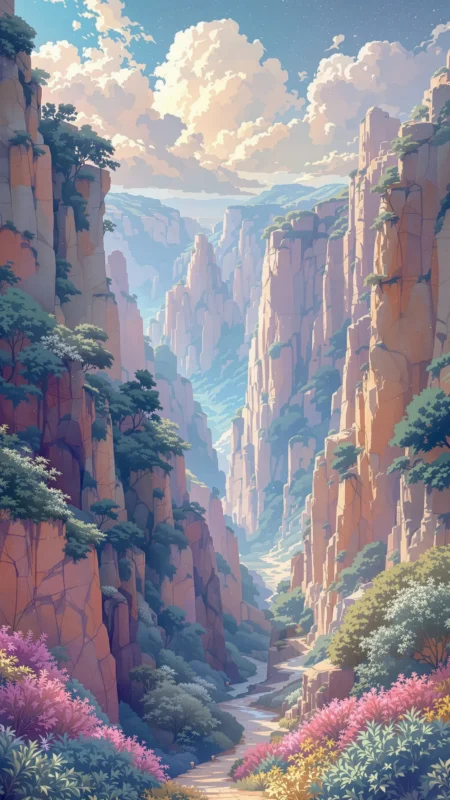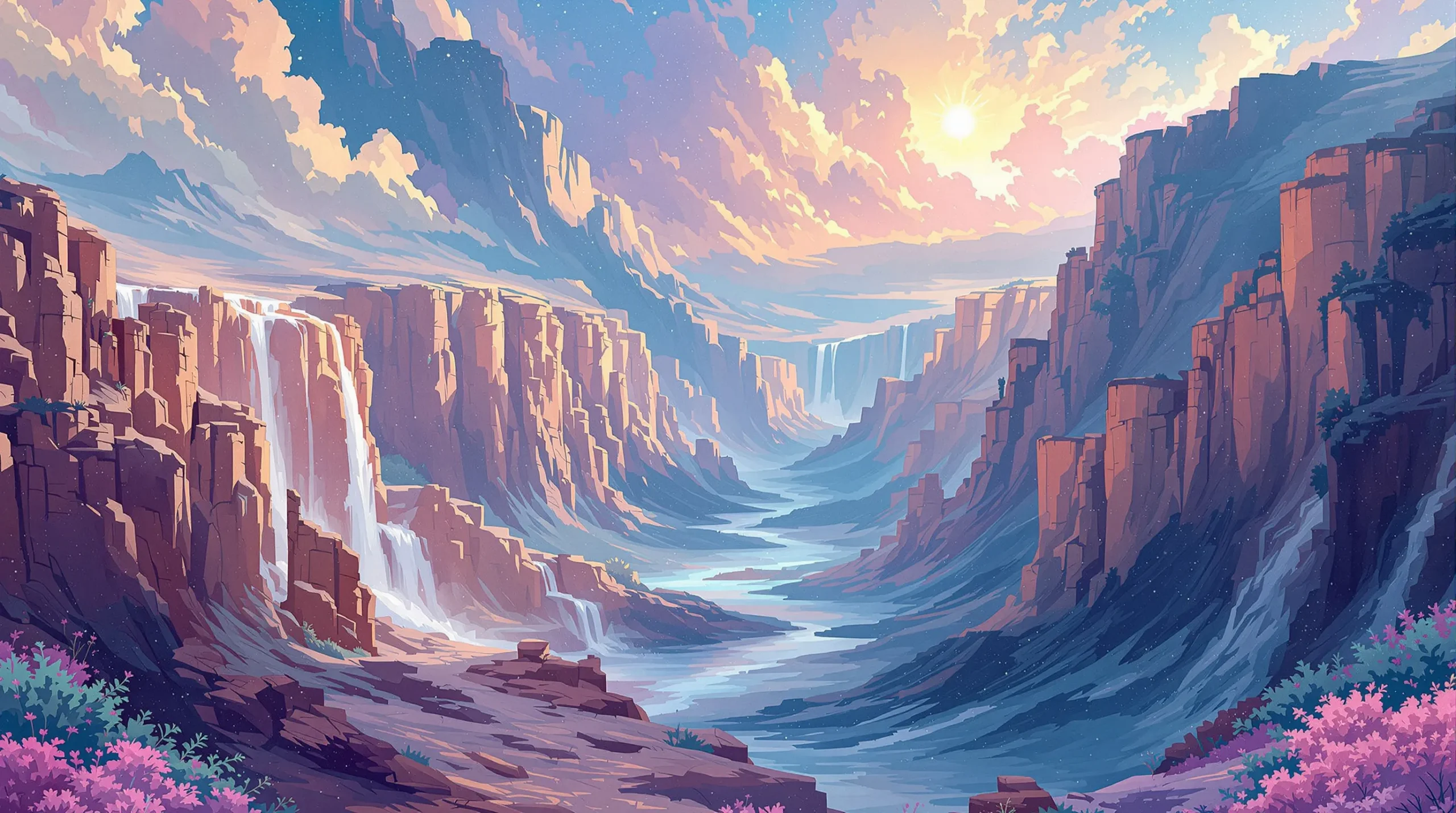


Canyon

Archetype Meaning & Symbolism

Depth, ancient, layered, isolating, formidable, echoing, patient, enduring, sculpted, revealing

  • Do not fear the descent. The deepest truths are found not by climbing, but by being carved.

If Canyon is part of your personal mythology, you may...

Believe

  • The most profound changes are the slowest and most persistent.

  • Every scar, every layer of the past, contributes to the beauty and strength of the present.

  • True understanding requires a descent into complexity, not an ascent to simplicity.

Fear

  • That the chasm within you is too wide to ever be bridged, leaving you permanently divided.

  • That a sudden, violent event, a 'flash flood,' will erase the intricate history and character carved within you.

  • Being seen only from the surface, your depths forever remaining un-explored, unknown, and unloved.

Strength

  • Profound resilience and the ability to endure immense pressure over long periods.

  • A unique and grounding perspective that can calm and center others in times of crisis.

  • The capacity for deep, enduring, and unshakable relationships built on a foundation of trust and shared history.

Weakness

  • A tendency towards emotional inaccessibility and a majestic, self-imposed isolation.

  • A deep-seated resistance to rapid change, even when adaptation is necessary for survival or growth.

  • An intimidating presence that, while unintentional, may keep others at a safe and lonely distance.

The Symbolism & Meaning of Canyon

In personal mythology, the Canyon may represent the architecture of the soul, a space defined by a great and formidable opening. It is not a void but a passage, carved by the persistent river of experience. To embody this archetype is to possess a profound inner depth, a sense that your identity is layered with history, memory, and accumulated wisdom. You might feel that your most significant qualities were not built up, but carved out by life’s challenges. The Canyon is a wound transfigured into a wonder, a place of descent that paradoxically offers a higher perspective. It suggests that truth and beauty are not found on the summit, but in the intricate, shadowy, and life-sustaining passages far below the surface.

The Canyon also symbolizes the value of a long perspective. Its stratified walls are a visible record of time, each layer telling a story of drought, flood, and slow accumulation. A person with Canyon in their mythos may have an innate understanding of cycles, seeing current events not as isolated emergencies but as another stratum being laid down in a much longer history. This can lend them a formidable calm, a kind of geological patience in the face of fleeting human drama. They might be the keepers of stories, the anchors of families, the ones who remember where things came from, providing a grounding context in a world obsessed with the new.

This archetype could also speak to a majestic isolation. A canyon is a world unto itself, with its own climate, its own ecosystem, its own secrets. Similarly, a Canyon individual may feel they contain a vast and complex inner landscape that few are willing or able to explore. They may be admired from a distance, their depths appreciated as a spectacle, but they might feel that true intimacy requires a descent that most are afraid to make. The symbolism here is one of profound self-sufficiency that walks a fine line with a deep and echoing loneliness.


Canyon Relationships With Other Archetypes

The River

The River is the Canyon’s creator, lover, and most intimate inhabitant. This archetype represents the ceaseless flow of life, emotion, and purpose. For the Canyon, the River is the force of transformative experience: every sorrow, joy, and obsession is a current that cuts deeper, revealing new layers of being. The relationship is utterly symbiotic. The Canyon provides the River with direction and form, its hard walls creating a channel. In turn, the River prevents the Canyon from being a static, dead place, ensuring it is always a living, evolving landscape. This dynamic suggests a personal mythos where purpose is found not in resisting change, but in allowing it to shape you into something magnificent.

The Sky

The Sky represents consciousness, infinite possibility, and the world beyond the self. From the bottom of the Canyon, the Sky is not an all-encompassing dome but a narrow, brilliant strip: a focused glimpse of the universal. This relationship might speak to a personality that has a very specific, directed view of transcendence or freedom. The Canyon’s walls could blot out distractions, making the path to a higher state of being incredibly clear, albeit confined. For the Canyon person, the vastness of the Sky might be overwhelming; they may prefer its limited, framed presence, a reminder of the infinite that doesn't negate the importance of their own profound depths.

The Bridge

The Bridge is an archetype of connection, ingenuity, and transcendence over obstacles. It offers a way to cross the Canyon’s great divide without undertaking the arduous journey down and up again. In a personal mythos, the Bridge can represent a sudden insight, a key relationship, or a technological leap that resolves a long-standing internal conflict. For the Canyon person, the Bridge could be a complex symbol. It might be a welcome reprieve, a way to unite two disparate parts of their life. Or, it could feel like a cheat, an artificial structure that allows others to bypass the essential, character-building experience of the descent. It challenges the Canyon’s belief that true understanding only comes from navigating the depths.

Using Canyon in Every Day Life

Navigating Grief

When loss carves a chasm through your life, the Canyon archetype suggests you do not try to fill it. Instead, you may learn to walk the basin floor. This space is not an absence but a new landscape with its own ecology. You learn its light, its shadows, its unique seasons. The Canyon teaches that grief is not a hole to be paved over but a passage to be explored, a defining feature that adds impossible beauty and depth to your personal geography.

Understanding Personal History

You may view your identity as a series of geological strata, each layer a different era of your life: the soft sandstone of childhood, the volcanic ash of a traumatic event, the limestone of quiet, accumulated years. The Canyon archetype encourages an archaeological dig into the self. It asks you to honor the composition of each layer, to understand how the pressures of your past have compressed and shaped you, without judgment, seeing the entire cross-section as the testament of your endurance.

Finding Perspective in a Crisis

In a moment of overwhelming crisis, you might use the Canyon archetype to metaphorically stand at its rim. From this vantage point, the raging problem becomes a thin, silver ribbon of a river far below. You can acknowledge its power to carve and shape, yet you also see the vast, ancient, and unbothered stone that contains it. This shift in scale may not solve the problem, but it can shrink the panic, reminding you that you are the vast landscape, not merely the turbulent water.

Canyon is Known For

Immense Depth and Scale

The Canyon is known for inspiring a sense of awe and personal insignificance. Its sheer walls and profound depths serve as a physical representation of the sublime, challenging the observer's sense of their own importance in the grand scheme of time and space.

Revealed History

Its exposed rock layers, or strata, are a visible library of geologic time. Each band of color and texture tells a story of a different epoch, making the Canyon a powerful symbol for the accumulated weight and wisdom of the past and the layers that constitute any deep identity.

The Power of Slow Erosion

The Canyon is the quintessential monument to patience and persistence. It stands as undeniable proof that a soft, yielding force, like water or wind, can sculpt the hardest, most intransigent material if given enough time. It is a testament to the power of the gentle and the consistent.

How Canyon Might Affect Your Personal Mythology

How Canyon Might Affect Your Mythos

When the Canyon shapes your personal mythos, your life story may not be a tale of conquering mountains but of deepening valleys. Your narrative is one of excavation. Pivotal life events are not steps on a ladder but acts of erosion, moments where the persistent flow of experience cut through your defenses and revealed a deeper, more ancient layer of your being. Your myth is not about who you are becoming, but about uncovering who you have always been, stratum by stratum. The central theme might be the slow, patient transformation of a wound into a sanctuary, a personal trauma that becomes the defining, beautiful feature of your inner landscape.

Your story may also be defined by a great divide, a central chasm that separates your life into a clear 'before' and 'after.' This could be a loss, a relocation, a profound change in belief. The entire narrative of your life then revolves around this space. Do you live on one edge, forever looking across at a past you cannot reclaim? Do you make the perilous journey to the bottom to find what new life grows there? Or does your mythos become about building a bridge, a new way to integrate the two sides of yourself? Your story is that of the landscape itself, defined by the space between things.

How Canyon Might Affect Your Sense of Self

You may perceive yourself as possessing a profound and perhaps intimidating inner complexity. Like the Canyon’s walls, your personality is layered, with parts of you formed in vastly different personal eras. This can lead to a sense of being ancient, as if you carry the history of not just your own life but something more. You might find a strange comfort in your own solitude, the way a canyon holds and amplifies its own silence. Self-acceptance, for you, could mean honoring all your layers, refusing to hide the weathered, eroded parts of yourself beneath a smooth facade.

This internal vastness could also make you feel fundamentally unknowable, both to yourself and to others. Your own emotions might feel like a powerful river at the bottom of a deep gorge: you know they are there, and you can hear their roar, but you cannot always see or access them clearly. You might see your own boundaries as sheer rock walls, formidable and difficult for others to scale, leading to a feeling of being a majestic but lonely landmark in the lives of others.

How Canyon Might Affect Your Beliefs About The World

Your worldview might be characterized by what could be called 'geological time.' You may have an innate sense of the long-term, seeing the frantic urgencies of modern life as mere weather patterns passing over an ancient landscape. This perspective can grant you a powerful sense of calm and stability. You may look at societal structures, political movements, and cultural trends as temporary deposits, destined to be compressed, eroded, or washed away by the slow, inexorable rivers of history. This doesn’t necessarily mean cynicism, but rather a deep trust in underlying, persistent forces.

You may also view the world as a place of hidden depths. You might be naturally skeptical of surfaces, always looking for the fissures and fault lines that reveal what lies beneath. You could see people, institutions, and nations as their own canyons, shaped by forgotten rivers and ancient pressures. This perspective might make you a natural historian, psychologist, or strategist, someone gifted at understanding how the past carves the present. You appreciate the beauty in things that are weathered, worn, and scarred, seeing them not as damaged but as complete.

How Canyon Might Affect Your Relationships

In relationships, you may value depth and endurance above all else. You are likely not one for fleeting connections; instead, you seek bonds that have the weight of history and the resilience of stone. To be loved by you might feel like being given shelter in a vast and ancient place. You offer a profound stability and a space where another person can explore their own depths, safe within your steadfast presence. Love, for you, might be the slow process of two rivers converging, gradually carving a shared life together over the course of an epoch.

However, this same depth can be a barrier. Potential partners or friends may feel daunted by your sheer scale, as if they are standing on a precipice, afraid of falling in. You might appear self-sufficient to the point of being inaccessible, your quiet presence mistaken for disinterest. There could be a recurring pattern in your relationships where others admire your depths from a safe distance but are unwilling to make the journey required to truly meet you where you are. This can lead to a feeling that your relationships are defined by a beautiful but unbridgeable distance.

How Canyon Might Affect Your Role in Life

Your perceived role in the world may be that of a witness or a container. Like a canyon that holds the history of the land in its walls, you might see yourself as a keeper of memories, stories, and traditions for your family, community, or profession. Your purpose isn't necessarily to act, but to be a repository of wisdom and perspective. People may come to you not for a quick solution, but to be reminded of a longer, deeper story, to find their own place within a larger context that you seem to effortlessly hold.

Alternatively, you could see your role as being the challenge that inspires growth in others. You are the formidable landscape that one must navigate to find their own strength. You might be a mentor, a therapist, or a leader whose quiet, unyielding nature forces others to dig deeper within themselves. Your role is not to provide the path, but to be the terrain itself, the beautiful, difficult, and transformative journey that others must undertake for themselves, with you as the silent, awe-inspiring context for their becoming.

Dream Interpretation of Canyon

In a positive context, dreaming of a canyon could represent a successful and willing descent into the subconscious. You might be flying effortlessly between its walls or navigating its river with skill, suggesting a harmonious integration of your past with your present. Seeing a canyon in a dream may also symbolize the sudden revelation of your own profound depth and resilience. It might appear after a period of hardship, a message from your psyche that the experience, while painful, has carved something of incredible beauty and strength within you. It is an affirmation of the majesty of your own inner world.

In a negative light, a canyon dream may evoke feelings of being trapped, lost, or overwhelmed. You might be at the bottom, unable to see the sky, symbolizing a state of depression or feeling buried by the weight of your own history. A dream of falling into a canyon could signify a loss of control or a fear of confronting a painful truth about yourself. Crumbling canyon walls might point to a crisis of identity, where the very foundations of your personal story feel unstable and threaten to collapse upon you.

How Canyon Archetype Might Affect Your Needs

How Canyon Might Affect Your Physiological Needs

The Canyon archetype may anchor your basic physiological needs in a deep, almost geological rhythm. The need for food, water, and rest might feel less like a daily urgency and more like a participation in ancient cycles. You might favor simple, elemental foods and find true rest not in a short nap, but in a profound descent into stillness, a state of quiet that feels like the bottom of a deep, shaded gorge. Your body may not just be a body: it could be a landscape, and its needs are the slow, patient processes of weather and time.

Conversely, this archetype could foster a disregard for the body's immediate signals. Immersed in the vastness of your inner world, the body's cries for sustenance or sleep may seem like trivial interruptions. You might have a tendency to push your physical limits, treating your body like enduring stone rather than vulnerable flesh. The challenge here is to inhabit both the monument and the mortal form, to recognize that even the grandest canyon is shaped by something as simple and vital as water.

How Canyon Might Affect Your Ideas of Belonging

Your need for belonging may be satisfied not by social circles, but by a connection to a place, a history, or a lineage. You might feel a stronger kinship with a landscape or with ancestors you've never met than with a room full of peers. Love and intimacy, in this context, are not about constant communication but about shared presence in a deep space. You may show love by creating a safe, profound space for another within your own inner world, an act of slow and patient excavation to make room for them.

This can make casual social interactions feel shallow and alienating. The lighthearted banter of a party can seem to echo meaninglessly against the vast walls of your inner canyon. A core loneliness may stem from this dynamic: a feeling of being a majestic natural wonder that people admire from an overlook but where no one ventures to live. You may yearn for a companion willing to make the long descent and appreciate the quiet, hidden world at your core, not just the dramatic view from the top.

How Canyon Might Affect Your Feelings of Safety

A sense of safety may be found not in locks or alarms, but in deep roots and permanence. To feel secure is to be grounded in your own unchangeable core, to know that you are carved from something that endures. The Canyon’s formidable walls could symbolize an immense internal fortitude, a belief that you can withstand any external storm because your essential self is protected by layers of experience. Security is not about preventing crises, but about having the depth to absorb them without collapsing.

This need for enduring stability can also become a source of profound anxiety in a fast-changing world. The constant flux of modern life, with its transient jobs, relationships, and technologies, may feel like a threatening erosion. The greatest fear is not a sudden, violent attack but the slow, persistent trickle of meaninglessness that threatens to wear down your solid sense of self. A 'flash flood' in your life, a sudden and chaotic event, could trigger a primal fear of being scoured out, of having your carefully carved identity washed away.

How Canyon Might Affect Your Views of Esteem

Esteem could be derived internally from your own complexity and endurance. You may not require constant external praise because you see yourself as your own monument. Self-worth is rooted in the knowledge of the layers you contain, the pressures you have withstood, and the history you carry. You might command respect not through loud achievement, but through a quiet, solid presence that communicates a deep and unshakable sense of self. Your value is not in what you do, but in the magnificent landscape of what you are.

The shadow of this is that your source of esteem might be largely invisible to others. If people only interact with your surface, your 'rim,' they may have no conception of the immense depth and history that constitute your self-worth. This can lead to a profound feeling of being misunderstood or undervalued. You might feel a quiet frustration that your greatest quality, your depth, is the very thing that prevents others from recognizing your value in a world that privileges the accessible and the easily summarized.

Shadow of Canyon

The shadow of the Canyon archetype emerges when its depth curdles into a void. Here, the formidable walls cease to be protective and become a prison. You may become rigid, unchangeable, and petrified by your own history, looking down with contempt on the fleeting lives of others. The inner world is no longer a place of quiet wisdom but of echoing resentments and stagnant memories. The river of life that once carved you has dried up, leaving only a dusty, lifeless chasm. In this state, you are not a wise elder but a stubborn monument to your own past, resisting the flow of the present entirely.

Another shadow expression is a kind of geological nihilism. Having witnessed so much slow change and the impermanence of all things, you may fall into a profound apathy. If all is dust, why care? This can lead to a cold, impassive detachment from your own feelings and the suffering of others. Love, pain, and ambition may seem like insignificant scurrying on the canyon rim. This isn't peace, but an abdication of life, a retreat into an empty grandeur that isolates you from the messy, vibrant, and meaningful business of being human.

Pros & Cons of Canyon in Your Mythology

Pros

  • You possess a rare and valuable long-term perspective, making you a source of wisdom and stability for others.

  • Your inner world is rich, complex, and layered, providing a deep well of creativity and profound self-reliance.

  • You have the capacity to form incredibly deep, resilient, and meaningful connections with those willing to truly know you.

Cons

  • You may be perceived by others as distant, intimidating, or emotionally unavailable, making connection difficult.

  • Your deliberate, slow pace can make it challenging to adapt and thrive in a fast-moving, rapidly changing world.

  • You might struggle with a deep and persistent loneliness, feeling like a natural wonder that people visit but where no one truly lives.