 Believe
 Fear
Fear Strength
 Weakness
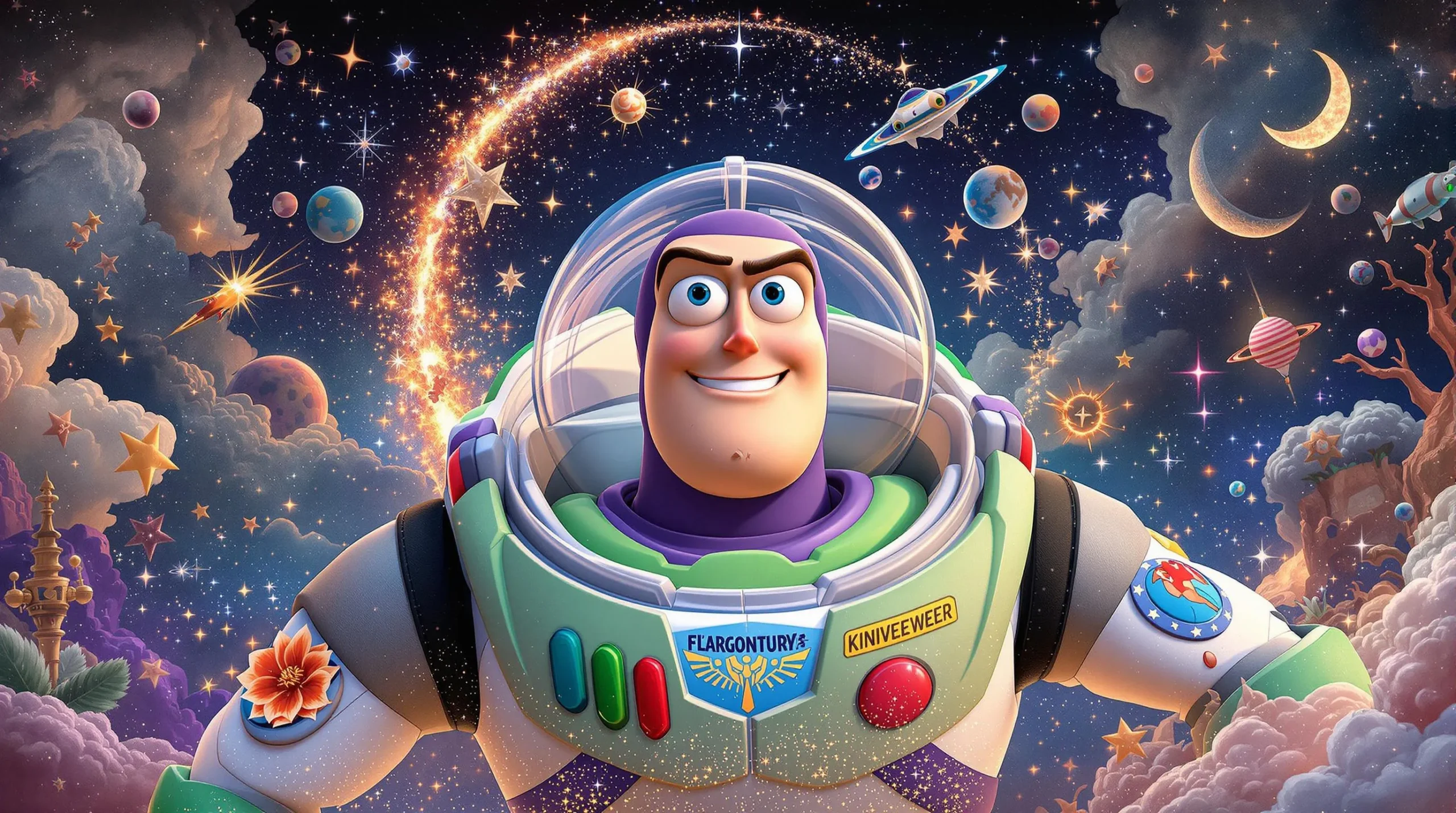
To have Buzz Lightyear in your personal mythos is to wrestle with the beautiful, dangerous power of self-conception. He is the archetype of the noble delusion, the man who arrives fully formed from a box, armed with a complete and unshakeable story of who he is. This isn't just confidence; it's a hermetically sealed reality, a spacesuit of belief worn against the void of the unknown. He symbolizes the part of us that constructs a grand narrative—'I am a Space Ranger, here to save the galaxy'—as a way to navigate a world that feels alien and chaotic. His initial state is a monument to the human need for purpose, even if that purpose is, for a time, a magnificent fiction.
The fall is everything. The moment Buzz sees the television commercial is a profound mythological event: the shattering of the sacred text. It symbolizes the inevitable collision between our carefully constructed internal mythology and the indifferent, objective truth of the external world. He is no longer a unique hero from Star Command; he is a mass-produced object. This crisis is the crucible of the archetype. His journey from this point is not about reclaiming the old delusion, but about building a new, more resilient meaning. He learns that heroism isn't about cosmic destiny but about local loyalty, that flying is less important than friendship, and that a signature on your boot can mean more than a rank from a faraway, faceless authority.
Ultimately, Buzz Lightyear comes to represent a synthesis. He doesn't discard his heroic ideals; he integrates them. The laser is still a laser in his mind, the wings still represent a capacity for greatness. 'Falling with style' becomes his new creed, an acknowledgment of limitations that doesn't surrender to them but finds grace within them. He symbolizes the mature self that has looked its own 'toy' nature in the eye and chosen to be a hero anyway. His purpose is no longer beamed down from Star Command, but built, handshake by handshake, in the messy, vibrant, and very real world of Andy's room.